Fire-resistant rope is an essential safety component for fishing vessels, rescue teams, and industrial facilities, especially in environments exposed to high temperatures, sparks, or flammable materials. If you are unsure which type offers the best heat resistance, tensile strength, or suitability for specific applications, the guide below will help you choose the right product, meet technical standards, and optimize long-term operational costs. This article also explains rope materials, key evaluation criteria, and practical buying recommendations so you can confidently select high-quality fire-resistant rope for your work environment.
1. What Is a Fire-Resistant Rope? How Many Types Are Available on the Market?
A fire-resistant rope refers to a safety-engineered rope capable of withstanding high temperatures, limiting flame spread, and maintaining stable tensile strength even when exposed directly to fire, sparks, or intense heat. This type of rope is crucial for fishing vessels, rescue operations, and industrial plants due to its superior stability and safety compared to conventional ropes. When choosing a product, it is important to understand the structure and characteristics of each rope type to ensure optimal performance in marine environments, welding areas, or other high-temperature conditions.
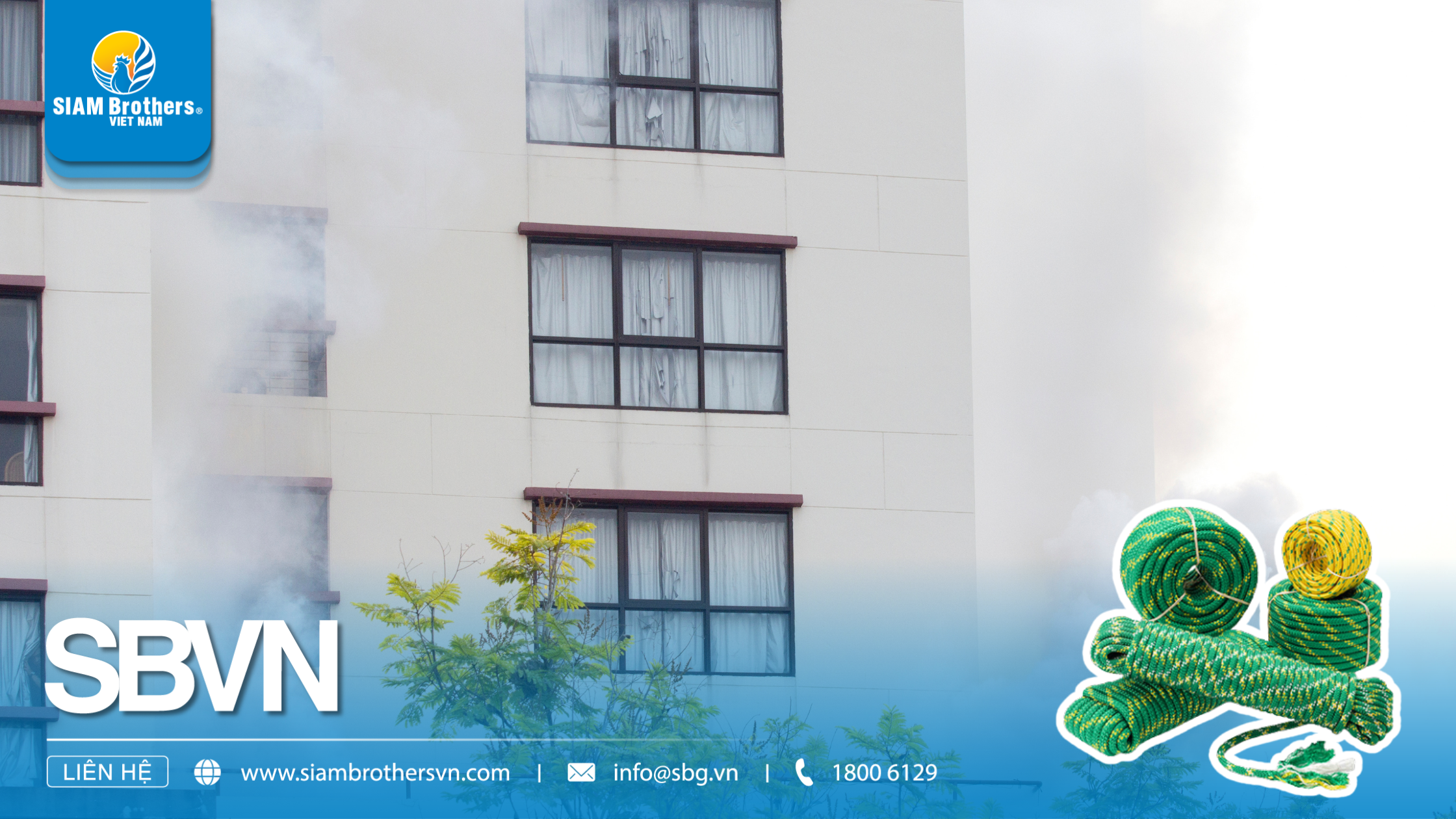
Common features include:
Ability to resist flames or self-extinguish when exposed to heat
High tensile strength without deformation within the recommended temperature range
Resistance to seawater, oil, or chemicals depending on material
Longer lifespan than traditional ropes under harsh conditions
1.1 Popular Types of Fire-Resistant Ropes
- Excellent heat resistance and effective flame protection
- Superior tensile strength, ideal for rescue ropes or areas near engines
- High abrasion resistance and minimal impact from marine environments
1.1.2 Ceramic Fiber Heat-Resistant Rope
- Extremely high heat resistance, suitable for boilers, welding workshops, and industrial plants
- Non-flammable and does not carbonize under intense heat
- Durable at continuous temperatures above 1000°C
1.1.3 Fiberglass Rope
- Strong heat resistance at a more affordable cost than ceramic rope
- Suitable for fishing vessels or factories with moderate heat exposure
- Resistant to oil, chemicals, and maintains structural stiffness
1.1.4 Flame-Retardant Natural Fiber Rope (Sisal or Jute)
- Chemically treated to reduce flammability
- Suitable for light-duty or temporary applications
- Not recommended for high-temperature or continuous operations
1.2 Applications for Each Rope Type
- Choosing the right fire-resistant rope depends on the requirements of each industry:
- Fishing vessels typically use aramid or fiberglass ropes for heat resistance around engine rooms
- Rescue teams need ropes with high tensile strength, quick flame resistance, and safe handling
- Industrial facilities choose ceramic or fiberglass ropes depending on temperature levels and workload

2. Advantages of Fire-Resistant Ropes Compared to Standard Ropes
2.1 High Heat Resistance in Harsh Environments
- Fire-resistant rope is engineered to maintain strength near engines, welding areas, and other heat sources. Compared to standard ropes, it offers clear advantages:
- Withstands prolonged exposure to heat without becoming brittle or damaged
- Maintains tensile strength under direct thermal impact, ideal for fishing vessels, rescue work, and factories
- Prevents melting or deformation, a common issue in PP or PE ropes under heat
2.2 Enhanced Safety Near Flames and Hot Sparks
- Fire-resistant ropes provide superior safety, especially where fire hazards must be controlled:
- Lower risk of ignition when exposed to welding sparks or hot engine compartments
- Prevents flame spread, meeting safety standards in factories, ports, and large vessels
- Produces less toxic smoke under heat, protecting rescue personnel during emergencies
2.3 High Tensile Strength and Longer Service Life
- Despite being designed for heat resistance, fire-resistant rope still delivers outstanding durability:
- Stable tensile strength in saltwater, oily environments, or high humidity
- Resistant to rot or degradation in prolonged outdoor conditions
- Less abrasion during continuous operation, reducing replacement costs
2.4 Optimized for Multiple Industries: Fishing – Rescue – Industrial Plants
- Its versatility makes fire-resistant rope suitable for a wide range of applications:
- Fishing vessels: safe for anchoring or securing near hot engine areas
- Rescue teams: reliable in environments with rapid temperature changes
- Industrial plants: useful for machine threading, equipment stabilization, or work near boilers and heating systems

3. Essential Criteria for Choosing a Fire-Resistant Rope
- This is the most critical factor when selecting a fire-resistant rope for fishing vessels, rescue operations, and industrial environments. You should evaluate:
- The maximum temperature the rope can withstand before deforming or losing tensile strength.
- Its resistance to sparks, hot fumes, or short-term exposure to open flames.
- Laboratory test data and certifications provided by the manufacturer.
3.2. Tensile Strength and Long-Term Durability
- Durability is always a priority, especially for applications requiring high load capacity.
- Minimum tensile strength suitable for each application: net hauling, mooring, rescue, or machinery operation.
- Durability under humid, salty, chemical-rich, or high-friction environments.
- Rate of strength degradation when exposed to elevated temperatures.
3.3. Fiber Material and Rope Construction
- Material composition determines the fire-resistant rope’s performance and lifespan.
- Specialized synthetic fibers with natural fire resistance or flame-retardant treatment.
- 3-strand, 4-strand, or braided constructions that increase anti-twist stability and load distribution.
- Ability to maintain fiber integrity under high heat without melting, separating, or sticking.
3.4. Weight and Application Flexibility
- Industries like rescue operations and vessel handling require speed, precision, and ease of use.
- Rope weight relative to its diameter to ensure comfortable handling.
- Flexibility for bending, knotting, mooring, or pulling tasks.
- Anti-slip performance when hands are wet or exposed to oil.

3.5. Resistance to Marine and Chemical Environments
- Beyond fire resistance, the rope must withstand harsh working conditions.
- Anti-corrosion properties against seawater, hot steam, or diesel.
- Resistance to solvents, detergents, and common industrial chemicals.
- Ability to retain strength and structure during prolonged outdoor exposure.
3.6. Certifications, Standards, and Rope Origin
- To ensure safety and performance, always verify:
- Heat-resistant and fire-resistant certifications issued by reputable agencies.
- Transparent manufacturing standards from the rope producer.
- Well-established brands such as SIAM Brothers Vietnam, known for long-lasting quality and reliable sourcing.
3.7. Suitability for Real-World Applications
- No single fire-resistant rope fits all needs. You should:
- Identify the specific purpose: mooring, rescue, machinery operation, or high-heat environments.
- Choose the right diameter, length, and tensile strength for maximum efficiency.
- Consider cost efficiency, product lifespan, and total budget planning.
4. Comparison of Fire-Resistant Rope Types
4.1. Special Fire-Resistant Polypropylene (PP) Rope
- PP fibers are enhanced with additives to improve heat resistance, suitable for environments with sparks and moderate heat.
- Naturally floats on water, improving safety for fishing vessels and rescue teams.
- Lightweight, easy to handle, and competitively priced.
- Limitation: Not ideal for extremely high temperatures or prolonged exposure to open flames.
4.2. Enhanced Fire-Resistant Polyamide (Nylon) Rope
- High tensile strength and excellent elasticity, ideal for rescue operations requiring stable pulling force.
- Strong abrasion resistance for continuous friction environments.
- Withstands higher temperatures than PP but does not float, which may be a concern for fishing vessels.
- Higher price, but superior industrial-grade performance.
4.3. Specialized Fire-Resistant Polyester Rope
- Excellent thermal stability with UV, chemical, and heat resistance higher than PP and Nylon.
- Non-absorbent, maintaining strength in humid conditions—ideal for long trips at sea.
- Suitable for factories with strict fire-safety requirements.
- Limitation: Lower elasticity than Nylon, requiring consideration for shock-load tasks.
4.4. High-Tech Fiber Fire-Resistant Rope (Aramid, Composite)
- Uses aramid or composite heat-resistant fibers capable of handling direct flame environments.
- Exceptional tensile strength without degradation under heat exposure.
- Best for extreme rescue operations, metallurgy facilities, and high-risk industrial zones.
- Drawback: Higher cost; should be selected based on clear operational needs.
4.5. Which Type Should You Choose?
- Need floating, lightweight, cost-effective rope → Choose PP.
- Need high tensile strength and elasticity for rescue → Nylon.
- Need stable heat resistance and outdoor durability at sea → Polyester.
- Work in explosive or extreme-heat environments → High-tech aramid/composite fibers.
5. FAQs — Frequently Asked Questions About Fire-Resistant Ropes
5.1. Are fire-resistant ropes suitable for seawater environments?
- Most high-quality fire-resistant ropes handle seawater and chemicals effectively.
- Their anti-corrosive properties ensure reliable performance on fishing vessels and near coastal areas.
- Depending on the fiber material (e.g., high-tech synthetics), durability may vary based on usage frequency.
5.2. Can fire-resistant ropes be used for rescue operations?
- Yes. Fire-resistant ropes are widely used in rescue settings due to their heat tolerance, abrasion resistance, and high safety levels.
- When choosing a rescue rope, prioritize high load capacity, certified heat resistance, and stability under emergency conditions.
- Some specialized models follow international safety standards for rescue operations.
5.3. How long do fire-resistant ropes last?
- Lifespan depends on the material, usage intensity, and environment.
- In fishing vessels or industrial facilities, a fire-resistant rope can last for several years with proper maintenance.
- Manufacturers often recommend periodic inspection to ensure no heat-induced damage or tensile loss.
5.4. Where should you buy a reliable fire-resistant rope?
- Choose experienced manufacturers specializing in technical ropes, especially those offering certified materials.
- Brands serving fishing fleets, rescue teams, and factories typically provide high-standard options.
- Purchasing directly from a trusted manufacturer ensures transparent technical specifications and competitive pricing.

Fire-resistant ropes provide a reliable and long-lasting safety solution for fishing vessels, rescue operations, and industrial facilities. When choosing one, evaluate key criteria such as material, heat resistance, tensile strength, abrasion resistance, and certification validity. Comparing Aramid, Ceramic, Fiberglass, and flame-retardant rope types helps you select the option most suitable for your application.
For optimal performance, always review test reports and purchase from reputable suppliers.
Contact SIAM Brothers Vietnam today for technical consultation, detailed datasheets, and pricing options to ensure maximum safety and efficiency for your operations.
Source: SIAM Brothers Vietnam
Contact us:
► Address: 5th floor, VRG Building, 177 Hai Ba Trung Street., Xuan Hoa Ward, Ho Chi Minh City, Vietnam
► Hotline: 1800 6129
► Tel: (+84) 28 38 912 889
► Email: info@sbg.vn
► Follow us for more details at: Facebook - Zalo OA - Tiktok - Youtube - LinkedIn
Download SBVN ID app here:
► CHPlay
► Appstore