
- 1800 6129

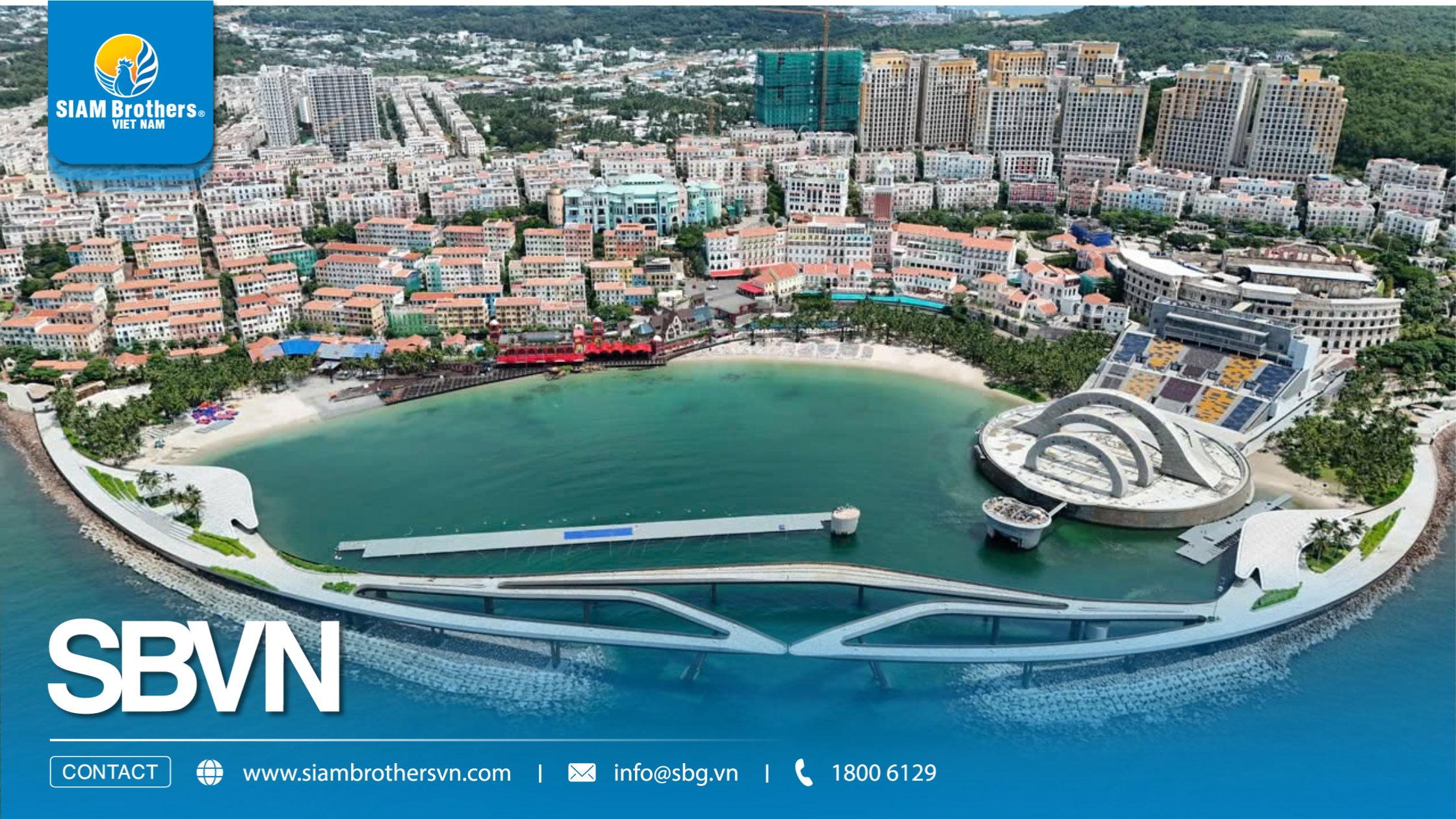
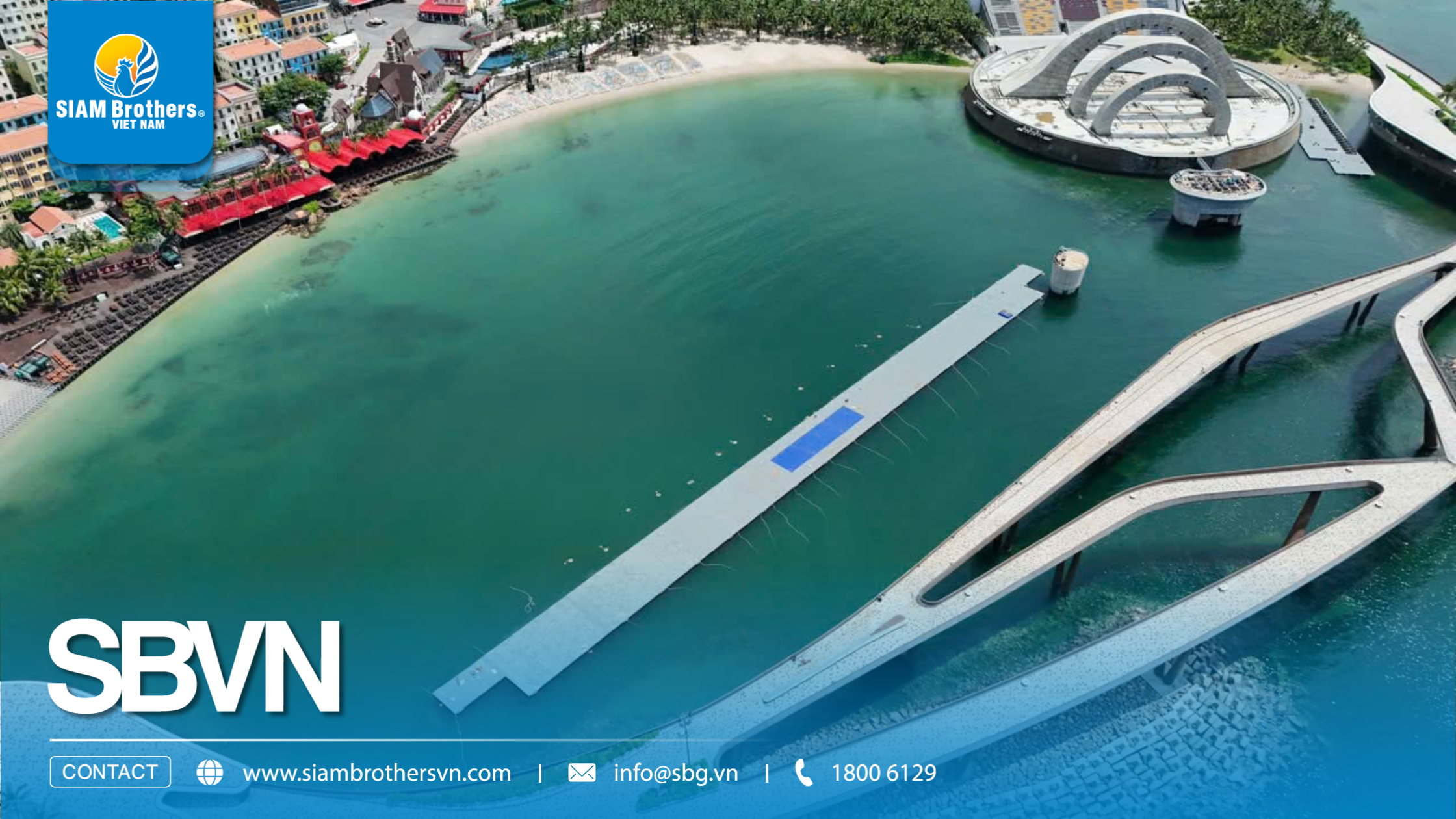
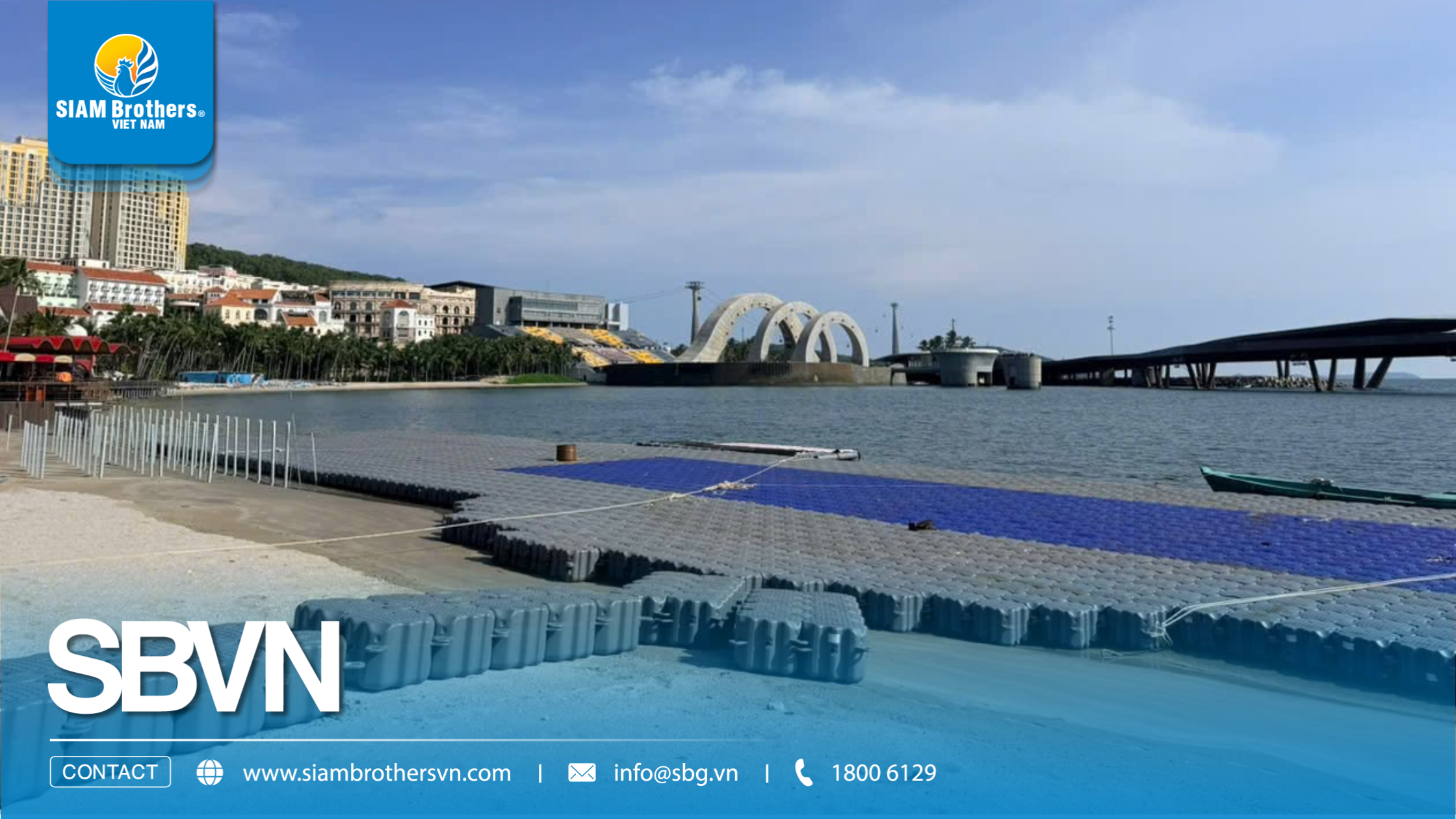
Against the stunning backdrop of Phu Quoc's coastline, a floating stage does more than create extra space for performances. It brings a whole new dimension to tourism, cultural events, and waterfront entertainment. At the iconic Kiss Bridge in Phu Quoc, SIAM Brothers Vietnam has completed a floating stage and jet ski docking complex built with a modular HDPE pontoon system.
The project highlights how HDPE floating pontoons can transform waterfront spaces into functional entertainment venues. It also offers a practical example for businesses and investors exploring floating stage solutions for their own projects.
Imagine watching a live performance with the ocean stretching out behind the stage and the sunset setting the scene. That's the kind of experience a floating stage can bring to life.
Unlike traditional venues, floating stages make the surrounding landscape part of the show, creating a memorable atmosphere for audiences.
At Kiss Bridge, the project was designed with several key objectives in mind:
Bringing this concept to life requires more than simply connecting floating pontoons. The entire system must be planned around the site layout, environmental conditions, and intended use.


At the heart of the project is a modular HDPE floating pontoon system. Individual pontoons are connected to create a floating platform that supports the performance deck.
HDPE (High-Density Polyethylene) is a durable plastic material widely used in floating structures thanks to its water resistance and relatively strong resistance to chemical corrosion.
This modular solution offers several practical advantages:
These features make HDPE floating pontoons a practical option for businesses looking to develop waterfront facilities with adaptable layouts.
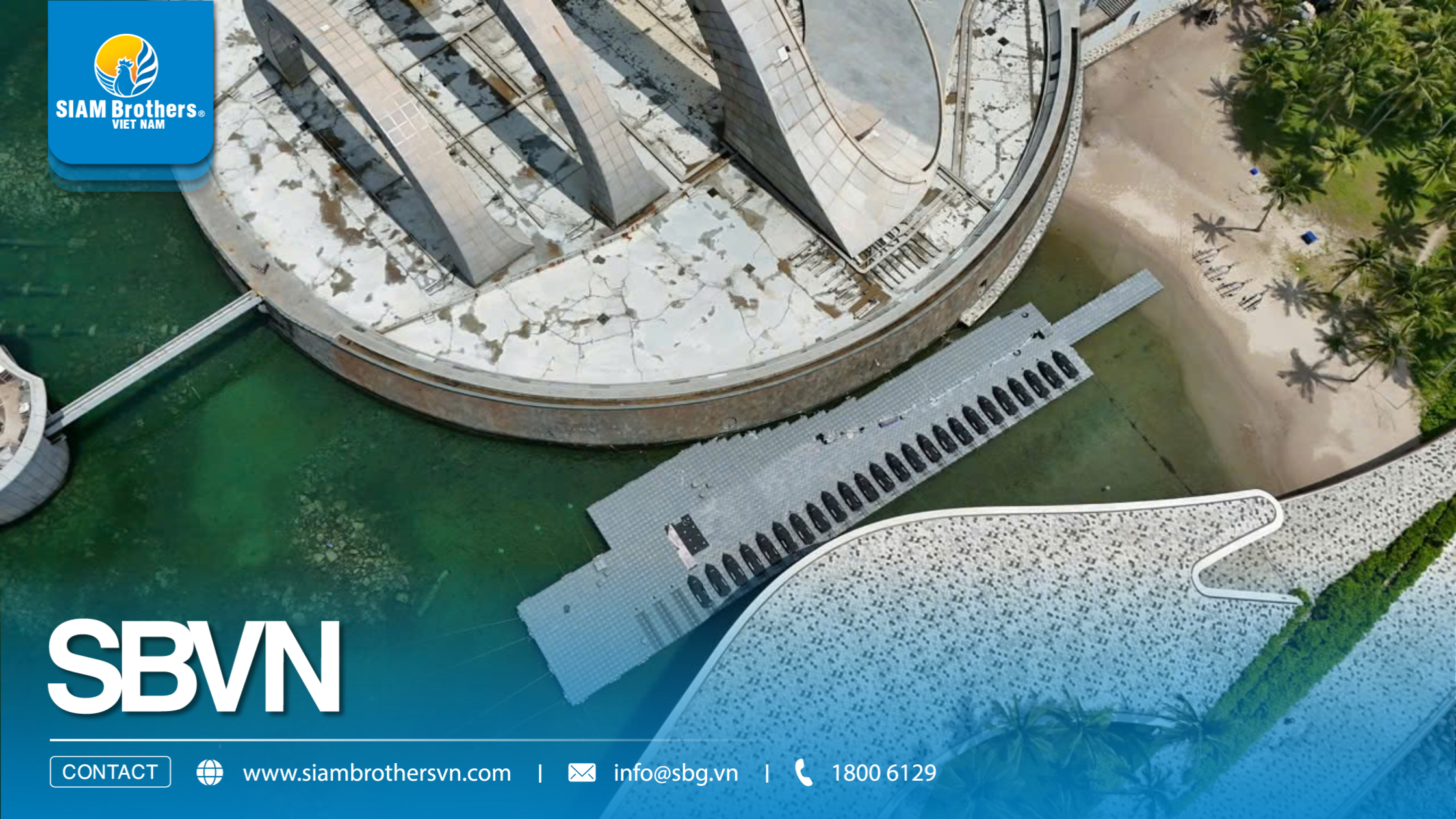
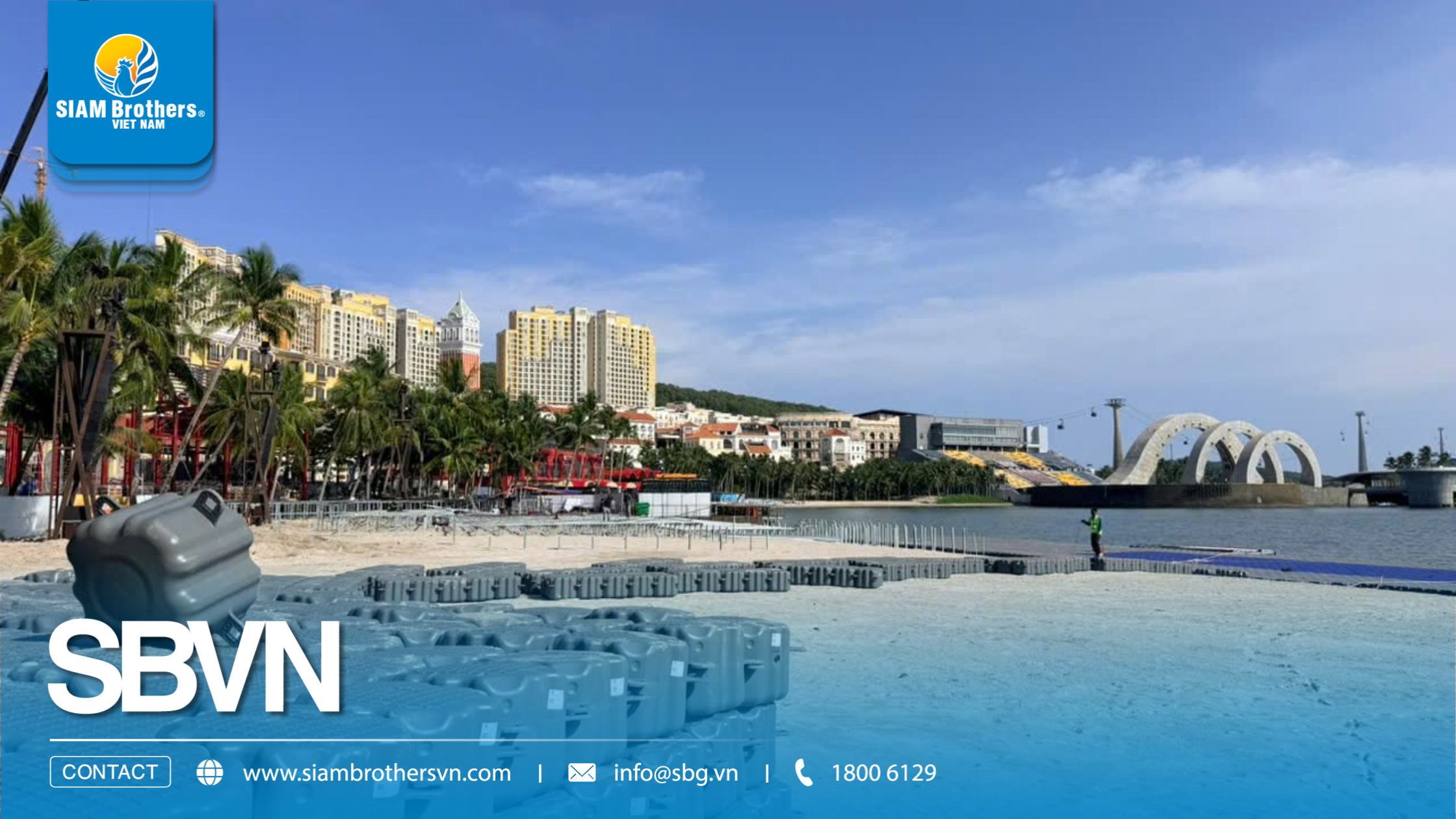
During the floating stage installation in Phu Quoc, the pontoon modules were arranged according to the approved layout and connected using an interlocking male-and-female connection system with specialized locking accessories.
This connection system helps:
The result is an interconnected floating system designed to support the intended platform arrangement.
When it comes to a floating stage, stability and load-bearing performance involve much more than the number of pontoons used.
Several factors must be considered:
Technical Note: A floating pontoon system naturally moves with the water. This does not mean the stage will remain perfectly level under all conditions. Its safe working load and overall stability must be assessed based on engineering specifications, actual site conditions, and the intended operating plan.
Alongside the floating stage, SIAM Brothers Vietnam also implemented a jet ski docking area designed to support the mooring and boarding of personal watercraft.
These two facilities serve different purposes while working together as part of the same waterfront complex:
This combination demonstrates how modular floating infrastructure can support multiple activities within a single marine tourism destination.

Building a floating stage requires careful preparation, especially when the installation takes place in a marine environment.
Before assembly begins, materials, transportation, and installation arrangements need to be coordinated to support project quality and scheduling.
Key preparation activities include:
At Kiss Bridge, SIAM Brothers Vietnam worked with the project teams to bring the floating infrastructure together, one component at a time.
The installation process involved:
What began as individual HDPE pontoons gradually took shape as an integrated floating complex designed to support activities at sea.
A floating stage opens up new possibilities for outdoor events, especially at coastal resorts and waterfront attractions.
Potential applications include:
Depending on the location and operating conditions, these facilities can help tourism businesses diversify their offerings and create more engaging experiences for visitors.
Instead of relying entirely on traditional indoor venues, destination operators can explore new ways to make use of the surrounding waterfront.
Compared with permanent fixed structures, modular pontoon systems offer greater flexibility in platform configuration when properly designed.
Depending on project requirements, investors and developers may consider:
However, any changes to the platform's size, layout, or intended use must be reviewed in terms of load capacity, structural connections, and mooring requirements.
SIAM Brothers Vietnam specializes in manufacturing and distributing ropes for fishing, agriculture, marine applications, and general-purpose use, alongside a range of floating pontoon solutions.
For waterfront infrastructure projects, the company offers products and solutions for various applications, including:
The Kiss Bridge project is a real-world example of how modular HDPE pontoons can be incorporated into marine tourism and entertainment facilities.
It also reflects the potential of these products to support creative applications beyond conventional floating structures.
Thinking about building a floating stage, boat dock, or waterfront experience area?
Before choosing a floating pontoon system, it helps to have a clear understanding of what your project needs.
Here are a few important factors to consider:
With this information, SIAM Brothers Vietnam can review your requirements and recommend suitable floating pontoon products and solutions for your project.
A floating stage is a performance platform built on a buoyant structure that allows it to float on water. It typically consists of floating pontoons or platforms, decking, structural connections, and a mooring system designed for the intended application.
Yes. HDPE pontoons can be used as the foundation for floating stages in marine environments. However, the system must be properly designed to accommodate the required loads, local wave and wind conditions, and operational safety requirements.
The cost of building a floating stage depends on several factors, including the platform area, pontoon type and quantity, deck structure, design loads, mooring system, installation location, and additional project components.
You can contact SIAM Brothers Vietnam to learn more about HDPE floating pontoons, modular connection systems, and supply options tailored to your project requirements.
Whether you're planning a waterfront event venue, floating platform, or marine tourism facility, SIAM Brothers Vietnam can help you explore suitable HDPE pontoon solutions.
Contact SIAM Brothers Vietnam to discuss your project requirements and find out which floating pontoon products best suit your intended application.
Source: SIAM Brothers Vietnam
Contact us:
► Address: 5th floor, VRG Building, 177 Hai Ba Trung Street., Xuan Hoa Ward, Ho Chi Minh City, Vietnam
► Hotline: 1800 6129
► Tel: (+84) 28 38 912 889
► Email: info@sbg.vn
► Follow us for more details at: Facebook - Zalo OA - Tiktok - Youtube - LinkedIn
Download SBVN ID app here:
► CHPlay
► Appstore







Specializing in Agricultural and Fisheries Products & Multipurpose Wire