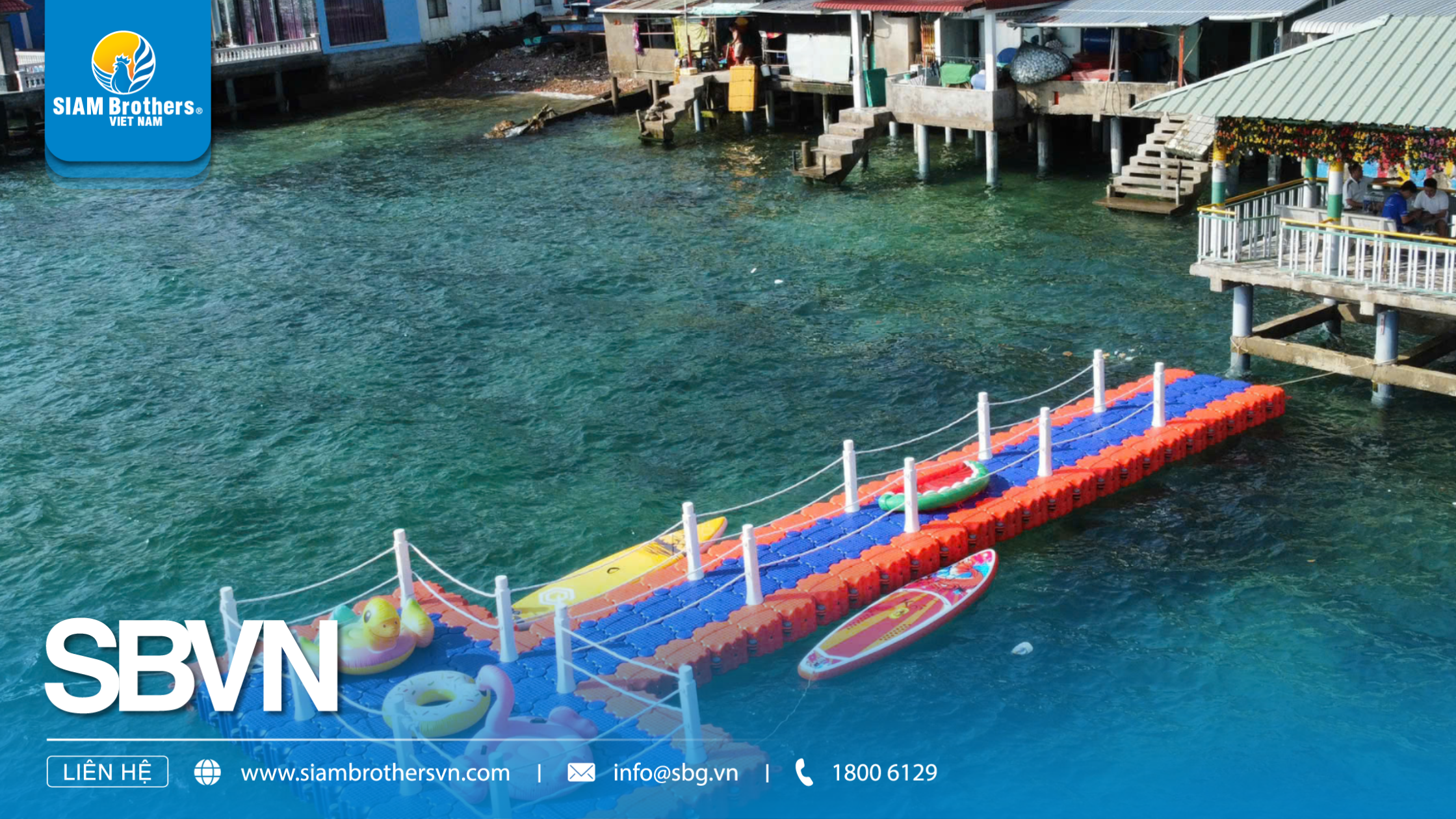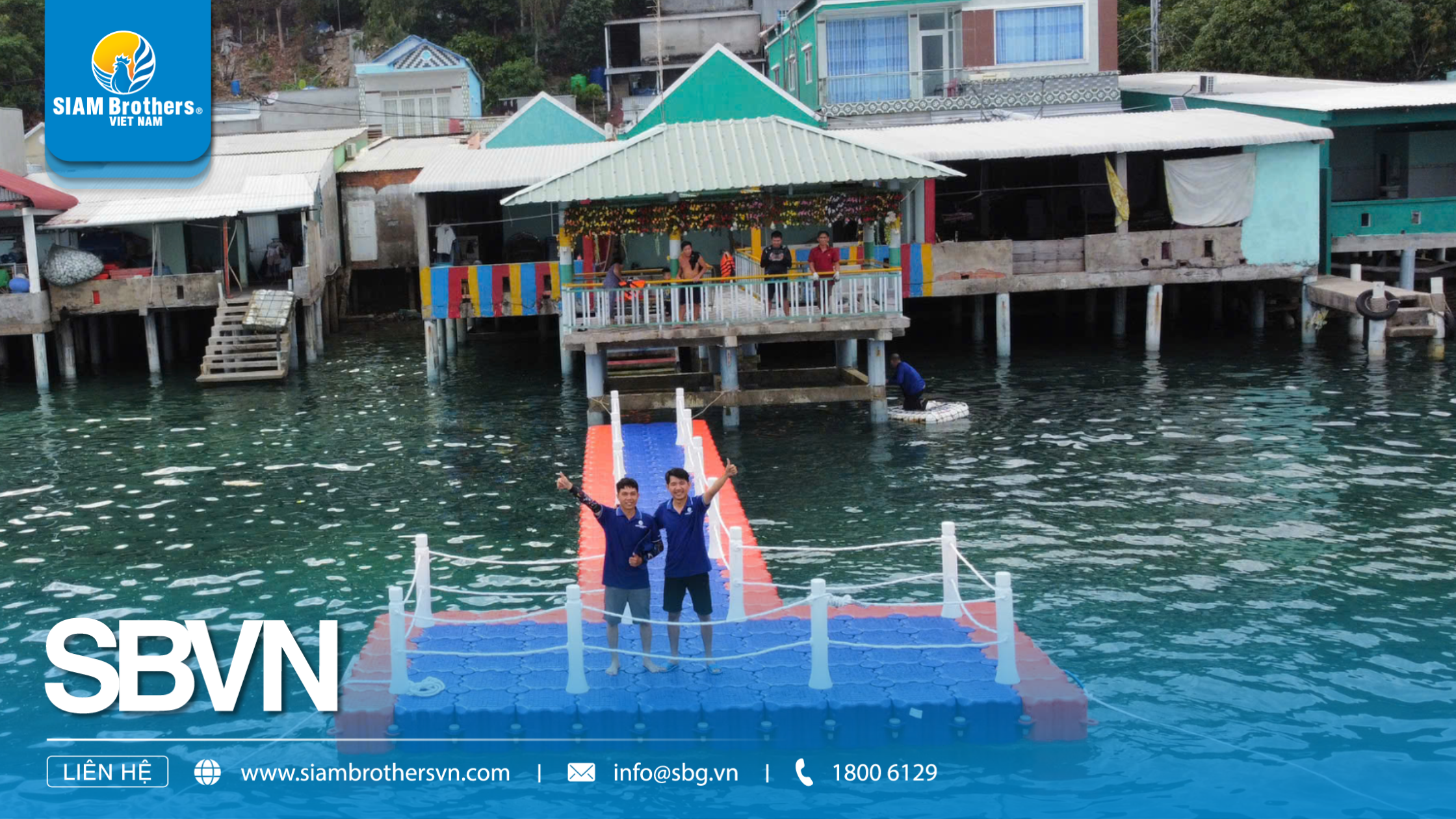
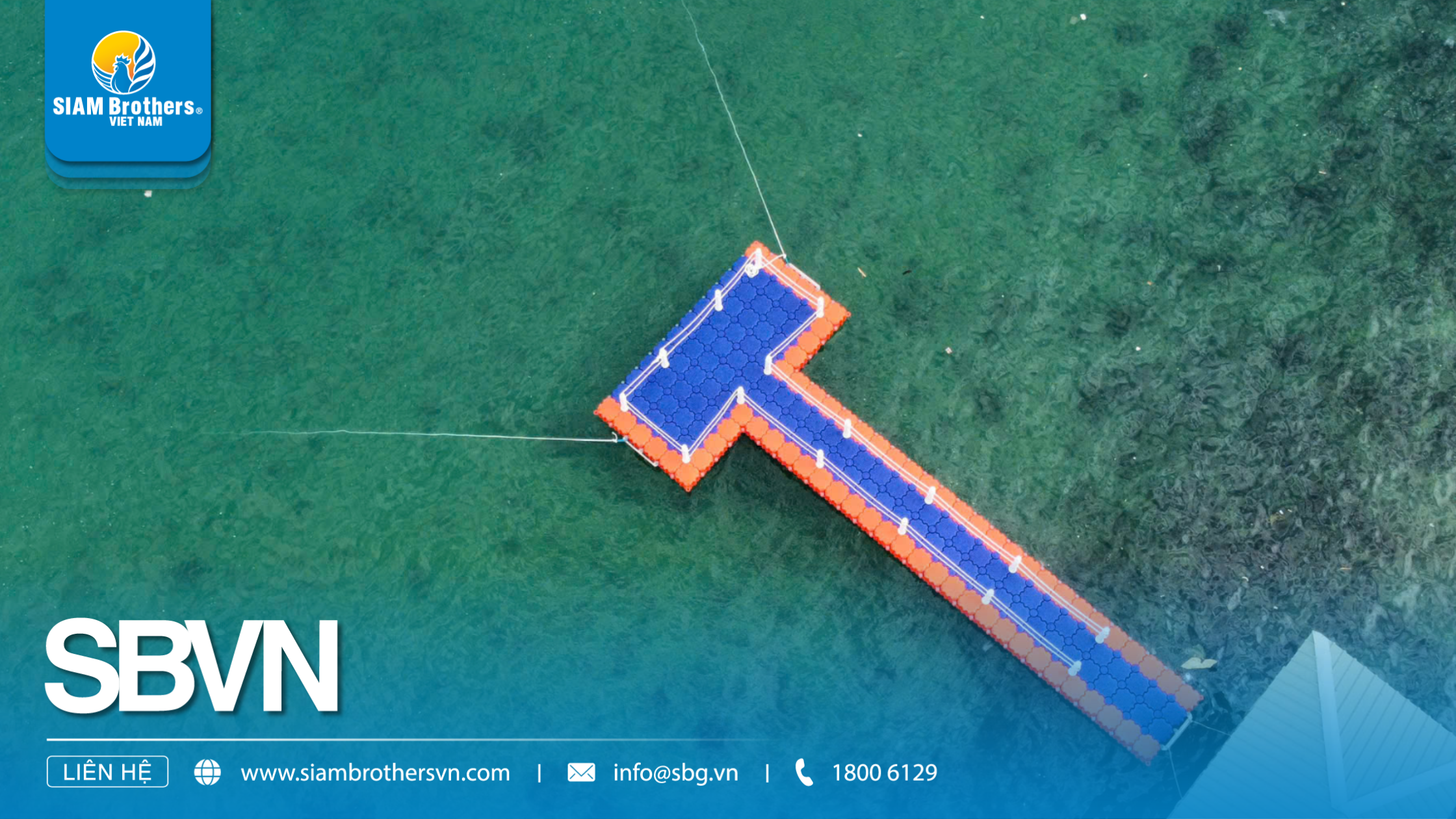
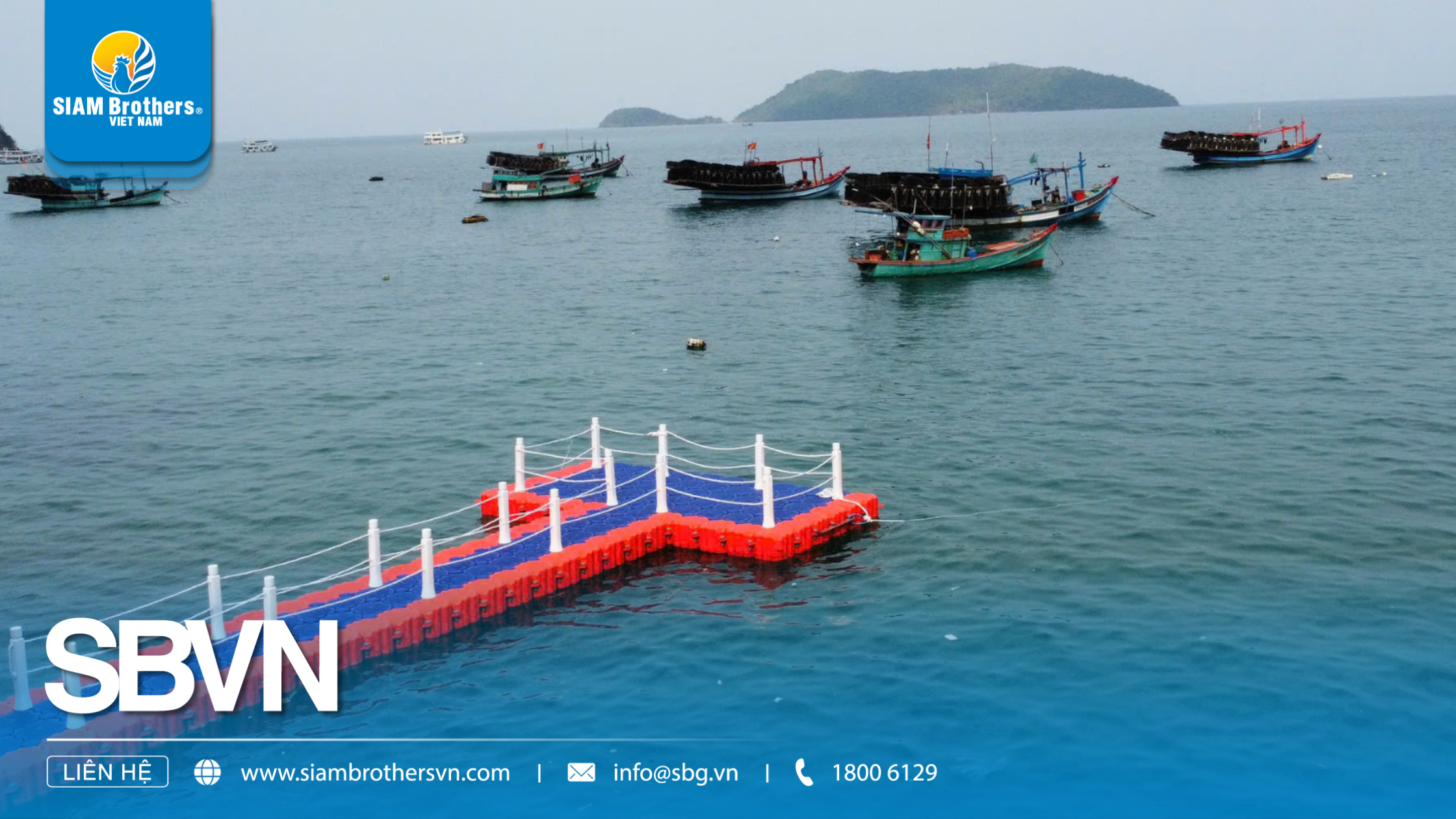
The rapid growth of island and coastal tourism has created an urgent demand for safe, flexible, and sustainable marine connectivity infrastructure. In Nam Du (Kien Giang Province), the HDPE Floating Pontoon Bridge connecting to the sea has emerged as a key solution, linking the mainland with tourist attractions, boat terminals, and aquaculture areas.
Implemented by SIAM Brothers Vietnam, this project not only addresses waterway transportation challenges but also opens up long-term development opportunities for local tourism and the coastal economy.
1. Overview of the HDPE Floating Pontoon Bridge Project in Nam Du
1.1 Project Background
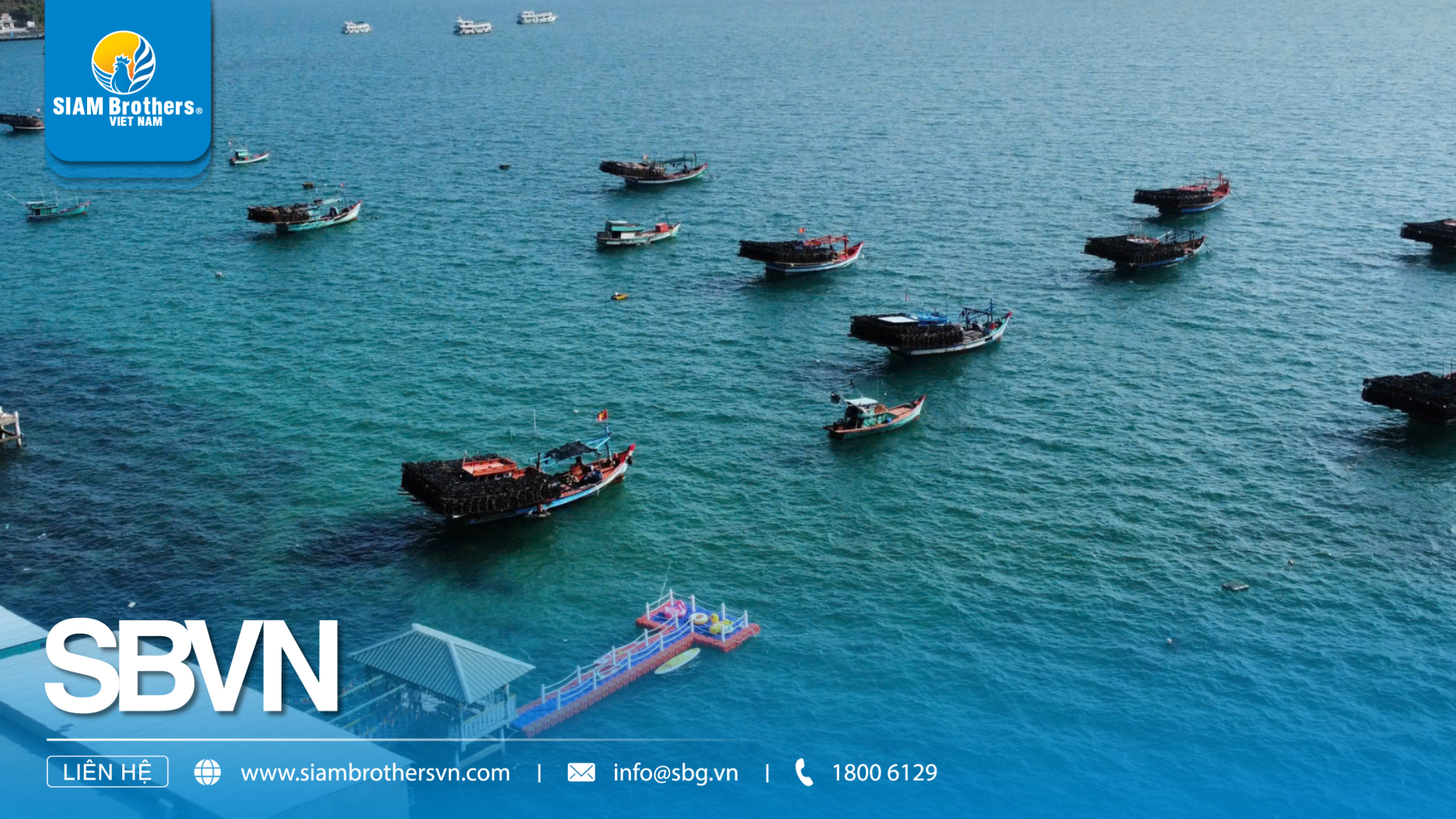
Nam Du is an archipelago with significant potential for eco-tourism and marine services. However, connectivity between the mainland and smaller islands has remained limited, relying heavily on boats.
Practical demands include:
- Providing safe mainland–island access for tourists
- Creating stable floating walkways for local residents and fishermen
- Reducing investment costs compared to conventional concrete bridges
- Minimizing negative impacts on the marine environment


1.2 The Role of the HDPE Floating Pontoon Bridge
Within this context, the HDPE Floating Pontoon Bridge was selected due to its high adaptability to tidal fluctuations and saline environments.
This solution enables:
- Pedestrian access and light transportation across water surfaces
- Seamless connection between tourist areas, boat piers, and coastal homestays
- Support for fisheries operations and marine logistics services
2. What Is an HDPE Floating Pontoon Bridge?
2.1 Definition
An HDPE Floating Pontoon Bridge is a floating bridge system that uses HDPE plastic pontoons as the primary load-bearing structure, combined with steel frames or engineered plastic components. The system is securely anchored using mooring ropes, chains, and specialized marine accessories.
2.2 Basic Structure
A standard HDPE Floating Pontoon Bridge connecting to the sea includes:
- One-piece HDPE pontoons resistant to UV radiation and corrosion
- Galvanized steel or stainless-steel connection frames
- Anti-slip HDPE decking with high load-bearing capacity
- Mooring systems, including ropes, chains, and marine fittings


3. Why Nam Du Chose the HDPE Floating Pontoon Bridge
3.1 Suitability for Island and Marine Conditions
Nam Du features:
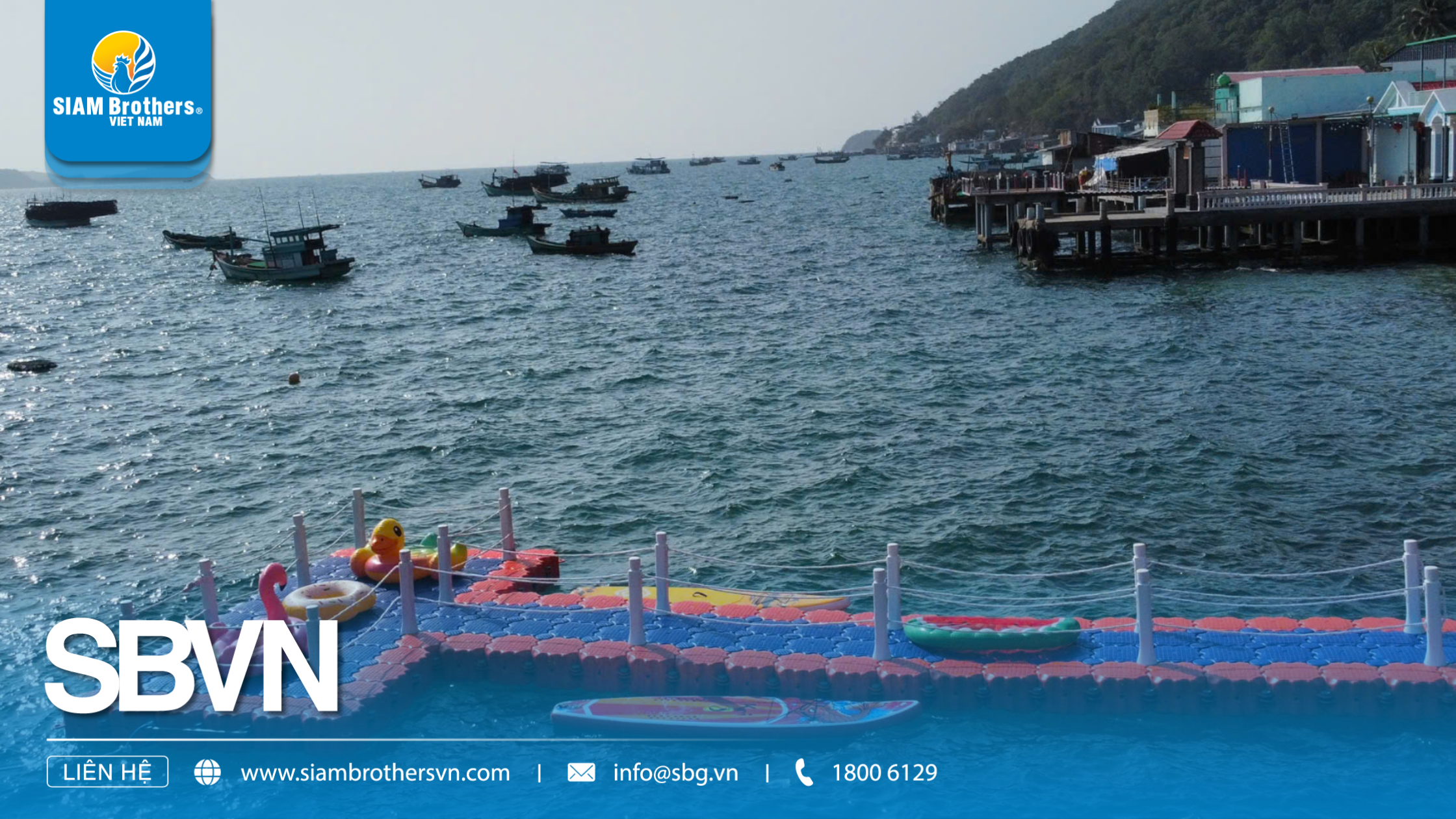
- Seasonal variations in waves and winds
- Frequent tidal fluctuations
- Complex seabed topography
The HDPE Floating Pontoon Bridge offers:
- Flexible buoyancy that adapts to changing water levels
- Reduced pressure on the seabed
- Stable performance in saltwater environments
3.2 Economic Efficiency
Compared to fixed concrete bridges, the HDPE Floating Pontoon Bridge solution:
- Reduces initial investment costs
- Shortens construction time
- Allows for easy installation, dismantling, expansion, or relocation

4. Key Advantages of the HDPE Floating Pontoon Bridge
4.1 High Durability in Marine Environments
- HDPE material is resistant to saltwater corrosion
- UV-resistant, preventing brittleness under prolonged sun exposure
4.2 User Safety
- Anti-slip surface design
- Stable load-bearing performance
- Flexible structure that minimizes vibration during movement
4.3 Environmental Friendliness
- No seabed intrusion
- Does not obstruct natural water flow
- Well aligned with sustainable eco-tourism development goals

5. The Role of the HDPE Floating Pontoon Bridge in Nam Du Tourism Development
5.1 Enhancing Tourist Experiences
The HDPE Floating Pontoon Bridge helps:
- Create floating walking paths over the sea
- Connect boat terminals with resorts and homestays
- Improve visitor experiences at eco-tourism destinations
5.2 Increasing Service Value
The pontoon bridge system contributes to:
- Attracting tourists through convenience and safety
- Expanding coastal dining and entertainment services
- Enhancing the overall image of Nam Du as a marine tourism destination

6. Ideal Applications for the HDPE Floating Pontoon Bridge Solution
This solution is particularly suitable for:
- Marine and island tourism investors
- Coastal resorts and beachfront developments
- Fishermen and aquaculture cooperatives requiring floating access systems
7. Why Choose SIAM Brothers Vietnam for HDPE Floating Pontoon Bridges?
Clients choose SIAM Brothers Vietnam because of:
- High-quality, standardized HDPE pontoon products
- Customized design solutions tailored to real-world project conditions
- Professional technical support and transparent HDPE pontoon warranty policies
- Proven credibility through successfully implemented pontoon bridge projects

The HDPE Floating Pontoon Bridge project in Nam Du clearly demonstrates the effectiveness of floating infrastructure solutions in island tourism development. With its durability, flexibility, and environmental adaptability, the HDPE Floating Pontoon Bridge not only solves connectivity challenges but also enhances tourism experiences and supports local economic growth.
For businesses or local authorities seeking a sustainable floating bridge solution, SIAM Brothers Vietnam is ready to support you from consultation to real-world implementation.
Source: SIAM Brothers Vietnam
Contact us:
► Address: 5th floor, VRG Building, 177 Hai Ba Trung Street., Xuan Hoa Ward, Ho Chi Minh City, Vietnam
► Hotline: 1800 6129
► Tel: (+84) 28 38 912 889
► Email: info@sbg.vn
► Follow us for more details at: Facebook - Zalo OA - Tiktok - Youtube - LinkedIn
Download SBVN ID app here:
► CHPlay
► Appstore