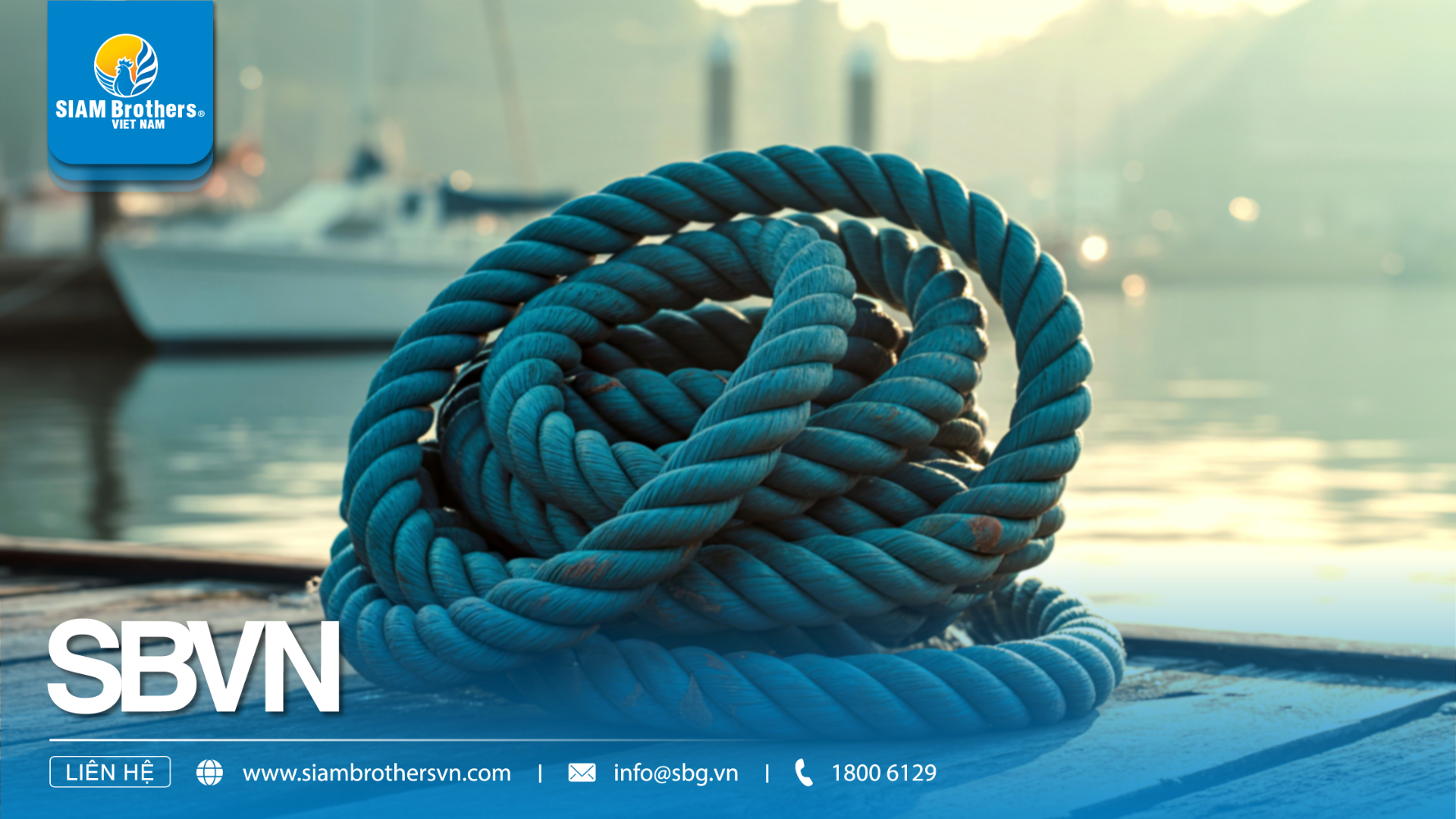
A Marine Mooring Rope is always one of the most critical safety components during any mooring operation, especially when vessels operate in deep waters, windy areas, or remain berthed for extended periods. Many vessel owners still choose mooring ropes based on habit rather than technical criteria, which can lead to anchor dragging, premature wear, or insufficient load capacity.
In this article, SIAM Brothers Vietnam helps you clearly understand the differences between PP rope, Nylon rope, and steel chain—from tensile strength and elasticity to durability in saltwater environments. You will also learn how to select the most suitable mooring solution for fishing vessels, service boats, small boats, or high-capacity ships. This practical and comprehensive guide is designed to optimize costs, extend rope lifespan, and ensure vessel safety under all operating conditions.
1. What Is a Marine Mooring Rope? Its Role in Maritime Safety
A Marine Mooring Rope is the connection between a vessel and its anchor, designed to secure the vessel in position and prevent drifting caused by waves, wind, or strong currents. Depending on vessel size and operational purpose, mooring ropes may be made from PP fiber, Nylon fiber, or combined with a steel chain system. When selected to the correct standard, a mooring rope ensures vessel stability throughout the mooring period and extends the service life of the entire anchoring system.
Core Functions in Maritime Operations
1.1 Maintaining Vessel Position in All Water Conditions
- Minimizes drifting, rotation, or misalignment during strong winds.
- Keeps the vessel precisely positioned at anchorage areas, channels, or fixed mooring zones.
1.2 Protecting Vessel Structure During Long-Term Mooring
- Reduces vibration and sudden tensile loads on the bow.
- Prevents damage to the hull, machinery, and deck equipment during changing weather conditions.
1.3 Enhancing Safety for Crew and Operations
- Improves safety during cargo handling, net hauling, or voyage preparation.
- Reduces collision risks with nearby vessels or obstacles at anchorage points.

2. Key Factors to Consider When Choosing a Marine Mooring Rope
2.1 Vessel Size and Load Capacity
- Selecting the correct Marine Mooring Rope starts with vessel dimensions and displacement, which determine rope diameter, material, and tensile strength.
- Large vessels require high-strength ropes such as Nylon or rope–chain combinations to distribute anchoring loads effectively.
- Small boats and nearshore fishing vessels can use PP rope to optimize cost and buoyancy.
- Higher loads require larger rope diameters to prevent failure under strong wave conditions.
2.2 Operating Area and Environmental Conditions
Environmental factors directly affect rope durability, abrasion resistance, and long-term performance.
2.2.1 Offshore Marine Environments
- Large waves and strong winds require highly elastic materials such as Nylon to absorb shock loads.
- Chain combinations help anchors set deeper and remain stable.
2.2.2 Freshwater, Rivers, and Lagoons
- PP rope is suitable due to its lightweight structure, easy handling, and cost efficiency.
- Reduced salt exposure helps maintain material durability.
2.3 Elasticity and Abrasion Resistance
- Elasticity determines how effectively a Marine Mooring Rope absorbs dynamic loads caused by vessel movement.
- Nylon offers excellent elasticity, ideal for areas with strong currents and wave action.
- PP has lower elasticity but floats on water, making it suitable for small vessels or nearshore anchoring.
- In rocky seabeds or high-current zones, combining rope with chain reduces abrasion and extends rope life.
2.4 Rope Length and Mooring Configuration
- Rope length plays a crucial role in anchor holding performance.
- The recommended rope length–to–water depth ratio ranges from 5:1 to 7:1, depending on conditions.
- Large vessels or long-term anchoring require complete systems including rope, chain, and connectors.
- Proper rope length improves anchor penetration and stability in adverse weather.
2.5 Intended Use and Operating Frequency
- Actual usage requirements help vessel owners select the appropriate rope material and system configuration.
- Offshore fishing vessels require durable, salt-resistant ropes with high elasticity.
- Service boats, tourist vessels, and speedboats need flexible systems for quick deployment and retrieval.
- For long-term mooring, UV-resistant ropes or rope–chain combinations are recommended to extend service life.
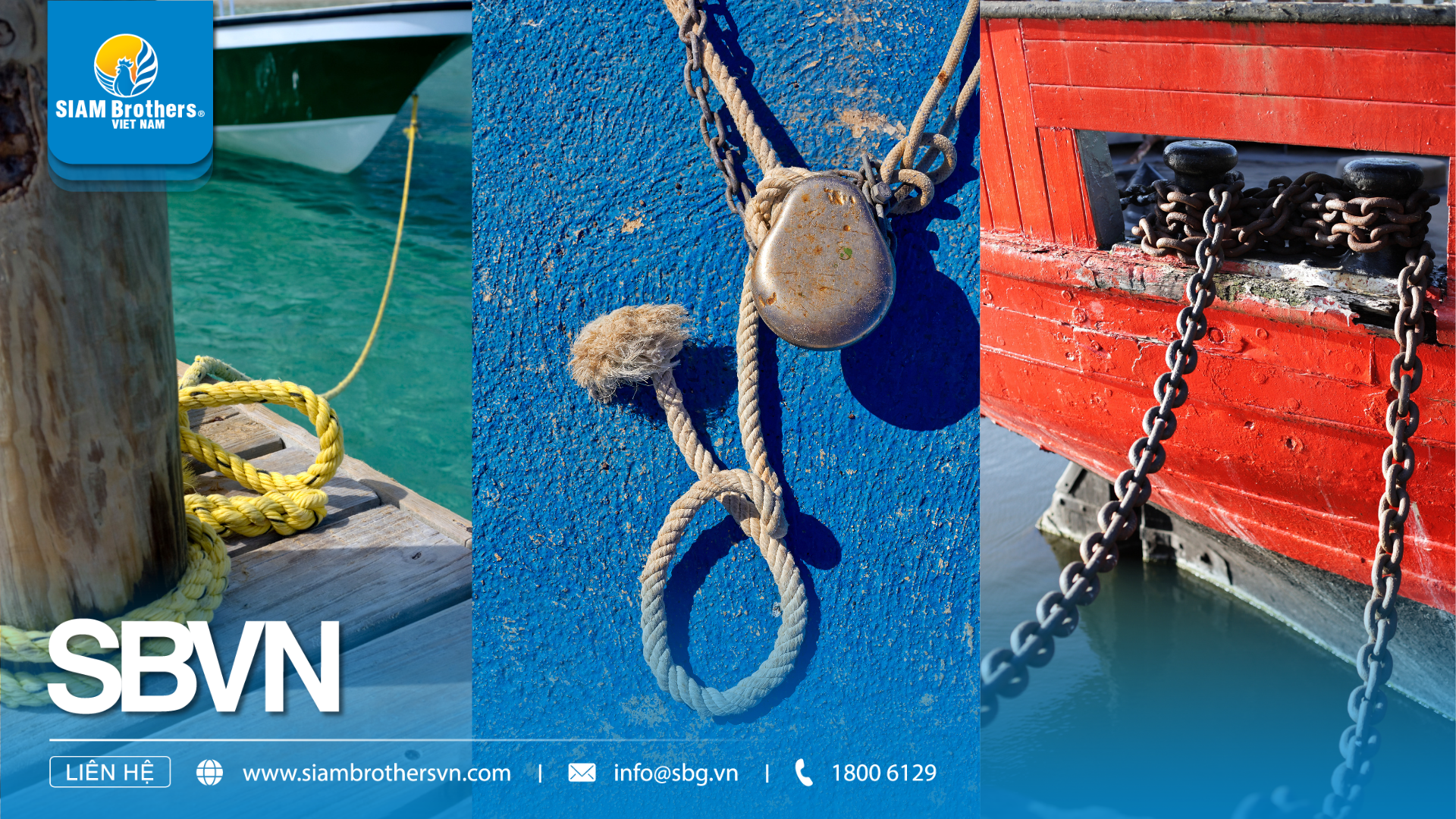
3. Comparison of Three Common Mooring Solutions: PP – Nylon – Chain
| Criteria |
PP Rope |
Nylon Rope |
Mooring Chain |
| Material properties |
Lightweight, floats |
High elasticity, strong |
Heavy, excellent seabed grip |
| Tensile strength |
Medium |
High |
Very high |
| Elasticity |
Low |
Highest |
None |
| Abrasion resistance |
Low |
Good |
Excellent |
| Marine environment resistance |
Stable, non-absorbent |
Highly salt-resistant |
Extremely durable |
| Handling ease |
Easy |
Easy but heavier when wet |
Difficult without winch |
| Cost |
Low |
Medium |
High |
| Suitable applications |
Small boats, nearshore vessels |
Medium to large vessels, offshore use |
Large vessels, long-term anchoring |
4. How to Choose the Right Marine Mooring Rope for Each Type of Vessel
4.1 Small Vessels: Dinghies, Skiffs, Fishing Boats, Mini Tourist Boats
4.1.1 Selection Criteria
- Priority should be given to lightweight ropes that are easy to handle.
- High load capacity is not required.
- High buoyancy is preferred for convenient use in nearshore conditions.
4.1.2 Recommended Rope Type
- PP rope is the optimal choice thanks to its light weight and cost efficiency.
- A short chain section can be added when anchoring on hard seabeds to improve holding power.
4.1.3 When to Replace the Rope
- When the fibers become fuzzy, discolored, or lose tensile strength.
- When the rope shows signs of cuts, cracks, or brittleness caused by prolonged sun exposure.
4.2 Medium-Power Vessels: Nearshore Fishing Boats, Tourist Boats, Medium-Capacity Vessels
4.2.1 Selection Criteria
- Good elasticity is required to absorb shock loads.
- Better resistance to water, salt, and abrasion compared to PP rope is necessary.
4.2.2 Recommended Rope Type
- Nylon rope is the preferred option due to its superior elasticity and tensile strength.
- Adding a chain section helps create a more stable anchoring point and reduces stress on the main rope.
4.2.3 Safety Guidelines
- The minimum rope length should be 5–7 times the water depth at the anchorage.
- Regular inspection of connectors, shackles, and chain sections is essential.

4.3 Large Vessels: Offshore Fishing Vessels, Maritime Service Ships, Cargo Vessels
4.3.1 Selection Criteria
- Ability to withstand very high loads.
- Continuous operation in harsh saltwater environments.
- Strong seabed grip and high overall stability are required.
4.3.2 Recommended Rope Type
- Mooring chain is the standard solution thanks to its exceptional load-bearing capacity.
- Combined with Nylon rope to increase elasticity and reduce shock loads on the anchoring system.
4.3.3 Technical Considerations
- Chain length should be at least 3–5 times the water depth.
- Periodic inspection of chain links, connectors, and anchor windlass components is required.
5. Frequently Asked Questions About Marine Mooring Rope
5.1 Which material provides the best durability for a Marine Mooring Rope?
- Material selection depends on anchoring purpose and environmental conditions.
- Nylon rope is the best choice when high elasticity is required to reduce shock loads in rough seas.
- PP rope is suitable for short-term anchoring, calm waters, or small vessels.
- Steel chain is ideal for large vessels requiring strong seabed holding power.
- Offshore fishing vessels should prioritize ropes with certified strength and abrasion resistance.
5.2 What components are included in a standard Marine Mooring Rope system?
- Main mooring rope or chain.
- Anchor or anchor arm depending on seabed conditions.
- Connectors, D-shackles, anti-twist swivels, and a chain leader near the anchor.
- The vessel’s mooring point must meet the required working load standards.
- Combining rope with a short chain section significantly improves anchoring performance, especially in deep water or muddy seabeds.
5.3 How often should a Marine Mooring Rope be replaced?
- Replacement frequency depends on usage intensity and weather exposure.
- PP rope should typically be replaced every 12–18 months if used outdoors continuously.
- Nylon rope has a longer service life but requires regular abrasion checks.
- Steel chain must be inspected for corrosion and wear at each link.
- Ropes showing severe fraying, discoloration, or reduced elasticity should be replaced immediately.
5.4 What advantages do SIAM Brothers’ Marine Mooring Ropes offer compared to the market?
- Manufactured from virgin materials to ensure consistency and high durability.
- Full product range including PP, PE, and Nylon for different industries and applications.
- Working loads are controlled according to international standards with transparent technical specifications.
- Optimized for abrasion resistance, UV protection, and harsh marine environments.
- Wide distribution network with accurate technical consultation for each vessel type.

A Marine Mooring Rope plays a vital role in ensuring safe anchoring, especially in highly dynamic marine environments. Selecting the correct PP rope, Nylon rope, or steel chain not only keeps vessels securely positioned but also minimizes the risk of damage caused by waves, wind, and strong currents. Based on vessel type, load capacity, and operating conditions, operators should prioritize ropes with appropriate working loads, high abrasion resistance, and clearly certified technical standards. If you need professional advice or want to select the right mooring solution for your vessel, contact SIAM Brothers Vietnam for expert support and fast quotations.
Source: SIAM Brothers Vietnam
Contact us:
► Address: 5th floor, VRG Building, 177 Hai Ba Trung Street., Xuan Hoa Ward, Ho Chi Minh City, Vietnam
► Hotline: 1800 6129
► Tel: (+84) 28 38 912 889
► Email: info@sbg.vn
► Follow us for more details at: Facebook - Zalo OA - Tiktok - Youtube - LinkedIn
Download SBVN ID app here:
► CHPlay
► Appstore