
A Jet Ski Dock is becoming an essential infrastructure component at coastal resorts, marinas, and water sports business areas as the demand for safe and professional operations continues to grow. Instead of temporary mooring methods that can cause scratches, capsizing, or safety risks for watercraft, investors today prioritize dedicated Jet Ski Dock systems designed with stable structures, anti-slip surfaces, and the ability to withstand coastal waves and wind.
This modern docking solution offers long-term durability and safety, making it suitable for investment in riverside, coastal, and marina environments. In the following article, SIAM Brothers Vietnam explores the key benefits and technical standards of a modern Jet Ski Dock system.
1. What Is a Jet Ski Dock? Why Is a Dedicated Docking System Necessary?
A Jet Ski Dock is a specialized mooring system designed specifically for personal watercraft such as Jet Skis. It helps secure, protect, and support safe operation during docking at marinas, coastal resorts, or riverside tourism areas.
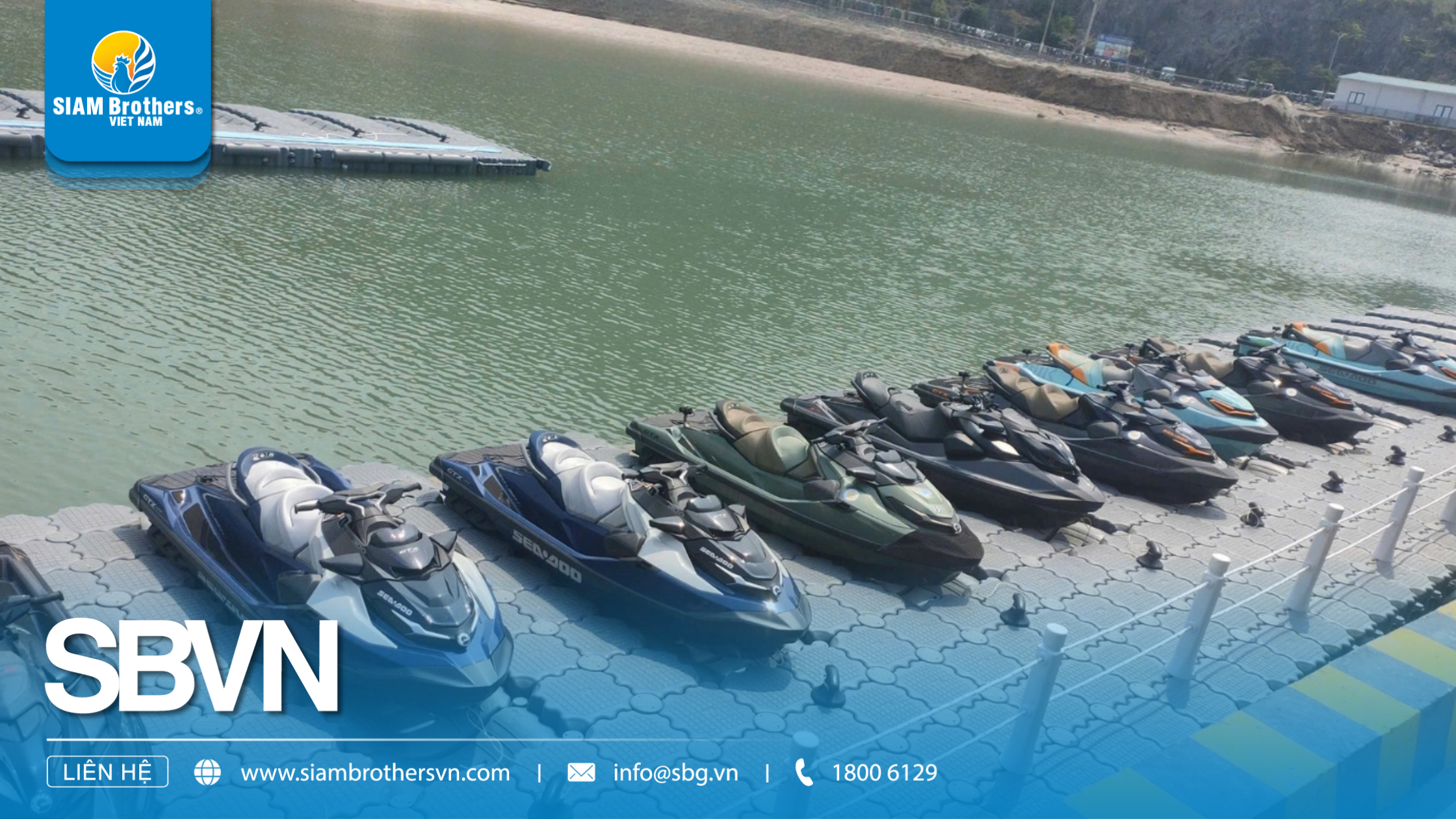
A modern Jet Ski Dock typically includes the following features:
- Floating or semi-floating structure that adapts to changing water levels and tidal conditions
- Anti-slip surface design to ensure safe boarding and disembarking
- High load capacity and impact resistance when exposed to waves or heavy operational traffic
- Integrated anchoring system that allows flexible connection to existing piers or marinas
Why Invest in a Dedicated Jet Ski Dock?
1.1 Reducing Risks from Improvised Jet Ski Mooring
Temporary docking methods such as rope tying, wooden docks, or traditional concrete piers may lead to various risks:
- Jet Skis may collide, scratch, or overturn during strong waves
- Hulls and engines can deteriorate due to prolonged contact with saltwater
- Increased safety risks for tourists and operating staff
- Reduced lifespan of watercraft and higher maintenance costs
1.2 Meeting Professional Operational Standards in Resorts and Marinas
Investing in a dedicated Jet Ski Dock helps operators:
- Optimize docking space and organize Jet Skis systematically
- Speed up boarding and disembarking processes
- Improve customer experience, especially for Jet Ski rental services
- Present a professional image that meets tourism operation standards
1.3 Suitable for Vietnam’s Coastal Environmental Conditions
Under tropical climate conditions with saltwater exposure and complex tidal movements, a modern Jet Ski Dock must:
- Resist corrosion, UV radiation, and harsh weather conditions
- Maintain stability under coastal waves and estuary currents
- Operate reliably over long periods with minimal maintenance costs

2. Why Is an HDPE Jet Ski Dock the Optimal Solution for Coastal Resorts?
In real-world operations at coastal resorts, marinas, and estuaries, a Jet Ski Dock is constantly exposed to saltwater, tides, and waves. HDPE plastic material is widely selected because it offers properties suitable for Vietnam’s geographical and climatic conditions:
- Resistant to saltwater corrosion and does not rust over time
- UV-resistant and capable of withstanding high temperatures in coastal environments
- Maintains structural stability when water levels fluctuate
- Performs reliably in rivers, seas, and estuarine environments
- 2.2 Structural Durability and Load Capacity for High-Frequency Jet Ski Operations
2.2.1 Impact Resistance and Structural Strength
Compared with concrete or metal docks, an HDPE Jet Ski Dock offers clear advantages:
- Floating structures distribute loads evenly
- Reduced risk of cracking when Jet Skis dock or when exposed to waves
- Lower chance of watercraft damage during mooring
2.2.2 Supporting Heavy Operational Demand at Tourism Areas
HDPE Jet Ski Dock systems are designed to:
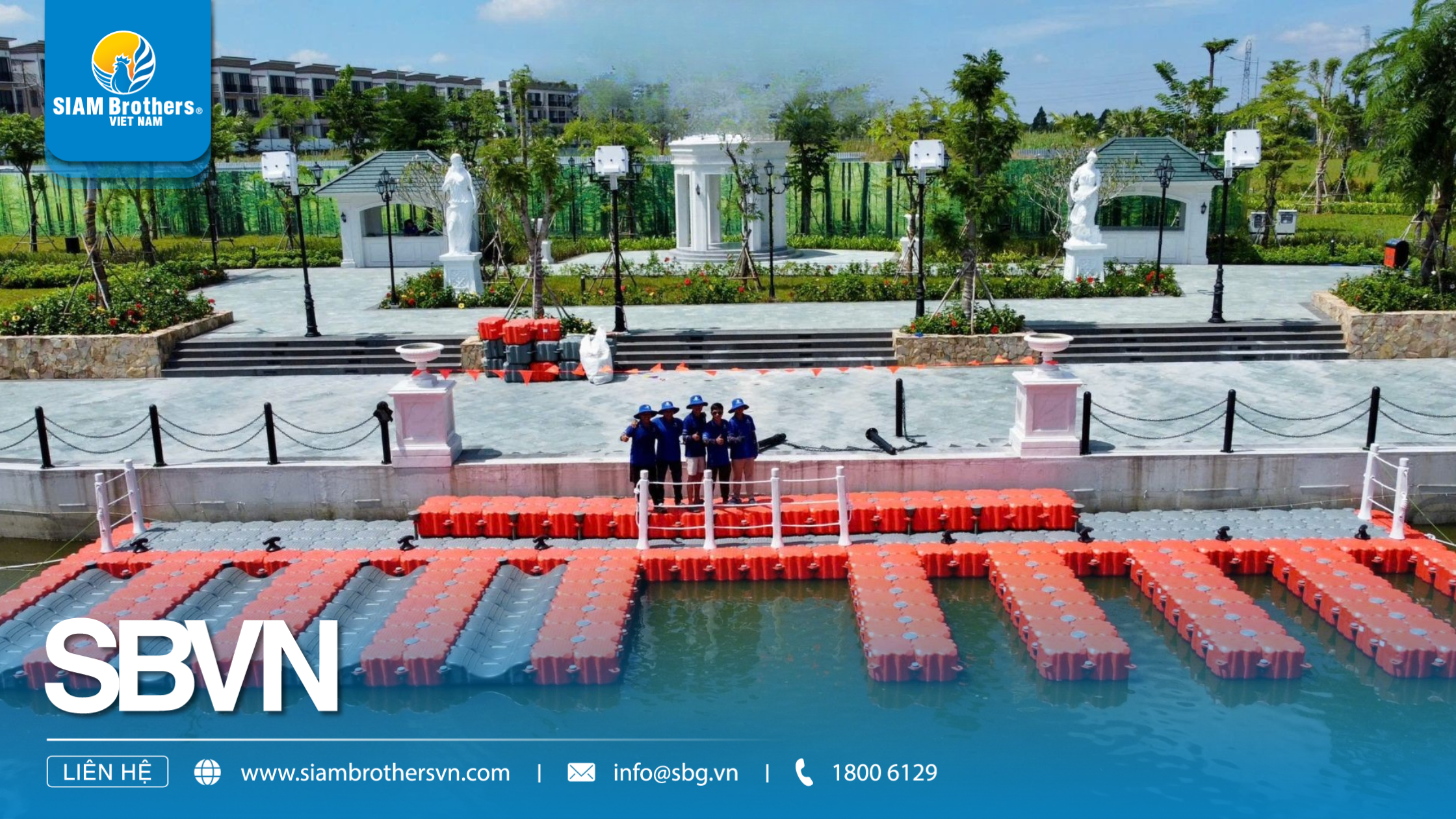
- Support the combined weight of Jet Skis and operators
- Accommodate high-frequency use at rental service locations
- Maintain sta3bility even when multiple watercraft dock simultaneously

2.3 Safety and User Experience
2.3.1 Anti-Slip Surface for Safe Boarding
Safety is a top priority in tourism environments. An HDPE Jet Ski Dock offers:
- Non-slip surfaces that reduce the risk of slipping
- Easy access for both tourists and operational staff
- Lower accident risks in wet or windy conditions
2.3.2 Enhancing Water Sports Tourism Services
Investing in a dedicated Jet Ski Dock allows operators to:
- Improve operational efficiency
- Reduce waiting time for customers
- Enhance the service image and standards of the resort or marina
2.4 Modular Design for Flexible Installation and Expansion
One of the key advantages of an HDPE Jet Ski Dock is its flexibility for different project requirements:
- Modular structure adaptable to various site layouts
- Easy expansion when the number of Jet Skis increases
- Fast installation with minimal disruption to existing marina operations
This flexibility is particularly valuable for coastal tourism areas that are expanding their services.
2.5 Long-Term Investment Efficiency
From both financial and operational perspectives, an HDPE floating Jet Ski Dock system provides:
Long service life with minimal maintenance requirements
No recurring costs for anti-rust treatment or repainting
Suitable for long-term infrastructure investment in resorts and marinas
3. Technical Standards Required for a Safe Jet Ski Dock
3.1 Load Capacity and Structural Stability
3.1.1 Supporting Jet Ski and Operator Weight
A standard Jet Ski Dock must:
- Support the weight of Jet Skis, fuel, and operators simultaneously
- Distribute loads evenly across the dock structure
- Prevent sinking, tilting, or structural deformation during docking
3.1.2 Stability in Waves and Tidal Conditions
For coastal and estuarine environments in Vietnam, the dock should:
- Maintain balance when water levels rise and fall
- Reduce excessive movement caused by waves or passing vessels
- Provide stable mooring during continuous operations
3.2 Materials Suitable for Saltwater and Harsh Weather
3.2.1 Corrosion and Material Aging Resistance
Key material standards for a coastal Jet Ski Dock include:
- Resistance to saltwater corrosion and marine chemicals
- Protection against UV radiation, high temperatures, and humidity
- Long-term mechanical durability
3.2.2 Long-Term Durability and Low Maintenance Costs
From an investment perspective, the dock should:
- Minimize repair and replacement costs
- Require no periodic repainting or surface treatment
- Support long-term operation in tourism areas and marinas
3.3 Safety for Users and Jet Ski Watercraft
3.3.1 Anti-Slip Surface and Easy Boarding
A safe Jet Ski Dock should ensure:
- High surface friction to prevent slipping when wet
- Convenient boarding for tourists and technical staff
- Reduced accident risks during operation
3.3.2 Protection Against Jet Ski Damage
Protection standards include:
- Dock structures that absorb impact during docking
- Reduced scratches and hull damage
- Stable watercraft positioning during long-term mooring
3.4 Jet Ski Dock Anchoring and Connection System
3.4.1 Secure Anchoring Under Different Conditions
A reliable Jet Ski Dock should include:
- Anchoring systems suitable for riverbeds, seabeds, or marina areas
- Stability against waves and water currents
- Strong connections between modular dock units
3.4.2 Easy Installation, Removal, and Expansion
Operational flexibility is achieved through:
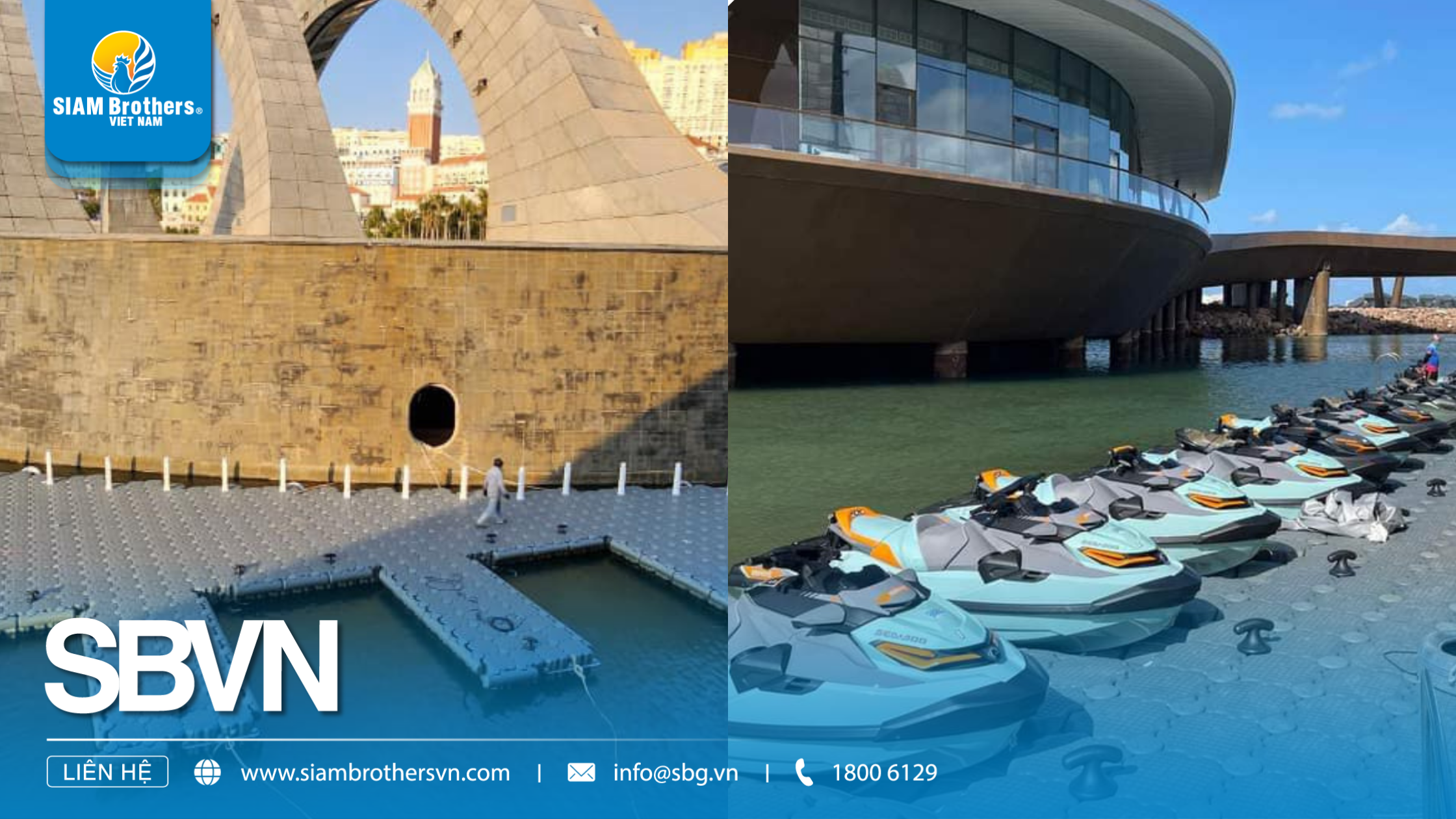
- Modular designs that simplify installation and adjustments
- Easy expansion when additional Jet Skis are added
- Minimal disruption to ongoing tourism operations

4. Frequently Asked Questions About Jet Ski Dock
4.1 Is a Jet Ski Dock suitable for coastal areas with strong waves?
A Jet Ski Dock can absolutely be used in coastal areas with waves, provided that it meets the appropriate technical standards:
- A stable floating structure that effectively distributes loads
- An anchoring system designed to match seabed conditions
- A flexible modular design that minimizes excessive movement
- Materials resistant to long-term exposure to saltwater and coastal weather conditions
Selecting the right Jet Ski Dock configuration is a critical factor that determines the system’s real-world operational performance and safety.
4.2 What is the average lifespan of an HDPE Jet Ski Dock?
Under typical operating conditions in Vietnam, an HDPE Jet Ski Dock can achieve a long service life thanks to:
- Excellent corrosion and material aging resistance
- Stable durability when exposed continuously to saltwater and UV radiation
- The ability to maintain structural integrity without complex maintenance requirements
However, the actual lifespan of a Jet Ski Dock depends on installation conditions, environmental factors, and operational intensity.
4.3 Does a Jet Ski Dock require frequent maintenance?
Compared with traditional docking structures, an HDPE Jet Ski Dock offers several maintenance advantages:
- Reduced need for painting or anti-rust treatment
- Lower repair frequency due to cracking or corrosion
- Easy inspection and routine cleaning
This makes the system particularly beneficial for coastal resorts and marinas that operate year-round.
4.4 Can a Jet Ski Dock be expanded when the number of watercraft increases?
Scalability is one of the major advantages of a modern Jet Ski Dock system:
- Modular designs allow flexible assembly and reconfiguration
- Easy expansion as operational demand grows
- Dock extensions can be installed without disrupting existing marina or resort operations
This feature is especially suitable for projects that plan to expand Jet Ski services in phases.
4.5 Is a Jet Ski Dock suitable for long-term investment?
From both investment and operational perspectives, a Jet Ski Dock provides several long-term benefits:
- Long-term operational efficiency
- Low maintenance costs
- High structural stability in coastal environments
A Jet Ski Dock is not merely a docking facility, it is a critical factor that influences operational safety, efficiency, and the professional image of coastal resorts and marina infrastructure. From load-bearing capacity and structural stability to user safety and flexible installation, modern Jet Ski Dock systems have become a sustainable mooring solution for water sports and marine tourism operations.
If you are looking for a Jet Ski Dock solution suitable for riverside or coastal environments, contact SIAM Brothers Vietnam for professional technical consultation, design support, and optimal docking solutions tailored to your project.
Source: SIAM Brothers Vietnam
Contact us:
► Address: 5th floor, VRG Building, 177 Hai Ba Trung Street., Xuan Hoa Ward, Ho Chi Minh City, Vietnam
► Hotline: 1800 6129
► Tel: (+84) 28 38 912 889
► Email: info@sbg.vn
► Follow us for more details at: Facebook - Zalo OA - Tiktok - Youtube - LinkedIn
Download SBVN ID app here:
► CHPlay
► Appstore