
- 1800 6129

Cage fish farming on rivers and reservoirs is becoming a highly effective aquaculture model that delivers strong economic returns in many regions across Vietnam. By taking advantage of vast natural water bodies, continuous water flow, and abundant dissolved oxygen, fish grow rapidly, develop firm flesh with minimal fishy odor, and often command higher market prices compared to traditionally pond-raised fish. This approach is well-suited for both small household farms and larger enterprises looking to scale up sustainably.
However, success is not guaranteed from the first crop. Since the water environment depends entirely on natural conditions, it can be significantly affected by floods, droughts, or pollution from upstream sources. Therefore, mastering practical experience from preparation through to harvest is the key factor in minimizing risks and optimizing profits.
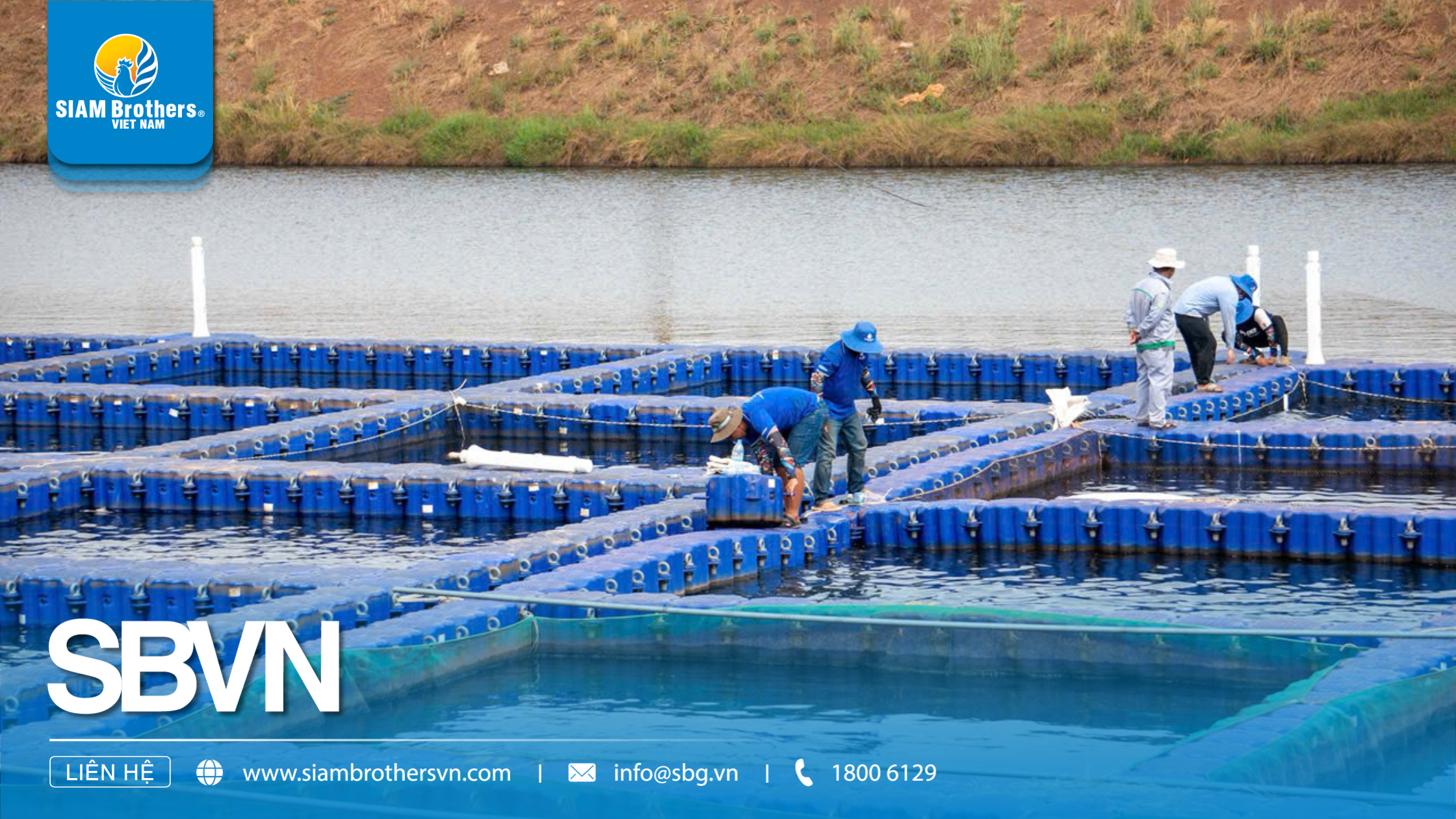
HDPE floating buoy/ HDPE floating cage - Source: SIAM Brothers Vietnam
Cage fish farming offers numerous clear advantages. Farmers do not need to invest in large pond excavation, which saves land area and eliminates complex wastewater treatment costs. Natural water currents keep fish healthy, reduce disease incidence, and allow daily observation and care. In particular, fish raised in cages typically have superior quality and can sell for 20–30% higher prices than pond fish.
That said, this model also requires a high level of caution. Water quality fluctuates with the seasons, and risks from storms, strong winds, and disease outbreaks are always present if the site is not chosen carefully or management is inadequate. For these reasons, farmers must prepare thoroughly right from the initial stages.
Site selection is the most critical step, as it largely determines the outcome of the entire farming cycle. A good location must meet the following conditions:
Water depth of at least 3–4 meters even during the dry season, with the bottom of the cage at least 1–1.5 meters above the riverbed or reservoir bottom.
Gentle water current of 0.2–0.5 m/s on rivers, or areas with good water exchange in reservoirs.
Water quality meeting standards: pH between 6.5–8.5, dissolved oxygen > 5 mg/liter, and NH₃ and H₂S levels < 0.01 mg/liter.
Avoid areas near industrial or agricultural discharge points, densely populated residential zones, and river bends where waste and pollutants easily accumulate.
Choose open, well-ventilated sites with minimal strong waves or winds, and easy access for daily care and secure anchoring.
Practical tip from experienced farmers: On reservoirs, prioritize areas downstream of the dam or sheltered bays protected from wind. On rivers, select straight sections with calm, steady flow and maintain a safe distance from the bank.
Today, two main types of cages are commonly used: traditional wooden-frame cages with nets and modern HDPE floating cages. HDPE cages are increasingly preferred due to their high durability (5–10 years), excellent resistance to waves and wind, and ease of relocation. Common sizes include 5x5x3 meters or 6x6x4 meters.
When designing the cage, pay attention to the following:
Net height for fish culture around 2.5–3 meters.
Add a 40–50 cm guard net along the upper edge to prevent feed from floating away.
Use nets with mesh sizes that change according to the growth stages of the fish.
The cage frame must be securely anchored, especially during the rainy and stormy season.
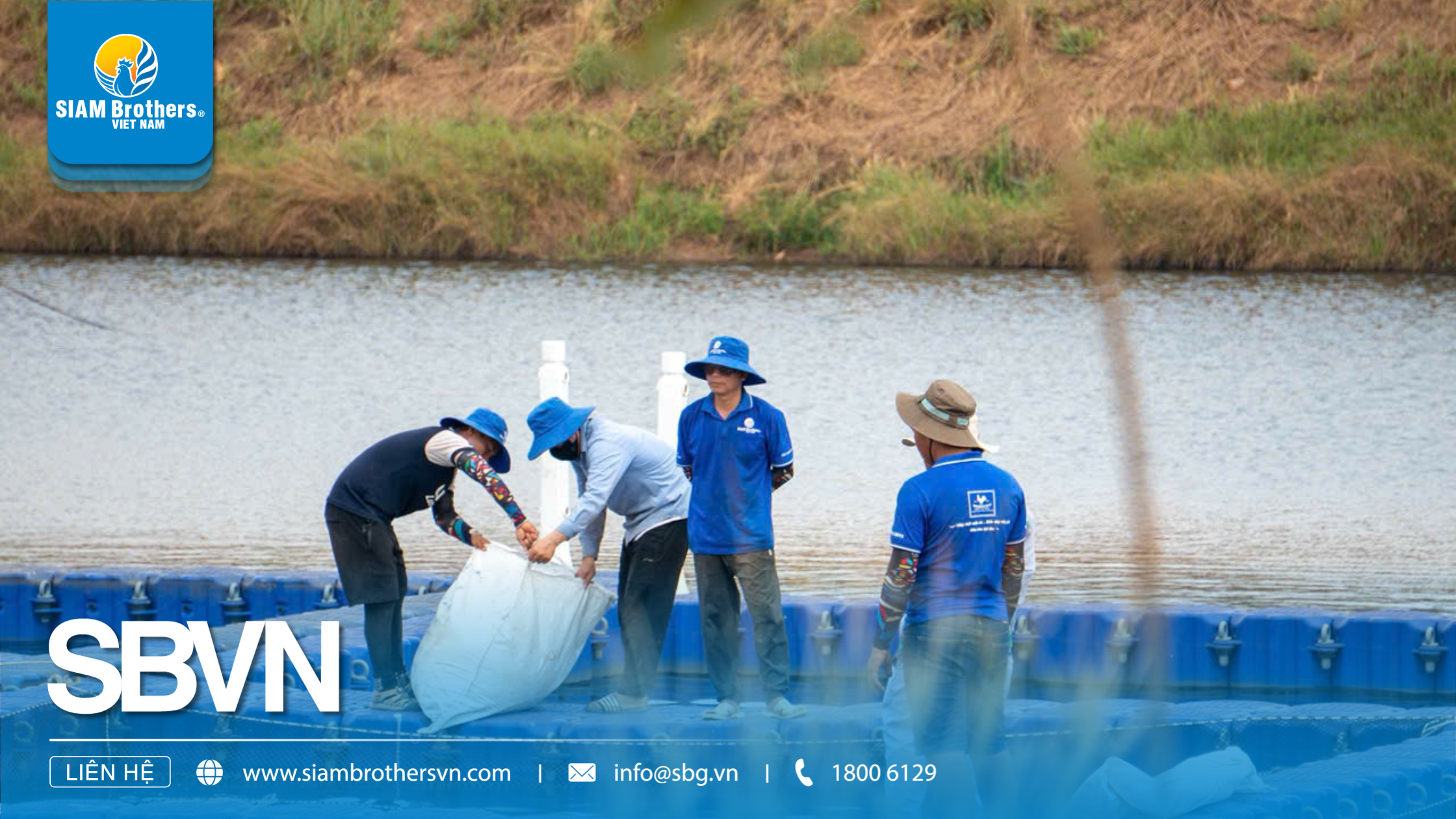
HDPE floating buoy/ HDPE floating cage - Source: SIAM Brothers Vietnam
Seed quality plays a major role in survival rates and growth speed. Farmers should source healthy, uniform fingerlings from reputable hatcheries that provide clear quarantine certificates. The fish should be active swimmers with no signs of disease.
Before stocking, follow this proper procedure:
Bathe the fish in 2% saltwater for 5–10 minutes to eliminate parasites.
Float the seed bags in the cage for 10–15 minutes to allow temperature acclimation.
Stock during early morning or late afternoon when the weather is cool.
Red tilapia or Nile tilapia: 50–100 fish/m³
Grass carp: 20–30 fish/m³
Catfish (tra): 40–50 fish/m³
Snakehead or other carnivorous species: 50–60 fish/m³
It is advisable to start with a moderate density for easier management, then thin out the stock as the fish grow.
Feed accounts for a large portion of production costs, so scientific and economical feeding is essential. Use high-quality industrial floating pellets, supplemented with natural feeds appropriate for each species.
Important notes on feeding:
Daily feeding rate: 2–7% of total biomass, divided into 2–3 meals.
Closely observe the fish’s feeding behavior to adjust the amount promptly.
Avoid overfeeding, which pollutes the water and wastes money.
Supplement with vitamin C, minerals, and probiotics periodically to boost immunity.
Check fish growth every 15 days to evaluate performance and make necessary adjustments.
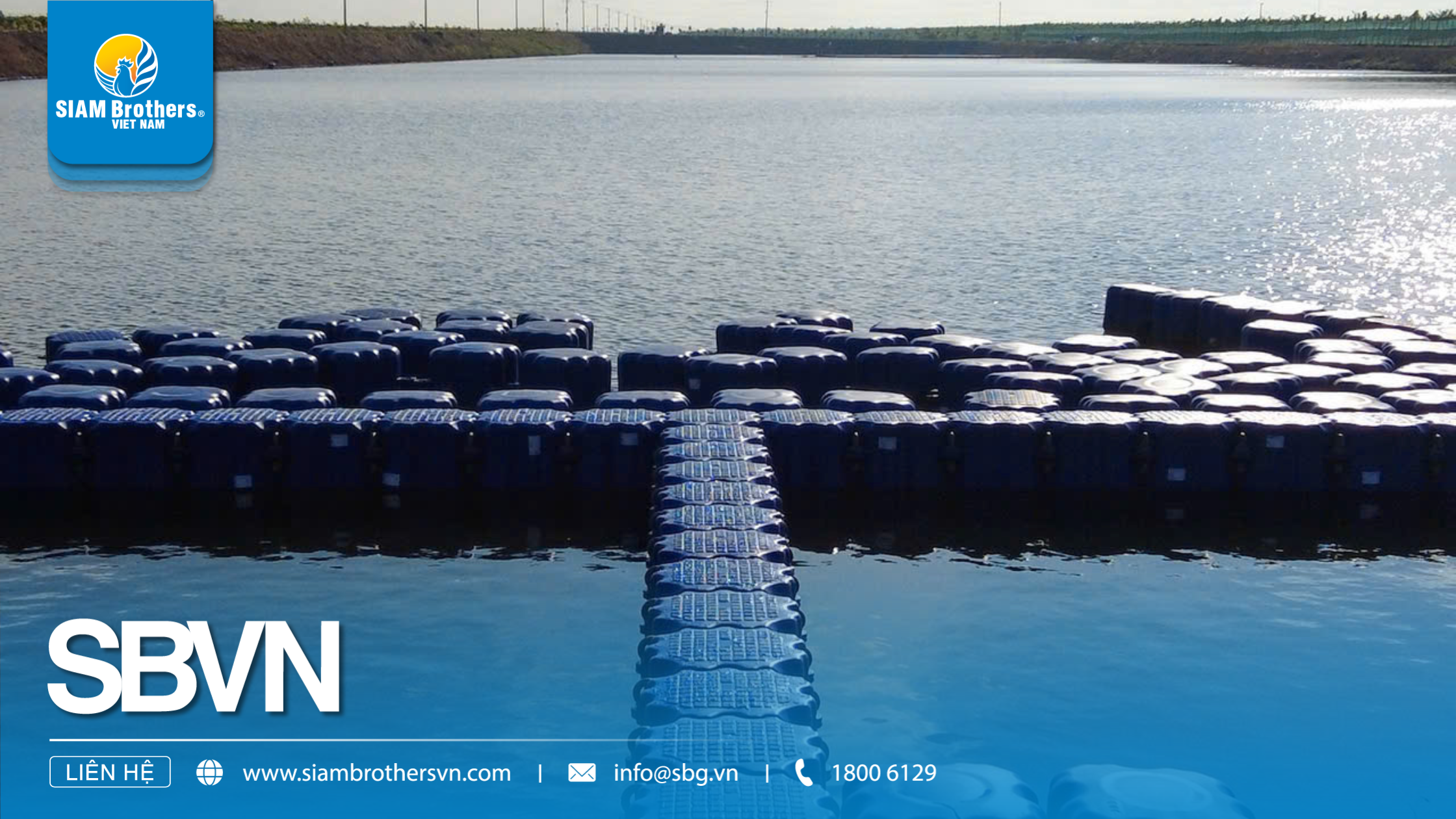
HDPE floating buoy/ HDPE floating cage - Source: SIAM Brothers Vietnam
Because the water environment is entirely natural, regular monitoring of water parameters is crucial. Check pH, dissolved oxygen, and temperature at least twice per week.
Do not stock at excessively high densities.
Clean the nets regularly to maintain good water flow.
Minimize rough handling during bad weather to reduce stress on the fish.
Before the rainy and flood season, prepare a plan to move cages to safer locations.
Apply biological methods such as probiotics and natural herbs when necessary.
The culture period usually lasts 4–8 months depending on the species. When fish reach marketable size (typically 500–800 grams per fish), harvest the entire crop or selectively remove larger individuals first. Stop feeding 2–3 days before harvest to allow the fish to empty their guts and improve meat quality.
Many real-world models show that large cages can yield 6–10 tons per crop. Thanks to lower feed costs and premium prices for clean, cage-raised fish, profitability is often very attractive when proper techniques are applied.
Cage fish farming on rivers and reservoirs represents a promising direction for Vietnam’s aquaculture industry. Although it requires investment in knowledge and practical experience, doing it correctly not only generates stable income but also contributes to the sustainable utilization of the country’s abundant natural water resources.
Read more: Carp Farming Process for Commercial Production Using HDPE Floating Systems and Net Cages
Source: SIAM Brothers Vietnam
1. Is cage fish farming on rivers and reservoirs highly risky?
Cage fish farming on rivers and reservoirs can deliver high productivity thanks to clean water and abundant oxygen. However, it also carries risks such as flooding, drought, upstream pollution, or strong winds and storms. To minimize these risks, farmers must select the cage site carefully, use durable cage materials, and manage the environment on a regular basis. Applying proven practical experience will help make the crop much more stable and successful.
2. What stocking density and feeding rate should be used for cage fish farming?
Stocking density must be adjusted according to the fish species and environmental conditions. For example, red tilapia or Nile tilapia are typically stocked at 50–100 fish/m³, grass carp at 20–30 fish/m³, and catfish around 40–50 fish/m³. The daily feeding rate ranges from 2–7% of the total fish biomass, divided into 2–3 meals. Observing the fish’s feeding response allows timely adjustments, preventing overfeeding that can pollute the water and increase costs.
3. What type of cage should be used for long-term fish farming on rivers and reservoirs?
Nowadays, many farmers are switching to HDPE floating cages because of their high durability, strong resistance to waves and wind, and ease of relocation during bad weather. In particular, the HDPE floating cages from Siam Brothers Việt Nam are highly regarded for using virgin HDPE material, excellent buoyancy (approximately 350 kg/m²), modular design that is easy to assemble, and a lifespan of more than 10 years. This product helps reduce maintenance costs, protects water quality, and is suitable for farming on rivers, reservoirs, as well as coastal areas.
Contact us:
Address: 5th floor, VRG Building, 177 Hai Ba Trung Street, Vo Thi Sau Ward, Ho Chi Minh City, Vietnam
Tel: (+84) 28 38 912 889
Hotline: 1800 6129
Facebook: www.facebook.com/siambrothersvn
Email: info@sbg.vn
YouTube: youtube.com/@siambrothersvietnam1728
OA Zalo: zalo.me/1402339229697925373
App SBVN ID:
CHPlay: https://bit.ly/SBVNID-Android
Appstore: https://bit.ly/SBVNID-iOS








Specializing in Agricultural and Fisheries Products & Multipurpose Wire