
- 1800 6129

Eye splicing a 3-strand and 4-strand rope is an essential technique for fishermen, sailors, people making swings, and those who need to secure loads. With just a few simple steps, you can create a strong, permanent eye (loop) at the end of the rope that won’t fray, unravel, or slip.
This article will clearly explain what an eye splice is, why you should do it, and provide detailed step-by-step instructions for both 3-strand and 4-strand ropes — perfect even for complete beginners.
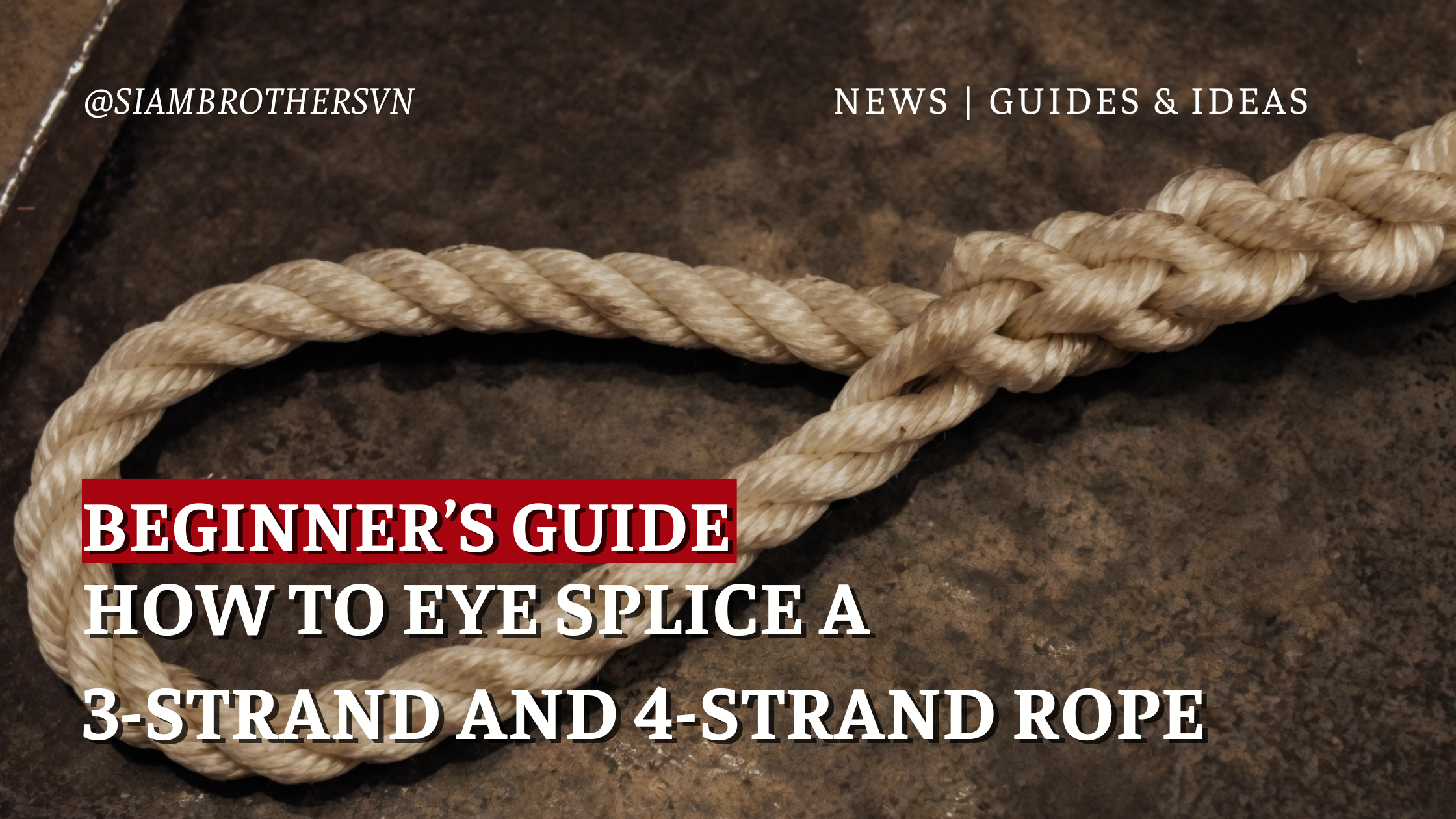
An eye splice (also known as “chầu đầu dây thừng” or rope eye) is a technique where you unlay the strands of the rope and weave them back into the main body to form a strong, permanent loop at the end of the rope.
Instead of temporary methods like wrapping with tape or burning the end, an eye splice creates a durable, long-lasting loop that can withstand heavy loads and years of use without coming apart.
Prevents the rope from fraying, unraveling, or strands coming loose.
Dramatically increases the strength and durability of the rope’s end.
Makes it easy to attach to anchors, hooks, swings, fishing nets, or cargo without worrying about slipping or breaking.
Saves money by extending the life of your rope instead of frequently buying new ones.
Modern synthetic ropes (PP, PE, Nylon) are very slippery. If not spliced properly, the eye can slip over time. That’s why it is recommended to make at least 5 to 7 tucks for safety.
3-strand or 4-strand rope (diameter according to your needs).
Duct tape or temporary whipping twine.
Splicing fid (or substitute: ballpoint pen, wooden stick, needle-nose pliers).
Sharp knife or scissors.
Work gloves (to protect your hands).
Tip: Work on a clean, flat surface with dry rope. Practice on an old piece of rope first to get comfortable.
3-strand rope is the most common type, ideal for fishing nets, swings, and light-duty lashing.
Wrap tape around the rope about 20–25cm from the end (depending on rope thickness).
Unlay the 3 strands up to the tape. Tape each individual strand end to prevent fraying.
Form the eye to your desired size and mark the spot on the standing rope where the first tuck will go.
Take the middle strand and pass it under one strand of the standing rope at the mark.
Take the lower strand and pass it under the next adjacent standing strand.
Take the upper strand and pass it under the remaining adjacent standing strand.
Pull evenly and twist each strand slightly to maintain its original lay.
Repeat the process at least 5 times (preferably 7 times for synthetic rope).
Pull the entire splice tight, cut off excess strands, and heat-seal or tape the ends to secure.
4-strand rope is thicker and stronger, commonly used for mooring boats and heavy loads.
Step-by-Step Instructions:
Wrap tape around the rope about 25–30cm from the end.
Unlay the 4 strands (remove the small core yarn if present). Tape each strand end.
Form the eye and mark the first tuck position.
Pass each strand under the adjacent standing strands (following the same pattern as 3-strand).
Keep even tension while splicing to maintain a balanced eye.
Repeat 5–7 tucks for maximum strength.
Tighten fully, trim excess, and seal the ends.
animatedknots.com
Synthetic ropes are slippery → always perform at least 5 tucks, preferably 7.
Always maintain the natural twist direction of each strand.
Pull each strand tight after every tuck for a neat and strong splice.
For thicker ropes, use a proper splicing fid for easier tucking.
After finishing, you can wrap extra tape or whip the ends for better appearance and security.
Making safe rope swings for children.
Mooring boats and attaching fishing nets.
Securing cargo, making rope ladders, and rescue lines.
Repairing old ropes instead of replacing them.
At Siam Brothers Việt Nam, we don’t just manufacture high-quality ropes — we also want to support our customers with practical, useful knowledge. Performing an eye splice correctly will help your ropes achieve maximum performance and longevity.
Please contact us today for advice on choosing the right rope for your needs.
Siam Brothers Việt Nam – Reliable Rope Solutions for Every Industry!
Read more: 5 Secure Ways to Tie Boat Anchor Ropes – A Must-Know for Seafarers
Source: SIAM Brothers Vietnam
FAQ – Frequently Asked Questions
1. Which is stronger: 3-strand or 4-strand eye splice?
A 4-strand eye splice is generally stronger and can handle heavier loads because it has more strands. However, 3-strand rope is easier to splice and suitable for most common uses such as fishing nets, swings, and general lashing. For heavy-duty applications like mooring, Siam Brothers Việt Nam recommends using 4-strand rope with at least 7 tucks.
2. How many tucks should I make with PP or PE rope?
Both PP and PE ropes are very slippery. You should make at least 5 tucks, and preferably 7 tucks to ensure the eye does not slip over time. The thicker and slicker the rope, the more tucks you should use.
3. What should I do if the eye splice is loose or uneven?
If the eye is loose, untuck it and start over. The usual causes are insufficient tension when pulling or too few tucks. Tip: Pull each strand firmly after every tuck and complete the recommended number of tucks. If you still have problems, please contact Siam Brothers Việt Nam for further advice.
Contact us:
Address: 5th floor, VRG Building, 177 Hai Ba Trung Street, Vo Thi Sau Ward, Ho Chi Minh City, Vietnam
Tel: (+84) 28 38 912 889
Hotline: 1800 6129
Facebook: www.facebook.com/siambrothersvn
Email: info@sbg.vn
YouTube: youtube.com/@siambrothersvietnam1728
OA Zalo: zalo.me/1402339229697925373
App SBVN ID:
CHPlay: https://bit.ly/SBVNID-Android
Appstore: https://bit.ly/SBVNID-iOS








Specializing in Agricultural and Fisheries Products & Multipurpose Wire