Product News

Heavy-Duty Marine Rope for Offshore Fishing Vessels: Selection Criteria and Practical Buying Guide

  • 22/06/2026

Learn how to choose the right Heavy-Duty Marine Rope for offshore fishing vessels based on load capacity, rope material, durability, and real-world operating conditions. Discover practical insights from SIAM Brothers, a trusted manufacturer of high-performance marine and fishing ropes, helping vessel owners, fishing businesses, and distributors select reliable rope solutions for safer and more efficient offshore operations.

Heavy-Duty Marine Rope plays a vital role in ensuring the safety, reliability, and operational efficiency of every offshore fishing trip. However, choosing the right rope for an offshore fishing vessel is not always straightforward. Factors such as load capacity, rope material, durability, and harsh marine conditions all influence long-term performance.

So, what should you consider when selecting a heavy-duty marine rope? Is Polypropylene (PP), Polyethylene (PE), or Nylon the better choice for your application?

In this guide, SIAM Brothers Vietnam shares practical insights based on years of manufacturing experience in the fishing and marine industries. You'll learn the key technical factors to evaluate, understand the strengths of different rope materials, and discover how to choose the most suitable rope solution for your offshore fishing operations.

1. What Is Heavy-Duty Marine Rope? Why Is It Essential for Offshore Fishing Vessels?

A Heavy-Duty Marine Rope is specifically engineered with a larger diameter and higher tensile strength to withstand demanding marine applications. It is widely used in offshore fishing, commercial ports, aquaculture systems, and other environments where ropes are exposed to heavy loads, saltwater, and continuous operation.

Key Characteristics of Heavy-Duty Marine Rope

  • Typically available in diameters of 20 mm or larger, depending on the intended application.
  • Manufactured from high-performance materials such as Polypropylene (PP), Polyethylene (PE), and Nylon.
  • Resistant to seawater, UV exposure, and abrasion.
  • Designed for heavy-load applications, including vessel mooring, trawl net towing, and securing offshore equipment.
  • Built to deliver reliable performance in harsh marine environments.

Based on the practical experience of SIAM Brothers Vietnam's engineering and production teams, selecting the appropriate rope diameter and material according to a vessel's size, engine power, and operational requirements can significantly extend service life while reducing the risk of rope failure during offshore operations.
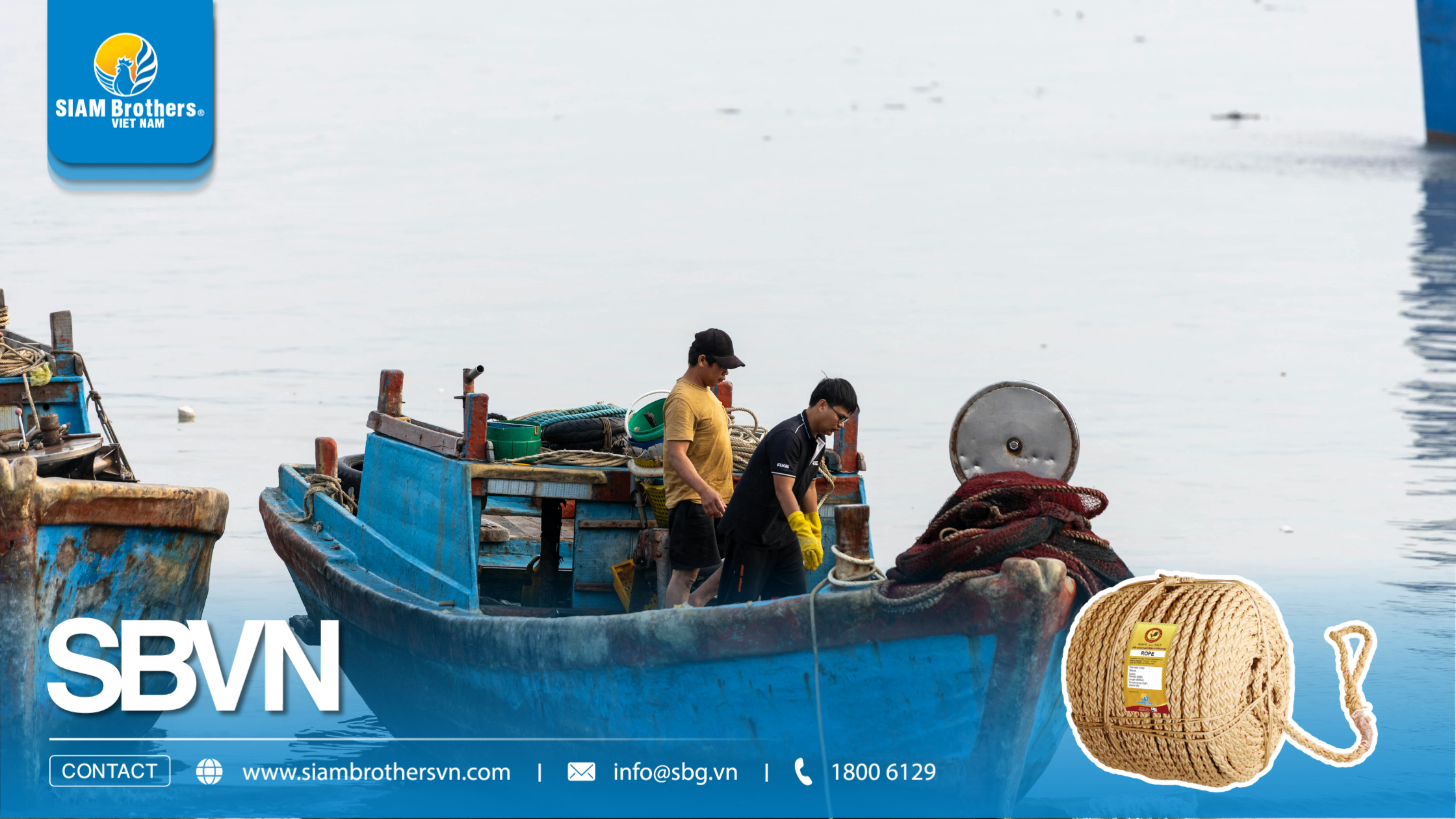
Dây thừng cỡ lớn cho tàu cá xa bờ - Tiêu chí lựa chọn và kinh nghiệm thực tế

Why Do Offshore Fishing Vessels Need Heavy-Duty Marine Rope?

Unlike nearshore fishing boats, offshore fishing vessels operate in far more demanding conditions. Strong waves, high winds, heavy equipment, and extended working hours place constant stress on every component onboard. Standard-purpose ropes are often unable to provide the strength and durability required for these environments.

Safe and Reliable Vessel Mooring

A high-quality Heavy-Duty Marine Rope helps improve safety during anchoring and mooring by:

  • Keeping vessels securely positioned in rough sea conditions.
  • Reducing the risk of drifting or collision.
  • Protecting crew members, equipment, and onboard assets.

Their advantages include:

  • High tensile strength for pulling heavy trawl nets.
  • Reduced rope elongation under continuous load.
  • Lower risk of rope failure when operating in strong currents or handling large catches.

This is why many commercial fishing operators choose purpose-built marine ropes instead of general-purpose ropes for offshore applications.

Enhanced Durability in Saltwater Environments

Marine ropes used offshore must withstand continuous exposure to challenging environmental conditions.

A premium Heavy-Duty Marine Rope offers:

  • Excellent resistance to saltwater corrosion.
  • Reduced wear caused by friction against vessel structures and onboard equipment.
  • Long-lasting performance under continuous outdoor exposure.

For fishing vessels operating offshore for several days or even weeks, these characteristics help minimize replacement costs while improving operational reliability.
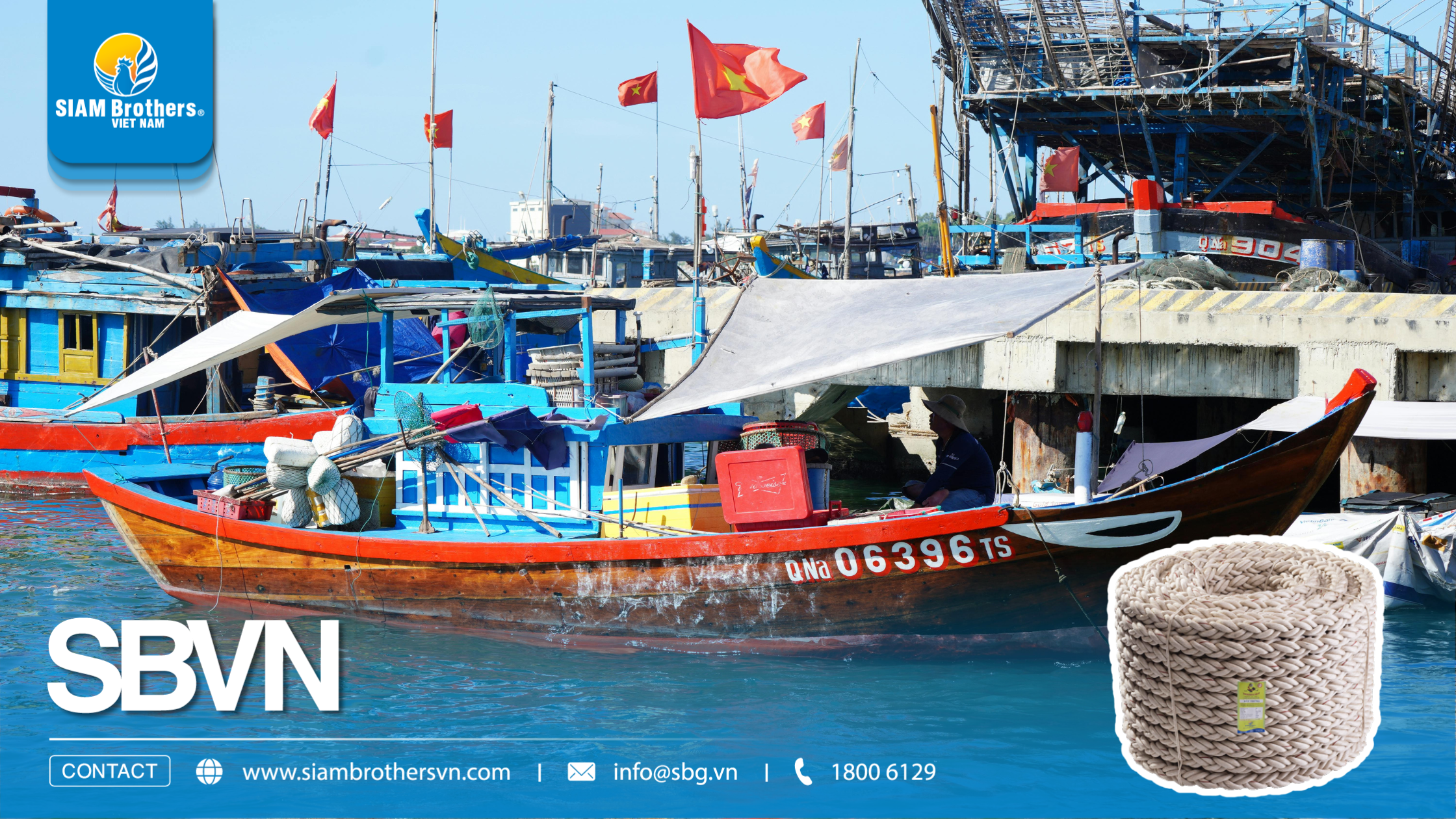
Dây thừng cỡ lớn cho tàu cá xa bờ - Tiêu chí lựa chọn và kinh nghiệm thực tế

2. Top 5 Key Criteria for Choosing Heavy-Duty Marine Rope for Offshore Fishing Vessels

Now that you understand the role of Heavy-Duty Marine Rope in offshore fishing operations, the next step is selecting the right rope for your vessel. The best option depends on several factors, including vessel size, operating conditions, fishing methods, and load requirements.

Based on SIAM Brothers Vietnam's engineering expertise and practical industry experience, evaluating the following five criteria will help you maximize safety, improve operational efficiency, and reduce long-term replacement costs.

2.1. Load Capacity That Matches Your Vessel's Requirements

Load capacity is the most important factor when selecting a Heavy-Duty Marine Rope.

A rope that is undersized for the application may stretch excessively, wear out quickly, or even fail during operation, creating serious safety risks for both the crew and onboard equipment.

Why Load Capacity Matters

  • Offshore fishing vessels regularly handle heavy loads from fishing nets, anchors, and marine equipment.
  • Continuous high tension places significant stress on the rope.
  • An incorrect rope specification can increase maintenance costs and operational downtime.

How to Choose the Right Load Capacity

Before purchasing a rope, consider the following:

  • The vessel's engine power and overall size.
  • The maximum working load during daily operations.
  • Peak pulling forces that may occur when hauling nets or anchoring.
  • A rope with an adequate safety factor above the expected working load.

For example, a large trawler requires a much stronger rope than a tuna longline vessel or a fisheries logistics boat because it experiences significantly higher towing forces throughout daily operations.

2.2. Rope Material

The material used to manufacture a Heavy-Duty Marine Rope directly affects its strength, buoyancy, durability, and service life.

According to the engineering team at SIAM Brothers Vietnam, selecting the appropriate material for each application can significantly improve operational performance while reducing long-term operating costs.

Polypropylene (PP) Rope
Key Benefits

  • Lightweight and easy to handle.
  • Naturally floats on water.
  • Cost-effective.
  • Suitable for a wide range of fishing applications.

Recommended Applications

  • General fishing operations.
  • Buoy lines.
  • Utility ropes.
  • Lightweight towing tasks.

Polyethylene (PE) Rope
Key Benefits

  • Excellent abrasion resistance.
  • Performs well in harsh marine environments.
  • Resistant to moisture and many chemicals.
  • Long service life under continuous outdoor use.

Recommended Applications

  • Offshore fishing vessels.
  • Mooring systems.
  • Aquaculture operations.
  • Heavy-duty marine applications.

Nylon Rope
Key Benefits

  • Outstanding tensile strength.
  • Excellent shock absorption due to high elasticity.
  • Performs well under continuous heavy loads.
  • Ideal for demanding marine environments.

Recommended Applications

  • Vessel mooring.
  • Anchor lines.
  • Heavy towing operations.
  • High-load marine systems.

Before choosing a rope material, determine whether the rope will primarily be used for anchoring, towing fishing nets, securing equipment, or supporting aquaculture systems. Matching the material to the intended application will improve both safety and long-term performance.
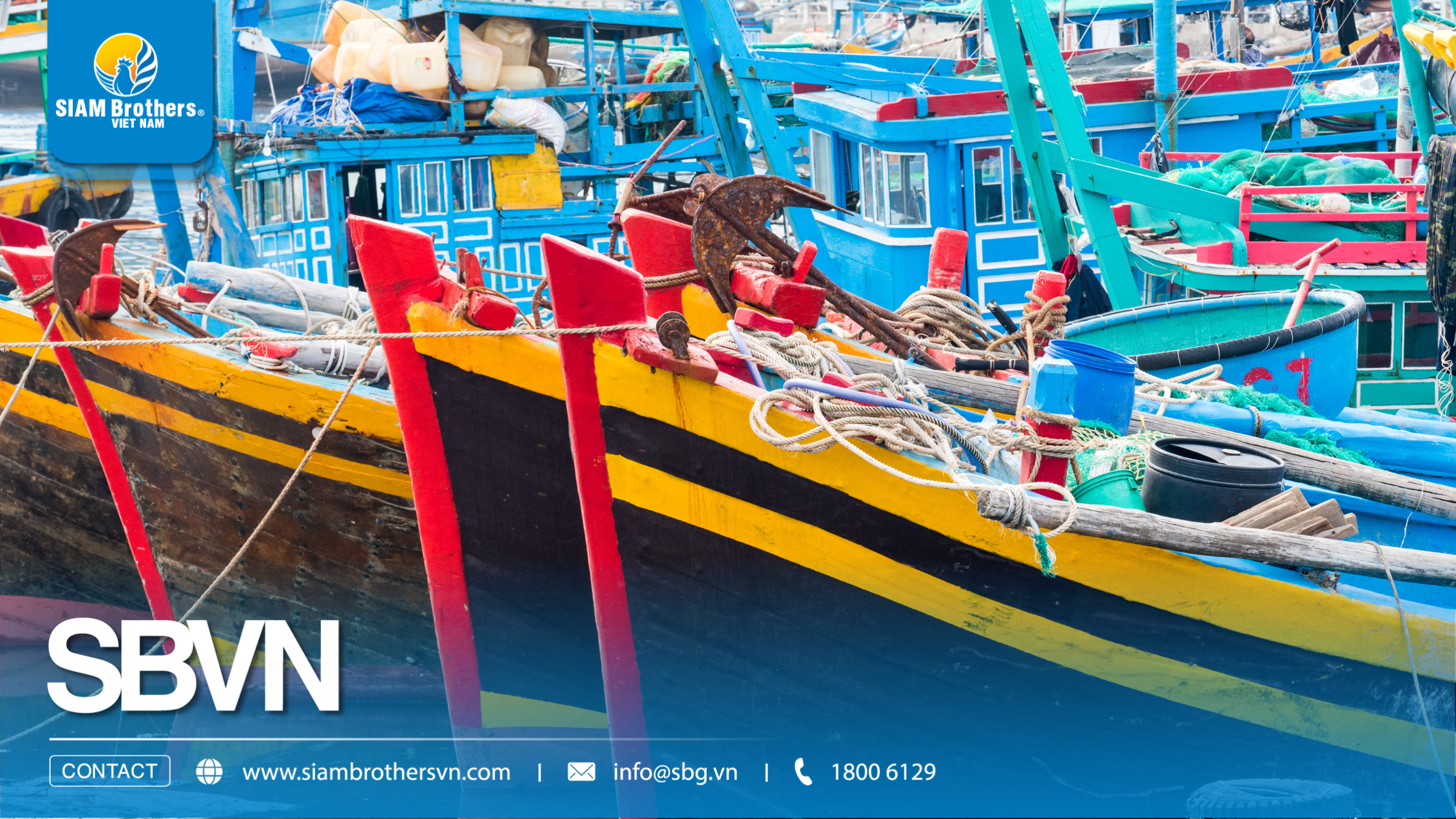
Dây thừng cỡ lớn cho tàu cá xa bờ - Tiêu chí lựa chọn và kinh nghiệm thực tế

2.3. Resistance to UV Exposure and Seawater

Marine ropes are constantly exposed to some of the harshest environmental conditions.

Without sufficient resistance to sunlight and saltwater, even a high-strength rope can deteriorate prematurely.

  • Common Environmental Challenges
  • Continuous exposure to saltwater.
  • Seasonal temperature fluctuations.
  • Constant friction against vessel structures and fishing equipment.

When selecting a Heavy-Duty Marine Rope, check whether it offers:

  • UV resistance for prolonged outdoor use.
  • Stable performance after long-term exposure to seawater.
  • Consistent mechanical properties in demanding marine environments.
  • Reliable durability throughout extended offshore operations.

A high-quality marine rope should maintain its structural integrity and strength even after repeated exposure to harsh offshore conditions. This not only improves operational safety but also reduces maintenance frequency and replacement costs over the rope's service life.

3. Comparing the Most Common Types of Heavy-Duty Marine Rope

Choosing the right Heavy-Duty Marine Rope depends on your vessel type, fishing method, working environment, and operational requirements. The comparison below provides a quick overview of the three most widely used rope materials for offshore fishing vessels.
Criteria  Heavy-Duty PP Rope Heavy-Duty PE Rope Heavy-Duty Nylon Rope
Material Polypropylene (PP) Polyethylene (PE) Nylon (PA)
Buoyancy Excellent  Good  Does not float
Load Capacity Good High   Very High
Elasticity Low Moderate High
Abrasion Resistance Good High High
UV Resistance Good Good  Good
Seawater Resistance Good Excellent Good
Weight Lightweight  Lightweight Heavier
Offshore Performance Good Excellent Excellent
Service Life Good Long  Very Long
Initial Investment Low  Medium High
Maintenance  Easy  Easy  Requires periodic inspection
Recommended Applications  Net hauling, fishing gear, buoy lines  Vessel mooring, equipment towing, HDPE floating cages Heavy-duty mooring, vessel towing, permanent anchoring systems
Suitability for Offshore  Fishing Vessels  Suitable for basic applications Highly recommended  Highly recommended
 
Quick Selection Guide
  • Lower initial investment:  PP Rope
  • Frequent offshore fishing operations: PE Rope
  • Mooring large fishing vessels: Nylon Rope
  • Towing fishing nets and marine equipment: PE Rope or PP Rope
  • Rough seas and strong wave conditions: Nylon Rope
  • Aquaculture cage systems and HDPE floating platforms: PE Rope
  • Long-term service life: PE Rope or Nylon Rope

Dây thừng cỡ lớn cho tàu cá xa bờ - Tiêu chí lựa chọn và kinh nghiệm thực tế

4. How to Choose Heavy-Duty Marine Rope Based on Different Fishing Applications

Selecting the right Heavy-Duty Marine Rope is not only about material selection. Different fishing operations place different demands on the rope. Matching the rope to its intended application improves safety, extends service life, and lowers long-term operating costs.
According to SIAM Brothers Vietnam's engineering and production teams, using the correct rope for each application significantly improves operational reliability in demanding offshore environments.

4.1. Heavy-Duty Marine Rope for Trawl Fishing Vessels

Trawl fishing vessels operate under continuous heavy loads. The rope system is constantly subjected to tension from fishing nets, large catches, and strong ocean currents.
 
Key Requirements
  • High tensile strength.
  • Excellent abrasion resistance.
  • Long service life.

Recommended Rope

  • Heavy-Duty PE Rope.
  • Heavy-Duty Nylon Rope for high-powered vessels.
Why It Is Recommended
  • Minimizes wear caused by winches and pulleys.
  • Reduces the risk of rope failure during heavy net hauling.
  • Maintains consistent performance throughout extended offshore fishing trips.
For trawlers operating offshore for several consecutive days, PE rope is widely preferred because of its outstanding abrasion resistance and long-lasting durability.

4.2. Heavy-Duty Marine Rope for Tuna Longline Fishing Vessels

Tuna fishing vessels generally experience lower towing loads than trawlers but require ropes that perform reliably during extended offshore operations.
 
Key Requirements
  • Lightweight and easy to handle.
  • Excellent seawater resistance.
  • High durability.
  • Easy onboard storage.
Recommended Rope
  • Heavy-Duty PP Rope.
  • Heavy-Duty PE Rope.
Why It Is Recommended
  • Reduces the overall weight of the rope system.
  • Makes deploying and retrieving fishing gear easier.
  • Offers a cost-effective solution for daily fishing operations.
This combination is ideal for tuna fishing vessels that frequently operate far from shore while maintaining efficient operating costs.

4.3. Heavy-Duty Marine Rope for Fisheries Support Vessels

Support vessels perform multiple tasks, including transporting fuel, ice, fishing equipment, and supplies while assisting fishing fleets at sea.
Key Requirements
  • High load-bearing capacity.
  • Safe and reliable mooring performance.
  • Long service life.
Recommended Rope
  • Heavy-Duty PE Rope.
  • Heavy-Duty Nylon Rope.
  • Why It Is Recommended
  • Delivers reliable mooring performance.
  • Supports heavy cargo securing.
  • Performs consistently under demanding marine conditions.
In practice, many fisheries support vessels combine PE and Nylon ropes to optimize performance across different onboard applications.

4.4. Heavy-Duty Marine Rope for Multi-Purpose Fishing Vessels

Some fishing vessels use different fishing methods throughout the year, requiring ropes that can adapt to multiple applications.
 
Key Requirements
  • Consistent durability.
  • Cost-effective performance.
  • Easy replacement when necessary.
Recommended Rope
  • Heavy-Duty PE Rope.
  • Why It Is Recommended
  • Offers an excellent balance between durability and investment cost.
  • Suitable for both mooring and fishing operations.
  • Provides versatile performance across various fishing methods.
For many vessel owners, PE rope is the preferred long-term solution because it combines reliability with excellent value.

4.5. Heavy-Duty Marine Rope for Vessel Mooring Systems

Mooring is one of the most safety-critical applications onboard any offshore fishing vessel.
During rough weather, the entire force generated by waves, wind, and vessel movement is transferred directly to the mooring system.
 
Key Requirements
  • Very high load capacity.
  • Good elasticity for shock absorption.
  • Excellent abrasion and seawater resistance.
  • Long service life.
Recommended Rope
  • Heavy-Duty Nylon Rope.
  • Premium Heavy-Duty PE Rope.
  • Why It Is Recommended
  • Effectively absorbs dynamic loads caused by vessel movement.
  • Reduces the likelihood of sudden rope failure.
  • Improves overall safety for both the vessel and its crew during offshore operations.'

Dây thừng cỡ lớn cho tàu cá xa bờ - Tiêu chí lựa chọn và kinh nghiệm thực tế

5. Frequently Asked Questions About Heavy-Duty Marine Rope for Offshore Fishing Vessels

Choosing the right Heavy-Duty Marine Rope often raises practical questions, especially for vessel owners, fishing companies, and distributors looking for long-term reliability. Below are some of the most frequently asked questions received by the engineering and technical support team at SIAM Brothers Vietnam.

5.1. How Much Load Can a Heavy-Duty Marine Rope Handle?

The load capacity of a Heavy-Duty Marine Rope depends on several factors, including:

  • Rope diameter.
  • Rope material.
  • Rope construction and braid design.
  • Actual operating conditions.

For example:

  • Larger-diameter ropes generally provide higher breaking strength than smaller ones.
  • Nylon ropes typically offer greater tensile strength than PP or PE ropes.
  • Ropes used continuously in offshore environments should be selected with an appropriate safety factor to ensure reliable performance.

Rather than choosing a rope based solely on its diameter, vessel owners should always refer to the manufacturer's technical specifications, including minimum breaking load and recommended working load.

5.2. Can Heavy-Duty Marine Rope Withstand Long-Term Exposure to Seawater?

Yes—provided you select a rope specifically designed for marine and commercial fishing applications.

A high-quality Heavy-Duty Marine Rope should provide:

  • Excellent UV resistance.
  • Outstanding seawater resistance.
  • High abrasion resistance.

In practice, many offshore fishing vessels continue to use the same rope system efficiently for years when the rope is properly selected, inspected, and maintained.

However, actual service life also depends on:

  • Frequency of use.
  • Operating environment.
  • Working load.
  • Maintenance and storage practices after each fishing trip.

5.3. How Often Should Marine Rope Be Replaced?

There is no universal replacement schedule for every type of marine rope.

Instead, vessel operators should perform routine inspections and replace the rope when any of the following signs appear:

  • Excessive fiber fraying.
  • Abnormal surface wear.
  • Permanent deformation or excessive stretching.
  • Noticeable reduction in load-bearing performance.

According to SIAM Brothers Vietnam's production specialists, inspecting rope before every offshore trip helps identify potential safety issues early and minimizes unexpected repair or replacement costs.

5.4. Is Choosing a Lower-Priced Rope a Good Way to Reduce Costs?

This is one of the most common questions from first-time vessel owners.

In reality, the lowest purchase price does not always result in the lowest operating cost.

Low-quality ropes often lead to:

  • Faster deterioration.
  • Shorter service life.
  • More frequent replacements.
  • Increased risk of rope failure during fishing operations.

When evaluated over the entire product life cycle, a premium Heavy-Duty Marine Rope typically provides a lower total cost of ownership through greater durability, improved safety, and reduced maintenance requirements.

5.5. Where Can You Buy Reliable Heavy-Duty Marine Rope?

When selecting a marine rope supplier, consider companies that offer:

  • Extensive experience in the marine and commercial fishing industries.
  • Transparent technical specifications and product documentation.
  • Professional engineering and technical support.
  • Reliable distribution and after-sales service.

SIAM Brothers Vietnam is a trusted manufacturer and supplier of industrial ropes for fisheries, agriculture, marine applications, and offshore industries. Backed by decades of manufacturing expertise, our engineering, production, and R&D teams work closely with customers to recommend rope solutions tailored to specific vessel types and operating conditions.

A Heavy-Duty Marine Rope is more than just an operational accessory—it is a critical component that directly impacts the safety, efficiency, and long-term performance of offshore fishing vessels. Selecting the right rope based on load capacity, material, durability, and actual operating conditions helps reduce maintenance costs while improving overall operational reliability.
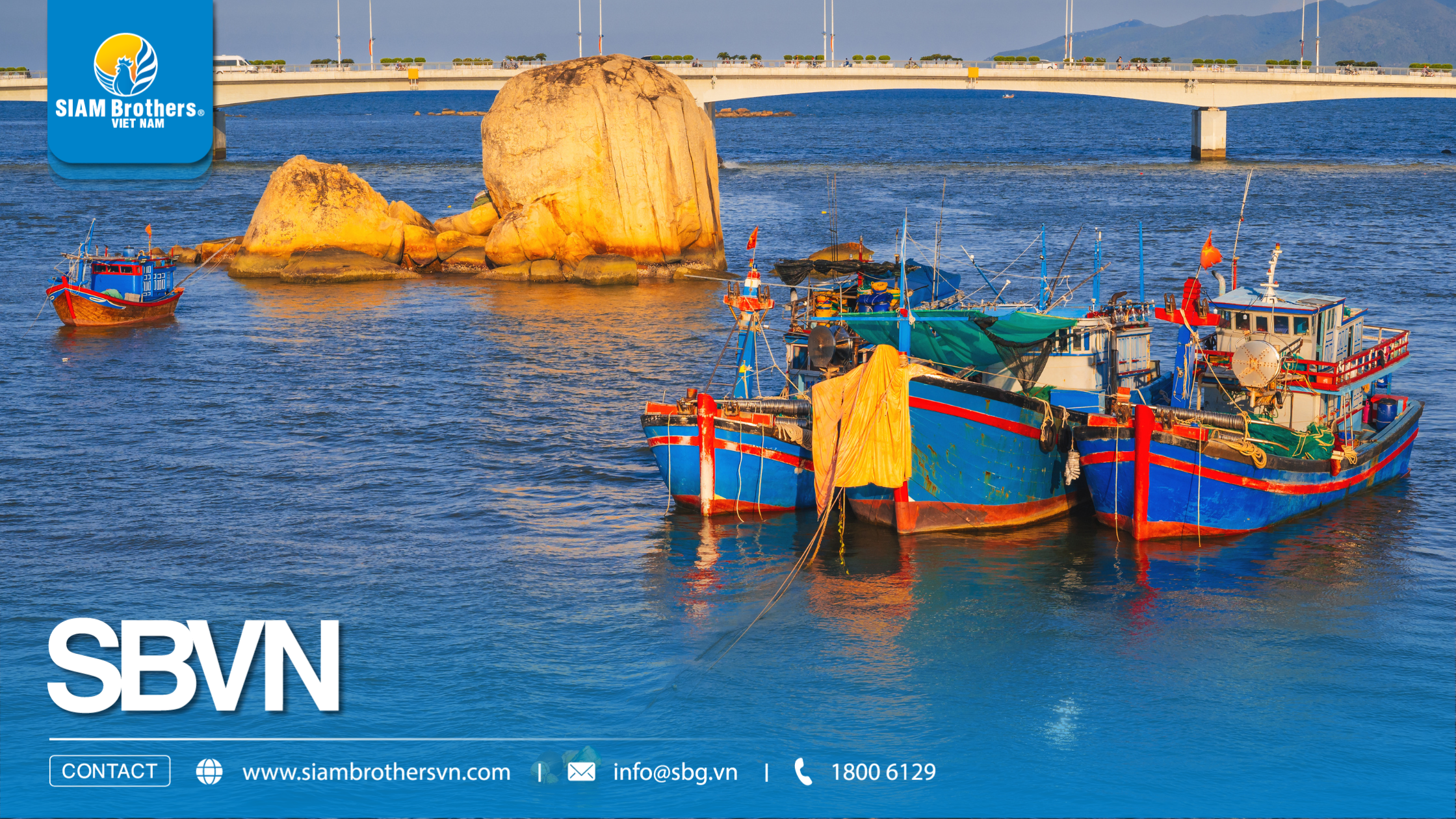
Dây thừng cỡ lớn cho tàu cá xa bờ - Tiêu chí lựa chọn và kinh nghiệm thực tế

Source: SIAM Brothers Vietnam


Contact us:

► Address: 5th floor, VRG Building, 177 Hai Ba Trung Street., Xuan Hoa Ward, Ho Chi Minh City, Vietnam

► Hotline: 1800 6129

► Tel: (+84) 28 38 912 889

► Email: info@sbg.vn

Follow us for more details at: Facebook - Zalo OA - Tiktok - Youtube - LinkedIn

Download SBVN ID app here:

CHPlay

Appstore

Dây thừng cỡ lớn cho tàu cá xa bờ - Tiêu chí lựa chọn và kinh nghiệm thực tế