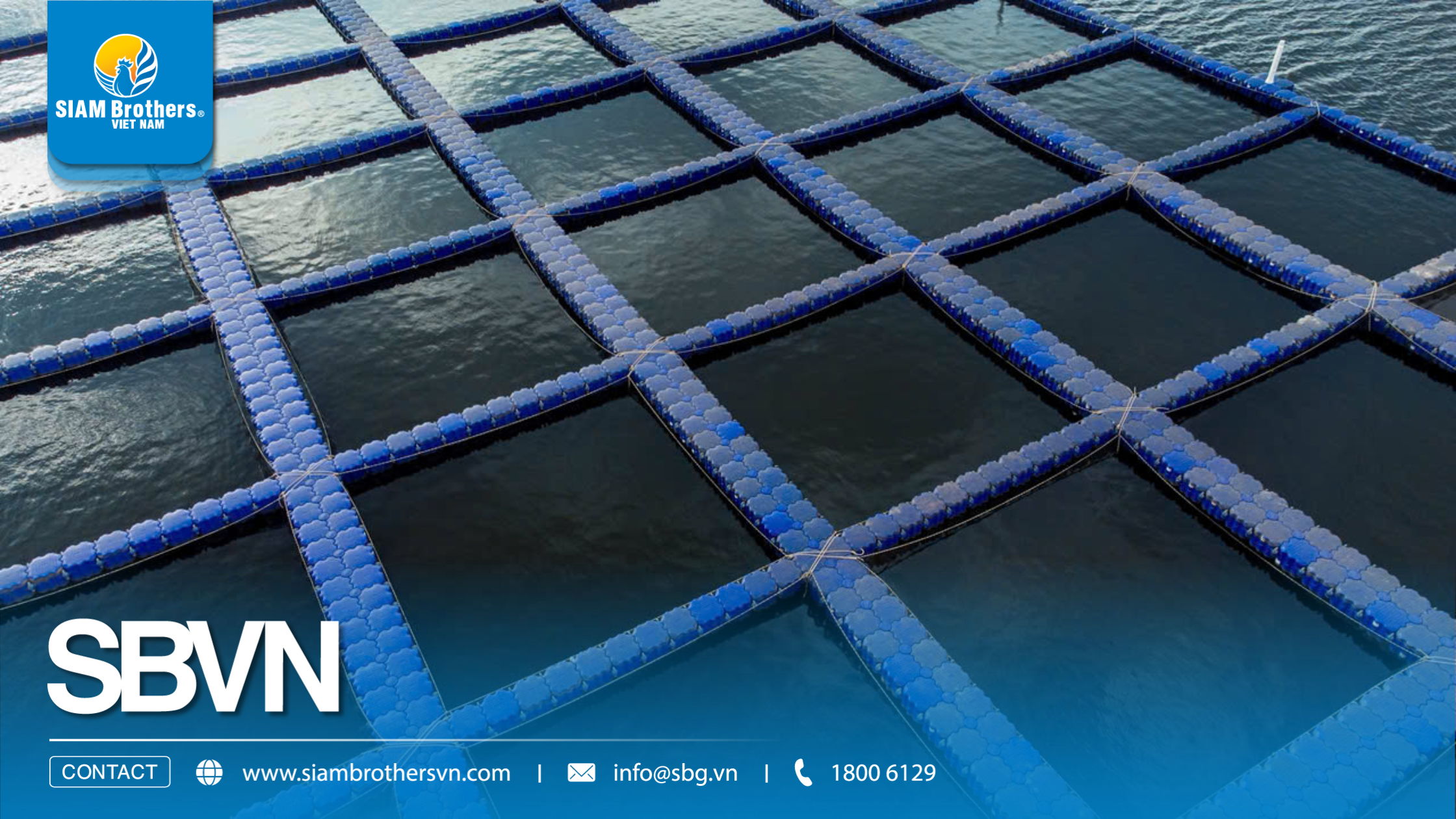
The Floating Pontoon System plays a critical role in determining durability, safety, and operational efficiency in fish cage farming as well as floating structures in rivers and coastal areas. If the system is not designed according to proper standards, risks such as structural damage, instability, and increased maintenance costs are unavoidable.
In this article, SIAM Brothers Vietnam will help you understand essential Floating Pontoon System design standards, including load capacity, HDPE material properties, structural connections, and real-world environmental conditions. At the same time, you will learn how to select the most suitable solution for different farming scales or floating projects, optimizing long-term investment costs.
This knowledge provides a solid foundation for businesses, distributors, and farmers to make informed decisions, ensuring stable and sustainable system performance over time.
1. What is a Floating Pontoon System? Practical Applications
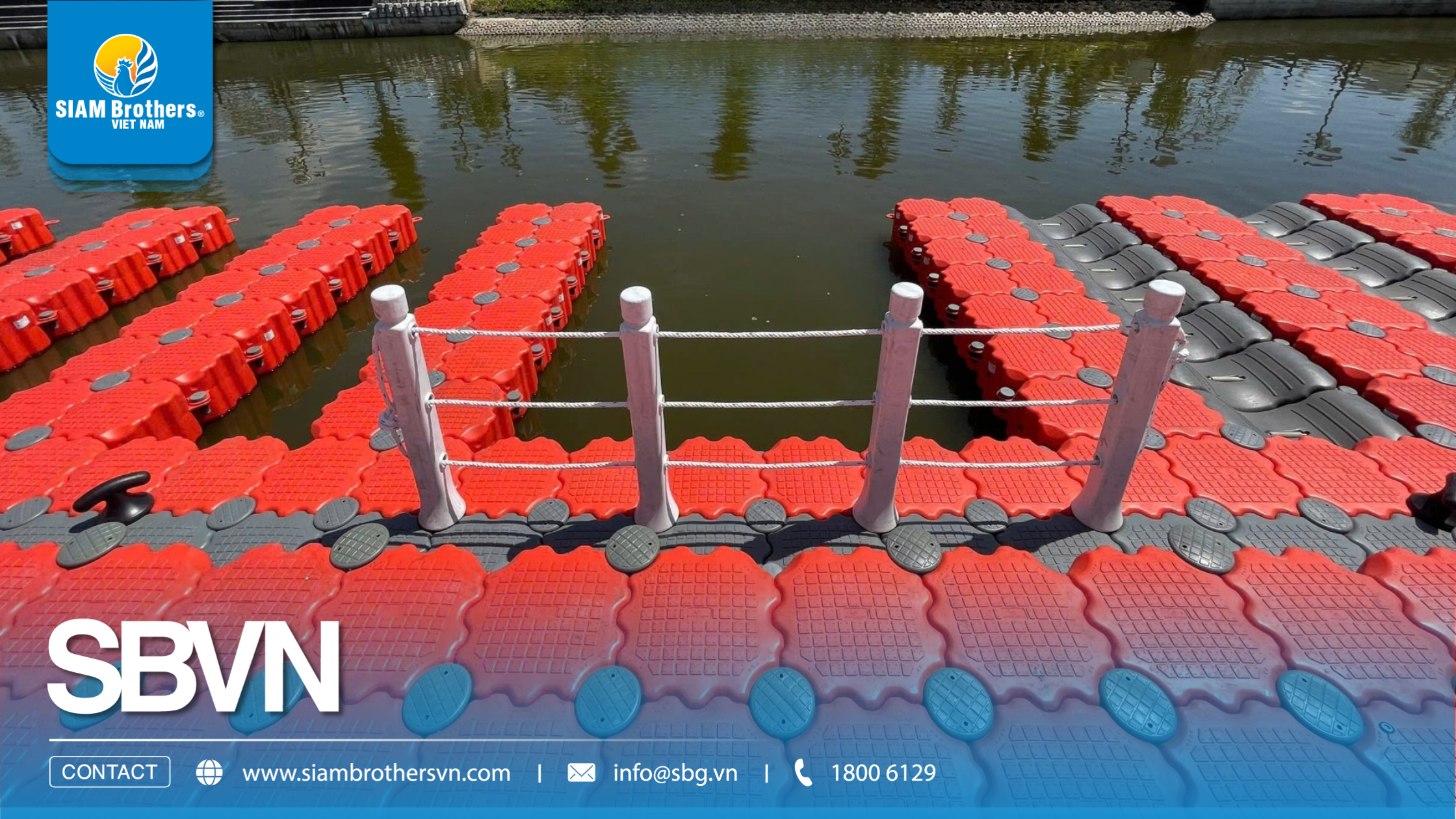
A Floating Pontoon System is a combination of buoyancy modules (typically made from HDPE or LLDPE), structural frames, decking, and anchoring systems that together form a stable floating platform on water. It is a core solution in aquaculture and waterfront construction, where load-bearing capacity, corrosion resistance, and long-term durability are essential.
A standard Floating Pontoon System typically includes:
- Floating pontoons: provide buoyancy and determine overall load capacity
- Structural frame: connects pontoons into a unified system
- Decking platform: supports movement, operation, and maintenance
- Anchoring system: stabilizes the structure against waves, wind, and currents
Practical Applications of Floating Pontoon Systems
Floating Pontoon Systems are widely used thanks to their flexibility and durability, especially when using modern HDPE materials. Each application requires specific design standards.
1.1. In Fish Cage Farming
- Provide a stable floating base to secure fish cages
- Ensure even load distribution as fish density increases
- Support feeding, monitoring, and harvesting operations
- Suitable for marine, brackish, and freshwater environments
1.2. In Floating Structures and Waterfront Infrastructure
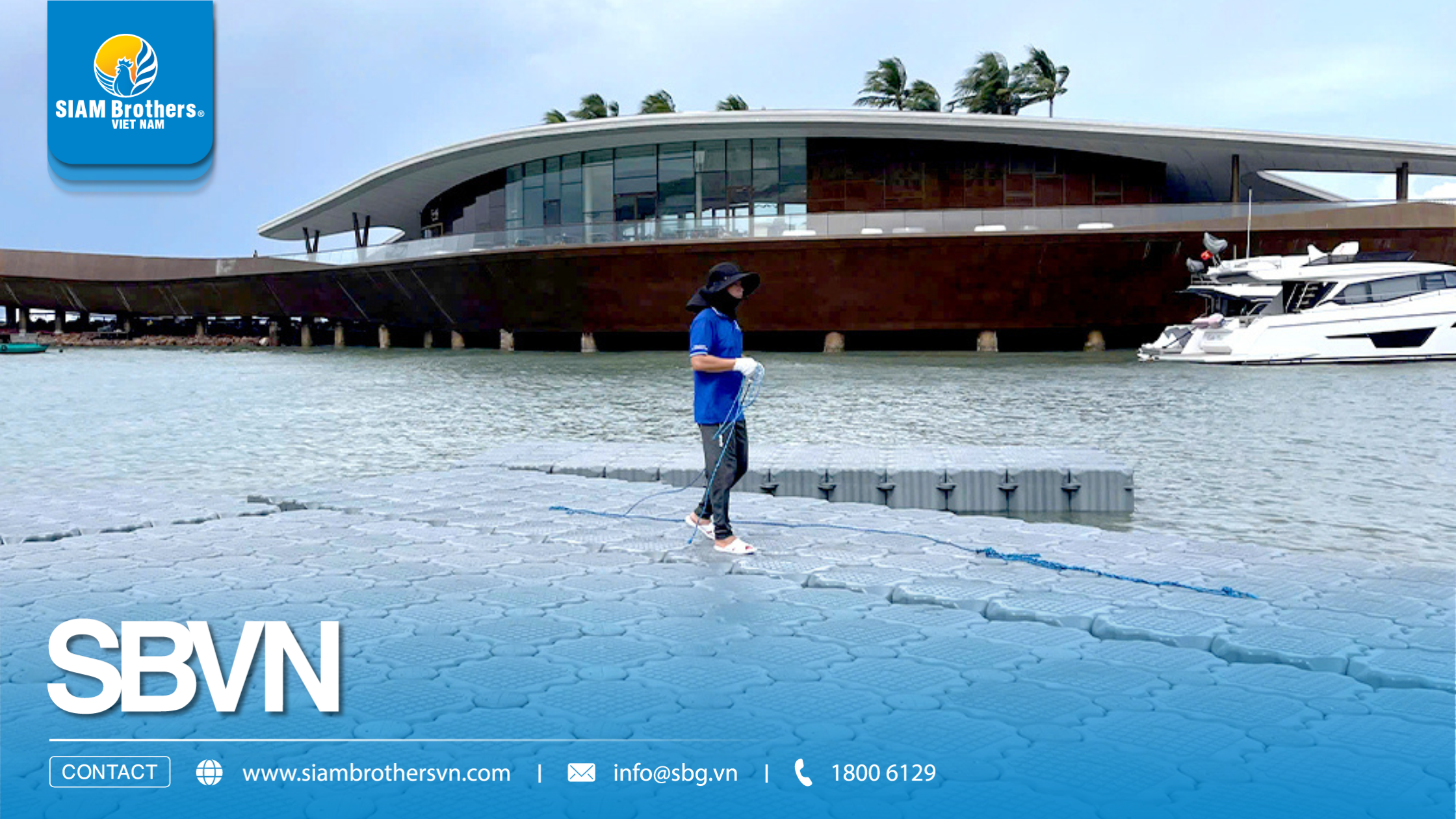
- Used for floating docks, piers, and resort platforms
- Easy to install and expand based on project scale
- Reduce construction costs compared to fixed structures
1.3. In Environmental and Debris Control Systems
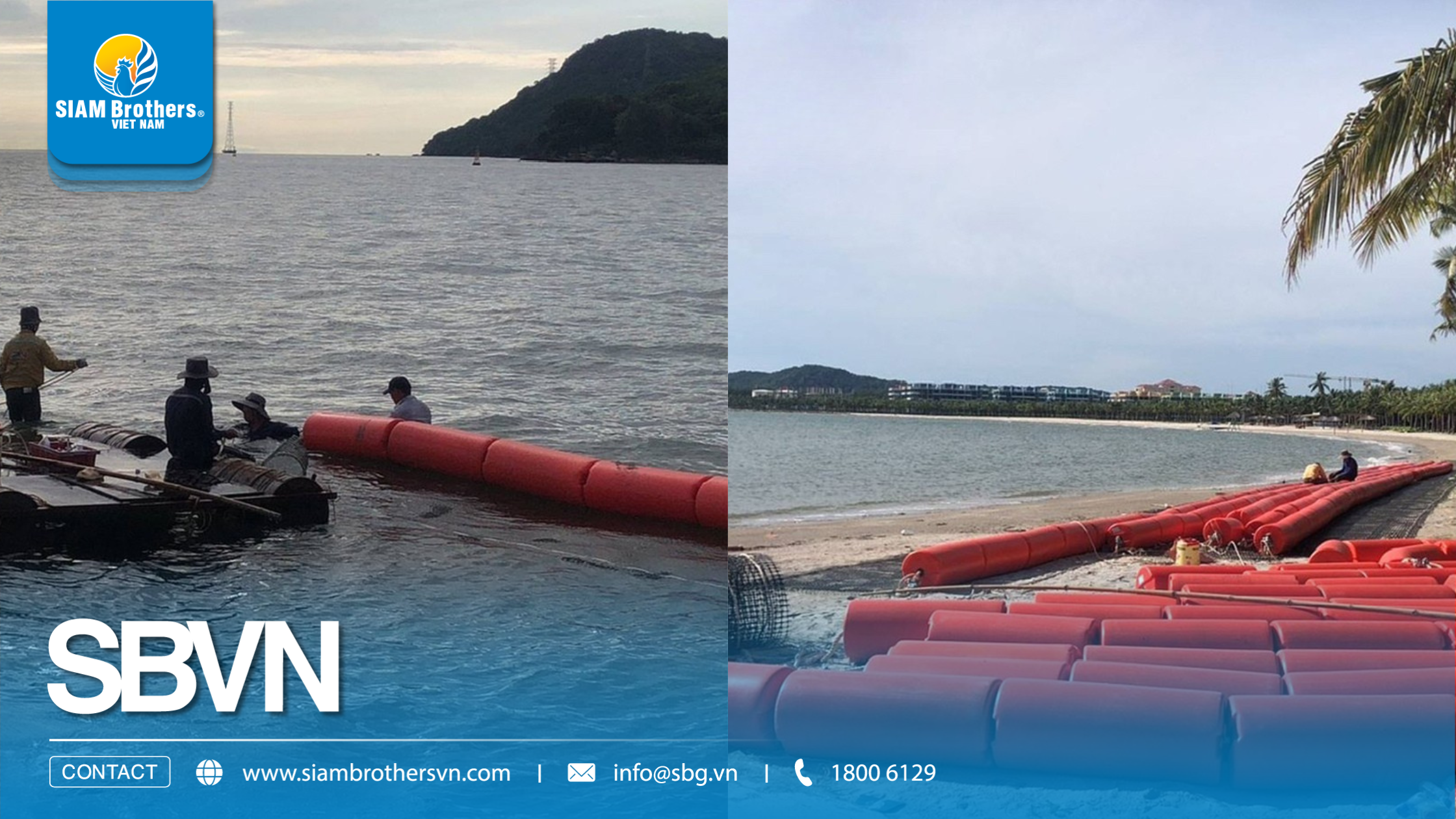
- Applied as floating barriers in rivers, lakes, and canals
- Prevent waste accumulation and protect water ecosystems
- Combined with mooring ropes and nets for improved efficiency
2. Key Design Standards for Floating Pontoon Systems
2.1. Load Capacity and Buoyancy Standards
2.1.1. Determining Total Design Load
- Calculate total weight: cages, fish biomass, operators, and equipment
- Include additional load factors during real operation
- Apply a safety factor of 1.3–1.5
2.1.2. Proper Buoyancy Distribution
- Arrange pontoons evenly to prevent imbalance
- Ensure each module operates within safe load limits
- Optimize pontoon quantity for cost-efficiency
2.2. Material Standards for Floating Pontoons
2.2.1. HDPE Material Requirements
- UV resistance and anti-aging performance
- Corrosion resistance in saltwater and brackish environments
- Average lifespan of 10–20 years
2.2.2. Comparison with Traditional Materials
- Foam pontoons: low cost but prone to damage and water absorption
- HDPE pontoons: higher investment but superior durability and stability
- Ideal for industrial aquaculture and permanent structures
2.3. Structural and Connection Standards
2.3.1. Structural Frame
- Made from HDPE or galvanized steel
- Designed according to cage size or project scale
- Ensures rigidity and resistance to wave impact
2.3.2. Connections and Fixation
- Use high-quality bolts and connectors
- Combine with mooring ropes for enhanced stability
- Minimize displacement caused by water currents
2.4. Safety and Environmental Standards
2.4.1. Operational Safety
- Anti-slip decking surface
- Stable structure during movement and operation
- Minimize risks of tilting or capsizing
2.4.2. Environmental Protection
- Non-toxic materials safe for aquatic ecosystems
- No pollution during long-term use
- Compliant with sustainable aquaculture standards
3. Basic Structure of an HDPE Floating Pontoon System
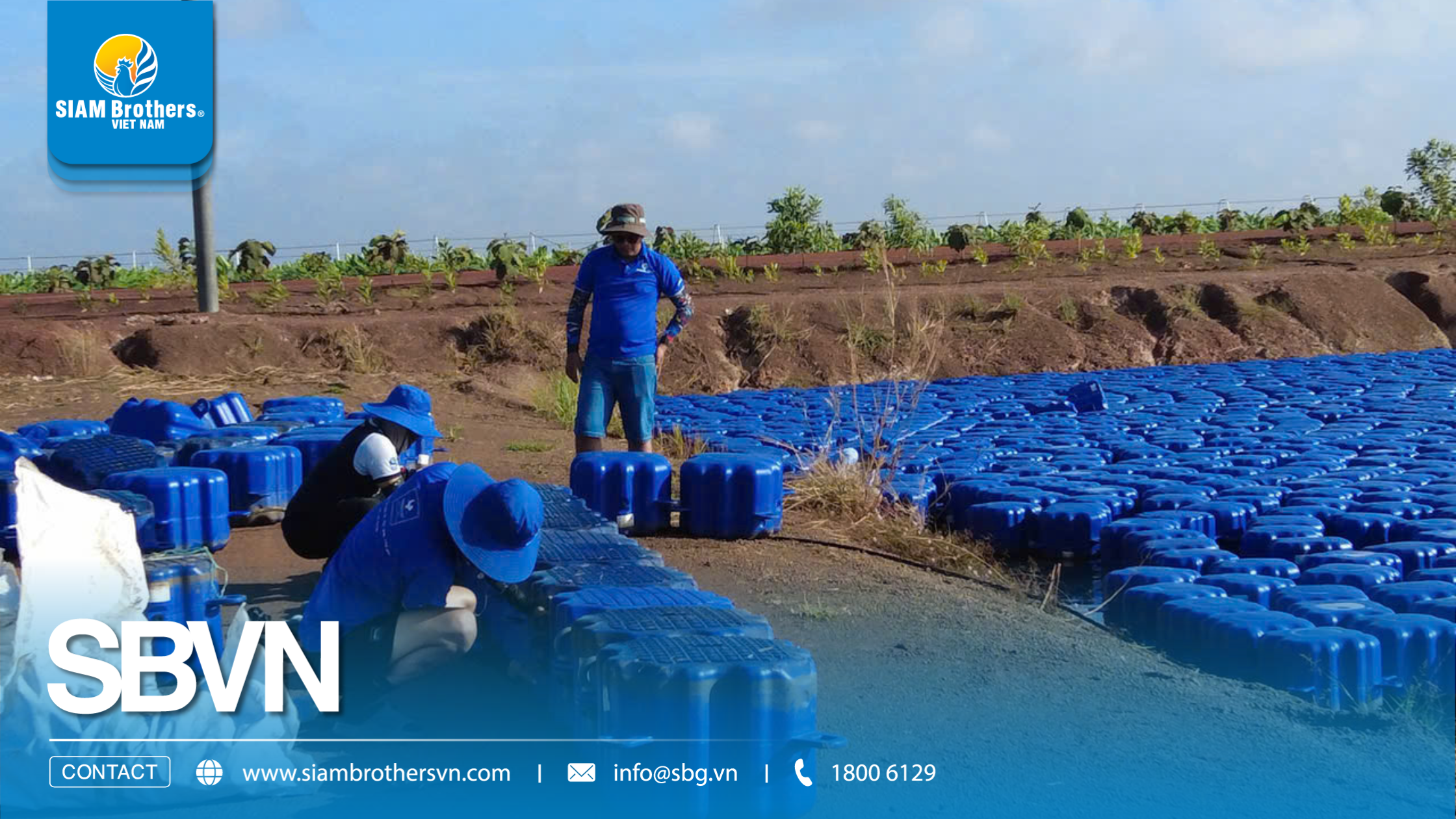
3.1. HDPE Floating Pontoons
3.1.1. Technical Features
- Made from virgin HDPE with high durability
- UV-resistant and corrosion-resistant
- Sealed structure, water-resistant, stable buoyancy
3.1.2. Functional Role
- Provide lift for cages or floating structures
- Reduce risks of sinking or tilting under load variations
3.2. Structural Frame and Decking
3.2.1. Frame
- Constructed from HDPE or galvanized steel
- Connects all pontoon modules into one system
- Ensures structural strength under waves and wind
3.2.2. Decking
- Provides space for movement and operations
- Easy to install and expand
3.3. Anchoring and Mooring System
3.3.1. Anchoring System
- Uses concrete anchors, piles, or seabed anchors depending on terrain
- Maintains stability against currents and wind
- Designed according to force direction
3.3.2. Mooring Ropes and Accessories
- High-strength ropes with abrasion resistance
- Connectors, shackles, and bolts ensure secure linkage
- Maintain flexibility while ensuring stability
3.4. Supporting Components
3.4.1. Fish Nets and Cage Frames
- Used in fish cage farming
- Optimize farming space and fish containment
3.4.2. Protective Systems
- Applied in environmental projects such as debris barriers
- Improve control of water flow and waste
3.5. System Integration
To ensure optimal performance, all components of the Floating Pontoon System must be integrated:
- Pontoons provide buoyancy → frame distributes load → anchors ensure stability
- Strong connections help withstand harsh environmental conditions
- A synchronized design extends lifespan and reduces maintenance costs
4. How to Design a Floating Pontoon System for Fish Cage Farming
4.1. Define Farming Scale and Site Conditions
4.1.1. Cage Farming Scale
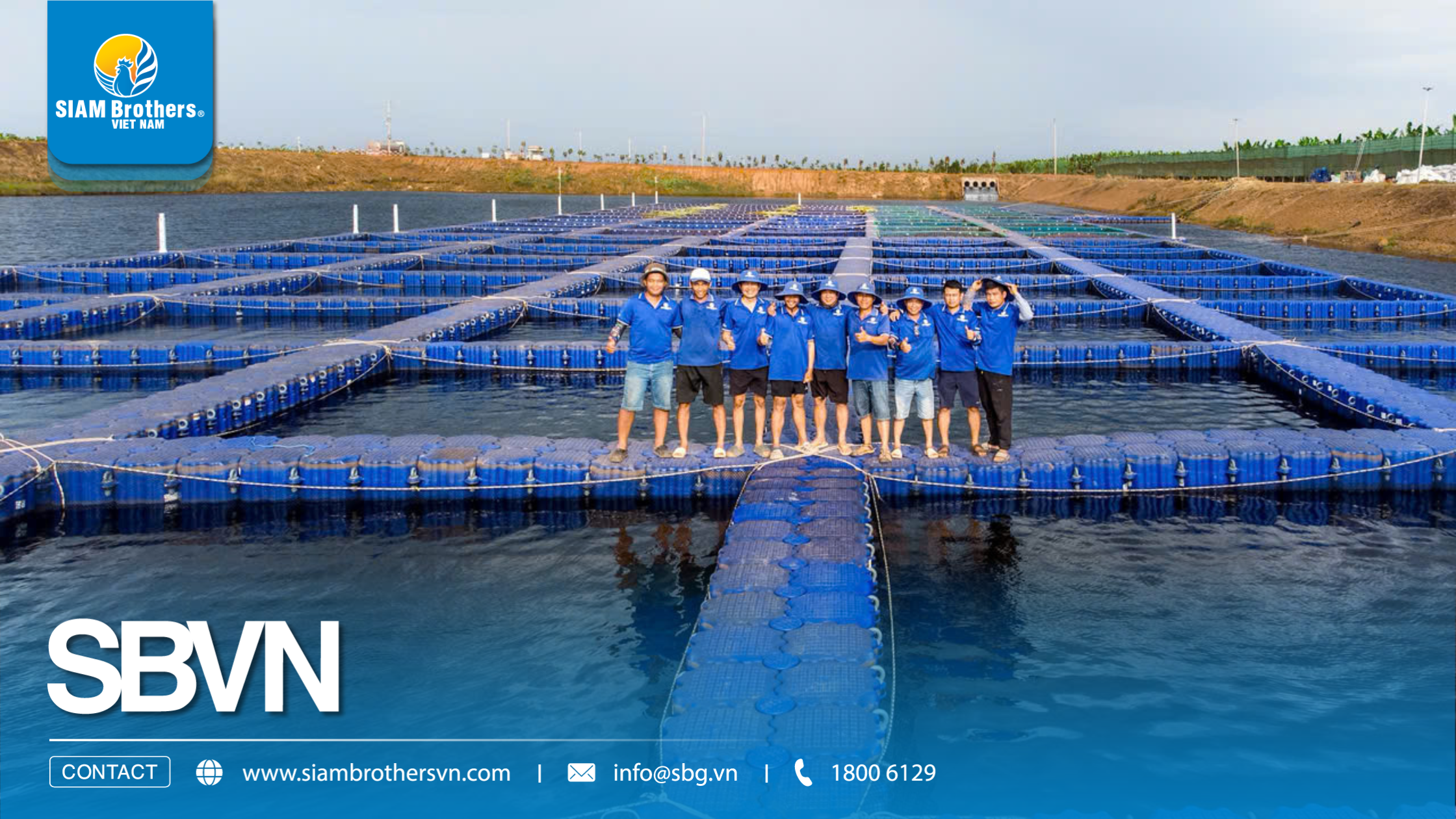
- Number of fish cages to be deployed
- Dimensions of each cage (square, circular, or rectangular)
- Stocking density and target production output
4.1.2. Environmental Conditions
- Water type: freshwater, brackish water, or seawater
- Farming depth and water level fluctuations
- Wave intensity, wind conditions, and current flow
Accurately defining these factors is essential for designing a Floating Pontoon System that is both suitable and sustainable.
4.2. Load Calculation and Pontoon Quantity
4.2.1. Determine Total Load Capacity
- Weight of cages, frames, and decking
- Fish biomass at different growth stages
4.2.2. Determine Required Number of Pontoons
- Based on the buoyancy capacity of each HDPE pontoon
- Apply a safety factor of 1.3-1.5
- Distribute pontoons evenly to prevent imbalance
4.3. Selection of Materials and System Configuration
4.3.1. Pontoon Selection
- Prioritize HDPE pontoons with high durability and UV resistance
- Ensure stable buoyancy over long-term operation
4.3.2. Frame and Decking Selection
- Use HDPE or galvanized steel frames for corrosion resistance
- Anti-slip decking with high load-bearing capacity
- Design for easy installation and future expansion
4.4. Anchoring and Mooring System Design
4.4.1. Anchoring Solutions
- Use concrete anchors or fixed piles depending on seabed conditions
- Arrange anchors according to the main current direction
- Ensure overall system stability
4.4.2. Mooring Ropes and Connections
- Use high-strength marine-grade mooring ropes
- Ensure abrasion resistance and load-bearing performance in water environments
4.5. System Layout and Design Optimization
4.5.1. Cage and Pontoon Arrangement
- Organize cages in clusters for easier management
- Maintain proper spacing for water circulation
- Optimize water surface utilization
4.5.2. Long-Term Cost Optimization
- Design flexible systems for future expansion
- Avoid under-design or overdesign of load capacity
5. FAQs – Frequently Asked Questions about Floating Pontoon Systems
5.1. How long does a Floating Pontoon System last?
- The average lifespan of an HDPE Floating Pontoon System is 10–20 years
- Depends on material quality, environmental conditions, and usage frequency
- Proper design standards help reduce damage and maintenance costs
5.2. Can a Floating Pontoon System withstand strong waves?
- Yes, if designed with proper load capacity and anchoring systems
- HDPE pontoons offer flexibility, reducing the risk of cracking
- Performance depends on layout design and anchoring direction
5.3. How many pontoons are needed for one fish cage?
- No fixed number; depends on cage size and stocking density
- Must calculate total load and divide by pontoon buoyancy
- A safety factor should be applied to prevent overload
5.4. Does a Floating Pontoon System require maintenance?
- Yes, but maintenance costs are low with high-quality materials
- Regular inspection of connections, mooring ropes, and pontoons is recommended
5.5. Is a Floating Pontoon System suitable for all water environments?
- Suitable for freshwater, brackish water, and marine environments
- Material selection and design must match specific conditions
- Especially important in areas with strong waves or currents
5.6. What factors affect the investment cost of a Floating Pontoon System?
- System scale and number of pontoons
- Materials used (HDPE, LLDPE, steel, etc.)
5.7. Should you design a Floating Pontoon System yourself or hire professionals?
- Small-scale systems can be self-designed with sufficient experience
- Large-scale projects should involve professional experts to ensure safety
5.8. How to optimize efficiency when investing in a Floating Pontoon System?
- Select durable materials suitable for the environment
- Ensure synchronized design between pontoons, frame, and anchoring system
- Choose scalable solutions for future expansion
5.9. Where to buy a reliable Floating Pontoon System?
- Choose suppliers with proven industry experience and real projects
- Prioritize manufacturers offering complete system solutions
- Verify technical specifications and warranty policies
The Floating Pontoon System plays a decisive role in ensuring safety, durability, and operational efficiency in both fish cage farming and floating structures. Complying with proper design standards—from load capacity and HDPE materials to structural configuration and anchoring systems—helps optimize investment costs, reduce risks, and extend service life.
If you are looking for the right solution for your project, avoid making decisions based on assumptions. Instead, rely on clear technical standards and expert guidance. Contact SIAM Brothers Vietnam today for professional consultation on designing a Floating Pontoon System that is efficient, durable, and tailored to your specific conditions.
Source: SIAM Brothers Vietnam
Contact us:
► Address: 5th floor, VRG Building, 177 Hai Ba Trung Street., Xuan Hoa Ward, Ho Chi Minh City, Vietnam
► Hotline: 1800 6129
► Tel: (+84) 28 38 912 889
► Email: info@sbg.vn
► Follow us for more details at: Facebook - Zalo OA - Tiktok - Youtube - LinkedIn
Download SBVN ID app here:
► CHPlay
► Appstore