
- 1800 6129

A fishing net rope runs along the edge of a net, connecting the netting to floats, sinkers and other load-bearing components. In coastal fishing operations, choosing the right nearshore fishing net rope helps the net maintain its intended shape and tension while reducing the risk of damage during repeated deployment and retrieval. Which factors should fishers consider when selecting this component? Let’s explore them with SIAM Brothers Vietnam.
Source: Internet
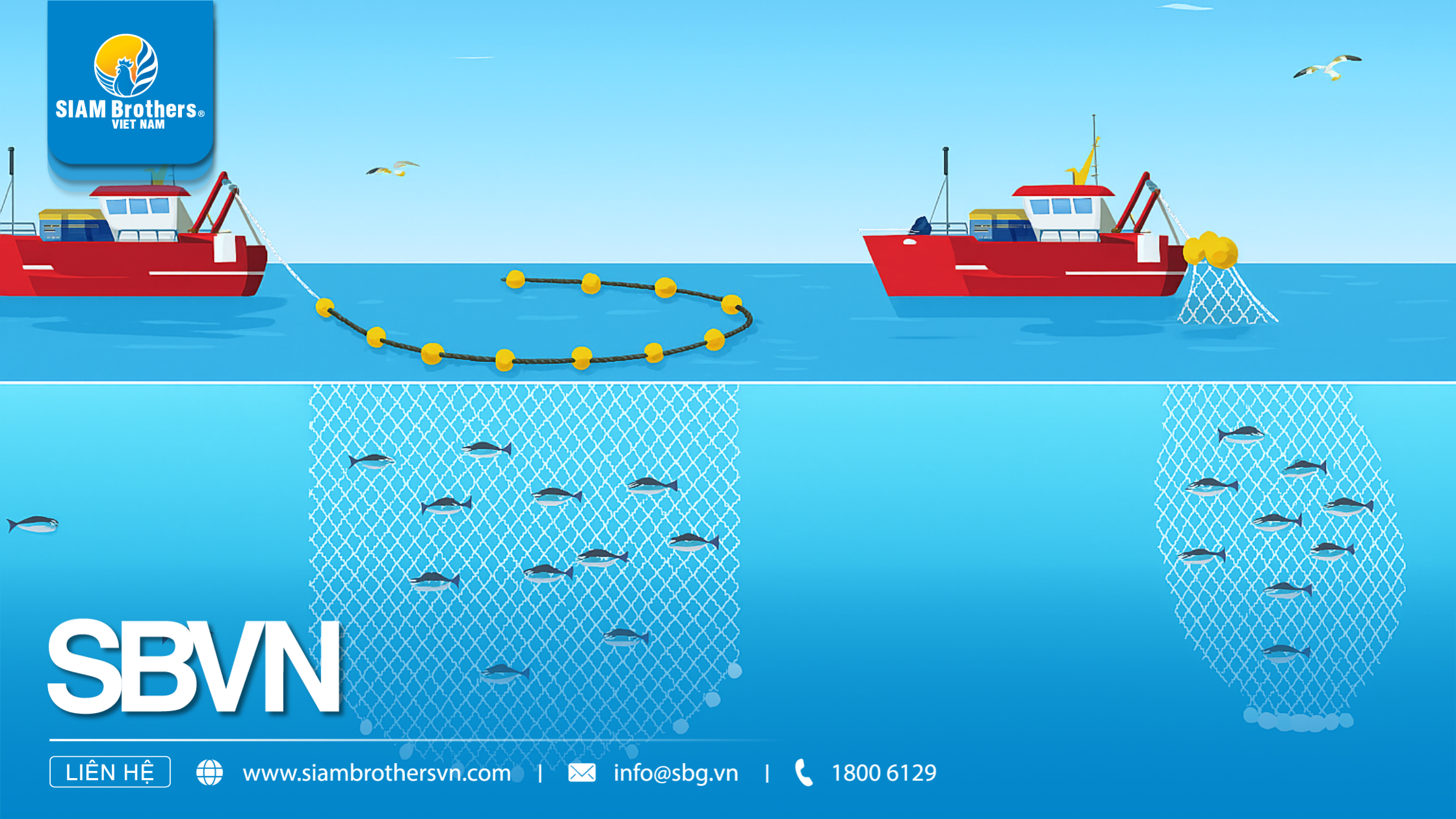
Fishing net ropes are sewn, braided or tied along the upper and lower edges of a net. Depending on the fishing gear design, they may be connected to floats, sinkers, rings or hauling lines.
A nearshore fishing net rope therefore does more than reinforce the edge of the net. It also helps distribute loads throughout the fishing gear during deployment, towing and retrieval.
When installed correctly, the rope forms a load-bearing frame around or along the net’s edges. This frame helps distribute the mesh evenly and limits the risk of the net edges bunching, sagging or becoming distorted.
The upper edge, known as the headrope or float line, is normally fitted with floats to provide buoyancy. The lower edge, known as the footrope or lead line, is connected to sinkers or weighted components.
The interaction between these two edges helps the net open and maintain its intended shape in the water.
Currents, waves, the weight of the net and the pulling force generated by the vessel can act on the fishing gear simultaneously. The nearshore fishing net rope must transmit and distribute these forces along the edge of the net.
When tension is uneven, some sections may sag while others carry excessive loads. This can prevent the net from opening properly and increase the risk of torn mesh, displaced accessories or damaged connecting points.
The edges of a fishing net are repeatedly exposed to friction, tension and sudden loads. A suitable rope reinforces these areas and provides secure attachment points for floats, sinkers and other components.
However, the effectiveness of a nearshore fishing net rope also depends on the tying method, spacing between attachment points, net construction and fishing technique. Even a strong rope may perform poorly if it is incorrectly installed or mismatched with the rest of the fishing gear.
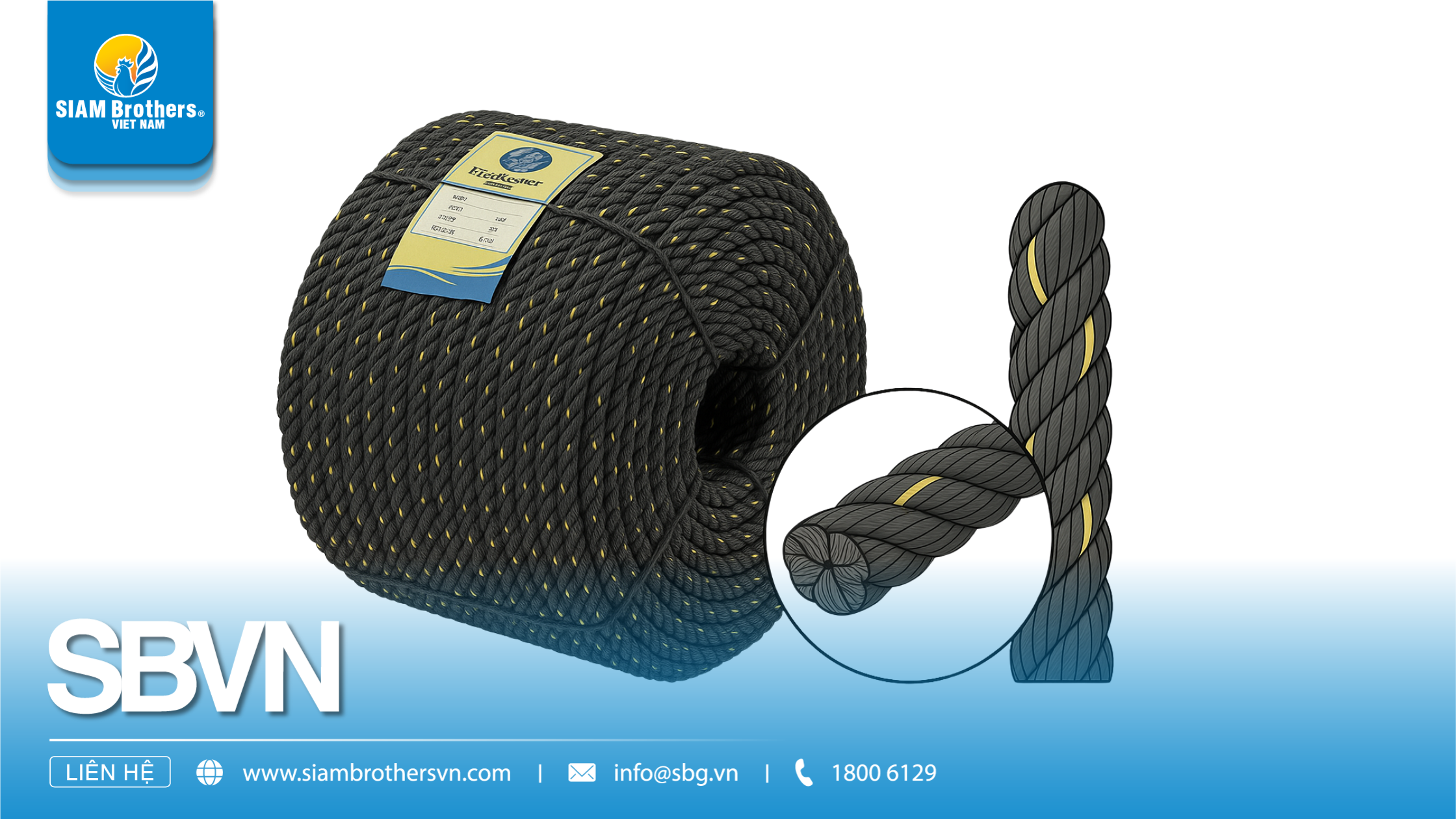
A fishing net rope should not be selected based solely on its external size or how it feels when handled. Diameter, breaking strength and abrasion resistance should be evaluated together.
Diameter affects the rope’s strength, weight, flexibility and ease of handling. A rope that is too small for the actual load may stretch excessively, wear quickly or break. In contrast, an unnecessarily large rope may add weight and become difficult to tie, deploy or retrieve on a small vessel.
When selecting nearshore fishing net rope, consider:
The dimensions and total weight of the net.
The number and weight of attached floats or sinkers.
The method used to deploy and retrieve the net.
The capacity of the hauling equipment.
The size of the vessel and the number of crew members handling the gear.
Source: SIAM Brothers Vietnam
There is no single rope diameter suitable for every type of net. Fishers should provide information about their fishing gear and operating conditions before selecting a particular size.
Breaking strength refers to the maximum load a rope can withstand before failure under specified testing conditions. It is an important technical measurement, but it should not be treated as the safe working load under actual fishing conditions.
During operation, nearshore fishing net rope may be exposed to shock loading, uneven tension, knots, abrasion and material degradation. A suitable safety margin is therefore required rather than choosing a product with a breaking strength that only matches the estimated load.
When comparing ropes, users should refer to technical data for products with the same diameter and construction. Two ropes with similar external dimensions may differ significantly in material, strand structure, weight and breaking strength.
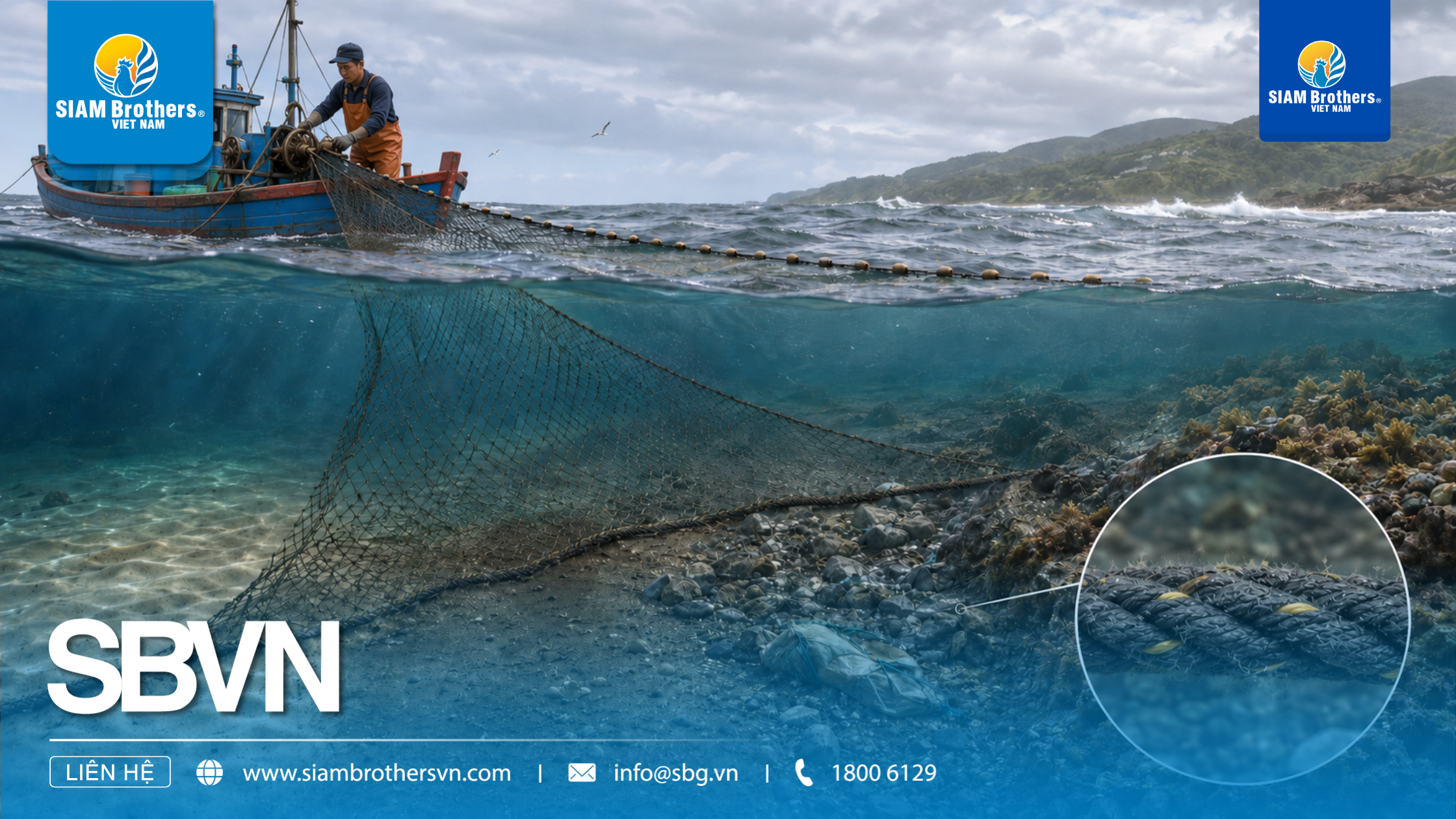
In nearshore environments, ropes may rub against vessel sides, hauling equipment, sand, mud, rocks, shells and metal components. Repeated friction causes surface fibres to become fuzzy, worn or cut, gradually reducing the effective cross-section of the rope.
A nearshore fishing net rope should therefore have a stable construction and suitable resistance to abrasion. Users should also inspect areas that regularly contact hard surfaces and avoid dragging the rope across the deck or over sharp edges.
Nearshore fishing does not necessarily involve light operating conditions. Coastal waters may have variable depths, strong tidal currents, complex seabed terrain and numerous natural or artificial obstructions.
Sand, mud, rocks and reefs produce different levels of friction. If the fishing gear frequently contacts the seabed, abrasion resistance should be prioritised.
In areas containing submerged rocks, poles, waste or sharp objects, the rope should be inspected whenever the net becomes snagged. Even a nearshore fishing net rope with high breaking strength can deteriorate quickly if it is repeatedly cut, rubbed or bent at the same point.
Currents create resistance across the entire surface area of a net. When the direction or speed of the current changes suddenly, the load transferred to the rope also changes.
Waves and vessel movement can generate shock loads rather than steady tension. For this reason, nearshore fishing net rope should be selected according to the most demanding conditions reasonably expected in the fishing area, not only the conditions experienced on calm days.
Source: SIAM Brothers Vietnam
Fishing gear used continuously is exposed to repeated cycles of pulling, bending, knot tightening and abrasion. A rope may not be completely broken, but its actual strength can still decrease after extended use.
Fishers should inspect sections close to knots, accessory attachment points, vessel contact areas and hauling equipment. A rope should be assessed for replacement if it becomes flattened, heavily frayed, deeply cut or structurally distorted.
Selecting the wrong rope can reduce the stability of the entire fishing gear system, even when the netting, floats and other accessories remain in good condition.
|
Rope condition |
Effect on fishing gear |
Operational risk |
|
Diameter is too small |
Rope may stretch and net edges may lose tension |
Higher risk of rope failure or torn netting |
|
Rope is excessively large or heavy |
Changes the gear’s weight and reduces handling efficiency |
More time and effort required for deployment and retrieval |
|
Breaking strength is insufficient |
Rope cannot withstand actual loads or shock loading |
Sudden failure during net hauling |
|
Abrasion resistance is poor |
Surface fibres wear and the rope loses strength |
Shorter service life and higher replacement costs |
|
Rope has deteriorated |
Load-bearing capacity becomes unpredictable |
Greater risk of unexpected breakage |
When nearshore fishing net rope stretches or wears unevenly, the shape of the net may change. Slack sections can affect the distribution of floats and sinkers, while stronger sections are forced to carry additional loads.
Deteriorated rope may also cause knots to loosen, accessories to shift or the edge of the net to become misaligned. A failure during operation can interrupt the fishing trip, require emergency repairs or damage other components.
Fishers should therefore not wait until the rope breaks completely before replacing it. Recording its usage history and inspecting it visually and manually before each trip can help identify sections that are no longer reliable.
Yiet Kieu nearshore fishing net rope is manufactured by SIAM Brothers Vietnam using polypropylene, polyethylene, colour additives and UV-resistant components. It is designed for fishing applications such as net framing, anchoring and securing equipment in marine environments.
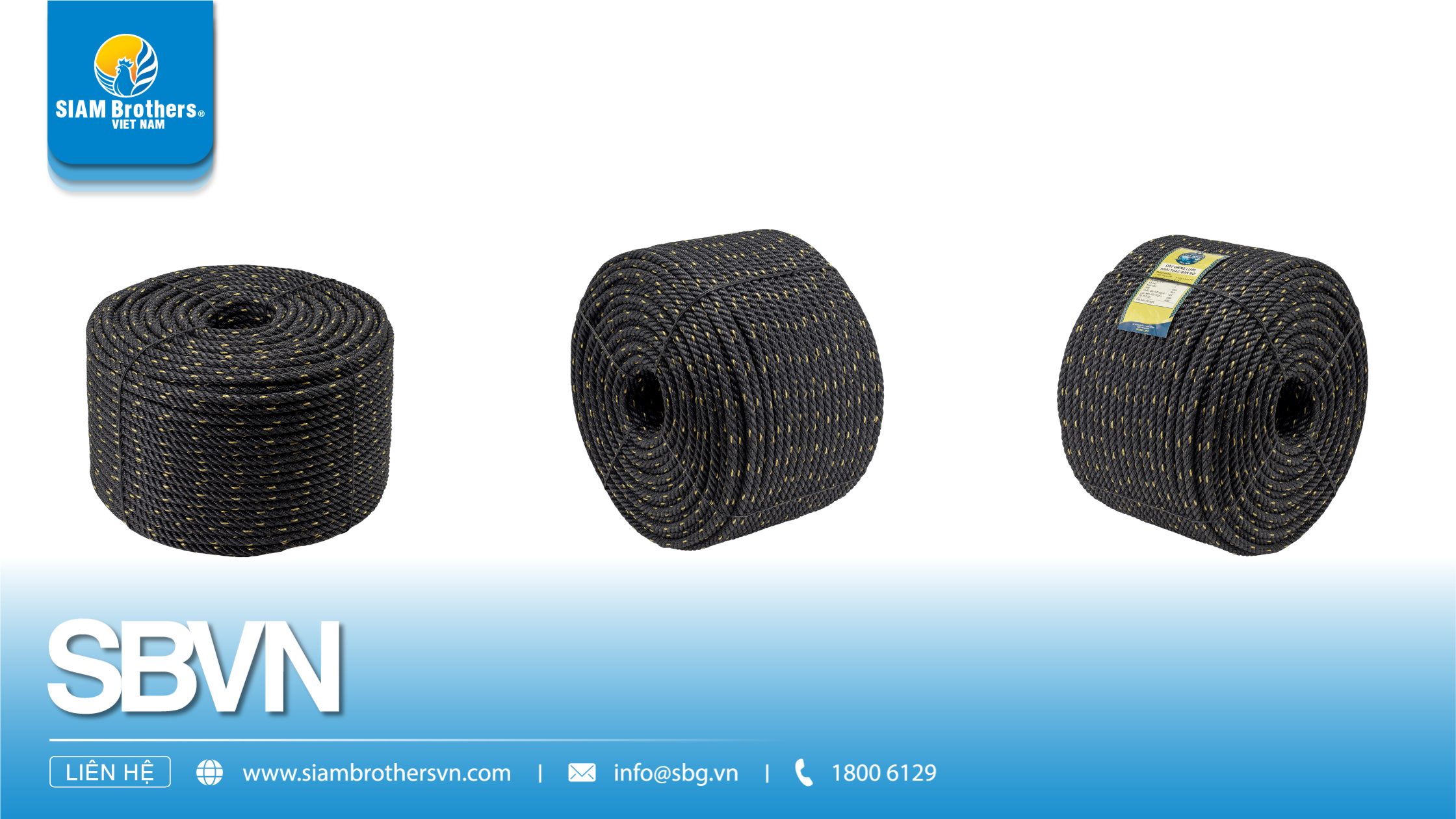
Yiet Kieu Nearshore Fishing Net Rope from SIAM Brothers Vietnam
According to information published by SIAM Brothers Vietnam, the product offers:
PP and PE construction.
Lightweight properties and the ability to float.
Abrasion resistance and high tensile strength.
UV-resistant components for prolonged outdoor use.
Black, military green and customised colour options.
Coil lengths of 180 m, 220 m and 1,000 m, with other lengths available upon request.
|
Rope diameter |
Weight |
Breaking strength |
|
24 mm |
316.5 g/m |
6,547 kgf |
|
26 mm |
376 g/m |
7,516 kgf |
|
28 mm |
435 g/m |
8,699 kgf |
|
30 mm |
481.4 g/m |
9,984 kgf |
|
32 mm |
583.8 g/m |
11,136 kgf |
|
34 mm |
641.8 g/m |
12,554 kgf |
|
36 mm |
731.5 g/m |
13,971 kgf |
These figures apply to selected four-strand polypropylene SKUs listed on the SIAM Brothers Vietnam website. When choosing nearshore fishing net rope, users should compare the specifications with the net type, estimated loads, fishing method and conditions in the intended operating area.
The rope with the highest breaking strength is not automatically the best choice. A suitable product should balance strength, diameter, weight, flexibility and ease of handling aboard the vessel.
Nearshore fishing net rope directly affects the shape, tension and load distribution of fishing gear. A suitable choice requires the user to consider diameter, breaking strength, abrasion resistance, seabed conditions, currents and operating frequency.
In addition to selecting the right product, the rope should be inspected regularly at knots, float and sinker attachment points, vessel contact areas and hauling equipment. Replacing sections that are badly frayed, flattened, cut or structurally distorted can help maintain fishing gear stability and reduce the risk of unexpected failure.
Read more: Comparing PE, Nylon and PP Fishing Net Ropes – Which Material Is the Most Durable and Suitable?
Source: SIAM Brothers Vietnam
FAQ – Frequently Asked Questions
Q: Should I always choose nearshore fishing net rope with the largest available diameter?
A: No. A larger diameter generally increases weight and stiffness, which may make the rope more difficult to handle or alter the fishing gear configuration. The diameter should correspond to the net size, load, hauling equipment and operating conditions.
Q: When should a fishing net rope be replaced?
A: Replacement should be considered when the rope has deep cuts, severe surface wear, flattened sections, distorted strands or knots that repeatedly become loose. A rope that has experienced a significant overload should also be inspected before further use.
Q: How can I select suitable nearshore fishing net rope?
A: Provide the supplier with information about the net type, gear dimensions, existing rope diameter, number of floats and sinkers, hauling method and local sea conditions. These details provide a more reliable basis for selection than appearance or diameter alone.
Contact us:
Address: 5th floor, VRG Building, 177 Hai Ba Trung Street, Vo Thi Sau Ward, Ho Chi Minh City, Vietnam
Tel: (+84) 28 38 912 889
Hotline: 1800 6129
Facebook: www.facebook.com/siambrothersvn
Email: info@sbg.vn
YouTube: youtube.com/@siambrothersvietnam1728
OA Zalo: zalo.me/1402339229697925373
App SBVN ID:
CHPlay: https://bit.ly/SBVNID-Android
Appstore: https://bit.ly/SBVNID-iOS








Specializing in Agricultural and Fisheries Products & Multipurpose Wire