
- 1800 6129

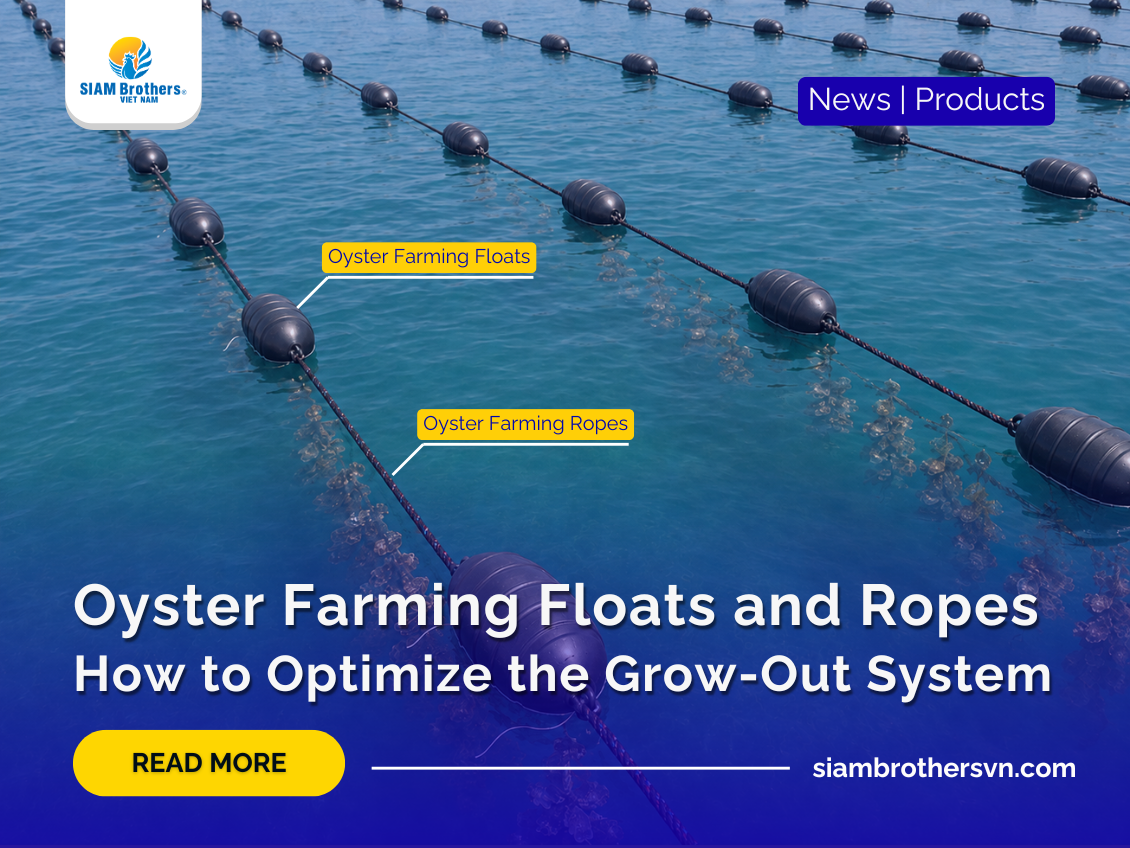
Oyster farming floats and ropes perform different functions, but they must be designed as parts of the same system. Floats provide buoyancy, while ropes connect the flotation points, carry the growing load and hold the oysters at a suitable depth. If one component is not compatible with the others, the line may sag, tilt or become unstable as the oysters grow.
In suspended oyster farming, the total load is not constant. In addition to the weight of ropes and collectors, the system must support growing oysters, connectors, accumulated fouling organisms and deposits. It must also withstand the continuous effects of currents, waves and wind. For this reason, combining oyster farming floats and ropes effectively requires more than selecting individual products. The entire line should be planned according to the maximum expected load and the conditions of the farming site.
Floats provide the buoyancy required to support the main line, hanging ropes, collectors, oysters and connecting accessories. As oyster biomass increases, the floats sit deeper in the water if the system does not have sufficient reserve buoyancy. Excessive immersion reduces the safety margin above the waterline, causes the main rope to sag and may move the oysters away from their intended growing depth.
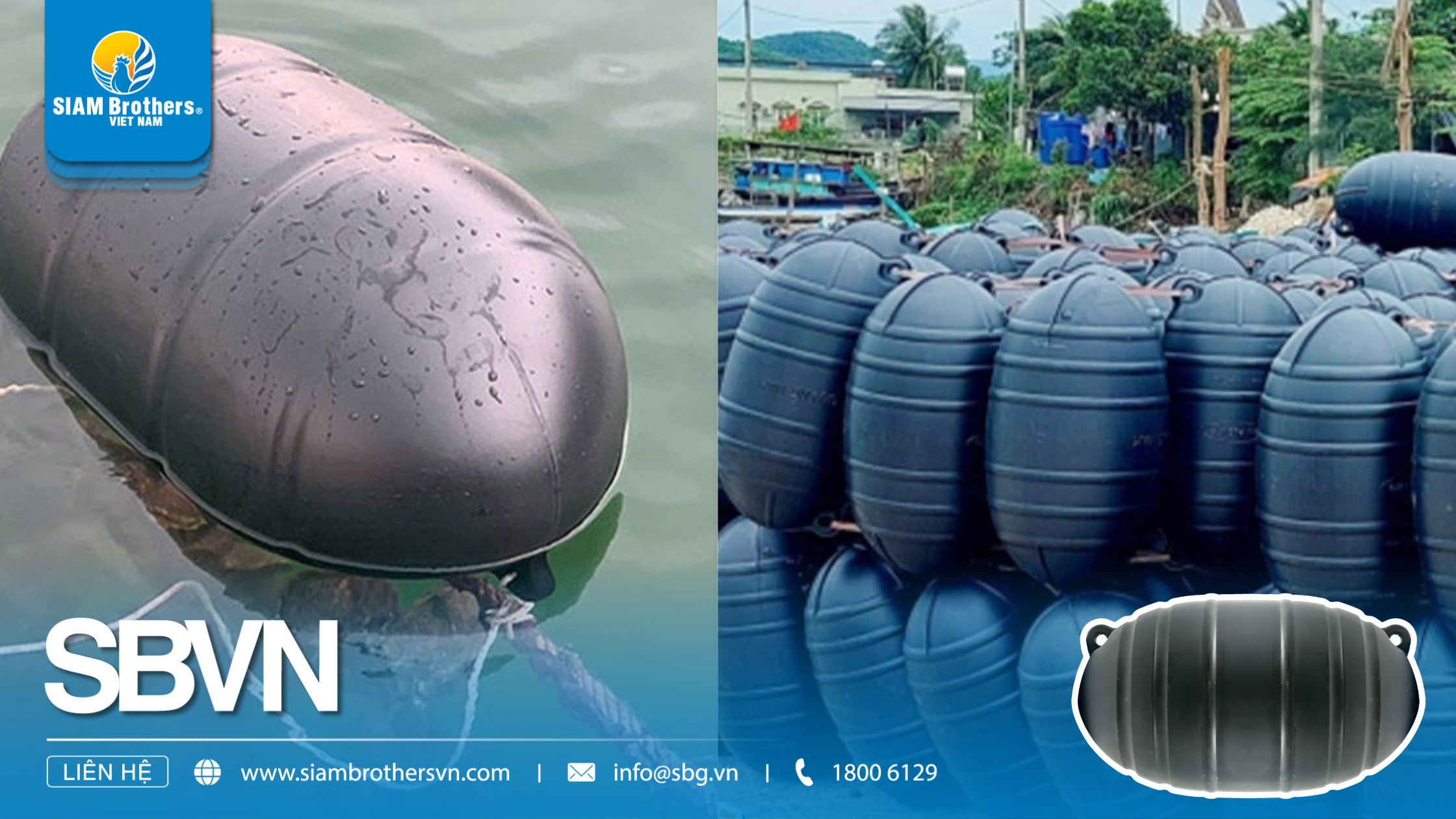
Within a complete system of oyster farming floats and ropes, the oyster farming float supplied by SIAM Brothers Vietnam is manufactured from HDPE. The product measures 300 × 600 mm, weighs approximately 2.3–2.5 kg and has a stated buoyancy of up to 80 kg.
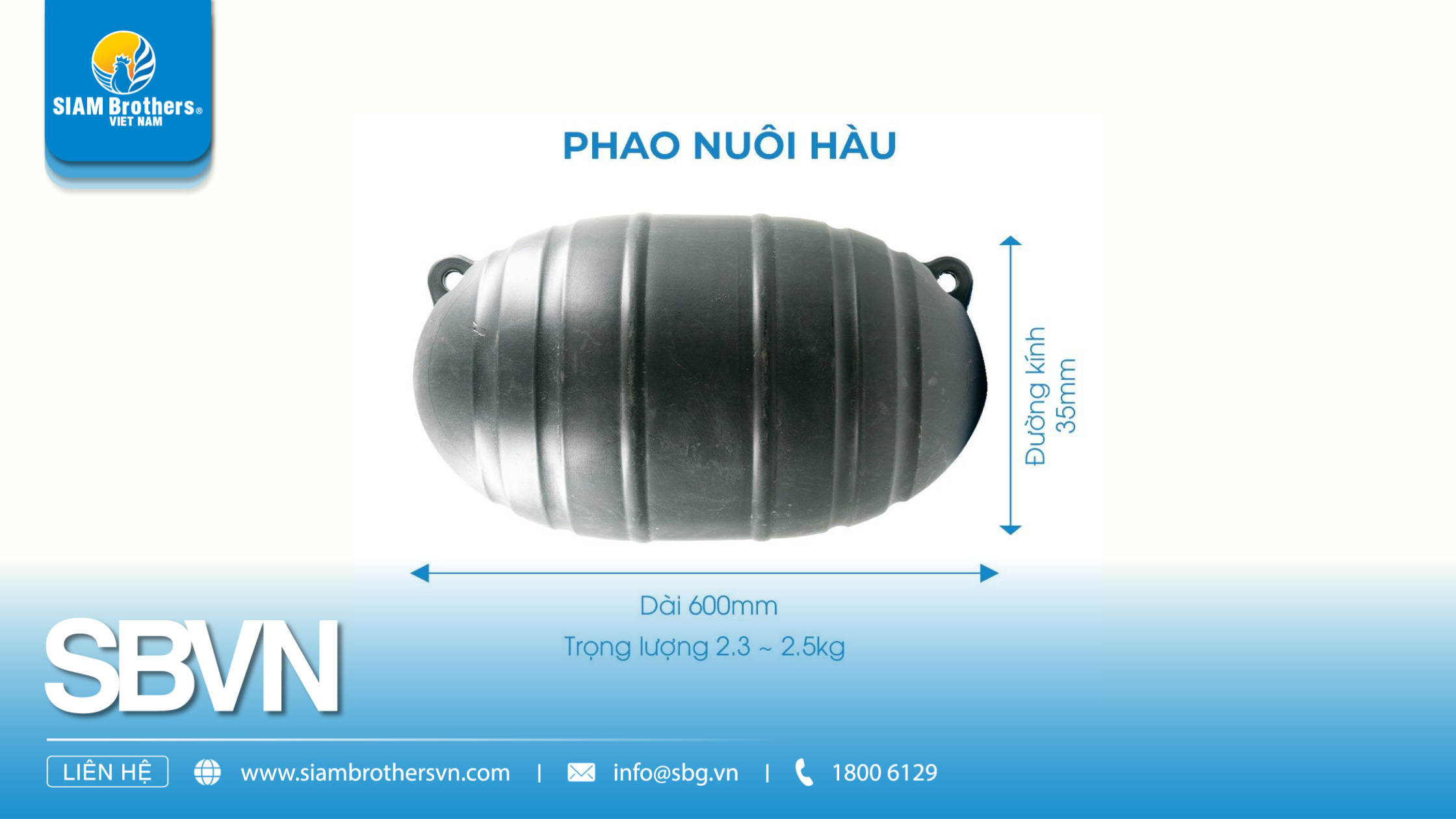
The HDPE material provides resistance to UV exposure, corrosion and impact, making it suitable for outdoor and marine use. However, the stated buoyancy should not be treated as the safe operating load under every condition. A portion of the available buoyancy should remain in reserve to accommodate oyster growth, dynamic loading and unexpected changes in the farming environment.
The main rope connects the floats and receives loads from the hanging lines. The forces acting on it are not entirely vertical. Currents push against the ropes, collectors and oyster clusters, creating horizontal tension along the main line and at the anchoring points.
The main rope therefore needs suitable tensile strength, controlled elongation and resistance to abrasion around knots and connectors. Hanging ropes hold the collectors or oyster clusters at the selected depth. They also maintain spacing between growing units, helping water circulate while reducing contact and entanglement.
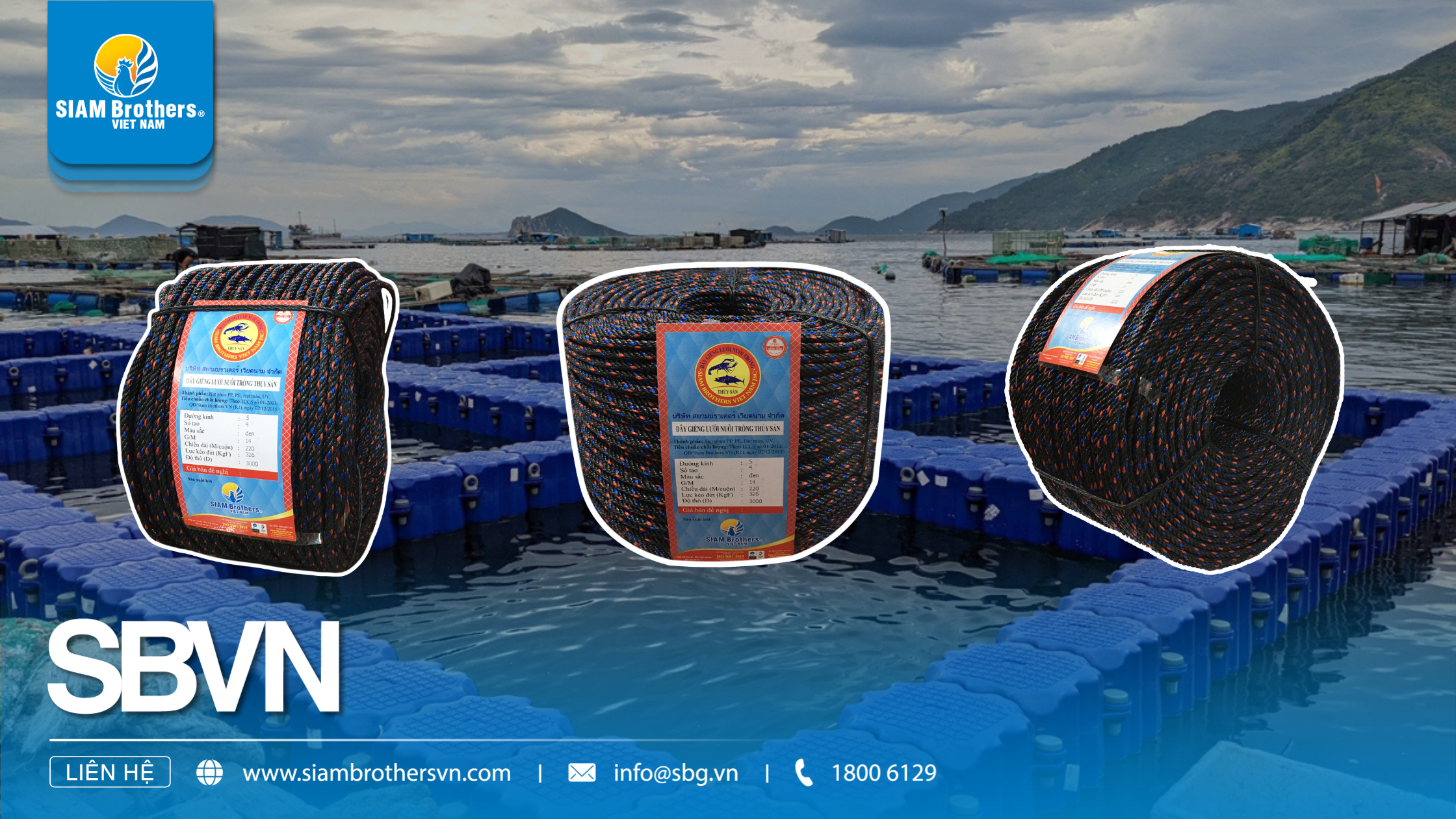
The FISH & SHRIMP AQUACULTURE ROPE is produced from polypropylene and polyethylene and is available in different diameters, coil lengths and breaking strengths. The rope is lightweight, floats on water and offers resistance to UV exposure and abrasion.
This range of specifications allows different ropes to be selected for the main line, hanging sections and connecting points. Using a single rope specification throughout the entire farm may appear convenient, but it does not account for differences in load, abrasion and handling requirements.
The first step is to estimate the highest total load expected during the production cycle. The calculation should include the weight of the main rope, hanging ropes, collectors, market-size oysters, connectors, fouling organisms and accumulated deposits.
Calculations based only on the weight at the stocking stage may result in insufficient buoyancy later in the cycle. A reserve should also be maintained so the system can respond to waves and currents without operating at the full stated buoyancy of every float.
Once the total load has been estimated, the floats should be distributed along the main line. Adding more floats does not automatically create a stable system if they are concentrated in only a few areas. Large gaps between flotation points allow the main rope to sag, create uneven hanging depths and concentrate tension around nearby knots.
A balanced distribution allows buoyancy to be transferred more evenly along the line. Sections carrying more hanging ropes or exposed to stronger currents may require additional flotation, but changes should be based on the actual load rather than on visual appearance alone.
The spacing between hanging ropes must also be considered together with float spacing. Hanging lines positioned too closely increase the total load, restrict water circulation and are more likely to collide when the current changes direction. If they are positioned too far apart, the available farming area may not be used efficiently.
Appropriate spacing should balance expected production, water exchange, maintenance access and the load-bearing capacity of the line. There is no single spacing measurement that can be applied to all farms because water depth, culture method, current speed and available equipment vary between locations.
Rope selection should not be based only on diameter. The main rope generally requires greater tensile strength and abrasion resistance. Hanging ropes should be strong enough for their assigned load while remaining manageable during inspection and harvest. Float-tying ropes must fit the attachment points and reduce the risk of knots slipping.
The manufacturer’s breaking-strength data provides a useful reference, but the normal operating load should remain below the breaking limit and include a suitable safety factor. Areas where ropes rub against hard edges, connectors or other ropes require additional attention because concentrated abrasion may reduce service life.
After installation, oyster farming floats and ropes should be tested under load. Operators should observe float immersion, main-line sag, the vertical position of hanging ropes and the balance between both ends of the farming line.
Sections that sit deeper or lean to one side should be corrected by redistributing the load, adding floats or adjusting connection points before full-scale stocking. Early adjustments are usually easier and less costly than repairing a line after it carries mature oysters.
According to the FAO’s guidance on oyster culture, oysters can be suspended from floating structures using rafts, floats and ropes. The length and spacing of the hanging units depend on water depth, operational methods and site conditions. A fixed float or rope interval should therefore not be applied to every farming location.
Current speed and direction have a major influence on system stability. Currents create horizontal forces that move the hanging units away from a vertical position. At sites with strong currents, hanging ropes may need wider spacing to reduce collisions, abrasion and entanglement.
The orientation of the line, the location of anchors and the tension of the main rope should correspond to the dominant current direction. In tidal areas where the current regularly reverses, knots and connection points must withstand repeated changes in loading direction.
Waves and wind create dynamic loads instead of steady pressure. Repeated movement can loosen knots, wear rope surfaces or cause floats to collide. Before storm seasons, farmers should inspect oyster farming floats and ropes, reinforce the connection points, remove damaged sections and correct lines that have become excessively slack.
Saltwater and UV exposure directly affect the service life of marine equipment. Rope sections close to the surface are exposed to both sunlight and seawater, while tying points experience concentrated friction. HDPE floats and UV-resistant aquaculture ropes can reduce premature deterioration, but material resistance does not eliminate the need for routine inspection.
The total load also changes throughout the farming cycle. Oyster growth, fouling organisms and accumulated deposits may increase the weight beyond initial estimates. Uneven oyster growth can create local load concentrations, causing certain floats to sit deeper while other sections remain relatively high.
The system should therefore be monitored and adjusted during production rather than treated as a fixed arrangement. Float immersion, rope sag and the position of hanging units provide useful visual indications of changing load distribution.
Operational access should also be considered during the design stage. Boats and workers need adequate space to reach the lines, lift hanging ropes, inspect oysters, add flotation and replace worn sections without dismantling large parts of the farm.
A layout that is too dense may use more of the available water area in the short term, but it can increase maintenance time and handling risks. Effective oyster farming floats and ropes should balance production density with load capacity and practical access.
One of the most common mistakes is calculating float quantity using only the initial load. As the oysters grow, the floats sit lower, the main rope sags and the distance between the oysters and the surface changes.
The solution is to calculate the maximum expected load, maintain reserve buoyancy and provide positions where additional floats can be installed. The system should be reviewed at different stages of oyster growth instead of only after the first installation.
Another mistake is placing floats too far apart or distributing them unevenly. The space between two floats can become a sagging point, while the attachment areas near the floats carry greater tension. Adding flotation only at the ends of the line does not solve this problem because the load must be supported along the entire length.
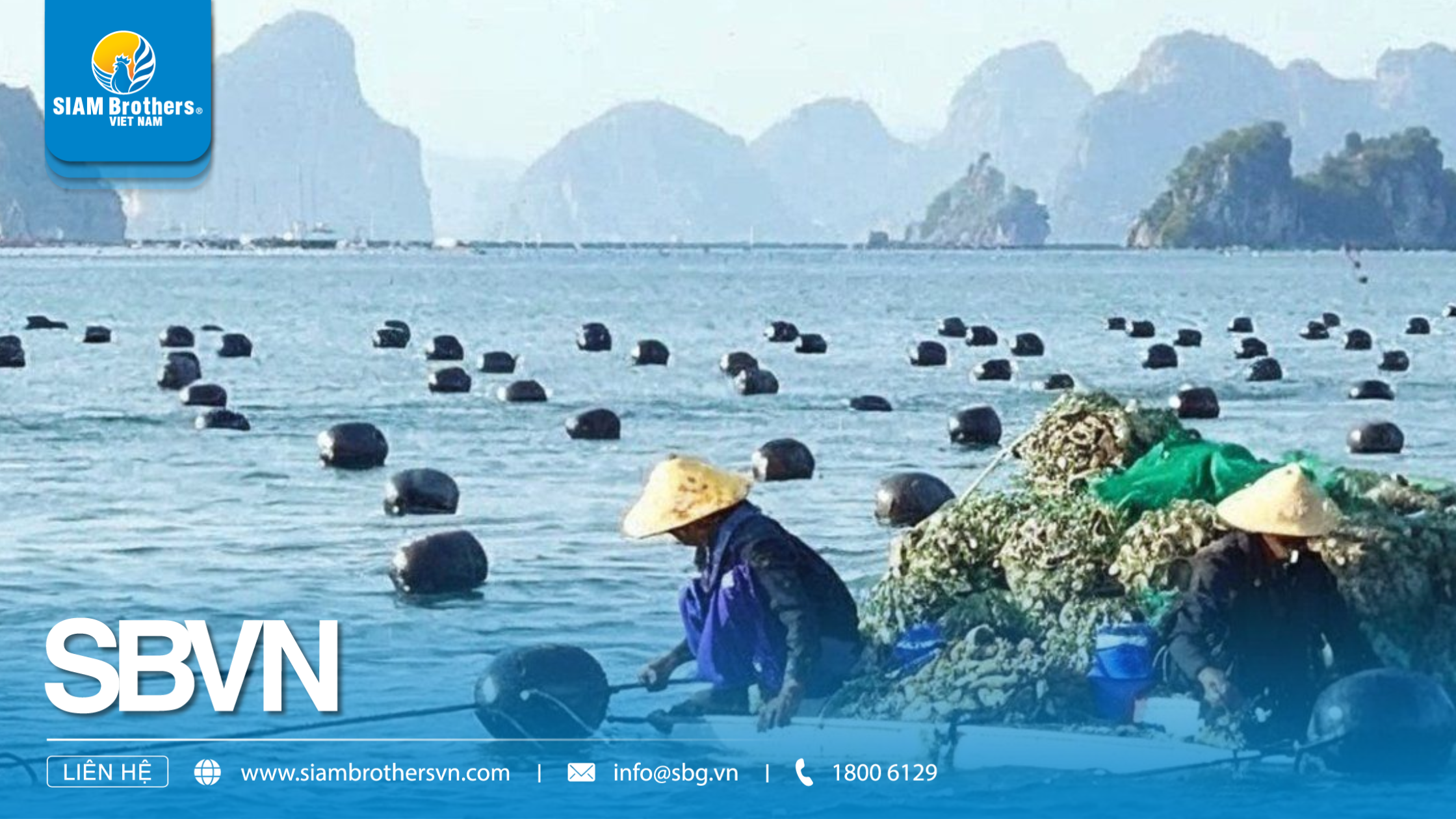
Installing too many hanging ropes on one section is another common issue. High density increases the load rapidly and makes the hanging units more likely to collide or become entangled. It can also restrict water flow through the oyster clusters.
Hanging lines should be distributed relatively evenly, with enough working space for inspection, lifting and harvesting. Density may need to be adjusted after observing actual current behaviour at the site.
Using the same rope specification for every position can also create weaknesses. Hanging ropes may become unnecessarily heavy or difficult to handle, while the main line or float-tying ropes may not provide sufficient tensile strength.
Each rope should be selected according to its function, expected load and abrasion exposure. Sections in contact with hard edges or connectors may require protection or earlier replacement than less exposed areas.
A final mistake is failing to inspect the system regularly. Floats may sit unusually low, ropes may fray and knots may loosen without causing an immediate failure. A scheduled inspection programme, combined with additional checks after severe weather, helps identify imbalance before the line breaks or becomes overloaded.
For oyster farming floats and ropes, preventive maintenance is generally less costly than emergency repairs after the system has failed. Damaged, cracked, deformed or heavily worn components should be addressed before they continue carrying production loads.
An integrated solution begins by treating floats, ropes and anchors as components of the same load-bearing structure. Rope specifications must match the available buoyancy, float quantity must correspond to the number of hanging lines, and the anchoring arrangement must hold the system under the local current conditions.
This approach reduces the risk of one component remaining in good condition while another becomes the system’s weak point. It also makes it easier to identify the cause of sagging, uneven immersion or repeated rope wear.
Before selecting products, farmers should collect information about the line length, number of hanging ropes, expected harvest load, water depth, current conditions and production season. For an existing system, float immersion, main-line sag, knot condition and visible abrasion should also be recorded.
SIAM Brothers Vietnam supplies HDPE floats and aquaculture ropes in multiple specifications, supporting the development of oyster farming floats and ropes solutions based on actual farm scale and operating requirements.
Instead of purchasing each product separately, farmers should discuss the full line configuration to identify suitable buoyancy, rope diameter, tensile strength and coil length. A coordinated selection can improve stability, simplify maintenance and make future expansion easier.
Conclusion
Floats provide buoyancy, ropes carry and distribute the load, and anchors hold the farming line in position. Oyster farming floats and ropes should therefore be selected and arranged together according to load, currents, saltwater exposure and maintenance requirements.
An optimized system does not necessarily use the largest floats or thickest ropes. It requires adequate reserve buoyancy, appropriate rope strength, balanced load distribution and practical access for regular inspection.
To develop a suitable oyster farming floats and ropes solution, customers can review the oyster farming float and aquaculture rope supplied by SIAM Brothers Vietnam. Information about the farm scale, expected load and local water conditions will support a more appropriate product recommendation.
Source: SIAM Brothers Vietnam
Frequently asked questions
Q: How many floats are required for an oyster farming line?
A: The number depends on the total load, line length, hanging-rope density, currents and required reserve buoyancy. A fixed quantity should not be applied to every farming system.
Q: Can the same rope be used for both the main line and hanging ropes?
A: It may be possible in some small systems, but the main line and hanging ropes experience different loads, abrasion and handling requirements. Each position should be assessed separately.
Q: When should additional floats be installed?
A: Additional flotation should be considered when floats sit unusually low, the main line sags excessively, the system tilts or oyster biomass exceeds the expected load.
Contact us:
Address: 5th floor, VRG Building, 177 Hai Ba Trung Street, Vo Thi Sau Ward, Ho Chi Minh City, Vietnam
Tel: (+84) 28 38 912 889
Hotline: 1800 6129
Facebook: www.facebook.com/siambrothersvn
Email: info@sbg.vn
YouTube: youtube.com/@siambrothersvietnam1728
OA Zalo: zalo.me/1402339229697925373
App SBVN ID:
CHPlay: https://bit.ly/SBVNID-Android
Appstore: https://bit.ly/SBVNID-iOS







Specializing in Agricultural and Fisheries Products & Multipurpose Wire