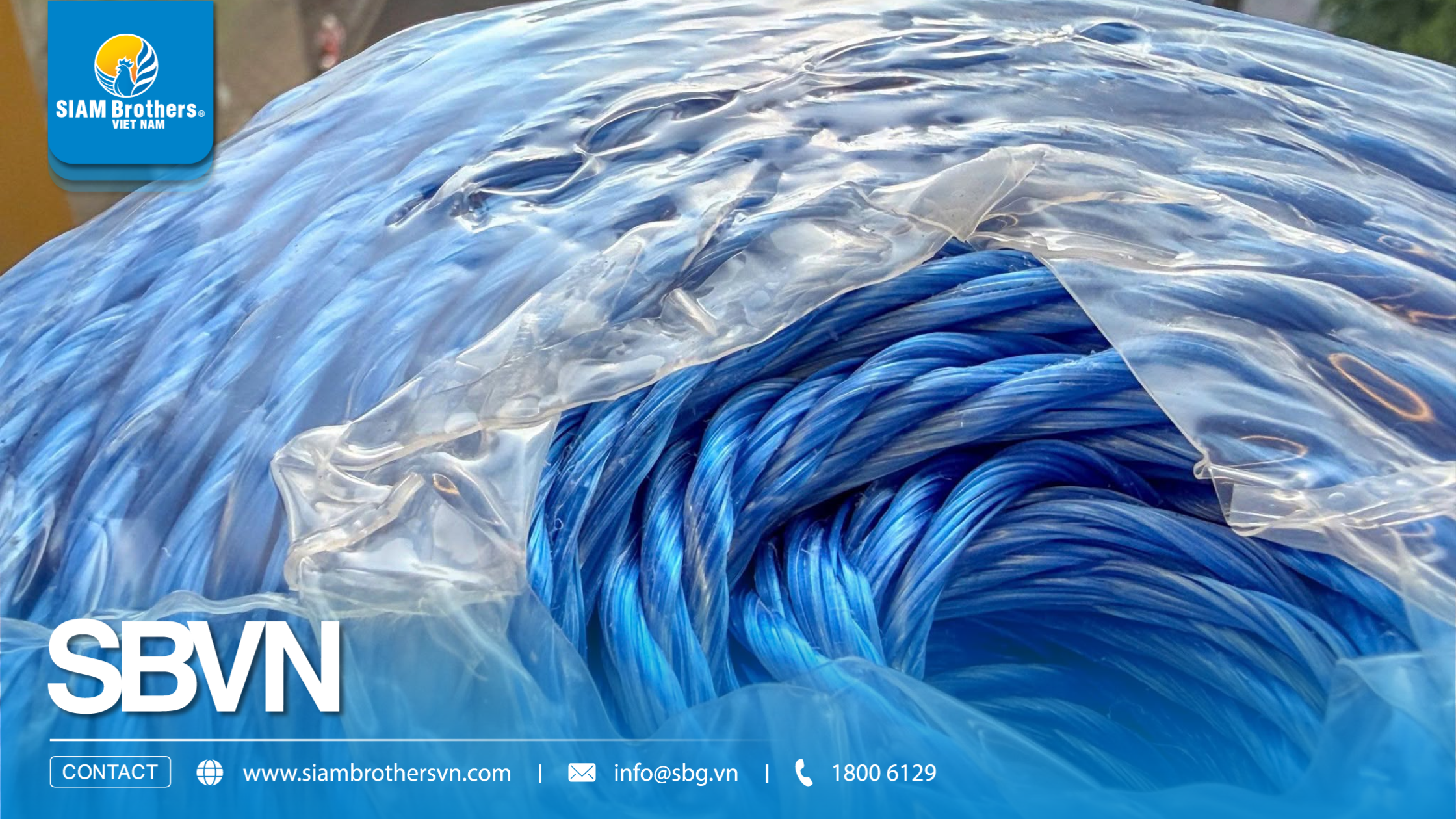
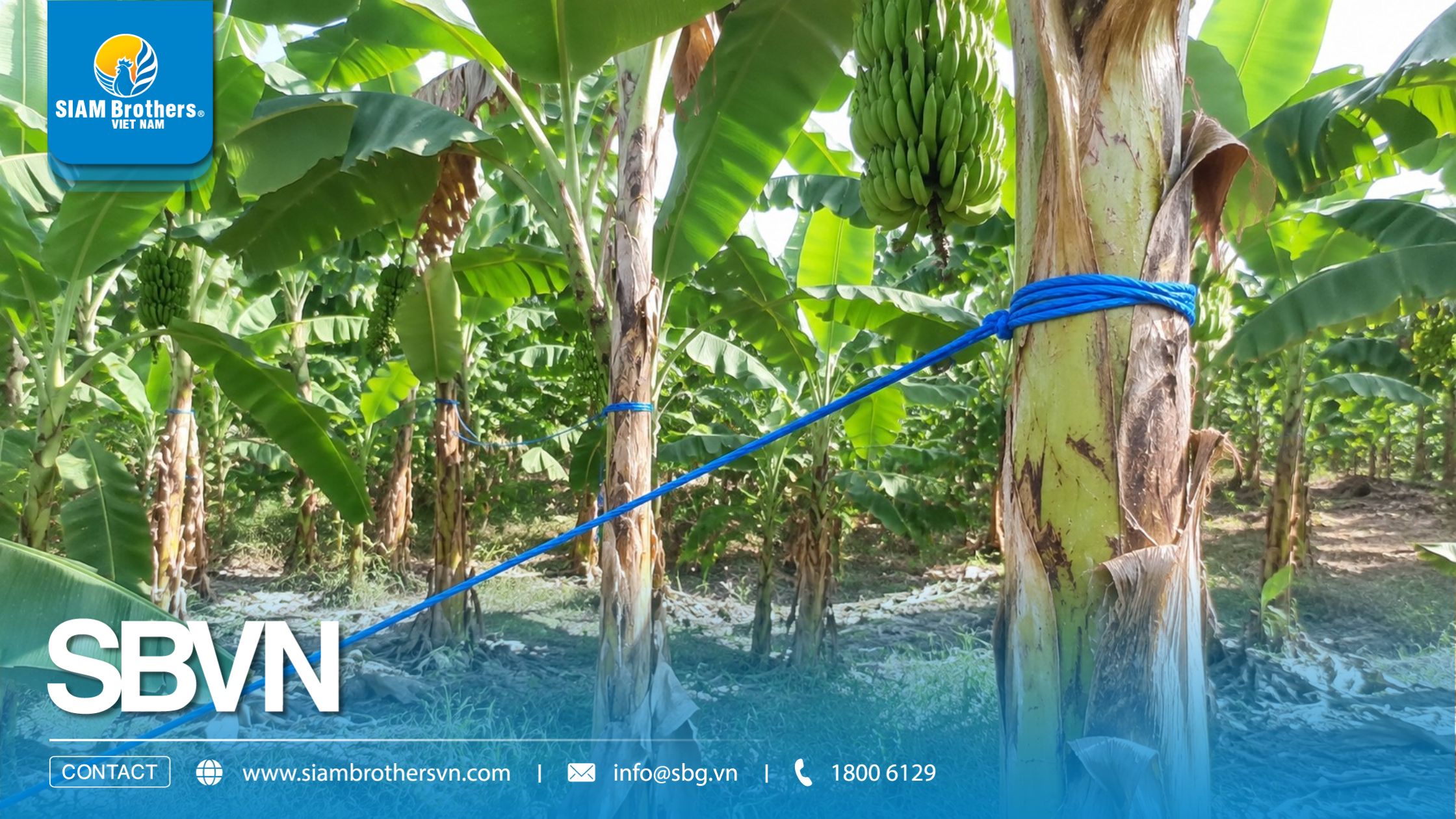
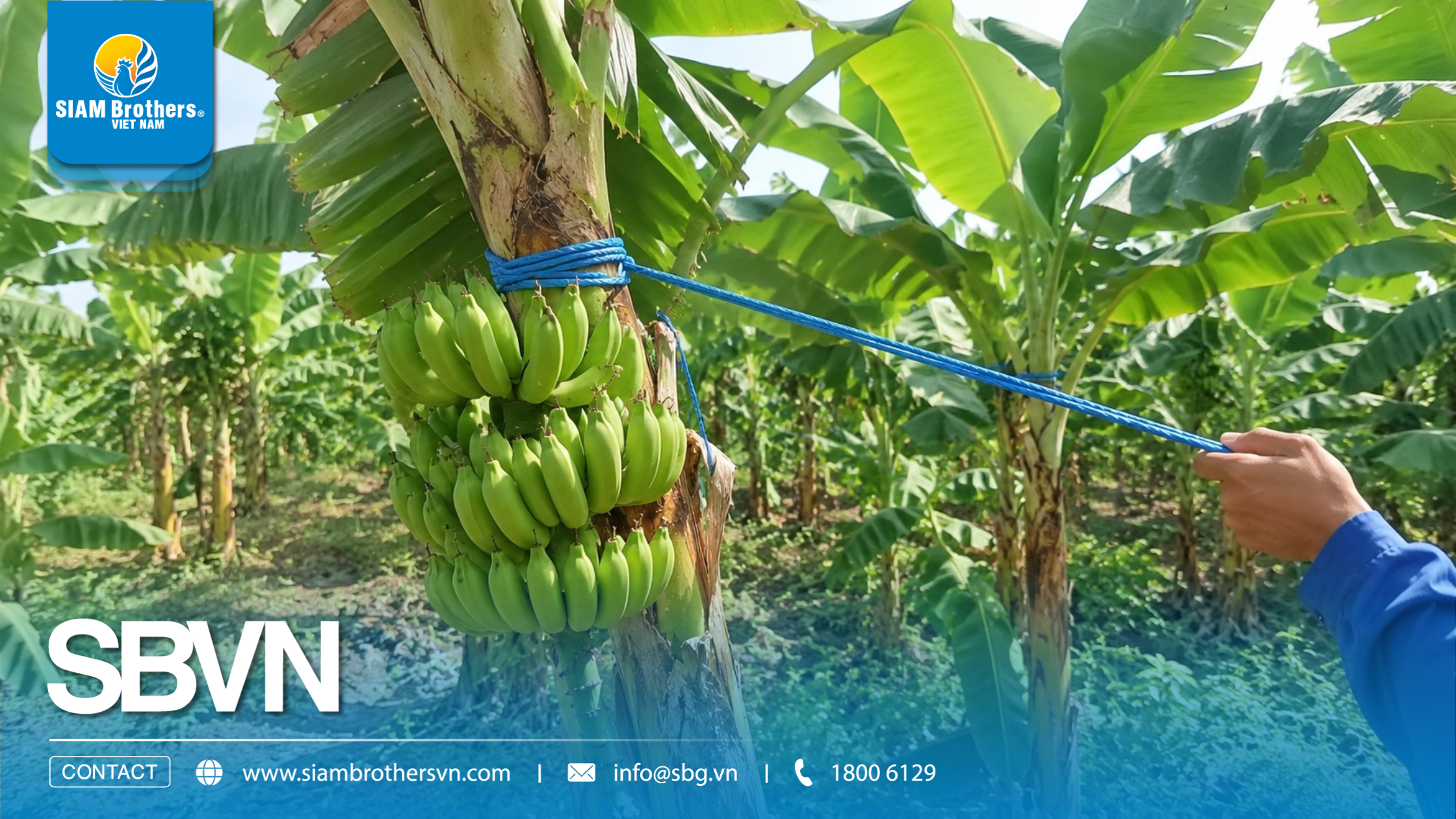
“How many banana plants can a heavy-duty banana support rope support?” This is a common question for growers before investing in crop-support materials. There is no fixed number of plants per roll because the actual amount needed depends on the number of plants that need anchoring, the rope length required for each plant, the distance to the anchor point, and the support method used. In this guide, SIAM Brothers Vietnam explains how to determine the rope requirement per plant, calculate the total rope length, estimate the number of rolls to buy, and allow for a suitable reserve. This helps farmers, plantations, and agricultural businesses plan their budgets and set up an effective banana plant support system.
1. How Many Banana Plants Can a Heavy-Duty Banana Support Rope Handle?
The number of banana plants that a heavy-duty banana support rope can support cannot be determined simply by looking at the rope length or the number of rolls. In practice, the amount of rope required also depends on the number of plants being anchored, the layout of the anchor points, and the rope length needed for each plant. For growers, understanding how to calculate this from the start can help prevent running out of rope during the growing season or buying more than necessary.
1.1. There Is No Fixed Rope Requirement for Every Banana Plantation
Every plantation has different growing and support conditions, so the number of plants that can be supported by one roll will vary. When estimating your rope requirements, consider the following factors:
- Number of plants to be supported: A plantation may have 500 banana plants, but they may not all require the same anchoring method at the same time.
- Rope length per plant: The farther the plant is from the anchor point, the more rope you will need.
- Number of anchor points: A single plant may require one or multiple anchoring directions depending on its condition and the actual growing environment.
- Plantation layout: Plant spacing, row arrangement, and anchor-post locations all affect the amount of rope required.
- Weather conditions: Areas exposed to strong winds or heavy rain may require a more secure support setup.
- Growth stage: Banana plants carrying heavy bunches have different support requirements compared with younger plants.
So, instead of asking, “How many plants can one roll support?”, a more accurate approach is to determine the rope requirement per plant and then multiply it by the total number of plants that need support.
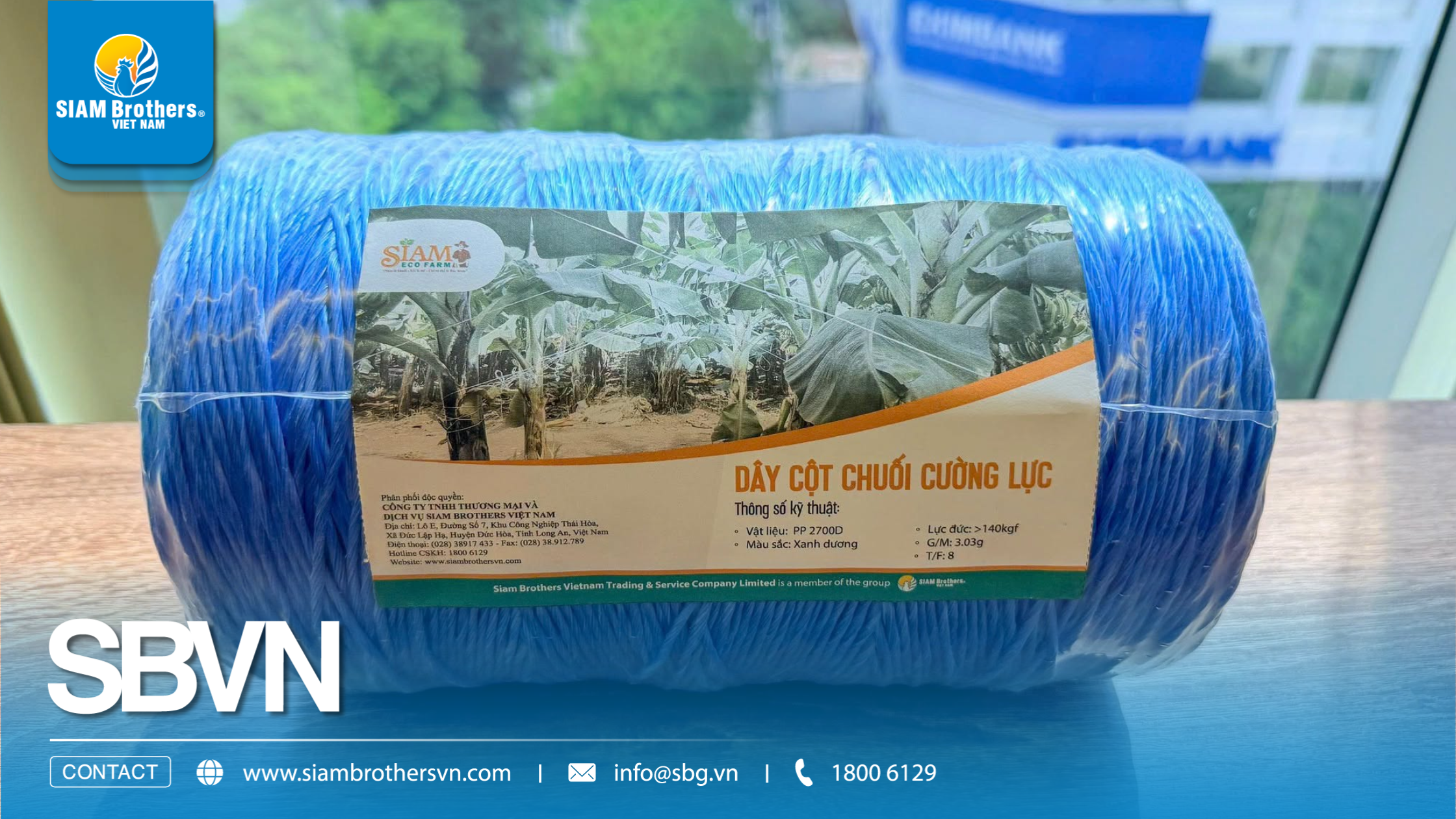
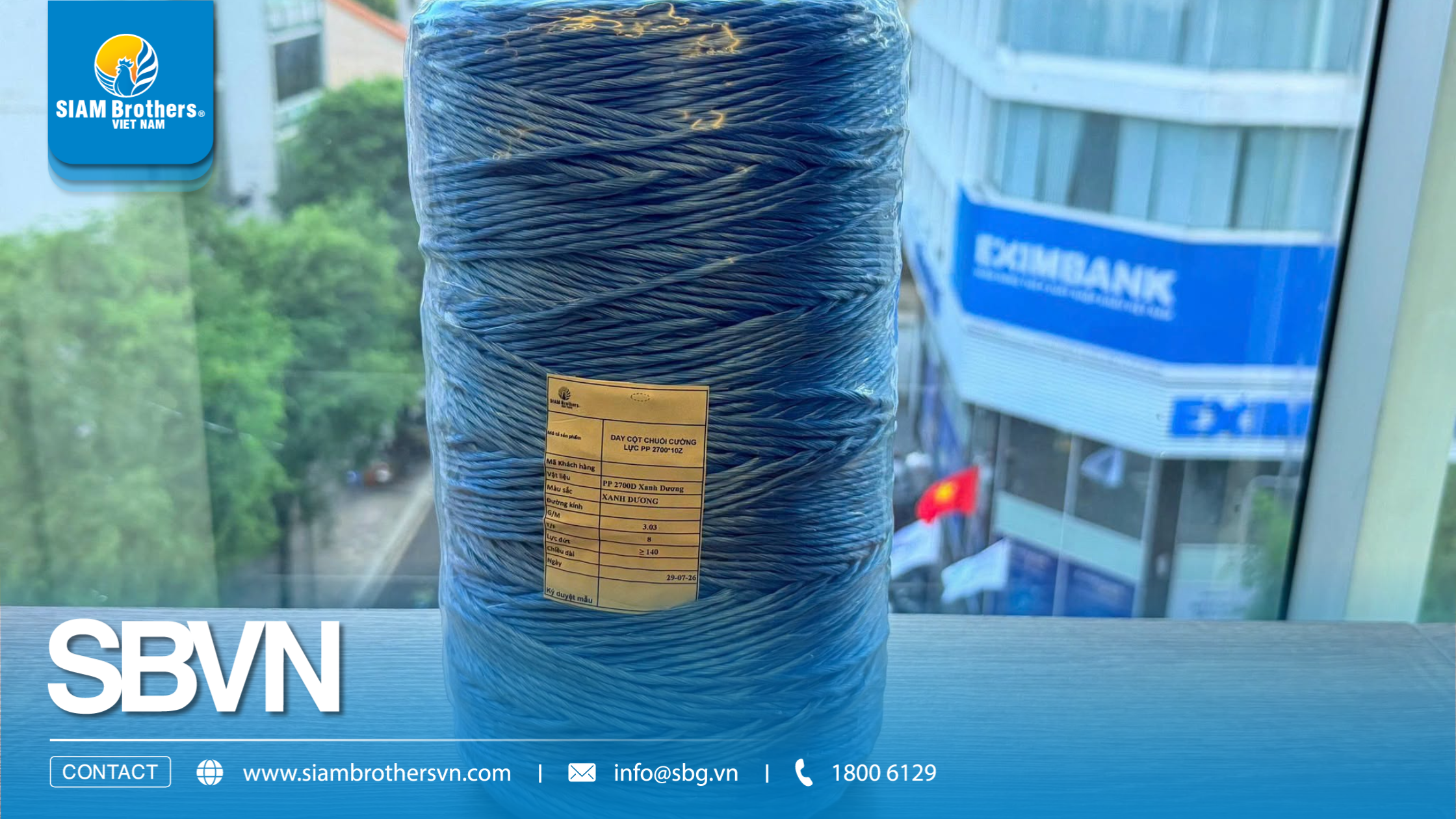
1.2. A Quick Way to Calculate the Number of Plants You Can Support
If you already know the total rope length in a roll and the average amount of rope required per plant, the calculation is straightforward:
Number of plants supported = Total rope length ÷ Rope length required per plant
For example:
- One roll contains 1,000 m of rope.
- The planned support method requires 5 m per plant.
- The theoretical number of plants supported is: 1,000 ÷ 5 = 200 plants.
However, 200 plants is only a theoretical figure based on rope length. In actual installation, you should allow extra rope for knots, anchor-point adjustments, and cutting waste.
1.3. To Calculate the Right Amount to Buy, Start With Each Plant
If you are preparing to purchase rope for a banana plantation, the easiest approach is to work from the requirements of each individual plant:
- Step 1: Determine the total number of banana plants that need support.
- Step 2: Choose the appropriate anchoring method for each area of the plantation.
- Step 3: Measure or estimate the rope length required for one plant.
- Step 4: Multiply the number of plants by the average rope requirement per plant.
- Step 5: Convert the total rope length into the number of rolls based on the product specification.
- Step 6: Add an appropriate reserve based on actual installation conditions.
This approach is particularly useful for plantations with hundreds or thousands of plants. Even a small difference in the rope requirement per plant can add up to a significant amount of material across the entire plantation.
2. What Determines the Amount of Rope Needed for Each Banana Plant?
2.1. Banana Plant Height and Size
The taller and heavier the plant, the greater the need for proper support.
- Younger, shorter plants with less-developed canopies may only require one suitable tying point.
- Once a plant starts carrying a banana bunch, the additional weight can make the stem more prone to leaning.
- At this stage, the rope requirement may need to be reassessed.
- If your plantation contains many tall plants with large stems and heavy bunches, consider allowing for a higher-than-average rope requirement.
2.2. Banana Bunch Weight and Position
The size and position of the banana bunch are important factors when estimating rope requirements.
- The larger and heavier the bunch, the greater the load placed on the plant.
- A bunch positioned heavily to one side can cause the plant to lean, especially in windy conditions.
- In practice, plant height alone should not determine the amount of rope required.
- A relatively short plant carrying a large bunch may still need more support.
- For high-yield banana plantations, it is worth checking the condition of representative plants before finalizing the rope quantity.
2.3. Wind and Weather Conditions in the Growing Area
Local weather conditions can have a direct impact on the support method.
- Plantations in areas exposed to strong winds may require a more secure anchoring setup.
- Heavy rain can soften the soil and reduce the stability of the root system.
- Before the rainy or storm season, check the existing tying points and the amount of rope being used.
If the plantation is located in an open area with little protection from trees or structures, consider allowing for more rope than you would in a sheltered growing area.
The amount of rope required depends on plant height and banana bunch weight – Source: SBVN
2.4. Plant Spacing and Anchor-Point Layout
Plant density directly affects how the rope can be positioned and secured.
- Widely spaced plants generally provide more room for arranging anchor points.
- In densely planted areas, the rope direction needs to be planned carefully to avoid interfering with neighboring plants.
- If dedicated posts or anchor points are used, the distance between each plant and its anchor point will also affect the required rope length.
As a result, two plantations of the same size can require different amounts of rope simply because their layouts are different.
2.5. How the Heavy-Duty Banana Support Rope Is Used
The amount of rope used per plant will vary depending on the support method.
- Using one rope section for a plant will consume less material than using multiple sections.
- If the rope is used only to secure the plant stem, the requirement may be lower than a setup that also reinforces the plant against directional loads.
- The length of each rope section depends partly on the distance between the plant and its anchor point.
- When cutting the rope, leave enough length for tying and future adjustments.
From a technical perspective, the goal should not simply be to use more rope. The priority is to use the right anchor point and provide adequate holding force for the actual conditions.
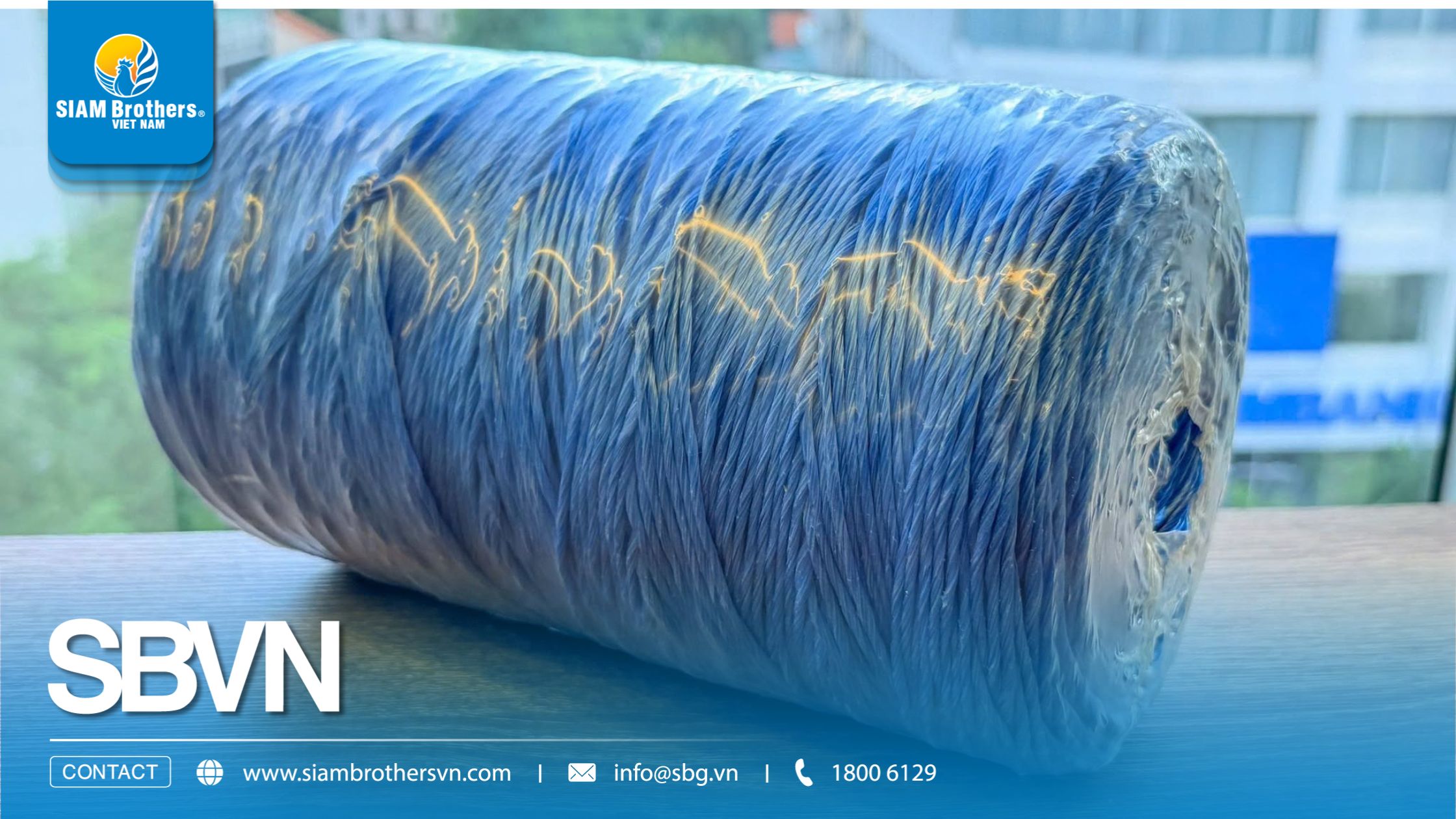
2.6. A Quick Way to Calculate the Total Rope Required for a Plantation
You can start with this simple formula:
Total rope required = Number of plants to be supported × Estimated rope length per plant + Reserve
For example:
- Plantation size: 1,000 banana plants.
- Estimated rope requirement: 3 m per plant.
- Basic requirement: 1,000 × 3 = 3,000 m of rope.
If you add 5-10% for tying, cutting, adjustments, and other installation needs, the recommended amount would be approximately 3,150–3,300 m.
This example is only intended to illustrate the calculation method. For an actual project, SIAM Brothers Vietnam recommends determining the rope length per plant based on the banana variety, growth stage, bunch load, wind conditions, and anchor-point location.
2.7. Why You Should Survey the Plantation Before Finalizing the Rope Quantity
For a smaller plantation, you can test the actual rope requirement on a representative group of plants first.
- Select around 10-20 plants with different sizes and relatively different bunch conditions.
- Measure the actual rope length required for each plant.
- Calculate the average rope consumption per plant.
- Use that average to estimate the requirement for the entire plantation.
- Finally, add an appropriate reserve.
This practical approach gives you a more realistic estimate and helps avoid relying on a fixed rope allowance that may not match the actual conditions of your banana plantation.
3. How to Calculate the Amount of Heavy-Duty Banana Support Rope for Different Plantation Sizes
Total rope length = Number of plants to be supported × Average rope length per plant
Once you have the basic figure, add around 5–10% extra rope to account for:
- Cutting the rope according to the requirements of each plant.
- Adjusting tying points during installation.
- Additional rope needed during the installation process.
The complete formula is: Rope to buy = Number of plants × Rope length per plant × 1.05–1.10
This is a simple way to estimate material requirements when planning a plantation project. However, the rope length per plant should not be treated as a fixed figure for every banana variety or growing condition.
3.2. Small Plantations: Around 100-300 Plants
For a smaller plantation, it is a good idea to measure actual rope consumption before placing a larger order.
Select a representative group of plants to determine the average rope length required.
For example: 100 plants
- Average rope requirement: 3 m per plant
- Basic rope requirement: 100 × 3 = 300 m
- With a 10% reserve: approximately 330 m
If the plants are carrying large bunches or the plantation is regularly exposed to strong winds, measure several high-load plants again and adjust the allowance accordingly.
3.3. Medium-Sized Plantations: Around 500-1,000 Plants
As the number of plants increases, accurate estimation becomes even more important. A difference of just a few dozen centimeters per plant can result in a significant amount of additional rope across the entire plantation.
For example, for 1,000 plants:
- Average allowance: 3 m per plant
- Basic requirement: 1,000 × 3 = 3,000 m
- With a 5% reserve: 3,150 m
- With a 10% reserve: 3,300 m
If your plantation contains different growing areas, consider calculating each area separately instead of applying one standard allowance to the entire plantation:
- Areas with smaller plants: Lower rope allowance.
- Areas with heavy banana bunches: Higher rope allowance.
- Areas frequently exposed to wind: Recheck the rope length and anchoring method.
3.4. Large Plantations: 2,000 Plants or More
For a large-scale plantation, it is better to establish rope requirements by area.
Avoid taking one average figure and applying it to the entire plantation if plant conditions vary significantly.
A practical three-step approach is:
- Step 1: Divide the plantation into areas with similar growing and support conditions.
- Step 2: Select representative plants and measure the actual rope required.
- Step 3: Multiply the allowance for each area by the corresponding number of plants, then add the reserve.
For example:
- Area A: 800 plants, averaging 2.8 m per plant
- Area B: 700 plants, averaging 3.2 m per plant
- Area C: 500 plants, averaging 3.5 m per plant
This approach reflects actual plantation conditions more accurately than simply applying a standard 3 m per plant allowance to all 2,000 plants.
3.5. Quick Reference Table by Plantation Size
| Plantation size |
Example allowance |
Basic rope requirement |
With 5-10% reserve |
| 100 plants |
3 m/plant |
300 m |
315–330 m
|
| 300 plants |
3 m/plant |
900 m |
945–990 m |
| 500 plants |
3 m/plant |
1,500 m |
1,575–1,650 m |
| 1,000 plants |
3 m/plant |
3,000 m |
3,150–3,300 m |
| 2,000 plants |
3 m/plant |
6,000 m |
6,300–6,600 m |
| 5,000 plants |
3 m/plant |
15,000 m |
15,750–16,500 m |
The figures in this table are calculation examples, not fixed technical specifications.
Actual requirements will also depend on plant height, bunch load, distance to the anchor point, wind direction, and the support method used.
If you are preparing to purchase rope for a specific plantation, simply identify the number of plants + average rope length per plant to get a quick estimate of your total requirement.
3.6. How Accurate Calculations Help Prevent Overbuying or Underbuying
- Buying too little: This can lead to additional shipping costs, waiting time for replenishment, and difficulty supporting multiple plants before severe weather arrives.
- Buying too much: This increases material inventory, especially on plantations with thousands of plants.
- The SIAM Brothers Vietnam technical team generally recommends starting with the actual application conditions: determine the load that needs to be supported, the anchoring location, and the appropriate rope length before finalizing the order quantity.
For a newly established plantation, you can test the support method on a representative group of plants first.
Use the actual measurements from this trial as the basis for calculating the requirement for the entire plantation.
3.7. Practical Example: A 1,000-Plant Banana Plantation
Suppose you have a plantation with 1,000 banana plants. After testing a representative group, you find that each plant requires approximately 3 m of rope.
In this case:
- Basic requirement: 1,000 × 3 = 3,000 m
- With a 5% reserve: 3,150 m
- With a 10% reserve: 3,300 m
If certain areas contain larger plants, heavier bunches, or anchor points that are farther away, calculate those areas separately.
So, instead of simply asking, “How many plants can one roll of rope support?”, it is better to determine how many meters of rope each plant actually requires under your plantation conditions.
That gives you a much more reliable basis for calculating the amount of heavy-duty banana support rope you need to buy.
3.8. When Should You Increase Your Rope Reserve?
Consider allowing for additional rope in situations such as:
- Before periods of heavy rain or strong winds.
- When plants are entering the stage of carrying heavy bunches.
- When the distance between plants and anchor points varies.
- When many plants need to be supported at the same time within a short period.
In these situations, the standard 5–10% reserve may need to be adjusted based on actual conditions rather than applied automatically.
4. Frequently Asked Questions About Heavy-Duty Banana Support Rope
4.1. How Many Banana Plants Can One Roll of Heavy-Duty Banana Support Rope Handle?
There is no single fixed number.
The number of plants that can be supported depends on:
- Total rope length per roll.
- Rope length required for each plant.
- Anchor-point layout.
- Plant and banana bunch size.
The formula is: Number of plants supported = Total rope length ÷ Average rope length per plant
For example, if one roll contains 1,000 m of rope and each plant requires an average of 3 m, the theoretical capacity is around 333 plants.
However, you should allow for some rope loss during tying, cutting, and adjustments. Therefore, the actual number of plants supported will be slightly lower.
4.2. Do Young Banana Plants Need Support Rope?
Not every plant needs to be supported from the beginning.
- Shorter plants with smaller stems and no banana bunches generally have lower support requirements.
- As the plant begins carrying a bunch or reaches a stage when it is more exposed to wind, additional support may become more important.
- If the plantation is located in an area that regularly experiences strong winds, growers should inspect the plants before periods of unfavorable weather.
4.3. Can Heavy-Duty Banana Support Rope Be Used for Different Banana Varieties?
It can be used across different banana-growing systems when the rope specification and support method are appropriate for the application.
However:
- Different banana varieties can have different stem sizes, plant heights, and bunch loads.
- For this reason, the same rope allowance should not automatically be applied to every banana variety.
- For a new plantation, you can test the support method on a representative group of plants first.
- You can then adjust the tying method and rope length based on actual conditions.
4.4. Should You Use Multiple Ropes for One Banana Plant?
Using more rope does not automatically mean better support.
The number of anchor points should be determined by:
- Plant leaning angle.
- Banana bunch weight.
- Prevailing wind direction.
- Distance from the plant to the anchor point.
- Soil and root-system conditions.
If a plant is carrying a heavy load or is located in an area exposed to strong winds, a more suitable support arrangement may be needed.
The key is to use the right anchor point, the right pulling direction, and sufficient holding force.
4.5. How Do You Calculate the Amount of Rope Needed for an Entire Plantation?
You only need three main figures:
- Total number of plants to be supported.
- Average rope length required per plant.
- Reserve percentage.
The simple formula is: Rope to buy = Number of plants × Rope length per plant × 1.05–1.10
For example:
- 1,000 plants
- Average requirement: 3 m per plant
- 10% reserve
- Rope to buy: 1,000 × 3 × 1.10 = 3,300 m
If your plantation has different growing areas, calculate each area separately for a more accurate result.
Actual rope consumption can increase because of cutting and tying.
- The required rope length is not exactly the same for every plant.
- Some plants may need additional support because of heavier bunches or greater exposure to wind.
- Allowing around 5–10% extra rope is therefore a practical way to reduce the risk of running short during installation.
- On a large plantation, even a small reserve percentage can represent a significant amount of material when multiplied across thousands of plants.
For this reason, it is a good idea to survey a representative group of plants before finalizing your order.
4.7. Can the Rope Be Reused for the Next Growing Cycle?
Reuse depends on the condition of the rope after removal.
After each growing cycle, check:
- Whether the rope is frayed or has broken strands.
- Whether the surface shows signs of deterioration.
- Whether the rope is deformed or appears to have lost its holding capability.
If the rope remains intact and still meets the requirements of the application, you may consider reusing it.
However, damaged or visibly deteriorated rope should not be reused for plants carrying heavy banana bunches.
4.8. Should You Calculate by Number of Rolls or Total Rope Length?
When preparing a material estimate, it is better to calculate the total rope length required first and then convert it into the number of rolls.
This avoids confusion when different product specifications have different roll lengths.
For example:
- Your plantation requires approximately 3,300 m of rope.
- If one roll contains 1,000 m, you would need to prepare at least 4 rolls.
- The remaining rope can be kept as reserve material for later support work.
So, if you are asking, “How many banana plants can a heavy-duty banana support rope handle?”, start with two key figures: the rope length per roll and the average rope requirement per plant. These two numbers give you the quickest and most practical way to estimate your actual requirement.
To determine how many plants a heavy-duty banana support rope can handle, start with the amount of rope required per plant rather than simply counting the number of rolls. First, determine how many plants need support, measure the average rope length required for each plant, and then add around 5–10% as a reserve. This approach makes it easier to estimate your material needs and avoid buying too little or too much.
The SIAM Brothers Vietnam technical and production teams recommend considering the banana variety, growth stage, bunch load, wind conditions, and anchor-point location when planning a support system.
If you are preparing to support a banana plantation, contact SIAM Brothers Vietnam for advice on the appropriate rope specification, length, and quantity for your actual growing conditions.
Source: SIAM Brothers Vietnam
Contact us:
► Address: 5th floor, VRG Building, 177 Hai Ba Trung Street., Xuan Hoa Ward, Ho Chi Minh City, Vietnam
► Hotline: 1800 6129
► Tel: (+84) 28 38 912 889
► Email: info@sbg.vn
► Follow us for more details at: Facebook - Zalo OA - Tiktok - Youtube - LinkedIn
Download SBVN ID app here:
► CHPlay
► Appstore