
- 1800 6129

Aquaculture Plastic Floats are more than just an investment, they can directly affect the stability and operating costs of your fish cage system. How much do they cost? How many floats do you actually need? And how should you budget for a small-scale cage versus a large commercial operation? These are common questions among aquaculture operators. In this guide, SIAM Brothers Vietnam will walk you through the key factors that affect float pricing, how to calculate the number of floats based on load requirements, and how to estimate costs for different fish cage sizes from small family farms to large-scale aquaculture businesses. With the right approach, you can choose the right configuration, stay on budget, and make a more cost-effective investment.
Instead of looking only at the price per float, it’s better to identify the following factors before requesting a quotation:
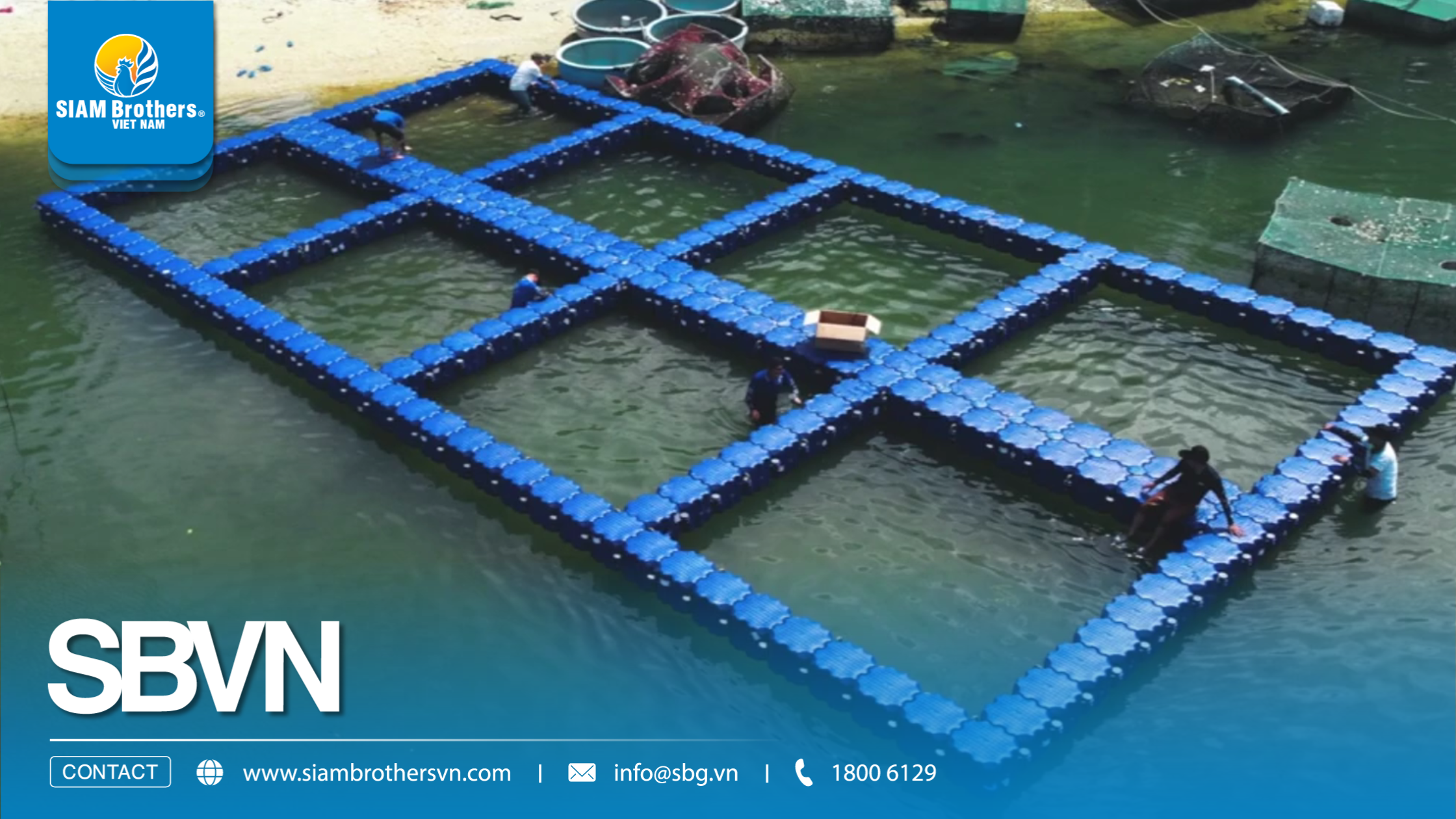
A lower-priced float does not necessarily mean a lower total cost for your entire system. In real-world operation, you also need to consider durability and the ability to maintain reliable buoyancy over time.
That’s why SIAM Brothers Vietnam looks beyond the unit price of Aquaculture Plastic Floats and considers the total cost throughout the product’s service life.
A basic reference formula is:
Number of Floats = Total Load to Be Supported ÷ Usable Buoyancy per Float
Here’s what each figure means:
For example, if a system has an estimated total load of around 2,000 kg and each float has an assumed usable buoyancy of 250 kg, the initial calculation would be: 2,000 ÷ 250 = 8 floats
However, eight floats may not necessarily be the final number. You also need to consider how the floats are distributed under the frame, where the concentrated loads are located, and the wave and wind conditions at the farming site.
In real-world operation, a fish cage does not always carry exactly the load you estimated at the beginning. Stock weight can increase, weather conditions can change, and loads may become concentrated in certain areas.
When calculating Aquaculture Plastic Floats, you should consider:
For this reason, the technical team should evaluate both buoyancy capacity and float positioning, rather than simply dividing the total load by the buoyancy of one float and using that number as the final configuration.
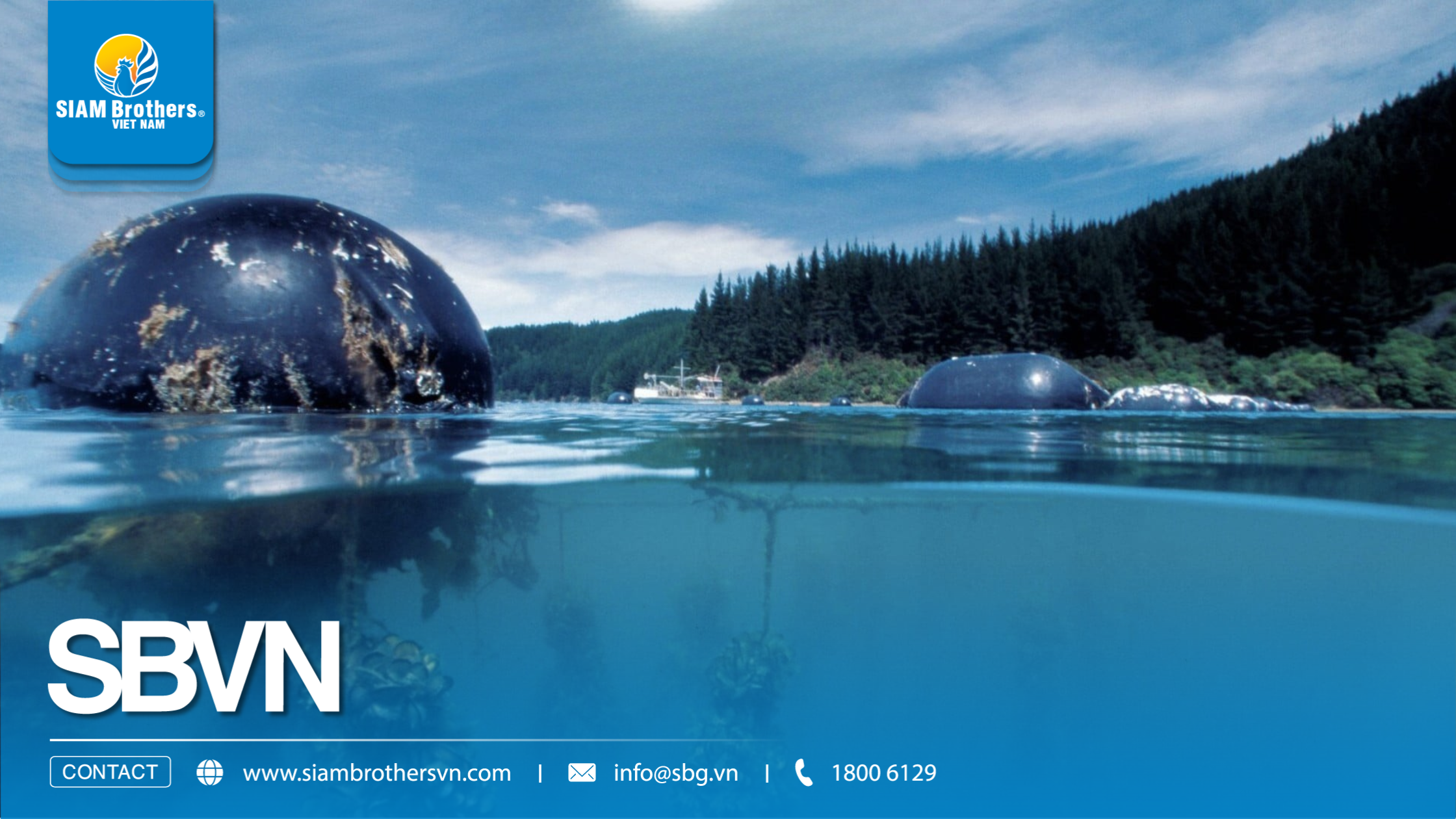
Let’s say you’re setting up a fish farming cage with the following estimated loads:
The initial calculation would be: 1,800 ÷ 250 = 7.2 floats
The result should be rounded up to 8 floats. However, before finalizing the configuration, you should also check:
If you plan to expand the cage or increase stocking density later, it’s better to account for that possibility from the beginning. This approach can make cost management much easier than installing too few floats and having to add more later.
For a small fish cage system, the setup is usually fairly straightforward. Even so, it’s better to calculate your float requirements based on the actual load rather than simply relying on recommendations from other farmers.
Here’s a practical approach:
A simple formula is: Float Cost = Number of Floats × Price per Float
For example, if a family farm needs 12 floats and the reference price is VND 1 million per float, the estimated float cost would be VND 12 million.
This is only an illustrative example. Actual pricing depends on the float type, dimensions, configuration, and order quantity.
As the size of the fish cage system increases, the cost calculation becomes more complex. You shouldn’t simply take the cost of one small cage and multiply it by the number of cages.
Instead, consider:
At this scale, keeping float dimensions and system configurations consistent can make installation, maintenance, and replacement much easier.
If you’re planning to expand the fish cage system in the future, it’s also a good idea to discuss your expansion plans with the supplier from the beginning. This allows the float configuration to be planned accordingly instead of having to redesign the system later.
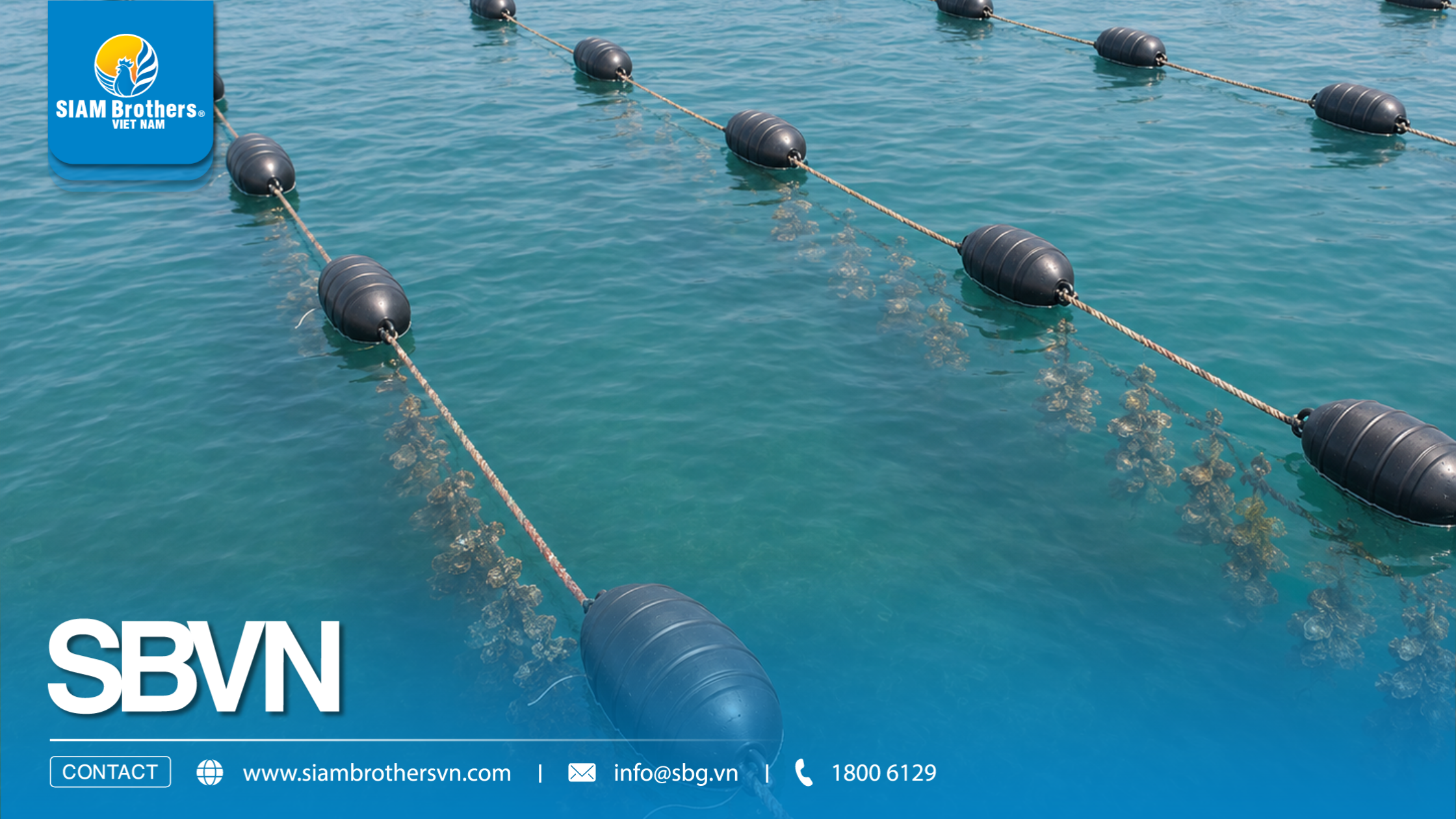
For a large aquaculture system, simply asking, “How much does one float cost?” isn’t usually the most effective approach.
A better option is to provide the supplier with your technical requirements so they can estimate the cost based on the entire system.
Ideally, you should prepare:
Based on these specifications, the technical and production teams at SIAM Brothers Vietnam can assess the requirements and recommend a more suitable Aquaculture Plastic Floats configuration.
To avoid overlooking additional expenses, you can use the following formula:
Total Cost = Float Cost + Accessories + Transportation + Installation
Here’s what each component includes:
For example, if a business needs 100 floats, don’t simply multiply 100 by the unit price and treat that as the total project budget.
Instead, include the related costs above to get a more realistic estimate of the actual investment required.
Aquaculture Plastic Floats: How Much Do They Cost? A Guide to Calculating Costs by Fish Cage Size
There is no single fixed price for every type of Aquaculture Plastic Float. Suppliers typically determine pricing based on specifications, order quantity, and actual application requirements. Larger floats, higher buoyancy capacity, or specialized designs generally cost more than floats intended for smaller systems. If you’re purchasing floats for an entire fish cage system, it’s better to calculate the cost by complete system or individual cage rather than looking only at the price of one float.
For large-volume orders, ask for a quotation based on your actual project scale. This makes it easier to compare the total investment across different suppliers.
HDPE is widely used in many float, cage, and aquaculture structure applications because of its durability, lightweight properties, and suitability for outdoor environments. However, actual performance also depends on the product design, float specifications, and how the floats are arranged within the fish cage system. That’s why you shouldn’t choose a product based on the material name alone. You also need to consider the actual cage load, local wave and wind conditions, and the connection system.
For larger aquaculture systems, calculating the required number and positioning of floats from the beginning can help improve overall system stability.
In many cases, suppliers can develop quotations based on order volume and specific project requirements. For this reason, businesses, fish cage operators, and dealers should provide the estimated quantity, float specifications, and delivery location in advance. This helps the supplier provide a quotation that more closely matches your actual needs while reducing the risk of ordering too few or too many floats.
For large fish cage projects, technical and production teams can also use the actual project specifications to recommend a suitable configuration instead of applying a standard quotation to every project.
To receive a more accurate quotation for Aquaculture Plastic Floats, you should provide:
If you’re not sure how many floats you need, simply provide the cage dimensions and farming scale. These details give the technical team a starting point for recommending the appropriate quantity and configuration.
Before placing an order, it’s worth asking the supplier:
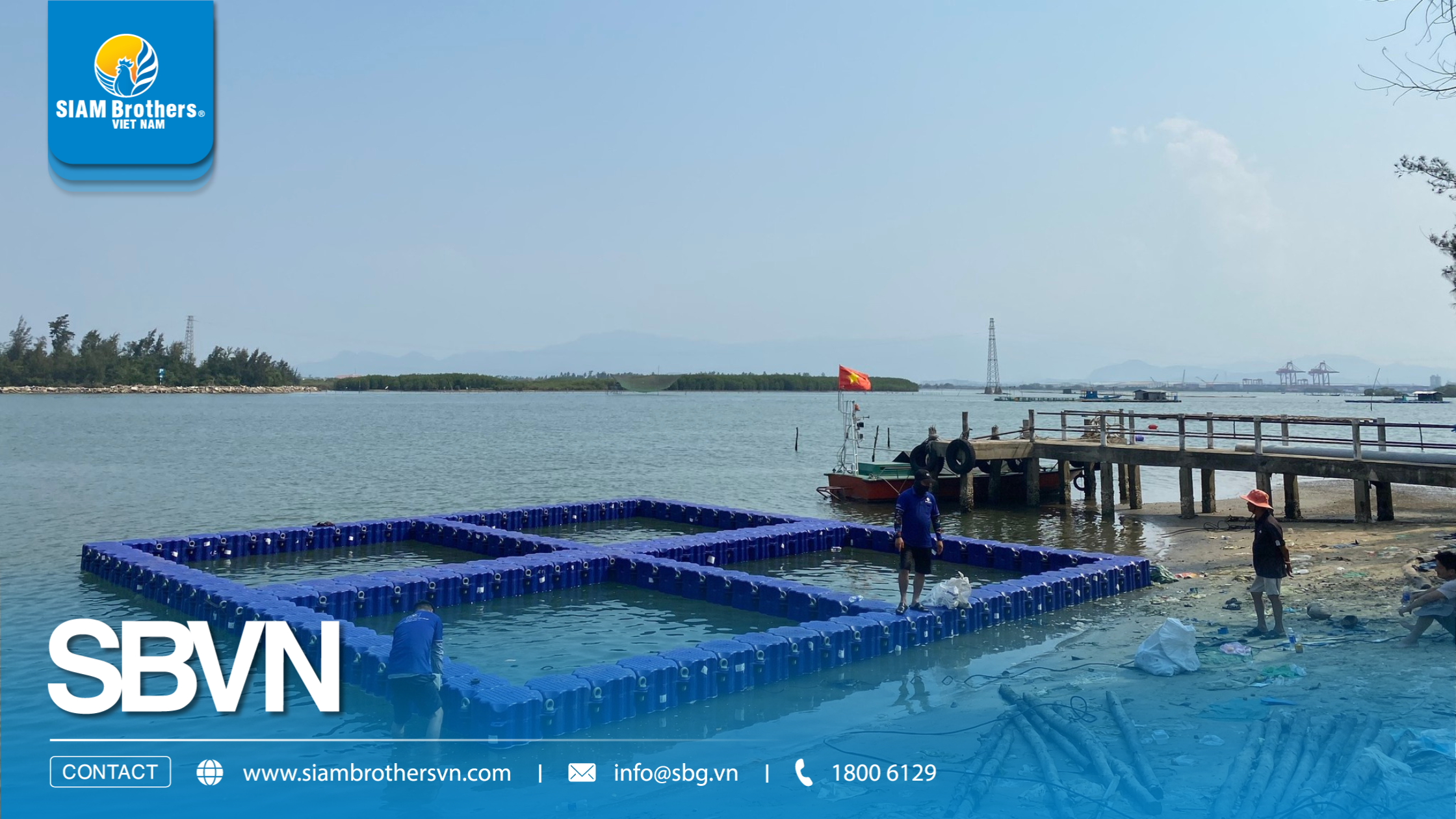
Aquaculture Plastic Floats should not be selected based solely on the price of one unit. To manage your budget effectively, you need to consider the float specifications, buoyancy capacity, required quantity, fish cage dimensions, and local farming conditions together. At SIAM Brothers Vietnam, our technical and production teams can assess your actual requirements and recommend a suitable float configuration rather than simply providing a product-based quotation. If you need help calculating the required quantity and estimated cost of Aquaculture Plastic Floats for your fish cage system, contact SIAM Brothers Vietnam for a more specific consultation.
Source: SIAM Brothers Vietnam
Contact us:
► Address: 5th floor, VRG Building, 177 Hai Ba Trung Street., Xuan Hoa Ward, Ho Chi Minh City, Vietnam
► Hotline: 1800 6129
► Tel: (+84) 28 38 912 889
► Email: info@sbg.vn
► Follow us for more details at: Facebook - Zalo OA - Tiktok - Youtube - LinkedIn
Download SBVN ID app here:
► CHPlay
► Appstore









Specializing in Agricultural and Fisheries Products & Multipurpose Wire