Product News

How Much Does Boat Anchor Rope Cost? How to Choose the Right Specifications and Avoid Overbuying

  • 14/08/2026

Boat Anchor Rope Price depends on several factors, including rope type, diameter, specifications, and the quantity you need. So, how much does boat anchor rope cost? This guide explains how pricing varies by rope type and size, and how to choose the right anchor rope for your vessel without buying more than necessary. For fishermen, boat owners, and marine businesses, selecting the right specifications from the start can help ensure reliable performance while keeping costs under control.

How much should you pay for boat anchor rope when different types of vessels require different diameters, materials, and lengths? This is a common question among fishermen, boat owners, businesses, and distributors before placing an order. In this article, SIAM Brothers Vietnam explains the key factors that affect Boat Anchor Rope Price, from PP, PE, and Nylon materials to rope diameter, strand construction, and packaging specifications. You will also learn how to determine the right rope length, quantity, and type for your anchoring needs, helping you avoid overbuying while maintaining reliable performance and safety. Need a quotation? Contact a supplier with your specific requirements before placing an order.

1. How Much Does Boat Anchor Rope Cost?

There is no single fixed price for boat anchor rope that applies to every application. When preparing a quotation, SIAM Brothers Vietnam typically needs to know the rope type, material, diameter, construction, length, and required quantity. For the same type of rope, a larger diameter generally means more raw material and a higher weight per meter. As a result, the price also varies depending on the specifications.

Order volume can also affect pricing. Fishermen, retail distributors, and businesses purchasing in larger quantities may receive different pricing based on the total order volume, specifications, and delivery requirements. Therefore, if you are looking for boat anchor rope, do not simply ask, “How much does it cost per meter?” It is better to provide complete information about your intended application.
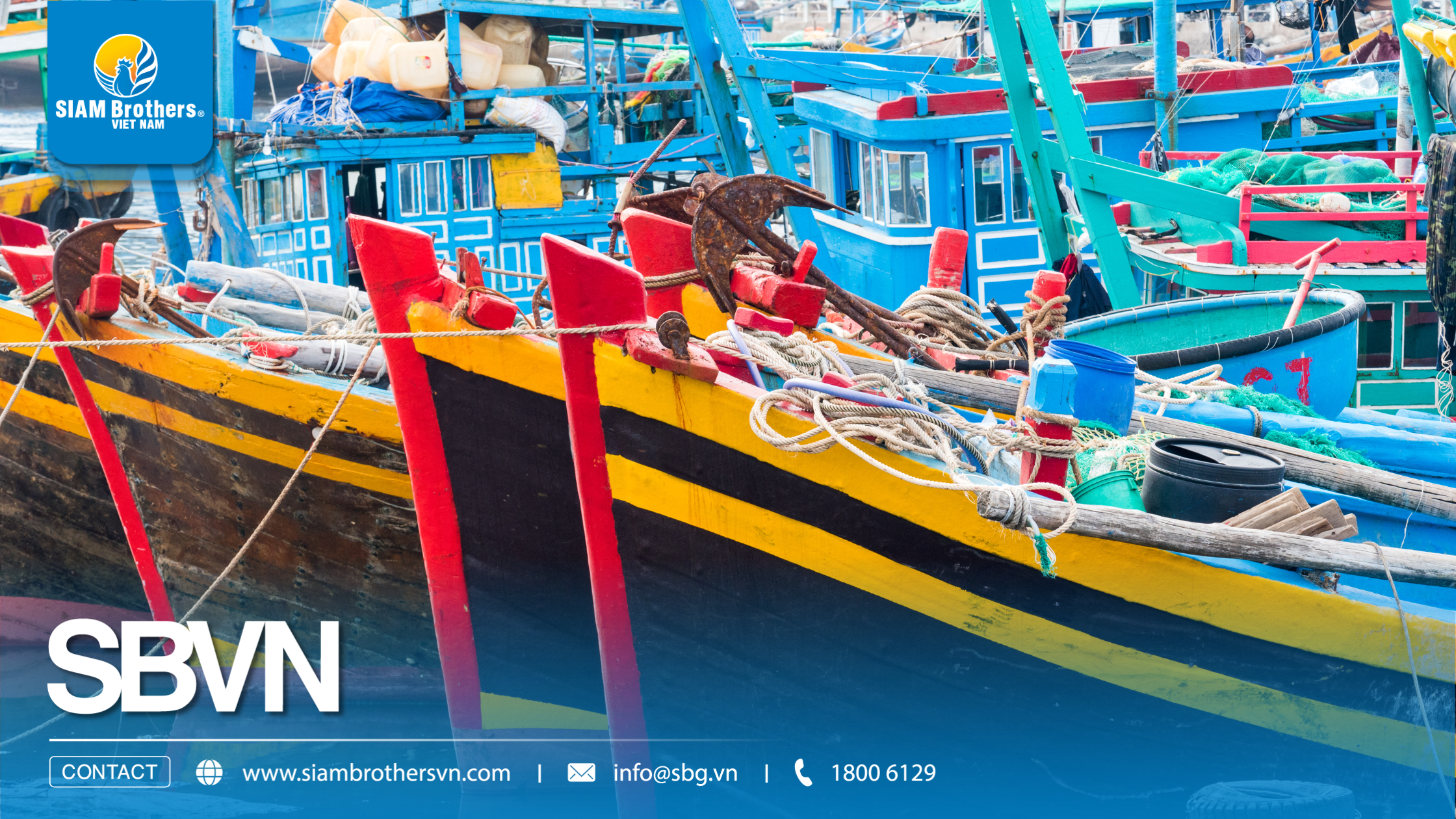
Giá dây neo tàu thuyền bao nhiêu? Cách chọn dây đúng quy cách, không mua thừa

1.1. What Factors Affect Boat Anchor Rope Price?

  • Material: PP, PE, Nylon, and other specialized ropes have different performance characteristics and price ranges. For example, PP rope is widely used because it is lightweight, does not readily absorb water, and can float on the water.
  • Rope diameter: An 8 mm, 12 mm, 24 mm, or 32 mm rope will have different weight and strength characteristics. Therefore, the price of one diameter cannot be used as a reference for every other size.
  • Rope construction: The number of strands and braiding structure can affect weight, strength, handling characteristics, and overall cost. SIAM Brothers Vietnam currently supplies L4 4-strand rope for applications such as boat anchoring, boat tying, and various fishing and marine uses.
  • Coil length: Rope can be supplied in different length configurations. For the L4 4-strand range, SIAM Brothers Vietnam offers lengths from 180 m to 1,000 m, with custom lengths available based on customer requirements.
  • Order quantity: Businesses and distributors typically require quotations based on the total quantity, specifications, and specific delivery requirements.
  • Intended application: Rope used for small boats, fishing vessels, offshore vessels, or specialized anchoring systems may require different specifications. Choosing solely based on the lowest price can result in a product that does not meet actual operating requirements.

1.2. Should Boat Anchor Rope Price Be Compared by Meter or by Kilogram?

This is one of the areas where buyers can easily get confused. Two coils may have the same length but completely different weights if their diameters are different.

If you compare only the price per meter, one product may appear cheaper than another. However, once you compare products with the same diameter, material, and specifications, the result may be very different.

For business or distributor purchases, ask the supplier to clearly specify:

  • Rope diameter.
  • Material.
  • Weight per meter.
  • Breaking force or other relevant technical specifications.
  • Length per coil.
  • Unit price.
  • Minimum order quantity, if applicable.

For example, SIAM Brothers' Con Ga L4 4-strand rope range is available in diameters from 5–8 mm and 12–36 mm, with weight-per-meter and breaking-force specifications provided for each diameter. This gives buyers a more reliable basis for comparing products rather than looking at the selling price alone.
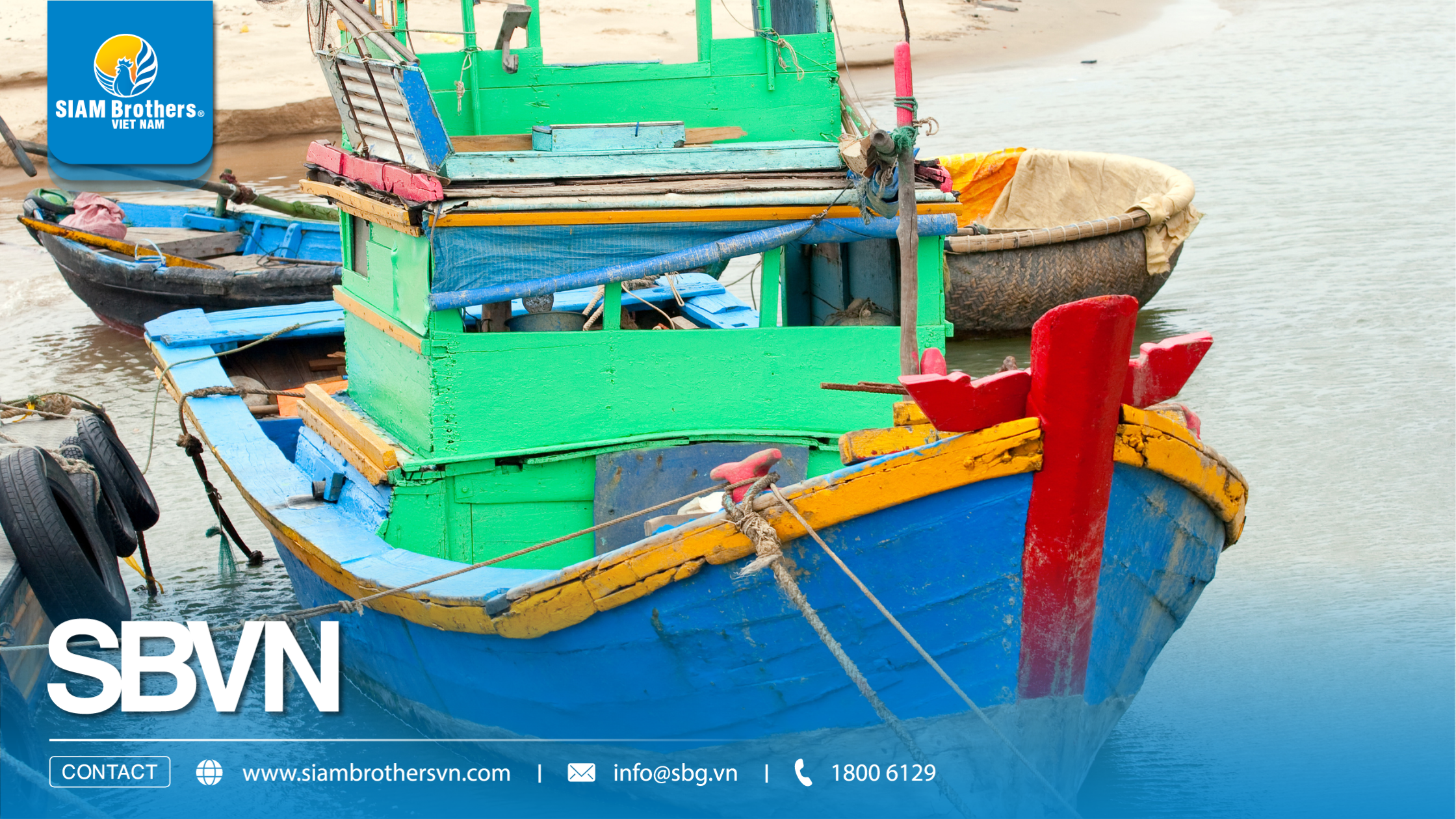
Giá dây neo tàu thuyền bao nhiêu? Cách chọn dây đúng quy cách, không mua thừa

2. How to Choose the Right Boat Anchor Rope Specifications and Avoid Overbuying

2.1. Identify Your Vessel Type and Load Before Choosing the Rope

This is the first step, but it is often overlooked when buying anchor rope.

Using the same type of rope does not mean it is suitable for every vessel. Small river boats, coastal fishing vessels, and offshore vessels can have different requirements for strength, elasticity, durability, and resistance to environmental conditions.

When contacting a supplier, provide information such as:

  • Type of boat or vessel.
  • Vessel length.
  • Load or engine capacity, if available.
  • Typical anchoring conditions.
  • Operating area: river, lake, coastal waters, or offshore.
  • Typical water depth and environmental conditions, when relevant.

If you are unsure which diameter to choose, do not automatically select the largest rope available. Instead, provide your actual operating information so the supplier can recommend specifications that match your application.

2.1.1. For Small Boats and Vessels

Prioritize rope that is easy to handle, retrieve, and deploy. If you regularly anchor close to shore, also consider water depth, current, and anchoring duration.
PP rope can be considered when a lightweight, floating rope is suitable for the application. SIAM Brothers' L4 range is manufactured using PP, PE, color masterbatch, and UV additives and is suitable for anchoring and boat-tying applications.

2.1.2. For Fishing Vessels and Long-Duration Operations

For fishing vessels and vessels operating for extended periods, pay closer attention to breaking force, elasticity, abrasion resistance, and exposure to seawater. Do not focus on diameter alone. Two ropes with the same diameter can have different materials, constructions, and technical specifications. For anchoring systems subject to higher loads or demanding operating conditions, the overall anchoring configuration may require a combination of rope and chain, depending on the actual system design.

2.2. Choose the Rope Material Based on the Operating Environment

Once you have identified the vessel type, the next step is to consider the rope material. Material has a direct impact on both performance and cost.

Common materials include:

  • PP: Lightweight, buoyant, and easy to handle.
  • PE: Offers characteristics suitable for a wide range of fishing and marine applications.
  • Nylon: Highly elastic and suitable for applications where shock absorption is important.
  • Polyester: Offers good durability and abrasion resistance and is supplied by SIAM Brothers for applications such as boat anchoring and marine transportation.

There is no single material that is “the best” for every application. The more useful question is: Which material is best suited to your operating conditions?

2.2.1. If You Prioritize Lightweight and Easy Handling

PP can be considered for applications where these characteristics are important. Its ability to float on water is also one of the advantages stated by SIAM Brothers Vietnam for its L4 Rope range.

2.2.2. If the Rope Is Frequently Subjected to Dynamic Loads

Consider the rope's ability to absorb shock and its elasticity. Do not focus solely on a “high strength” rating while overlooking how the rope responds when the vessel is affected by waves, wind, or currents.

2.3. Choose the Right Rope Diameter - Bigger Is Not Always Better

This is a common mistake when buying boat anchor rope. Many buyers assume that a larger rope is automatically safer. However, if the specifications exceed the actual requirements, you may end up paying more for additional material and weight without gaining meaningful benefits from the extra capacity. On the other hand, choosing an undersized rope simply because it is cheaper is not necessarily a cost-effective solution.

When selecting rope diameter, compare the following factors:

  • Vessel size and load.
  • Anchoring conditions.
  • Rope material.
  • Rope construction and number of strands.
  • Breaking force or other relevant product specifications.
  • Frequency of use.

SIAM Brothers Vietnam currently offers various rope specifications, including L4 4-strand ropes from 12–36 mm and L8 8-strand ropes from 16–50 mm. This range allows buyers to select a suitable specification for their specific application instead of using one size for every vessel.

Diameter is one of the easiest specifications to see, but it is not enough to evaluate a rope.

When comparing two products, consider all of the following:

  • Diameter.
  • Material.
  • Rope construction.
  • Weight per meter.
  • Breaking force.

This approach helps you compare products more accurately and evaluate Boat Anchor Rope Price based on actual value and suitability, rather than simply looking at the initial selling price.

2.4. Calculate the Required Rope Length to Avoid Overbuying

Rope length is another factor that can increase costs if it is estimated incorrectly.

A rope that is too short may not meet the anchoring requirements. A rope that is unnecessarily long, on the other hand, can increase your material costs without providing additional practical value.

When determining the required length, consider:

  • Water depth at the anchoring location.
  • Water level and tides.
  • Current.
  • Wind and wave conditions.
  • Anchor type and overall anchoring configuration.
  • Expected anchoring duration.

A commonly used technical concept is scope, which refers to the ratio between the length of the anchor line and the water depth. However, the appropriate ratio should be adjusted according to actual operating conditions rather than applied mechanically to every vessel.

For example:

If you normally anchor in shallow, relatively stable water, your required rope length will be different from that of a vessel anchoring in deeper water with significant tides or strong currents. Instead of simply asking, “How many meters should one coil be?”, first determine the anchoring depth, actual environmental conditions, and anchoring system configuration. For its L4 range, SIAM Brothers currently offers several length options, including 180 m, 200 m, 220 m, 270 m, 300 m, 400 m, 600 m, 800 m, and 1,000 m. Custom lengths are also available based on customer requirements.

2.5. Choose the Right Number of Strands and Rope Construction

After considering material and diameter, look at the rope construction. 3-strand, 4-strand, and 8-strand ropes have different constructions, which can affect handling characteristics, weight, and performance.

Do not automatically assume that an 8-strand rope is always better than a 4-strand rope. What matters is whether the construction matches the anchoring system and the actual operating requirements.

SIAM Brothers currently offers L3, L4, and L8 ropes in various diameter ranges.

Consider the construction carefully when:

  • The rope is intended for vessels with higher loads.
  • The rope is regularly exposed to abrasive conditions.
  • A business is purchasing in large quantities and wants to standardize one rope specification.
  • You are replacing existing rope and want to maintain or improve the current anchoring configuration.

2.6. Determine the Required Quantity Before Placing an Order

Do not simply calculate “one coil per vessel.” Determine the quantity based on your actual requirements.

A simple calculation is: Number of vessels × Number of ropes per vessel × Length of each rope = Total rope length required

You can then convert the total required length into the number of coils based on the manufacturer's available specifications.

For businesses and distributors, it may be reasonable to keep a practical reserve if the rope is used frequently. However, the amount of reserve should be based on replacement frequency and operating conditions rather than applying the same fixed percentage to every situation.
Giá dây neo tàu thuyền bao nhiêu? Cách chọn dây đúng quy cách, không mua thừa

3. Should You Choose PP, PE, or Nylon Boat Anchor Rope?

Choosing the right material is important because each type of rope offers different characteristics in terms of weight, buoyancy, elasticity, shock absorption, handling, and cost.
Comparison of PP, PE, and Nylon Anchor Rope
Criteria PP PE Nylon
Weight Lightweight Varies by type Relatively heavy
Buoyancy Good Depends on type and construction Not a primary advantage
Elasticity Lower than Nylon Depends on type High
Shock absorption Moderate Depends on type Good
Handling Easy Relatively easy Weight should be considered
Typical applications  Anchoring, tying, fishing Fishing, marine applications Systems requiring greater elasticity
Price Depends on specifications Depends on specifications Depends on specifications
   
Choose the Right Rope Based on Your Actual Needs
  • If you prioritize lightweight and easy handling: PP can be considered for suitable applications.
  • If you need PE rope for marine or water-based applications: Check the specific PE type, diameter, and technical specifications before purchasing.
  • If the anchoring system is frequently exposed to dynamic loads: Nylon may be worth considering because of its elasticity, but the entire anchoring system should still be evaluated.
  • If you are purchasing for multiple vessels: Standardize rope specifications for each vessel group rather than using the same rope for every vessel.
  • If you are a retailer or distributor: Build your product range around material, diameter, and intended application to make it easier to recommend the right product to customers.
  • If you are unsure which type to choose: Provide the vessel type, operating area, expected diameter, required length, and quantity. A supplier can use this information to provide a more suitable recommendation.

Giá dây neo tàu thuyền bao nhiêu? Cách chọn dây đúng quy cách, không mua thừa

4. FAQs – Frequently Asked Questions About Boat Anchor Rope Price

4.1. Is Boat Anchor Rope Priced by the Meter or by Kilogram?

It depends on the product and its specifications. Boat anchor rope may be quoted by the meter, kilogram, or coil.
When comparing prices between two suppliers, do not look only at the price per meter. Also compare:
  • Rope diameter.
  • Material.
  • Weight per meter.
  • Rope construction.
  • Breaking force and other relevant technical specifications.
For businesses and distributors, it is best to request quotations based on the same specifications so you can make a more accurate comparison of the total purchasing cost.

4.2. What Rope Diameter Should I Choose for a Fishing Boat?

There is no single rope diameter that is suitable for every fishing boat.
You should consider:
  • Vessel size and load.
  • Anchoring conditions.
  • Water depth at the anchoring location.
  • Current, waves, and wind.
  • Rope material and construction.
  • Requirements of the overall anchoring system.
If you are unsure which diameter to choose, provide the vessel specifications and operating conditions to the supplier rather than simply choosing the largest rope available.

4.4. Is 4-Strand Anchor Rope Suitable for Boats?

4-strand rope can be used for boat anchoring and tying applications, depending on its specific specifications.
The number of strands is not the only factor to consider. You should also evaluate:
  • Material.
  • Diameter.
  • Weight per meter.
  • Breaking force.
  • Operating conditions.
SIAM Brothers Vietnam currently supplies L4 4-strand rope in various diameters and lengths, including specifications suitable for marine applications.

4.5. How Can I Avoid Buying Too Much Boat Anchor Rope?

Before placing an order, determine:
  • Number of vessels.
  • Number of ropes required per vessel.
  • Required length per rope.
  • Rope diameter.
  • Rope material.
Then calculate the total required length and convert it into the number of coils based on the manufacturer's available specifications.
Do not choose an unnecessarily long rope or oversized diameter simply because you think “more is always safer.” The right specification should be based on the actual requirements of the vessel and anchoring system.
For business or distributor orders, standardizing rope specifications before purchasing can also make inventory management more efficient.

4.6. Can I Get a Better Price When Buying Boat Anchor Rope in Bulk?

In most cases, pricing should be determined based on the total order quantity, product specifications, and specific delivery requirements.
Businesses, retailers, and distributors should provide:
  • Rope type.
  • Diameter.
  • Length per coil.
  • Total quantity.
  • Delivery location.
Once these details are available, the supplier has a better basis for providing a quotation that matches the actual order requirements.
For large-volume purchases, you should also ask about packaging specifications, lead time, and the supplier's ability to fulfill future orders.

4.7. How Can I Get an Accurate Boat Anchor Rope Price Quote from SIAM Brothers?

To receive a more accurate quotation from SIAM Brothers Vietnam, provide the following information:
  • Type of boat or vessel.
  • Operating area.
  • Preferred rope type.
  • Diameter, if already known.
  • Required rope length.
  • Quantity.
If you are unsure which rope type or specification to choose, clearly explain how the rope will be used. The technical team can use your actual application requirements to recommend a suitable specification before preparing the quotation.
This approach helps you avoid choosing the wrong rope simply because it has a lower price, while also making it easier to control your purchasing budget.

4.8. Does Boat Anchor Rope Price Change Over Time?

Yes. Boat Anchor Rope Price can vary depending on several factors, including:
  • Raw material costs.
  • Rope material.
  • Diameter and product specifications.
  • Order quantity.
  • Packaging specifications.
  • Transportation costs.
For the most accurate price, provide your specific order requirements and request a quotation at the time of purchase.
 
Giá dây neo tàu thuyền bao nhiêu? Cách chọn dây đúng quy cách, không mua thừa
 
Boat Anchor Rope Price depends on more than the selling price per meter or per coil. Material, diameter, rope construction, length, and required quantity can all affect the overall cost. Choosing the right specifications from the beginning helps fishermen, boat owners, businesses, and distributors avoid purchasing rope that is unnecessarily large, long, or unsuitable for their actual application. The best choice should be based on vessel requirements, operating conditions, and the specifications of the complete anchoring system not simply the lowest initial price.
 
Contact SIAM Brothers Vietnam today to discuss your requirements, get a quotation based on the appropriate rope specifications, and find a cost-effective solution for your boat anchoring needs.

Source: SIAM Brothers Vietnam


Contact us:

► Address: 5th floor, VRG Building, 177 Hai Ba Trung Street., Xuan Hoa Ward, Ho Chi Minh City, Vietnam

► Hotline: 1800 6129

► Tel: (+84) 28 38 912 889

► Email: info@sbg.vn

Follow us for more details at: Facebook - Zalo OA - Tiktok - Youtube - LinkedIn

Download SBVN ID app here:

CHPlay

Appstore