
- 1800 6129

3-strand, 4-strand, and 8-strand ropes look the same if you only measure diameter, but the way the strands are laid or plaited decides whether the rope kinks, resists abrasion, or runs smoothly on a winch. Choose the wrong construction and even a “thick” rope can fail early at the mooring, on a net line, or at a friction point. To match the type to load, flexibility, and working conditions, read this article with SIAM Brothers Vietnam.
1. Construction and properties of 3-strand, 4-strand, and 8-strand rope
Strand count is the number of yarn bundles twisted or plaited into the finished rope. With the same PP or PE material and the same diameter, the three constructions still differ in how they share load, how stiff they feel, and how the ends are finished.
1.1. 3-strand rope: open lay, soft, easy to handle
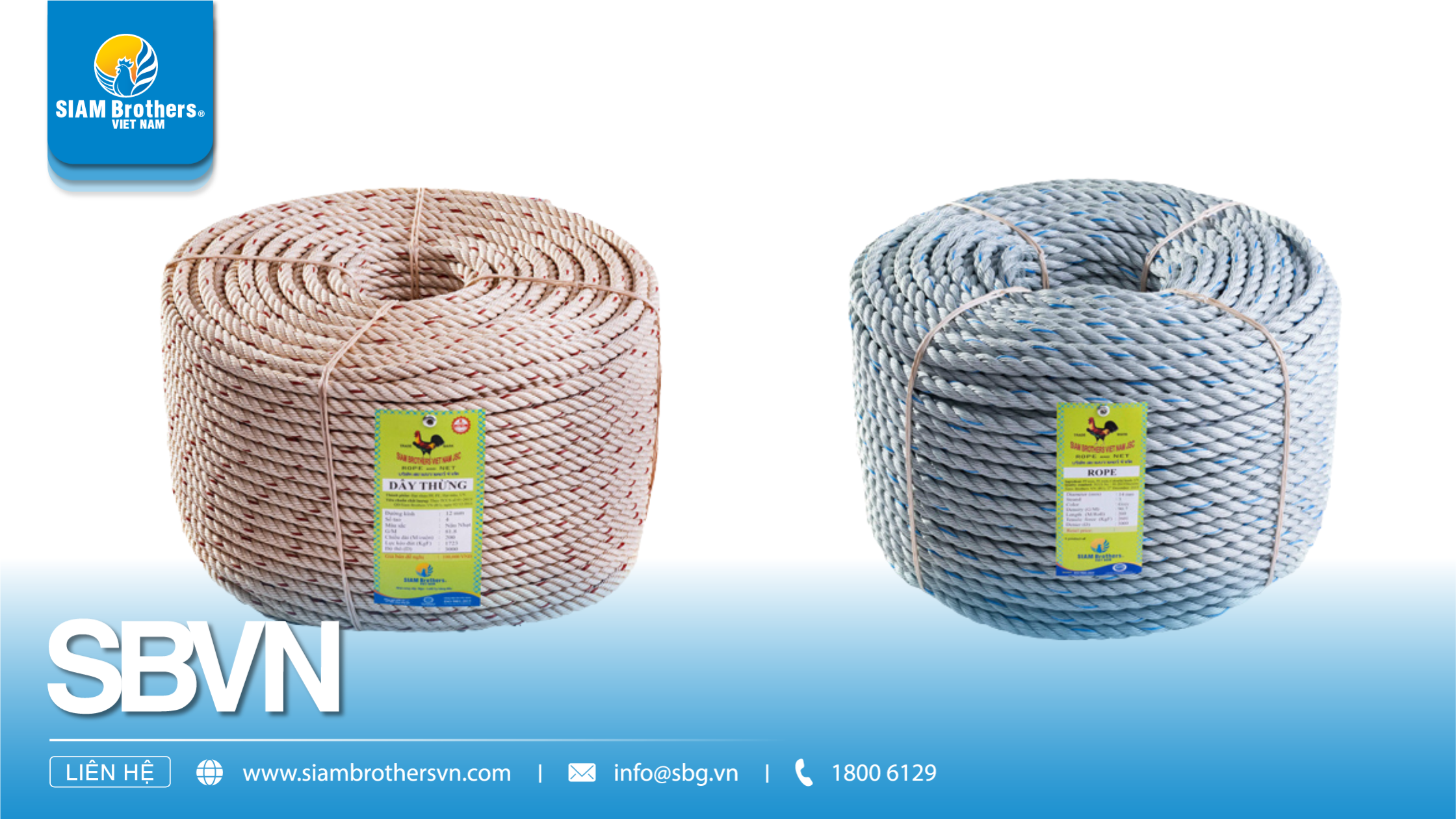
3-strand rope - Source: SIAM Brothers Vietnam
3-strand rope is twisted from three bundles. The surface has a clear spiral, it is soft in the hand, easy to knot, and easy to splice. Stretch helps it take light shock, so it suits lashing, trellises, general tying, or fishing gear that is not under continuous load. The open construction kinks more easily and fuzzes when it rubs on rock, barnacles, or a winch lip — use it only for moderate loads; do not make it the main mooring line on a large vessel just because it is cheap and easy to buy.
1.2. 4-strand rope: tighter, better abrasion and tensile performance
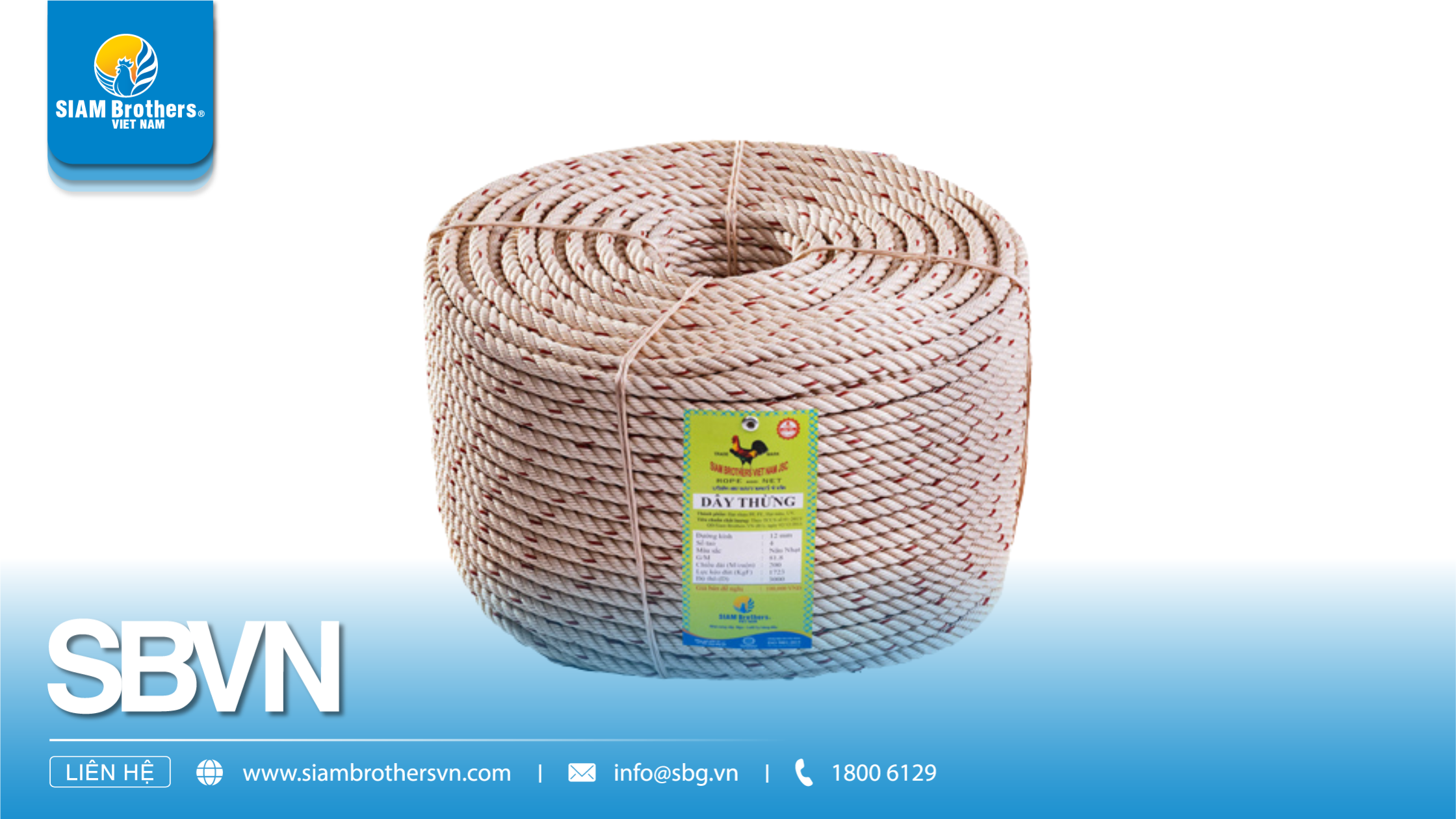
4-strand rope - Source: SIAM Brothers Vietnam
4-strand rope is still a laid rope. The extra strand makes the surface rounder and tighter, spreads load more evenly than 3-strand of the same size, and wears less against quay piles, net mouths, or small winch drums. Fishermen use it widely as “day bo”: medium-vessel mooring, tying up, net lines, and inshore towing. It feels firmer than 3-strand and can still be spliced. Its strength is the balance of price, grip, and life under frequent abrasion — that does not mean it is always stronger than 8-strand of the same diameter.
1.3. 8-strand rope: cross-plaited, low twist, stable under long load
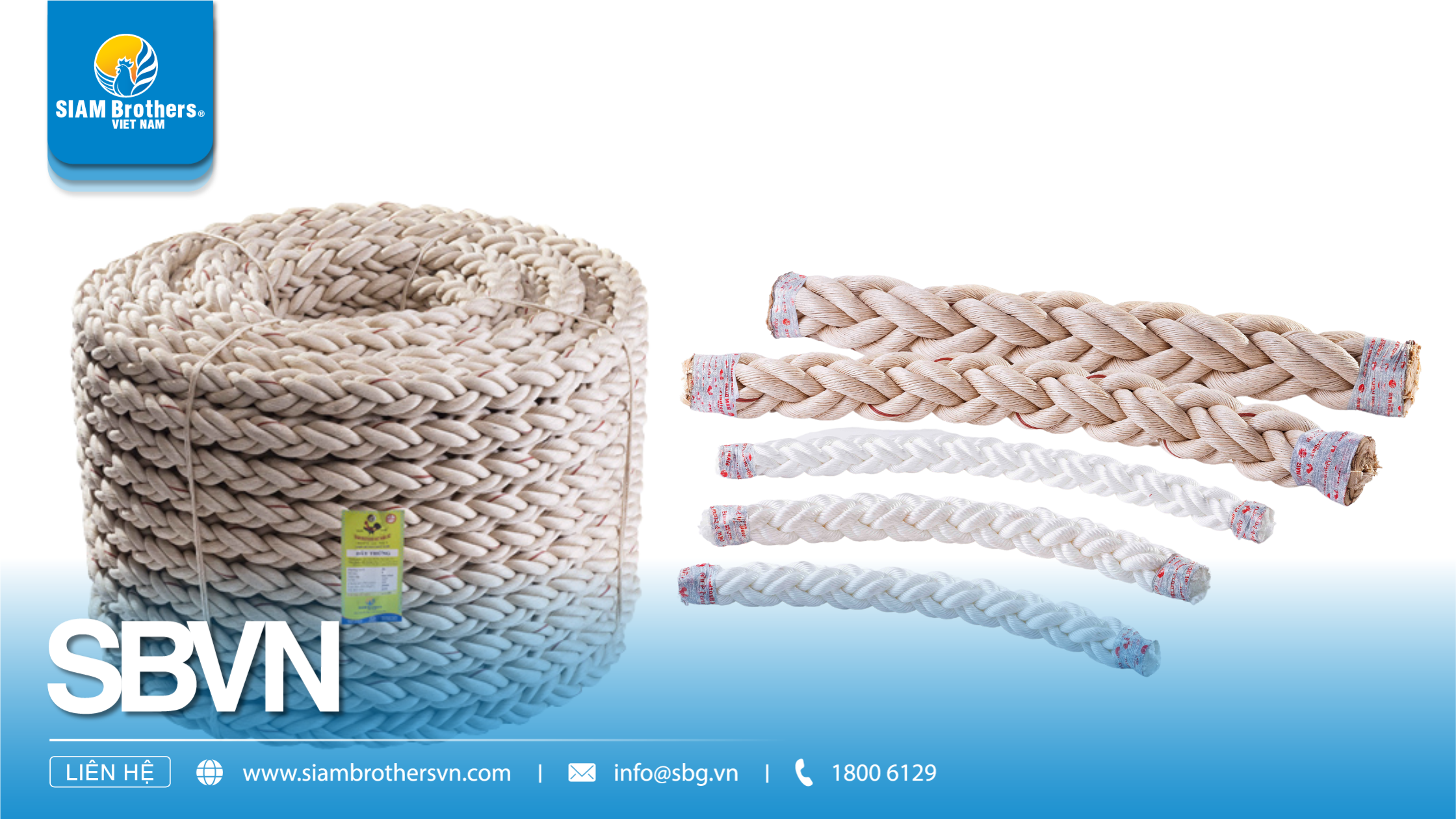
8-strand rope - Source: SIAM Brothers Vietnam
8-strand rope is commonly plaited: eight strands crossed into a near-square profile that balances torque, so it is less likely to corkscrew or tangle when stowed or winched, and it shares load more evenly than 3- or 4-strand laid rope. It usually comes in larger sizes (many lines from about 18 mm), for offshore fishing-boat and commercial-vessel mooring and for heavy towing. It is softer in the hand than laid rope of the same large size, but splicing is harder and needs proper technique. Do not use large 8-strand for light tying just because it “sounds stronger.”
The same vessel can still need all three: 3-strand for odd jobs on deck, 4-strand for net lines and secondary ties, 8-strand for the main mooring.
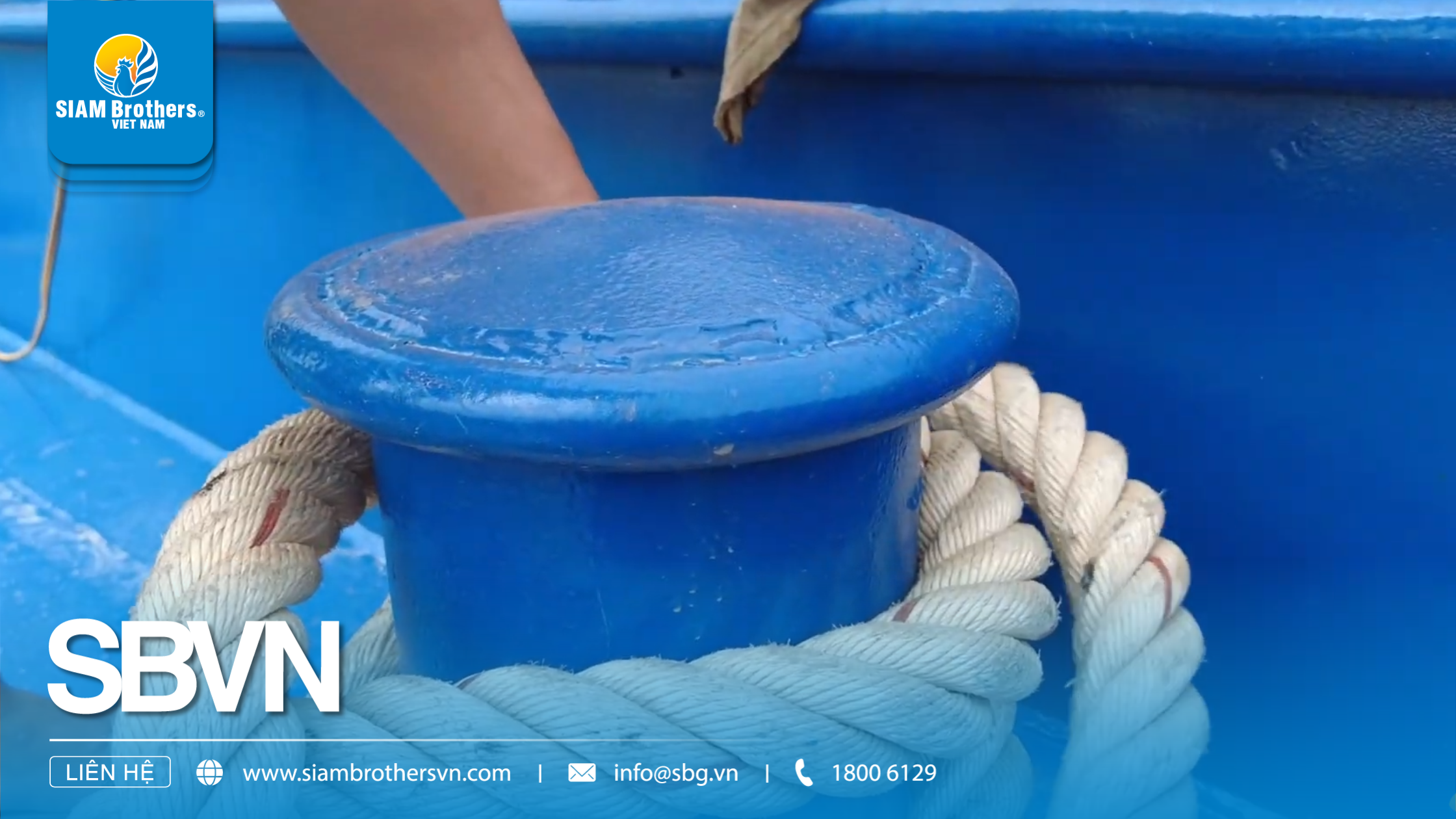
Mooring takes dynamic load: waves, wind, and snatch as the tide falls. 3-strand should only be a secondary line, a temporary line, or a line for a very small boat, because it twists when it is paid out and recovered often. 4-strand suits inshore boats, short-stay moorings, and berths with a lot of pile rub. 8-strand suits the main mooring, large vessels, and winch use: less twist, neater coiling, and a more stable hold when it stays taut.
Source: SIAM Brothers Vietnam
Towing creates hot spots on the drum, at thimbles, and on sharp edges. 3-strand fuzzes and loses outer yarns. 4-strand takes abrasion well, grips a drum reasonably, and suits inshore net towing or medium loads. 8-strand suits long tows and heavy loads where the line must not twist into people or machinery. If the tow path has rock, barnacles, or steel edges, choose a tighter surface (4-strand or 8-strand) instead of upsizing 3-strand for a “solid feel.”
The headline should be soft enough to follow the net frame, easy to join, and easy to haul. 3-strand or mid-size 4-strand is usually enough; many fishermen prefer 4-strand because it lasts longer when the net rubs the gunwale. A sinking footline can use a lead-core rope, still in the 3- or 4-strand group depending on the net. Large 8-strand on a small net line is usually too stiff, too costly, and hard to tune.
Pallet lashing, trellises, tree tying, temporary rope ladders: 3-strand or small-to-medium 4-strand, easy to knot and cut. Lifting, equipment mooring, and lines under repeated load: lean toward 4-strand or 8-strand using the catalogue breaking load, not a “it feels strong” test. General-purpose rope is not a substitute for certified lifting rope with its own safety factor.
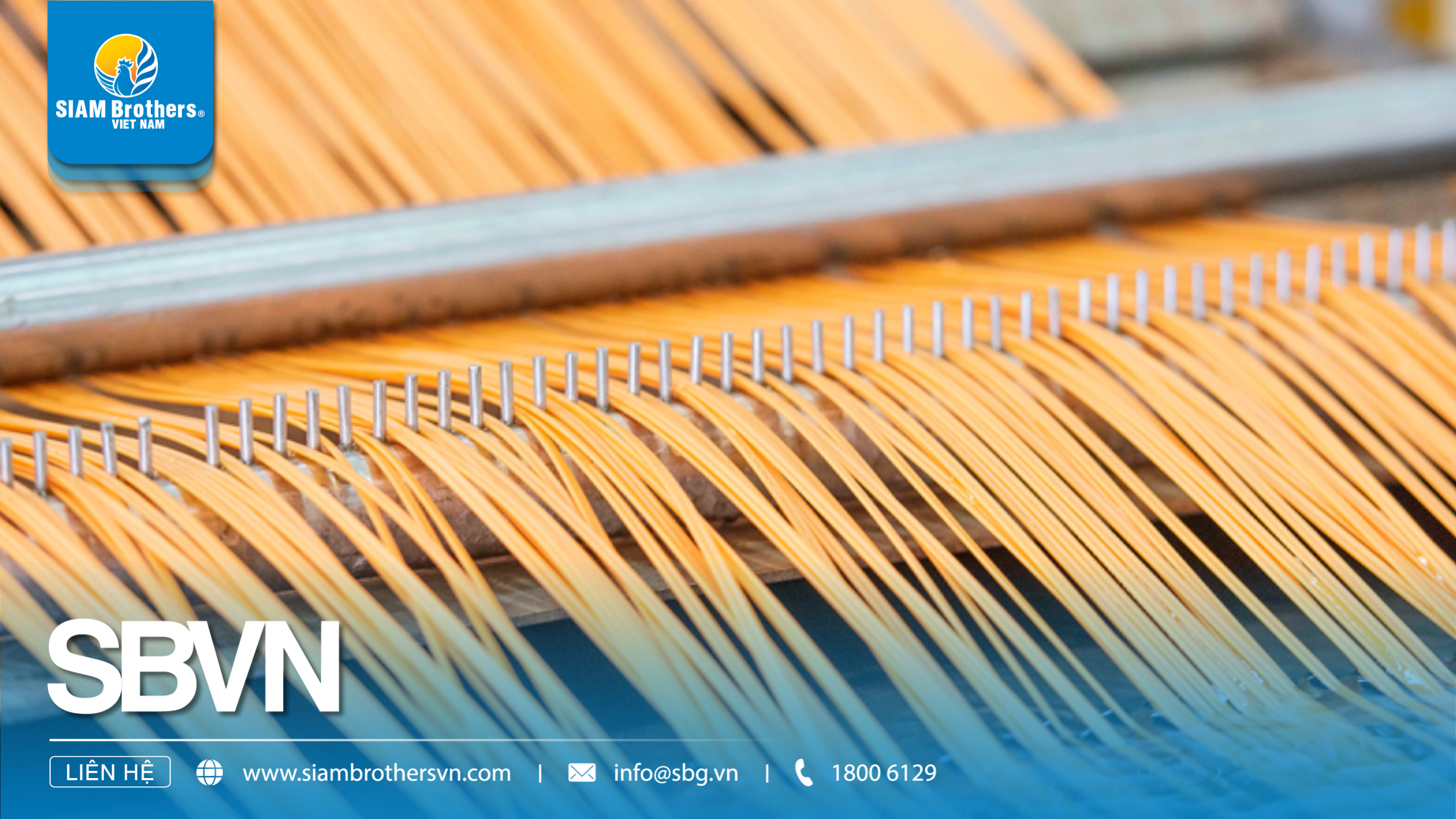
Source: SIAM Brothers Vietnam
Choose on three axes, not the habit of “bigger boat, thicker rope.”
Load: Read the breaking load (kgf) on the label or data sheet, then keep a safety factor. Mooring and towing with shock need a higher factor than static lashing. Two 12 mm ropes can differ in breaking load if strand count, material (PP/PE), or yarn density differ.
Flexibility: Work that is tied and untied many times a day needs a soft, easy knot: 3-strand or small 4-strand. Work that goes on a winch, into a locker, or stays under one-way load needs low twist: 8-strand. Too stiff slows handling; too soft cuts into fittings.
Operating conditions: Year-round sun and salt need UV-stabilized PP/PE; do not buy recycled rope just because the size matches. Sharp edges favor 4-strand. Large winches, long trips, and heavy vessels favor 8-strand. Fresh water, greenhouses, and light lashing still suit 3-strand on cost.
Quick guide:
Tree tying, trellises, light cargo: 3-strand.
Net lines, small-to-medium vessel mooring, inshore towing: 4-strand.
Main mooring on offshore fishing boats / commercial vessels, heavy towing: 8-strand.
Diameter only says how thick the rope is. It does not say how much load it can take or how it takes that load.
Do not choose by size alone when: you do not know the breaking load; you are comparing two brands; you replace 8-strand with oversized 3-strand because it “looks strong”; you buy non-UV rope for the sea; you ignore the end termination (3-strand is easy to splice, 8-strand is not); you ignore abrasion points. An 8 mm 4-strand PP Cock rope, per the published data sheet, has a breaking load of about 810 kgf — that figure does not apply to every 8 mm rope on the market.
The wrong size also works against you: too large and the line is heavy, the winch cannot wrap it fully, and knots will not bed. Too small, even in 8-strand, still breaks if working load exceeds capacity.
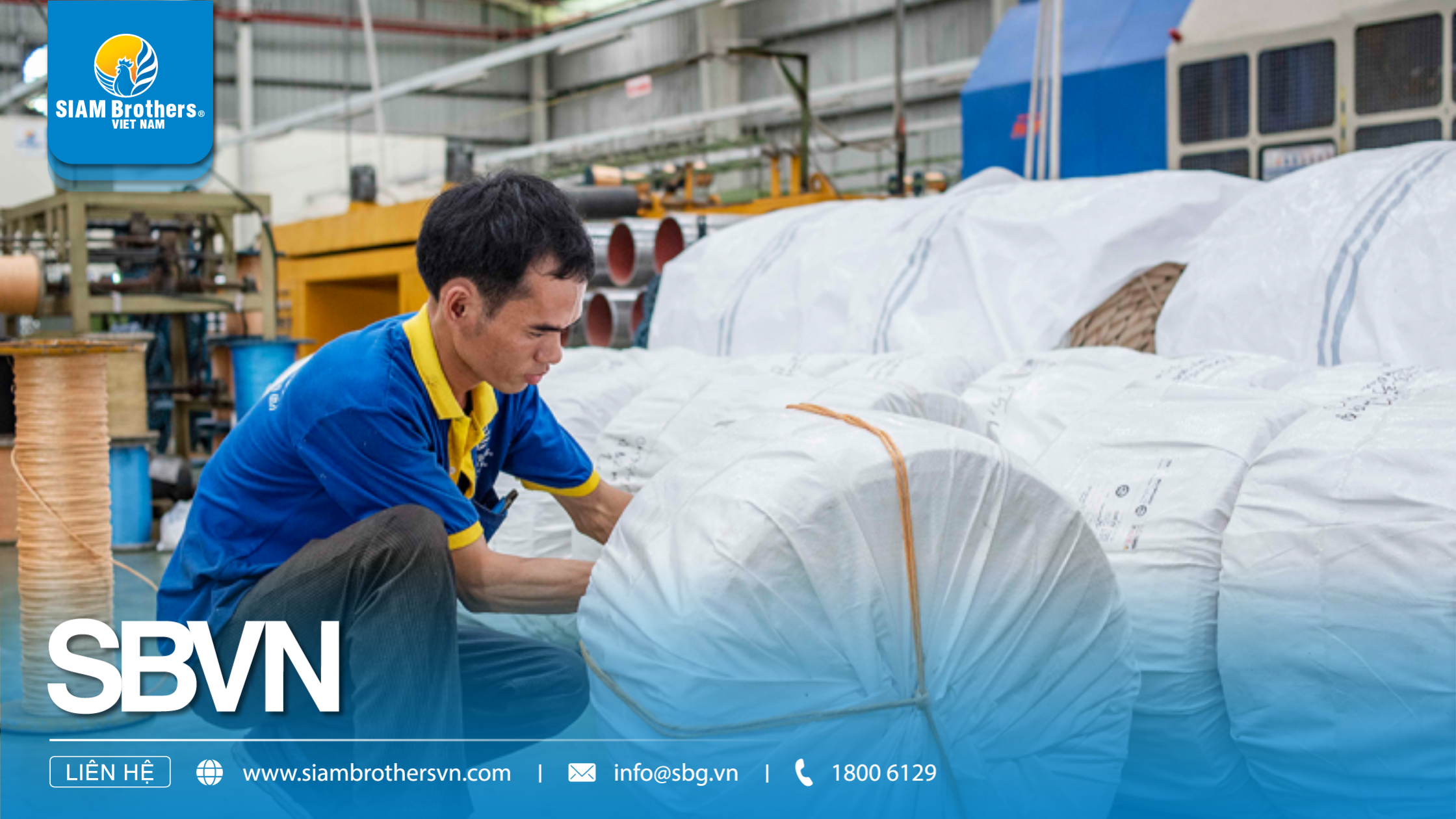
Source: SIAM Brothers Vietnam
Cock rope is made by SIAM Brothers Vietnam from PP, PE, color masterbatch, and UV additives for fishing, marine use, agriculture, and light industry. It floats, does not rot, and handles heat and common chemicals better than natural fiber.
Cock 3-strand rope: moderate and light work, tying, trellises, secondary fishing gear.
Cock 4-strand rope: the most used line — mooring, tying up, net lines, inshore towing; published breaking loads by size (for example, with PP, about 326 kgf at 5 mm, 461 kgf at 6 mm, 635.5 kgf at 7 mm, 810 kgf at 8 mm).
Cock 8-strand rope: mooring and tying fishing and commercial vessels, heavy towing; many large diameters and custom coil lengths.
The plants make PP 3- and 4-strand roughly 3–60 mm and PP 8-strand plait roughly 18–100 mm, depending on the range. Buy sealed anti-counterfeit tape, check the SBVN ID app, and compare breaking load — do not rely on the rooster mark on the wrap alone.
When you call, state the job (mooring, towing, net line), vessel size or estimated load, salt or fresh water, and whether a winch is used. That is better data for choosing 3-, 4-, or 8-strand than judging an old rope by eye.
Read more: How to Choose Rope by Load to Ensure Safe and Effective Use
Source: SIAM Brothers Vietnam
Frequently asked questions (FAQ)
Is 8-strand always more durable than 4-strand?
Not always. 8-strand twists less and stays stable under heavy, long load. 4-strand often handles inshore abrasion better and is easier to resplice. At the same size, compare breaking load and material, not strand count alone.
Does a small boat need 8-strand?
Not necessarily. For a small boat, short mooring, and a lot of hand work, 4-strand is enough in most cases. 8-strand pays off on a heavier vessel, as the main mooring, or when the line is recovered on a winch.
Should net lines be 3-strand or 4-strand?
Headline on a light net: 3-strand or mid-size 4-strand. Heavy gunwale rub and frequent hauling: lean to 4-strand. Large 8-strand rarely fits a small net line.
Why do two 10 mm ropes have different breaking strength?
Strand count, yarn density, PP versus PE, virgin versus recycled fiber, and the test standard all differ. Diameter is only one specification.
Contact us:
Address: 5th floor, VRG Building, 177 Hai Ba Trung Street, Vo Thi Sau Ward, Ho Chi Minh City, Vietnam
Tel: (+84) 28 38 912 889
Hotline: 1800 6129
Facebook: www.facebook.com/siambrothersvn
Email: info@sbg.vn
YouTube: youtube.com/@siambrothersvietnam1728
OA Zalo: zalo.me/1402339229697925373
App SBVN ID:
CHPlay: https://bit.ly/SBVNID-Android
Appstore: https://bit.ly/SBVNID-iOS








Specializing in Agricultural and Fisheries Products & Multipurpose Wire