
- 1800 6129

After many fishing trips or a long period of use, a rope may become frayed, stiff, or unsuitable for its original job. That does not always mean it must be thrown away. Depending on its condition, it may be reused for a light task, made into a craft item, or collected for recycling. So what should you do with old fishing rope to make good use of it while reducing waste? Let’s explore the options with SIAM Brothers Vietnam...
Lay the rope out and inspect its full length. Look for frayed fibers, broken strands, heavy abrasion, distortion, unusual stiffness, or contamination from oil and chemicals. Consider how the rope was used, too. A rope that looks intact on the outside may have spent a long time under tension, exposed to friction, sun, and rain.
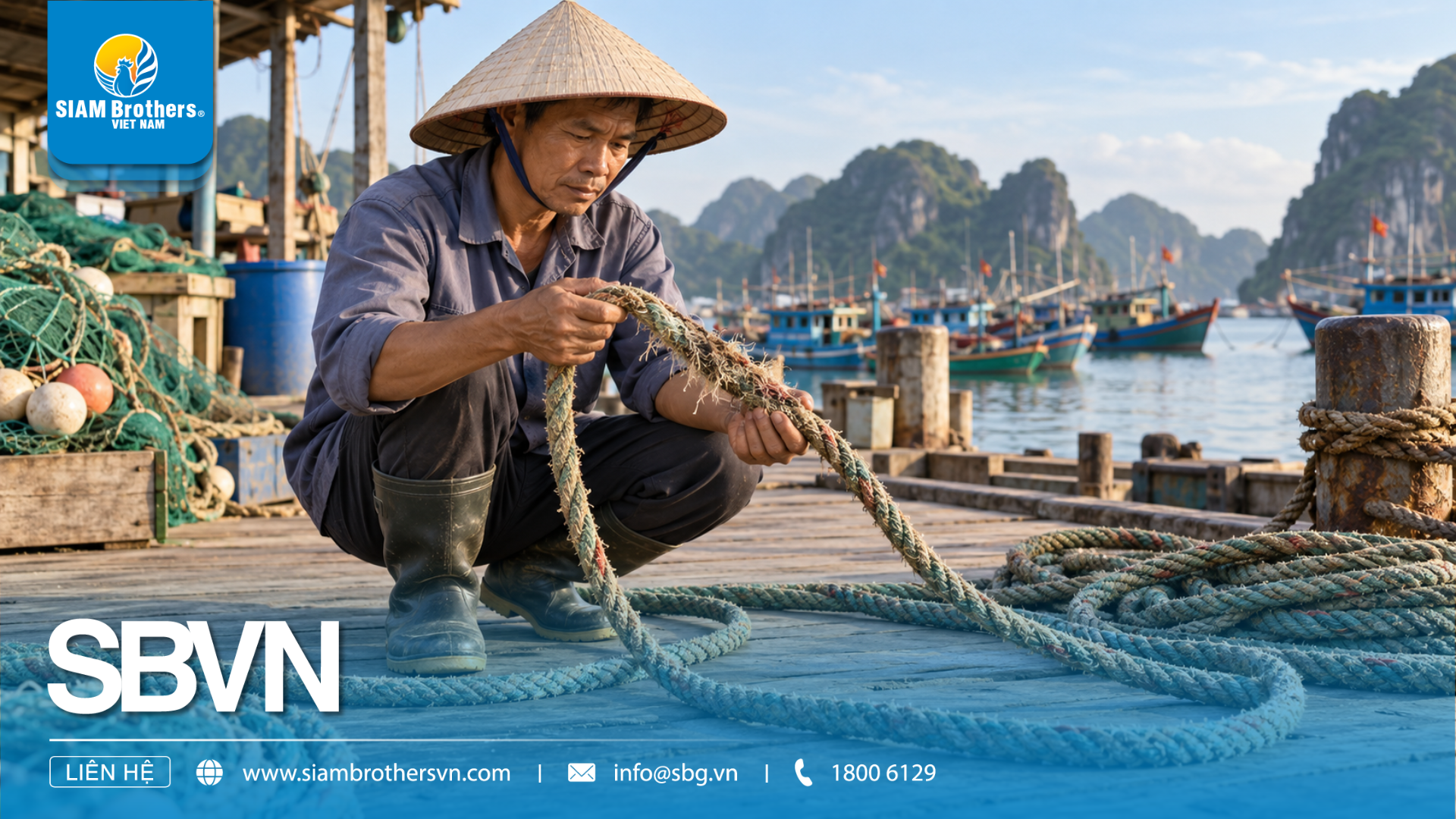
Inspect used rope before deciding whether to reuse it for light tasks or send it for collection.
If the rope is damaged or you do not know its usage history, do not keep using it to moor a boat, pull a heavy load, or perform any task where a break could cause harm. Retiring a rope from its original job does not mean every part is useless. It means you need to choose a more suitable use or disposal method.
For fishing rope or rope used outdoors, remove hooks, metal parts, and trapped debris before coiling it. Keep potentially reusable rope separate from badly damaged rope. If you know the rope’s material from its label or purchase information, record it before contacting a recycler.
Avoid leaving loose rope beside the water or unsecured on a boat. Lost rope and other fishing gear can entangle wildlife, interfere with vessels, and become marine debris.
A rope that is no longer selected for its main fishing job may still be useful if the section you plan to reuse is clean and intact. For example, it could help bundle light items in storage, keep small pieces of equipment together, or provide material for practicing rope coiling and basic knots.
Choose the new task according to the rope’s actual condition. Do not guess its remaining strength. Do not use old rope to suspend items overhead, support a person, moor a boat, or pull heavy loads. If only a short section remains sound, you can set that piece aside for an appropriate light task and collect the damaged portion for further handling.
Reuse is worthwhile when the rope serves a real purpose. Keeping large amounts of old rope outdoors because they “might be useful someday” can allow them to deteriorate further and make collection harder.
Clean, dry rope can be used for items that do not require high load-bearing strength. Depending on its thickness, color, and flexibility, you could:
Coil it into a small floor mat or decorative mat.
Wrap it around a jar or box for decoration.
Make wall decorations from shorter lengths.
Use it as practice material when teaching basic knots under appropriate supervision.
Some makers collect old fishing rope and turn it into mats and home décor. However, crafts are not suitable for every rope. Rope that is heavily contaminated, crumbling, or shedding many plastic fibers may be difficult to clean and unsuitable for use indoors.
If you do not want to make anything yourself, ask a craft group or maker whether they accept the type and condition of rope you have. Describe it accurately rather than handing over a bundle mixed with rubbish or sharp objects.

Cleaned used rope can be repurposed into a doormat and decorative items.
Recycling rope is not as simple as putting it in any recycling bin. A collector may need to know its material, quantity, and whether it contains metal, mud, oil, or other materials. Sorting and cleaning affect what can happen to the rope next.
If you have a large amount of rope from a fishing vessel, aquaculture site, or storage facility, coil it and separate it by material where that information is known. Then ask a collection program or recycler whether they accept rope, which types they take, and how to prepare it. Not every old rope can be recycled through every program.
SIAM Brothers Vietnam has published an old rope collection program for fishers, distributors, and partners, with the aim of sorting and recycling used rope. If you would like to take part, contact SIAM first to confirm the rope types currently accepted, handover method, location, and applicable terms. This is one option alongside other suitable local collection channels.
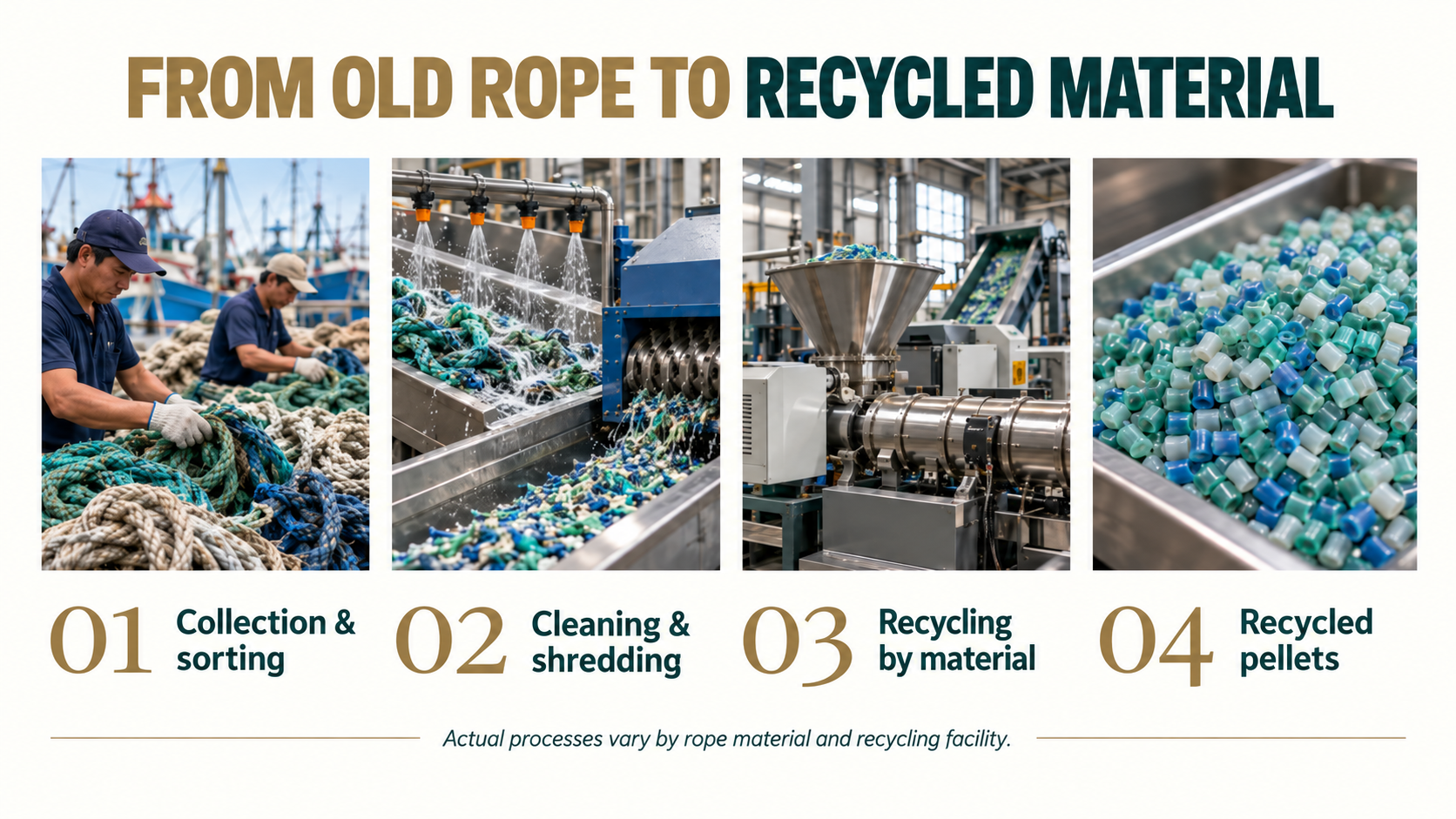
An illustrative overview of rope collection, sorting, cleaning, material-specific recycling, and pellet production.
Some ropes are badly damaged, heavily contaminated, or unsuitable for the collection programs available nearby. In that case, coil and secure the rope so it will not come loose during storage or transport. Remove hooks and other sharp objects, then ask your local waste collector how to hand it over.
Do not burn the rope, throw it into a river or the sea, or leave it where it can wash off a boat. For fishing rope in particular, bringing the entire rope, including small broken pieces, back to shore is a practical way to prevent more waste from entering the water.
When a rope is no longer suitable for its original job, inspect it and choose the next step based on its condition. You may be able to reuse a sound section for a light task, make a craft item, pass it to someone who needs the material, send it to a collection program, or dispose of it properly. Above all, do not use damaged rope for a task that depends on its strength, and do not let old rope drift into the environment.
Old rope? Don’t throw it away. Collect used rope and contact SIAM Brothers Vietnam.
Further reading: How SIAM Brothers Vietnam recycles used rope.
Source: SIAM Brothers Vietnam
FAQ
Q: Can old fishing rope be reused?
A: A section that remains suitable may be used for a light task or craft project after inspection and cleaning. Do not use a deteriorated rope where a break could cause harm.
Q: Can I put old rope in a regular recycling bin?
A: Do not assume it will be accepted. Ask the collection operator whether they take rope, which materials they accept, and how it should be sorted.
Q: What should I do with rope that is very dirty or badly damaged?
A: Remove sharp objects, coil and secure the rope, and check whether a collection program can accept it. If none can, follow your local waste collector’s instructions.
Q: Does SIAM Brothers Vietnam collect old rope?
A: SIAM has published an old rope collection program. Contact the company directly to confirm its current acceptance terms before sending any rope.
Contact us:
Address: 5th floor, VRG Building, 177 Hai Ba Trung Street, Vo Thi Sau Ward, Ho Chi Minh City, Vietnam
Tel: (+84) 28 38 912 889
Hotline: 1800 6129
Facebook: www.facebook.com/siambrothersvn
Email: info@sbg.vn
YouTube: youtube.com/@siambrothersvietnam1728
OA Zalo: zalo.me/1402339229697925373
App SBVN ID:
CHPlay: https://bit.ly/SBVNID-Android
Appstore: https://bit.ly/SBVNID-iOS








Specializing in Agricultural and Fisheries Products & Multipurpose Wire