
- 1800 6129

A river trash boom is more than just a line of floating barriers placed across the water. Behind every effective system is a carefully planned process involving site surveys, technical calculations, and a design tailored to real-world flow conditions. In this article, SIAM Brothers Vietnam explains how a river trash boom works, what components make up the system, and how the entire installation process is carried out—from the initial site assessment to final installation. This will help you better understand how to choose the right solution for different river, canal, and waterway projects.
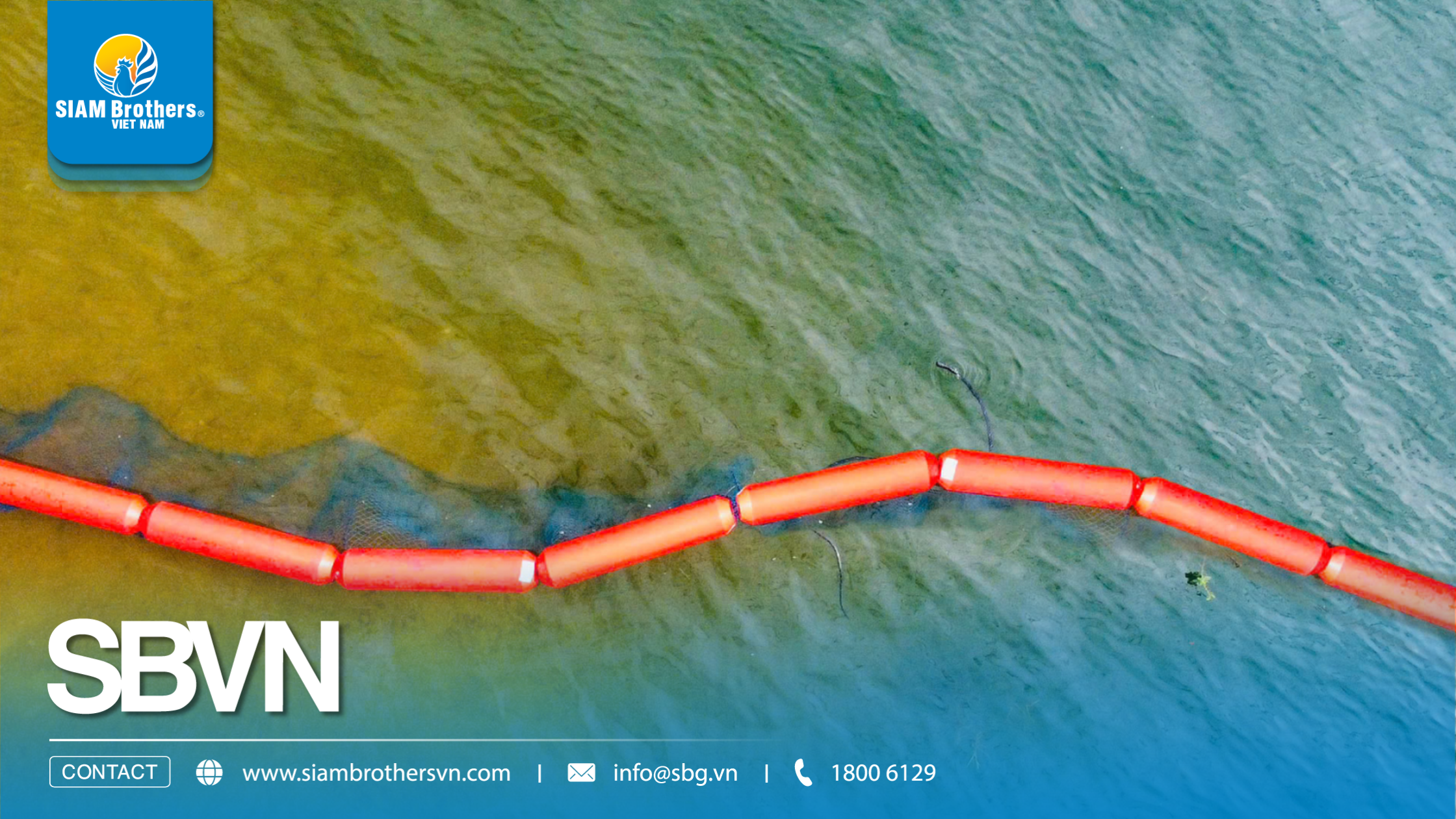
A river trash boom is a floating barrier system installed on the water surface to guide, capture, and concentrate floating waste toward a designated collection point.
A complete river trash boom system typically includes floating boom units, a trash-catching section, connecting ropes or cables, and an anchoring system.
The main components usually include:
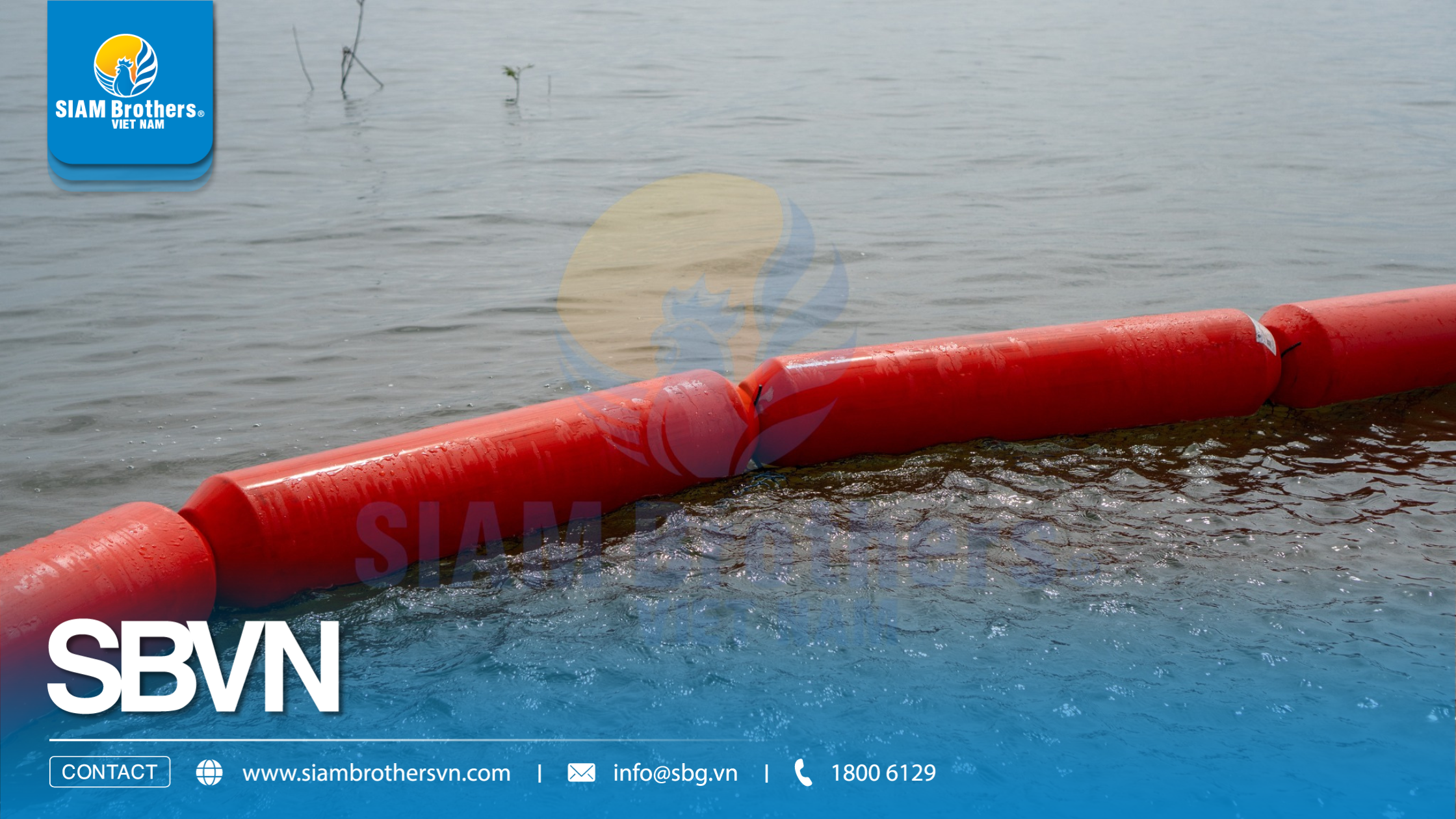
The working principle is fairly straightforward.
As floating waste moves with the current and reaches the boom, the system guides the debris toward a predetermined collection area. The waste can then be removed using a suitable collection method.
The basic process works as follows:
The types of waste a river trash boom can handle depend largely on the design of the overall system.
Under suitable operating conditions, a river trash boom can help control various types of floating debris, including:
For larger, heavier, or densely accumulated debris, the system must be designed with sufficient load capacity across the floats, nets, connecting ropes, and anchoring components.
This is also why an on-site assessment should be carried out before a technical configuration is recommended.
Two river trash boom projects may serve the same basic purpose, but a system installed on a fast-flowing river cannot simply use the same configuration as one installed in a narrow, slow-moving canal.
A stable river trash boom system depends on more than just the floating boom body. Every component must work together as part of one complete barrier system.
If any one of these components is not properly selected, the overall performance of the system may be affected.
For example, a boom may provide excellent buoyancy, but if the anchoring system is not strong enough, the barrier can still shift out of position.
On the other hand, even with a secure anchoring system, an unsuitable barrier or netting design may fail to collect the types of waste commonly found at the site.
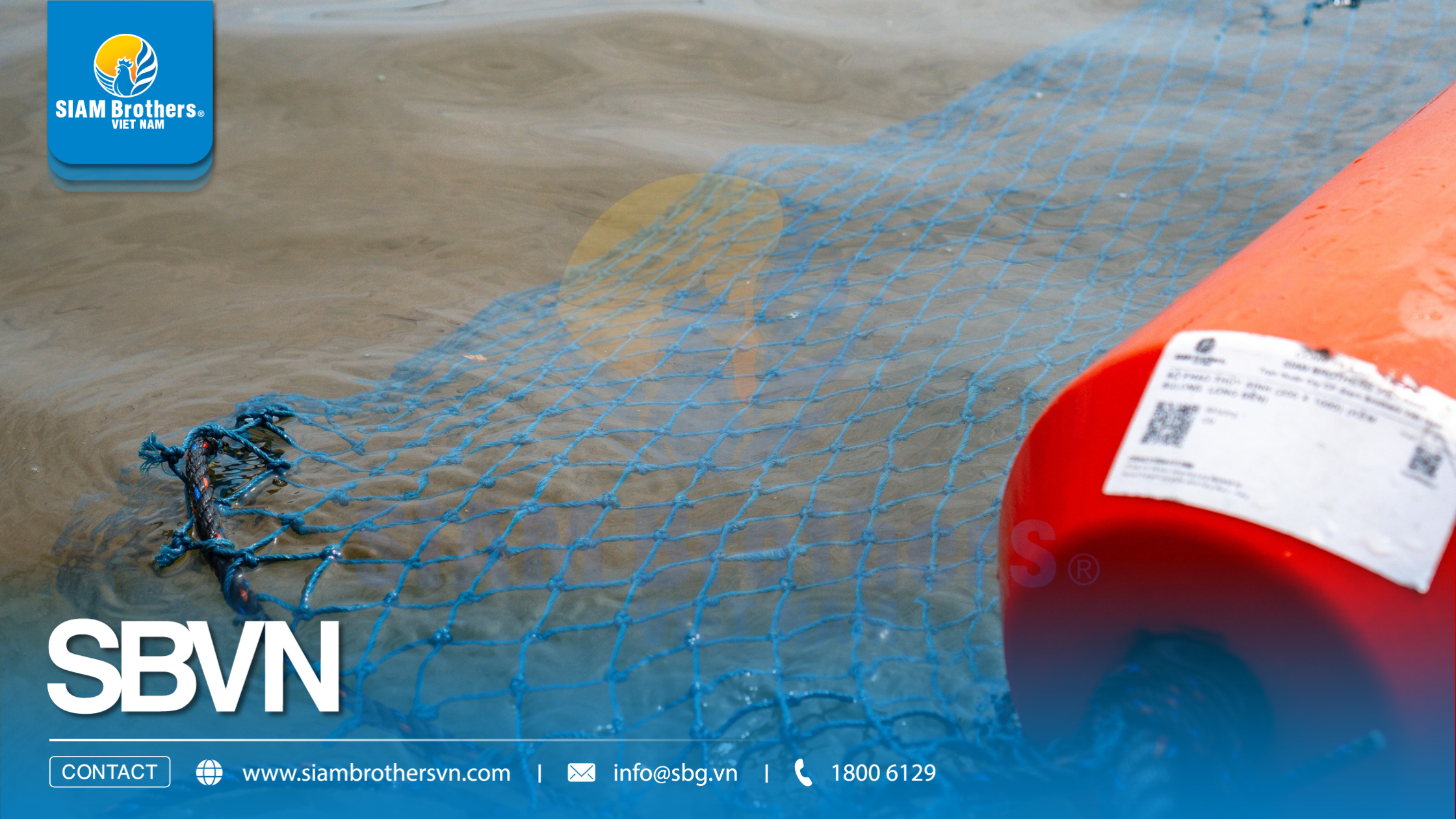
The floating body is the most visible part of a river trash boom.
Its main purpose is to provide buoyancy and maintain a continuous barrier line on the water surface.
When selecting the floating boom body, technical teams typically consider several factors:
A larger float does not automatically mean a better system.
The correct size should be selected according to the expected debris load, water flow, and actual operating requirements.
While the floating body keeps the barrier on the surface, the trash-catching section is the part that directly controls floating debris.
Depending on the system design, this section may use netting or another suitable barrier material based on the type of waste being targeted.
Important factors include:
For example, an area where plastic bottles and bags are the main concern will require a different barrier configuration from an area where branches, water plants, or bulky floating debris frequently appear.
For this reason, the netting should not be selected first and then simply attached to whatever floats are available.
The float and the trash-catching section should be designed as an integrated system from the beginning.
For long river trash boom installations, the system is usually not made from one continuous floating unit.
Instead, individual modules are connected into sections that together form the complete barrier line.
Connecting ropes or cables serve several important functions:
These components must also be selected according to the expected operational load.
The stronger the current or the greater the volume of floating debris, the higher the strength requirements for the connection system.
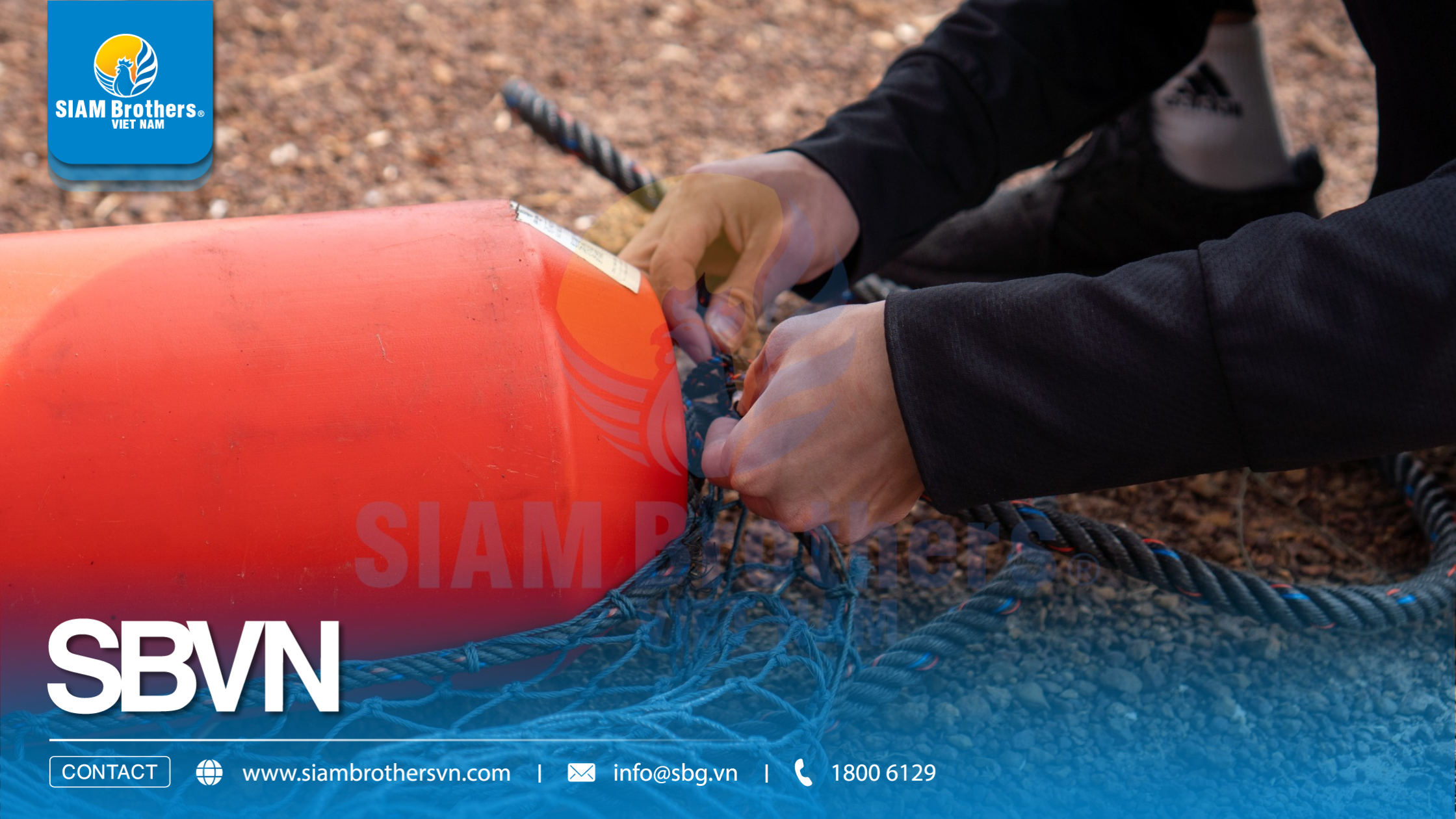
In practice, connectors and accessories often receive less attention than the main floating boom.
However, these components are critical connection points and should be inspected regularly.
A river trash boom system may use:
The key requirement is that all accessories must be compatible with both the boom structure and the operating environment.
For example, even if a boom section can handle a high load, an unsuitable connector may become the weakest point in the entire system.
The anchoring system is one of the most important components of a river trash boom.
Water currents continuously apply force to both the floats and the barrier section. As floating waste accumulates, the total load on the system increases even further.
The role of the anchoring system is to keep the boom in its intended position.
A typical anchoring system may include:
When designing the anchoring system, several factors should be considered:
An anchoring configuration used for one project should not simply be copied and applied to another.
Two sites may use the same type of river trash boom, while requiring completely different anchoring solutions because of differences in current speed, river width, water level, or surrounding terrain.
The ultimate goal of a river trash boom is not simply to stop floating waste. The debris also needs to be collected and removed efficiently.
That is why every project should identify the collection strategy from the beginning.
Key questions include:
A well-planned collection point can reduce operating time and help prevent excessive waste accumulation along the boom.
A river trash boom can be visualized as a connected system:
Floating Boom → Trash Barrier/Netting → Connecting Ropes and Accessories → Anchoring System → Waste Collection Area
Each component performs a specific role:
Only when these components are designed to work together as one coordinated system can a river trash boom operate more reliably under real-world river and waterway conditions.
A site survey is the first step and provides the foundation for designing the right river trash boom system.
Before deciding on the boom configuration, the following factors should be assessed:
For example, a slow-moving river where most of the debris consists of plastic bottles will require a very different solution from a location that frequently receives branches, floating vegetation, and bulky waste after heavy rain.
That is why an on-site survey should never be overlooked, especially for long river trash boom installations or waterways with complex flow conditions.
Once the site data has been collected, the next step is to determine exactly where and how the river trash boom should be positioned.
Key factors include:
Once the installation plan has been finalized, all components of the river trash boom system should be prepared.
These typically include:
Before transporting the components to the installation site, check:
Checking everything in advance helps prevent material shortages or missing components after the equipment has already been delivered to the project site.
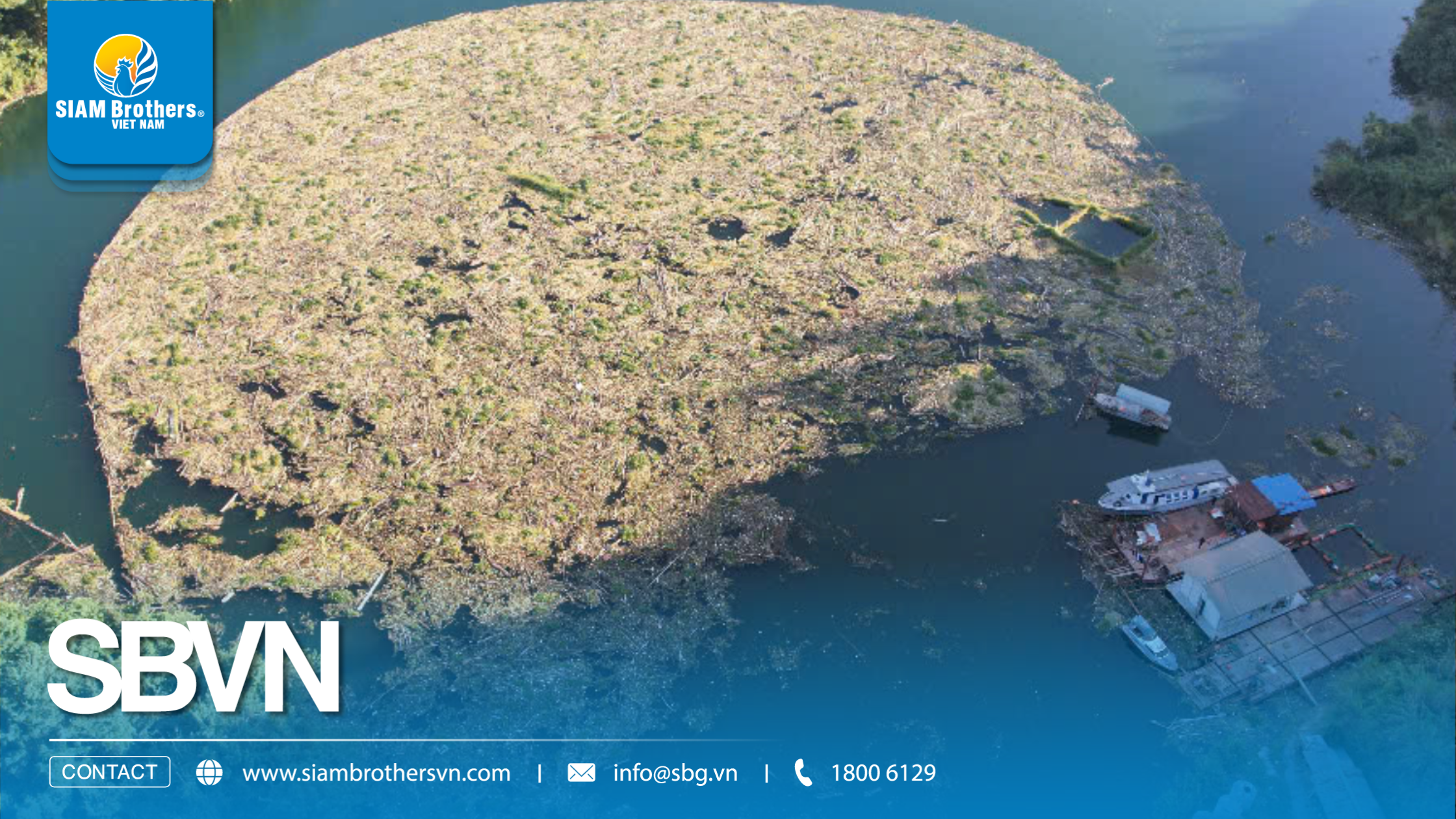
For a long river trash boom, individual modules are usually assembled into sections before being moved into their final position.
During assembly, make sure to:
For systems with many modules, labeling each section can make on-site installation much easier to manage.
Even a small issue at a single connection point can affect the entire boom once the system is exposed to water-current forces.
Once the floating boom sections have been connected, the trash-catching section can be installed according to the approved configuration.
Check the following:
The barrier should not be excessively loose, as this can reduce its ability to control floating debris.
At the same time, it should not automatically be pulled completely rigid if the system design requires some flexibility to accommodate movement on the water surface.
This step has a direct impact on the stability of the river trash boom.
The anchoring method may vary depending on site conditions. During installation, check:
Most importantly, the anchoring system must match the actual conditions of the project site.
If current conditions change significantly from season to season, the anchoring design should also account for changing water levels and varying loads on the barrier.
Once the floats, barrier section, and anchoring components have been prepared, the boom can be moved into its designated position.
At this stage, check:
Avoid fully securing the system before completing an overall alignment check.
Making adjustments at this stage is much easier if the boom has shifted away from its intended position.
Once the river trash boom is in the correct position, the final alignment and tension adjustments can be made.
Check:
At this stage, the installation team should observe how the system behaves under actual water conditions.
If one boom section is being pulled out of position or the barrier is experiencing uneven loading, it is better to correct the issue immediately rather than waiting until debris begins to accumulate.
Installation is not complete simply because all components are in place.
The system should be tested to confirm:
Whenever possible, the river trash boom should be observed under actual operating conditions for a period of time so that any issues can be identified and corrected.
Once testing is complete, the system should go through final inspection and acceptance based on the project requirements.
Items to inspect may include:
For commercial or industrial projects, it is a good idea to keep photos and inspection records.
These documents can provide a useful reference for future inspections, maintenance, troubleshooting, or system adjustments.
A river trash boom does not stop requiring attention once the installation has been handed over.
Routine inspections should cover:
The river trash boom should be inspected especially after:
Waste removal should also be scheduled according to the actual amount of debris accumulating at the site.
Debris should not be allowed to build up for too long, as the additional load can increase stress on both the barrier section and the anchoring system.
Yes, but the system needs to be designed around the actual flow conditions at the site.
Stronger currents create greater forces on the floats, barrier section, and anchoring system. When a large amount of debris accumulates, the load on the entire boom increases even further.
Before selecting a river trash boom configuration, it is important to assess:
For waterways with major changes in flow conditions, a configuration from another project should not simply be copied without a site-specific assessment.
Not necessarily.
The positioning of a river trash boom directly affects how effectively it captures and concentrates floating debris.
In practice, a boom may be installed at an angle to the current rather than automatically being placed perpendicular to the water flow.
The main goals are to:
This is another reason why a site survey should be completed before the final installation location is confirmed.
A properly designed river trash boom should take water movement into account while controlling floating debris.
Factors that may affect water flow include:
When too much debris builds up, the obstruction to water flow may increase.
For that reason, regular waste removal is part of normal river trash boom operationn not simply an optional maintenance task after installation.
If you are planning a river trash boom project, you can start by providing some basic information:
Based on this information, the technical team can further evaluate the most appropriate float configuration, trash barrier, and anchoring solution for the project.
Yes. Recommendations can be developed based on the actual conditions and requirements of each project.
To support a more accurate technical assessment, businesses should prepare:
With this information, the technical team can work with the customer to evaluate suitable materials, float dimensions, barrier configurations, connection methods, and anchoring systems rather than simply selecting a standard off-the-shelf boom.
A river trash boom performs effectively only when it is selected and designed according to the actual conditions of each project.
If your business is looking for a trash-control solution for a river, canal, lake, or other waterway, price should not be the only factor you consider. Start with the site conditions, the type and volume of debris, and your actual operating requirements.
Contact SIAM Brothers Vietnam today to discuss your project with our technical team and get recommendations on the most suitable river trash boom configuration, barrier system, and installation solution for your site.
Source: SIAM Brothers Vietnam
Contact us:
► Address: 5th floor, VRG Building, 177 Hai Ba Trung Street., Xuan Hoa Ward, Ho Chi Minh City, Vietnam
► Hotline: 1800 6129
► Tel: (+84) 28 38 912 889
► Email: info@sbg.vn
► Follow us for more details at: Facebook - Zalo OA - Tiktok - Youtube - LinkedIn
Download SBVN ID app here:
► CHPlay
► Appstore









Specializing in Agricultural and Fisheries Products & Multipurpose Wire