
- 1800 6129

Every rainy and flood season, the volume of floating vegetation, tree branches, debris, and drifting objects flowing into reservoirs, hydropower plants, and irrigation projects increases dramatically. To reduce cleaning costs and protect water intake structures, many operators still use DIY trash barrier systems made from steel drums, steel frames, and steel cables.
However, these improvised systems have gradually revealed significant limitations in terms of service life, operational safety, and debris containment performance. Meanwhile, specialized trash boom systems combined with high-strength debris nets are becoming the preferred solution thanks to their superior debris control, stable operation, and lower long-term operating costs.
In the article below, SIAM Brothers Vietnam will help you compare these two solutions in detail so you can select the most suitable option for your project.
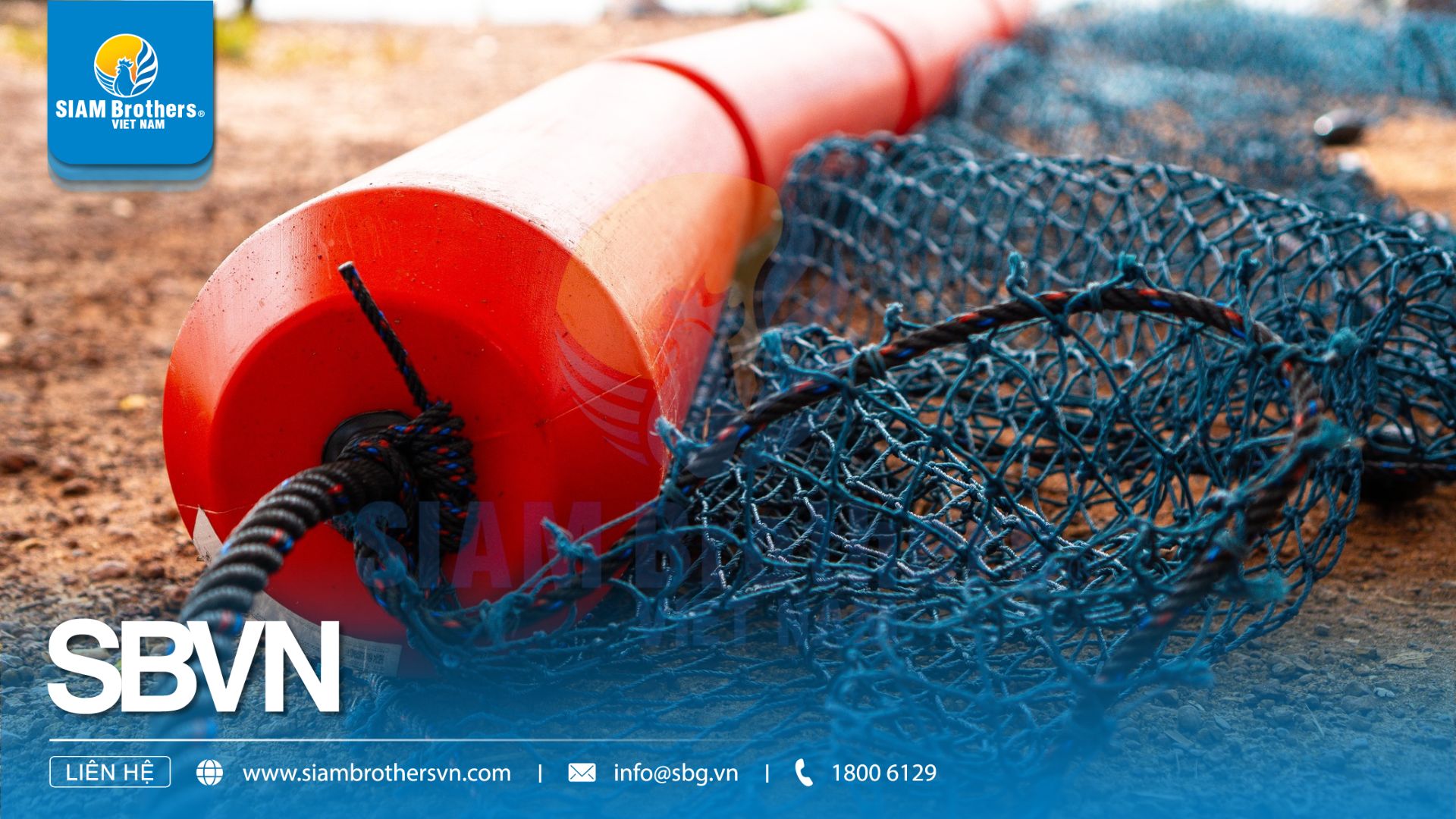
Specialized trash boom system with debris net protecting the water intake of a hydropower reservoir
A specialized trash boom is a floating barrier system designed to prevent floating debris, aquatic plants, tree branches, and drifting objects from entering the water intake area of hydropower plants, irrigation systems, and reservoirs. The system typically consists of floating booms, high-strength debris nets, anchoring cables, and connecting accessories, all engineered according to actual site conditions and water flow characteristics.
Unlike manually assembled barrier systems, a specialized trash boom is designed as an integrated solution capable of withstanding long-term outdoor exposure. Its materials provide excellent UV resistance, corrosion resistance, and adaptability to seasonal water level fluctuations.
Beyond preventing floating debris, the system also protects water intake structures, turbines, pumps, and other critical equipment from blockage and impact caused by large floating objects. As a result, specialized trash boom systems are increasingly becoming the preferred choice for modern hydropower and irrigation infrastructure projects.
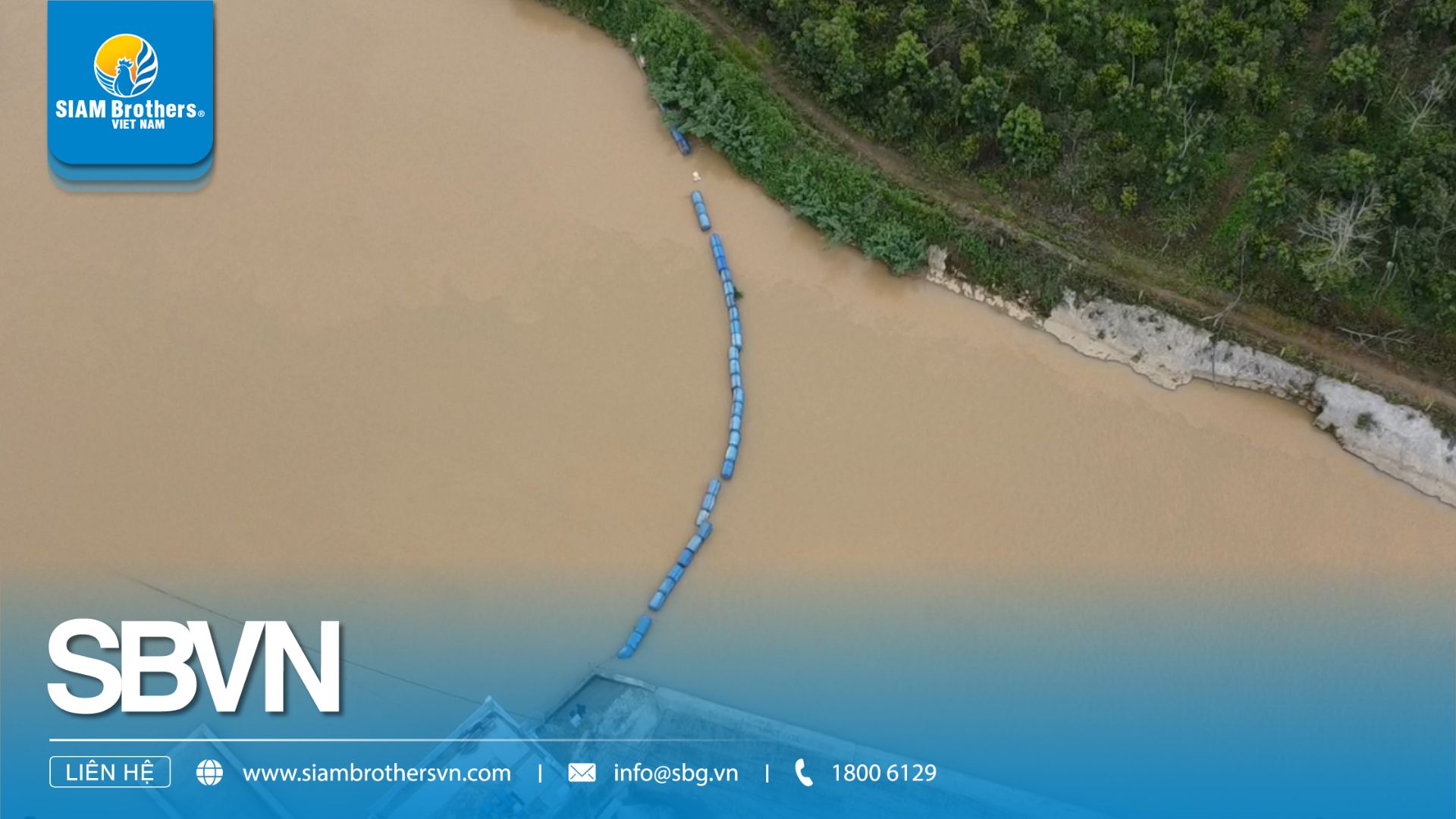
DIY trash barrier system using steel drums, steel frames, and steel cables installed across a reservoir
Before specialized debris control solutions became widely available, many projects chose DIY trash barrier systems to minimize initial investment costs.
A typical DIY trash barrier system generally consists of:
Plastic or steel drums used as floating buoys.
Welded steel frames.
Steel cables stretched across the water surface.
Steel mesh or conventional netting.
The primary advantage of this solution is its low initial investment cost, ease of installation, and ability to utilize readily available materials.
However, after a period of operation, several limitations usually become apparent, including:
Steel drums deteriorate quickly.
Steel frames are prone to corrosion.
Steel cables sag under heavy debris loads.
Maintenance becomes increasingly difficult.
Debris containment efficiency decreases significantly during periods of high water flow.
During the rainy and flood season, the combination of strong currents and large volumes of floating debris can easily deform the system, reducing its ability to protect critical infrastructure.
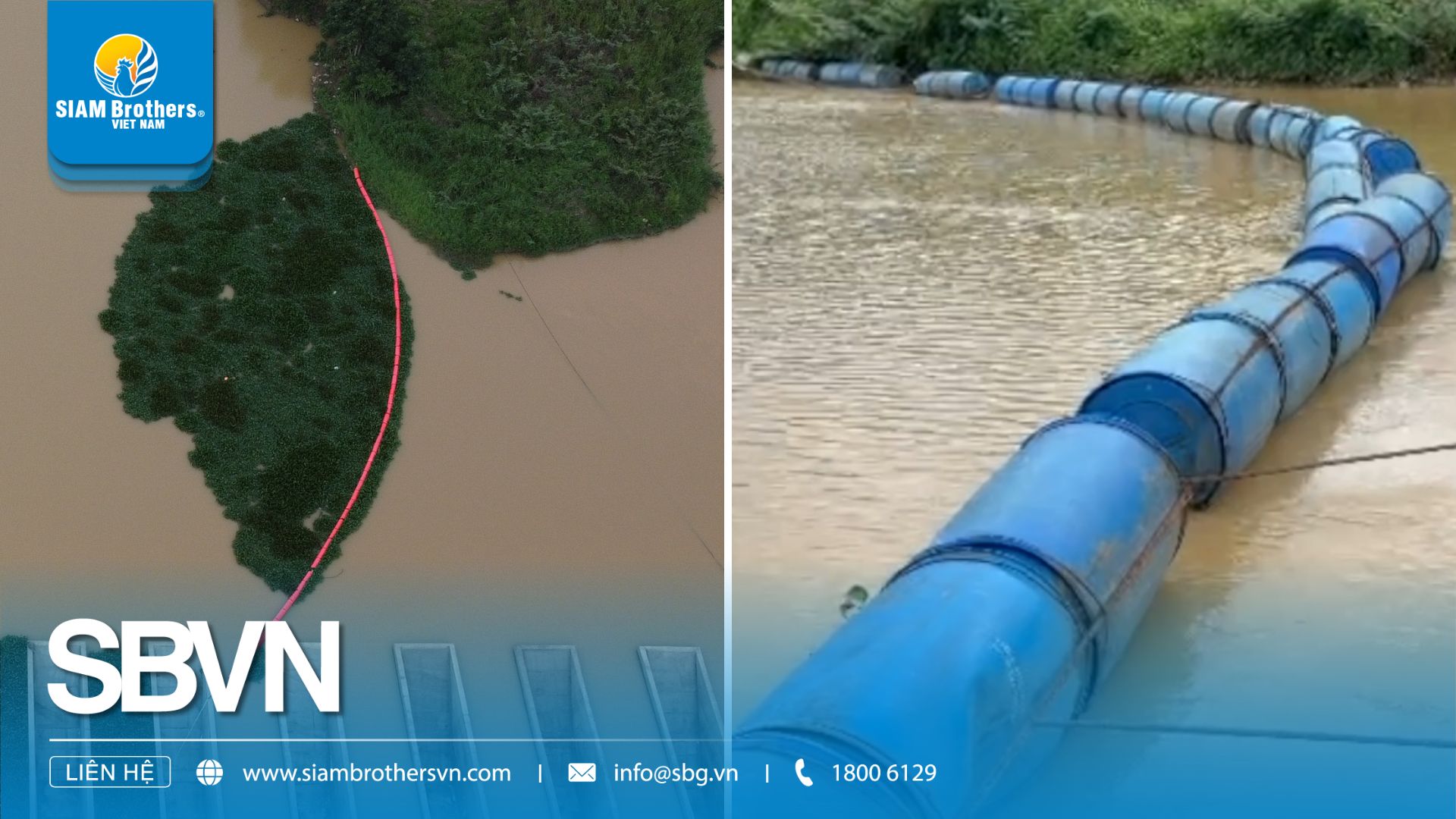
Comparison between a specialized trash boom and a DIY trash barrier system made from steel drums
DIY systems are generally capable of retaining only large floating objects, while smaller debris often passes through the barrier. In addition, these systems can deform when confronted with a sudden increase in debris volume.
In contrast, a specialized trash boom combined with a high-strength debris net effectively captures most floating vegetation, tree branches, floating waste, and drifting objects before they reach the upstream intake area.
Steel drums and steel frames are highly susceptible to prolonged exposure to UV radiation, water, and harsh weather conditions.
By comparison, specialized floating booms are manufactured from materials that offer superior UV resistance, corrosion resistance, and structural strength, significantly extending the overall service life of the system.
Under conditions of strong water currents and heavy debris accumulation, steel cables and manually fabricated frames can bend, deform, or even break.
Specialized trash boom systems are engineered according to the actual load requirements of each project, providing substantially greater structural strength and reliability.
Although the initial investment is higher, specialized trash boom systems significantly reduce:
Cleaning costs.
Repair and maintenance expenses.
Equipment downtime.
Labor required for debris removal.
When evaluated over the entire lifecycle of the project, specialized trash boom systems offer a considerably lower total cost of ownership than DIY alternatives.
Learn more Floating Trash Boom: 3 Reasons Why It Is the Optimal Waste Prevention Solution
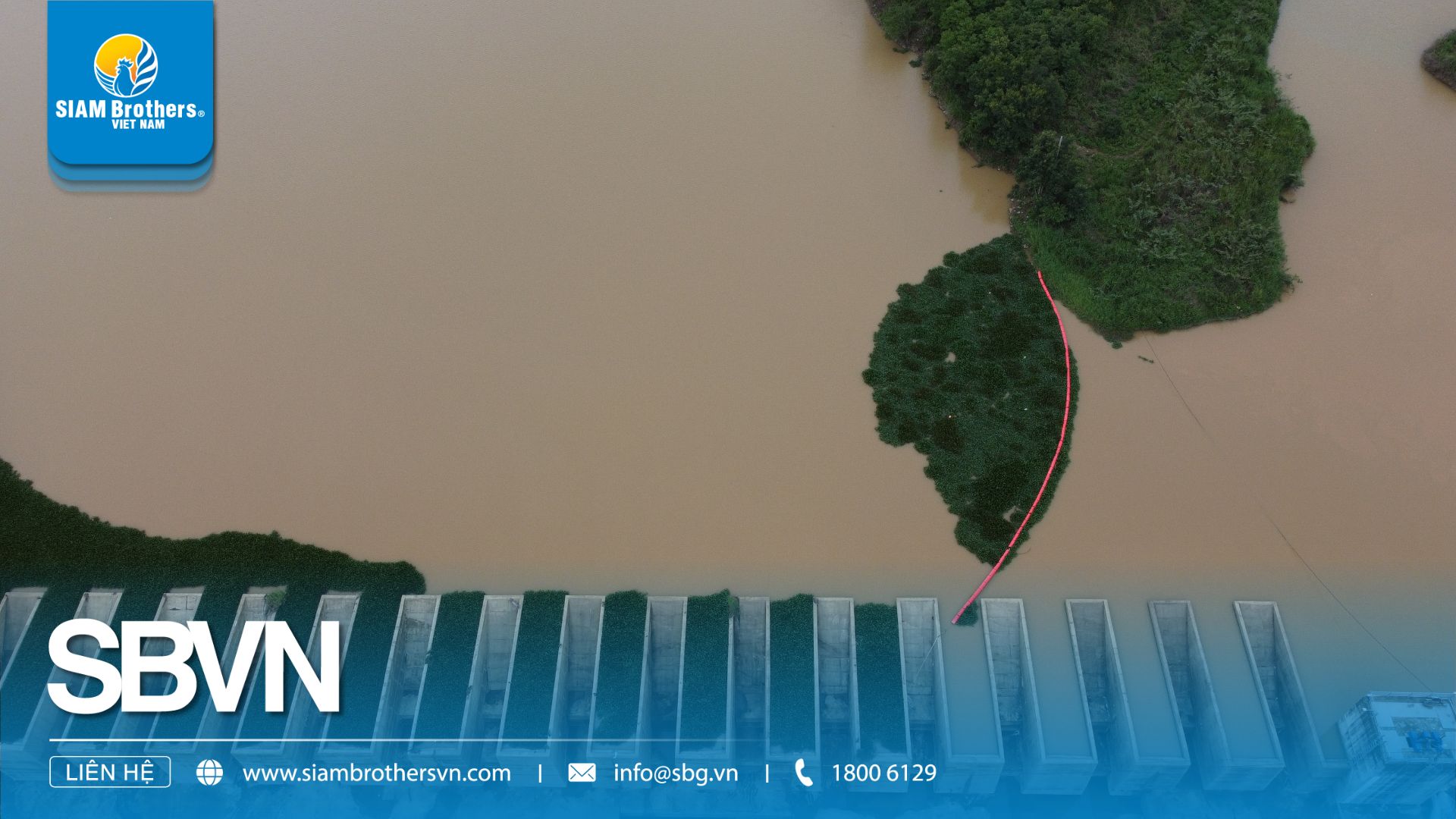
Specialized trash boom system operating at the Di Linh Hydropower Reservoir
A typical example is the specialized trash boom system installed in the upstream area of the Di Linh Hydropower Reservoir.
Previously, the project relied on a DIY trash barrier system constructed with steel drums and welded steel frames. After a period of operation, the system experienced frequent deterioration, inconsistent debris retention performance, and high maintenance labor requirements.
After replacing the old system with a specialized floating trash boom combined with a debris containment net, operational results recorded after approximately six months showed that the debris interception efficiency reached around 90%. This significantly reduced the amount of floating debris entering the water intake, minimized cleaning work, and improved overall operational efficiency.
This practical case demonstrates that investing in a specialized solution not only delivers superior technical performance but also creates long-term economic benefits for project owners.
If your project shows one or more of the following signs, it may be the right time to consider upgrading:
The system is frequently damaged after each rainy season.
Annual maintenance costs continue to increase.
Large amounts of debris are entering the water intake.
The steel frame has become severely corroded.
Steel cables are sagging under load.
Excessive labor is required to remove floating debris.
Operational equipment is frequently clogged by debris.
Replacing the system early helps minimize operational risks while extending the service life of the entire facility.
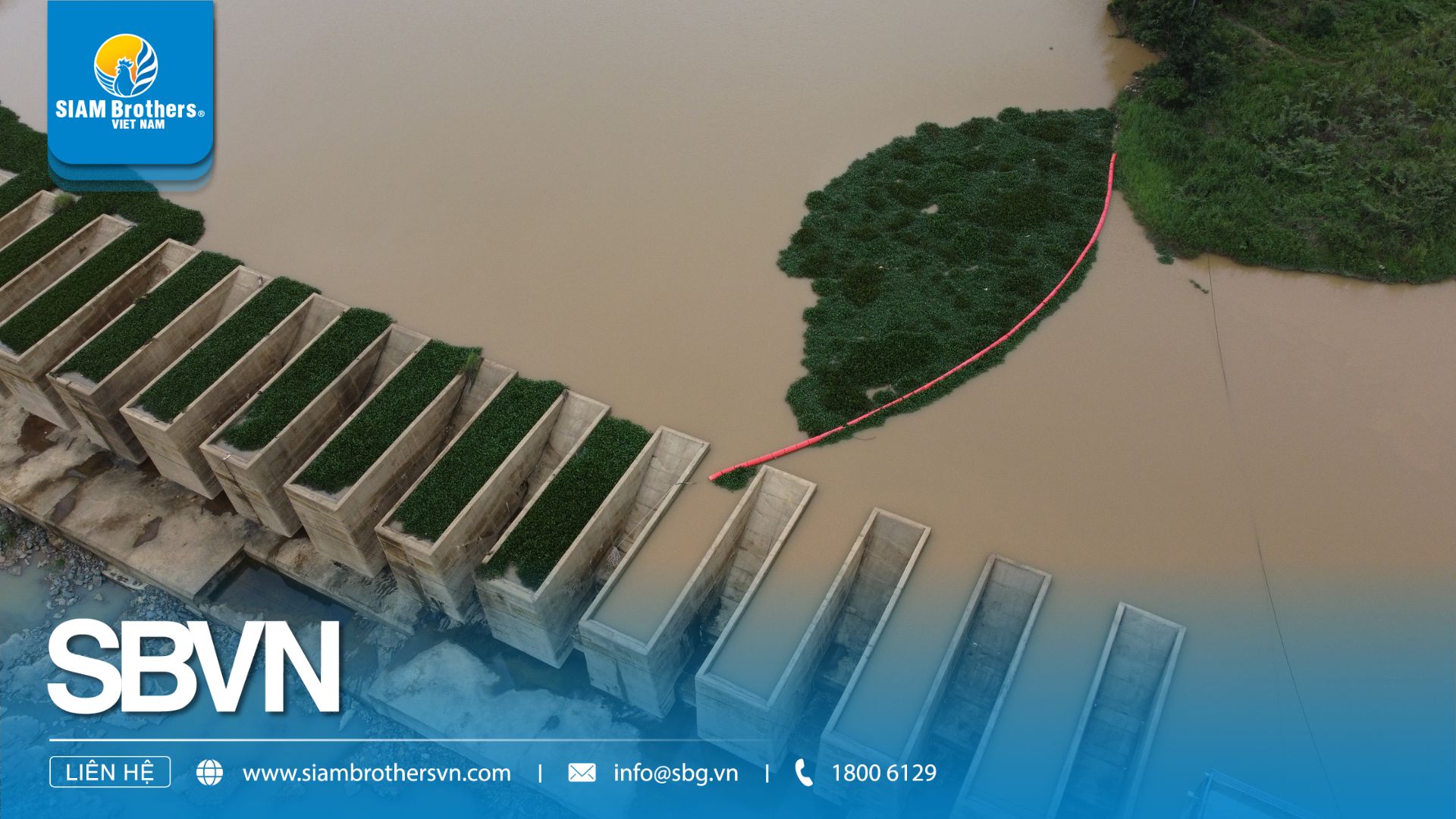
SIAM Brothers Vietnam specialized trash boom solution for hydropower projects
SIAM Brothers Vietnam provides specialized trash boom systems combined with high-strength debris nets for:
Hydropower reservoirs.
Irrigation reservoirs.
Spillways.
Water intake structures.
Water storage reservoirs.
Pumping stations.
Beyond supplying high-quality products, our engineering team also provides site surveys, technical consultation, system design, installation recommendations, and operational support to ensure optimal performance for every project.
Learn more Trash Barrier Buoy Project – A Practical Solution to Floating Waste at Son La Hydropower Reservoir
A trash boom is a floating barrier system combined with a debris net that prevents floating waste, aquatic plants, tree branches, and drifting objects from entering water intake structures or operational areas of hydropower plants, irrigation systems, and reservoirs.
A specialized trash boom offers a longer service life, higher load-bearing capacity, excellent corrosion resistance, lower maintenance costs, and significantly better debris interception performance than DIY systems made from steel drums, steel frames, and steel cables.
The system is suitable for:
Hydropower reservoirs.
Irrigation reservoirs.
Spillways.
Water intake structures.
Regulating reservoirs.
Pumping stations.
Water supply reservoirs.
Yes. However, maintenance mainly consists of periodic inspections of the debris net, anchoring cables, and connection accessories to ensure the system continues operating safely and efficiently over the long term.
Yes. For most hydropower and irrigation projects, a specialized trash boom provides higher debris interception efficiency, a longer service life, lower maintenance costs, and more reliable operation than DIY trash barrier systems constructed from steel drums, steel frames, and steel cables. It is the preferred solution for projects requiring long-term stability, safety, and operational efficiency.
Choosing the right trash barrier system affects not only debris containment performance but also operating costs, equipment lifespan, and the overall safety of the project. Compared with improvised solutions, specialized trash boom systems have proven to deliver superior performance through integrated engineering, enhanced durability, and reliable operation under a wide range of real-world conditions.
If your organization is looking for a specialized trash boom for hydropower reservoirs, irrigation reservoirs, spillways, or water intake structures, contact SIAM Brothers Vietnam for professional consultation, site surveys, and customized engineering solutions designed to meet the specific requirements of your project.
Cre SIAM Brothers Vietnam
Contact us:
Address: 5th Floor, VRG Building, No.177 Hai Ba Trung, Vo Thi Sau Ward, Dist. 3, Ho Chi Minh City, Vietnam.
Tel: (+84) 28 38 912 889
Hotline: 1800 6129
Fanpage: facebook.com/siambrothersvn
Email: info@sbg.vn
Youtube: youtube.com/@siambrothersvietnam1728
X: https://x.com/sbvnjsc
OA Zalo: zalo.me/1402339229697925373
App SBVN ID:
CHPlay: https://bit.ly/SBVNID-Android
Appstore: https://bit.ly/SBVNID-iOS








Specializing in Agricultural and Fisheries Products & Multipurpose Wire