
- 1800 6129

Camping essentials not only determine your level of comfort but also directly affect the safety of everyone involved. Changes in weather, a lack of clean water, getting lost, or minor injuries can all make a trip difficult without adequate preparation.
The following list covers seven important categories of gear suitable for camping at tourist sites, beaches, forests, or suburban areas. Read on with SIAM Brothers Vietnam to learn more.
Camping allows people to relax, stay active, and connect with nature. However, outdoor environments often involve unpredictable factors such as rain, wind, temperature changes, insects, slippery terrain, or locations without electricity and clean water.
The U.S. National Park Service recommends that people participating in outdoor activities carry essential items to deal with minor injuries, changing weather, and unexpected delays. The actual packing list should be adapted to the destination, trip duration, and nature of the journey.
Preparing a checklist before departure helps to:
Avoid leaving important items behind.
Prepare for weather and terrain conditions.
Distribute luggage reasonably among group members.
Reduce the risk of injury or shortages of food and drinking water.
Handle situations involving power outages, loss of phone signal, or getting lost.
Source: Internet
A tent provides basic shelter and a place to rest throughout the trip. It should be selected based on the number of campers, expected weather, and terrain at the campsite.
A basic camp setup kit usually includes:
A rain-resistant tent.
A tent footprint or groundsheet.
Tent stakes.
Guy lines.
A stake hammer or mallet.
An additional tarp or canopy.
Before the trip, set up the tent at home to check the zippers, seams, stakes, and guy lines. The National Park Service also recommends inspecting and testing equipment before departure, especially for people with limited camping experience.
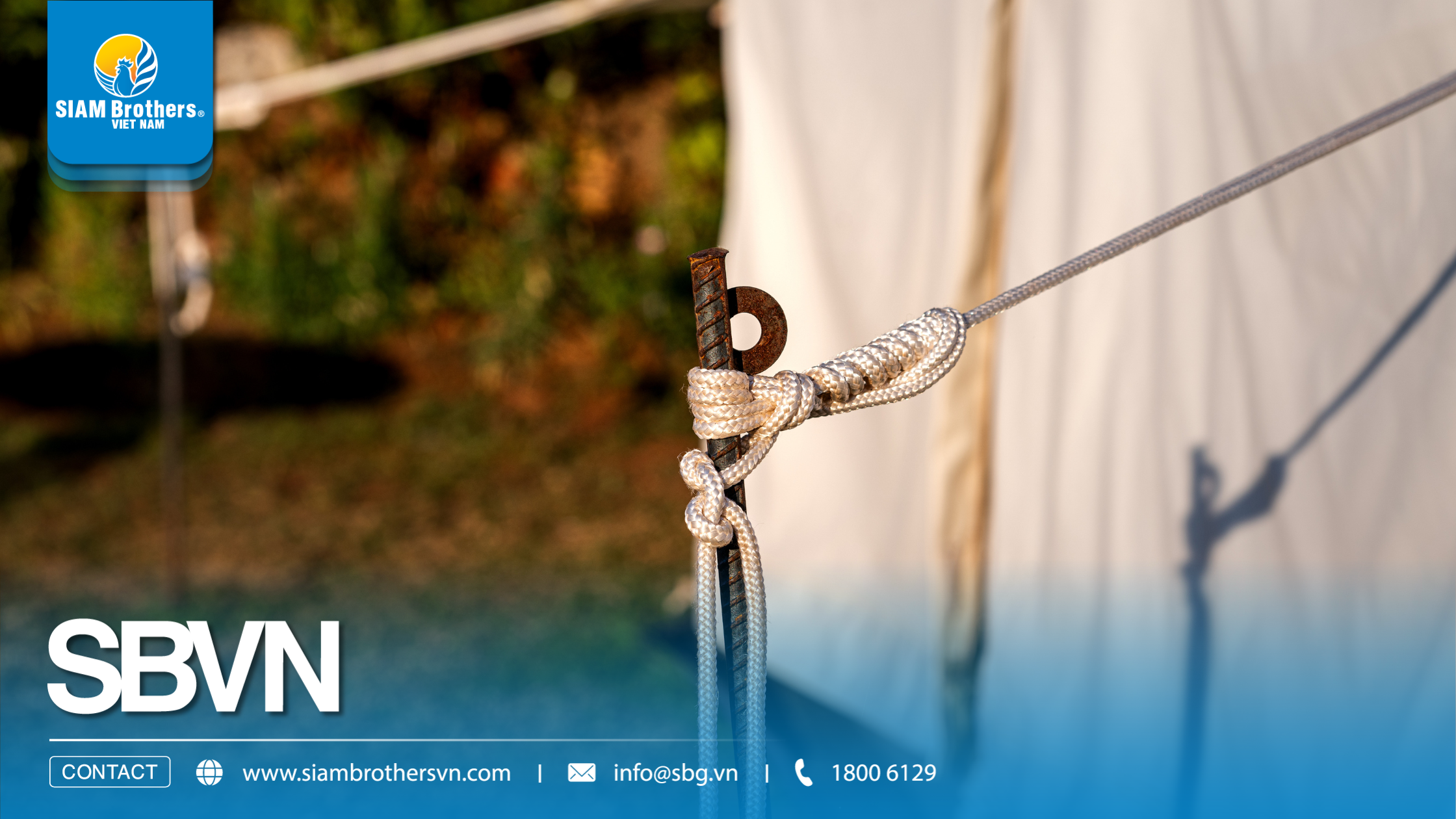
When pitching the tent, choose relatively level ground and avoid areas at risk of flooding, falling dead branches, or landslides. Guy lines should be tensioned appropriately and secured firmly to improve the tent’s stability in windy conditions.
Even when daytime temperatures are fairly high, outdoor temperatures can fall significantly at night. A sleeping bag and insulated sleeping pad are therefore essential camping items for staying comfortable while resting.
You should prepare:
A sleeping bag suitable for the expected temperature.
An air mattress or insulated sleeping pad.
A camping pillow.
A light jacket or warm layer.
A raincoat.
Shoes with good traction.
Spare clothing stored in a waterproof bag.
The National Park Service recommends wearing outdoor clothing and footwear suited to the terrain. In rainy or cold conditions, shoes should offer water resistance and adequate protection for the feet.
Do not rely solely on the weather forecast available at the time of departure. A dry change of clothes can become extremely important if it rains, your clothing gets wet, or the temperature drops suddenly.
Clean water must be a priority on every camping trip. The amount carried should be calculated according to the number of people, length of stay, weather, and expected activity level.
Do not drink directly from streams, lakes, or other natural water sources simply because the water looks clear. It may still contain disease-causing bacteria, viruses, or parasites.
According to the CDC, boiling is the most reliable way to kill microorganisms in water. The next best option is to filter and then disinfect it according to the instructions supplied with the filtration device or water-treatment product.
This category should include:
Bottled water or containers filled with clean water.
A water filter or treatment equipment for remote trips.
Shelf-stable food.
A camping stove and suitable fuel.
Pots, pans, cups, and eating utensils.
A cooler.
Sealed bags or containers for food storage.
Trash bags.
For food safety, the CDC recommends four principles: clean, separate, cook, and chill.
Stoves and open flames should only be used in permitted areas, away from tents, dry grass, and flammable materials. Before leaving, make absolutely sure that all flames and embers have been fully extinguished.
Once the sun sets, moving around a campsite becomes more difficult, especially on uneven terrain or at sites without lighting systems.
Source: Internet
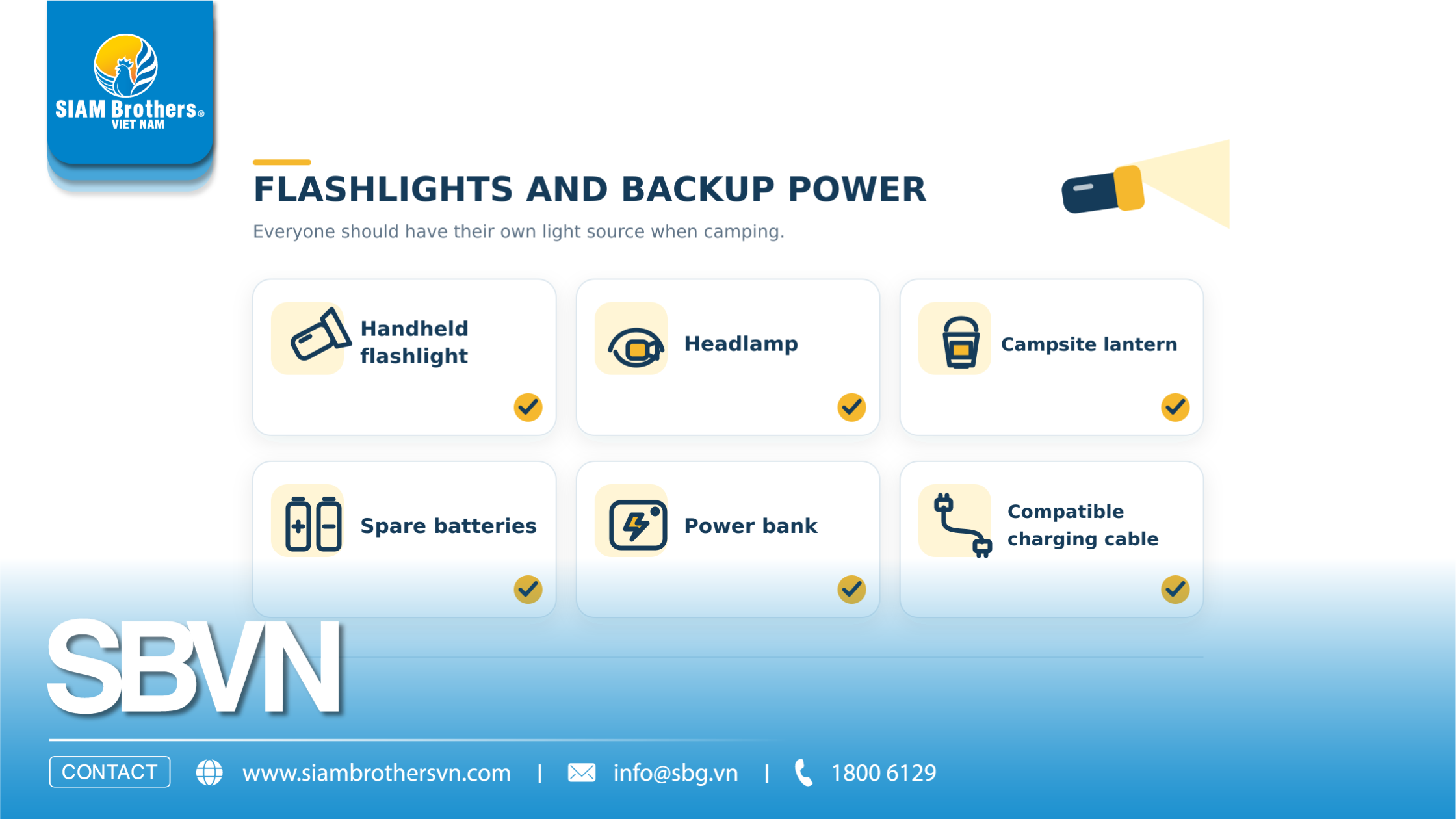
Each person should have an individual light source, such as:
A handheld flashlight.
A headlamp.
A lantern for the communal area.
Spare batteries.
A power bank.
Charging cables compatible with their devices.
Source: SIAM Brothers Vietnam
A headlamp is particularly useful because it keeps both hands free when pitching a tent, cooking, or dealing with a problem. Flashlights, headlamps, and spare batteries are also among the outdoor essentials recommended by the National Park Service.
A phone should not be treated as the only light source because its battery can drain quickly, particularly when the device is also being used for navigation and communication.
A first-aid kit can be used for the initial treatment of scrapes, cuts, insect bites, minor sprains, or foot blisters.
A basic first-aid kit may include:
Adhesive bandages and sterile gauze.
Roller bandages or elastic bandages.
Wound-cleaning solution.
Disposable gloves.
Small scissors and tweezers.
Any personal medication currently being taken.
Sunscreen.
Insect repellent.
A list of emergency phone numbers.
Do not bring medications whose uses are unclear or attempt to self-medicate for a serious condition. Before the trip, group members should inform one another of any allergies, underlying health conditions, or medication that must be taken regularly.
The CDC notes that mosquitoes, ticks, and certain other insects can transmit disease. Campers should use appropriate protective measures, wear clothing that provides adequate coverage, and check their bodies after passing through brush or tall grass.
Smartphones make navigation convenient but may lose signal, run out of power, or be damaged by rain. Campers visiting remote areas should therefore have a backup means of navigation.
Source: SIAM Brothers Vietnam
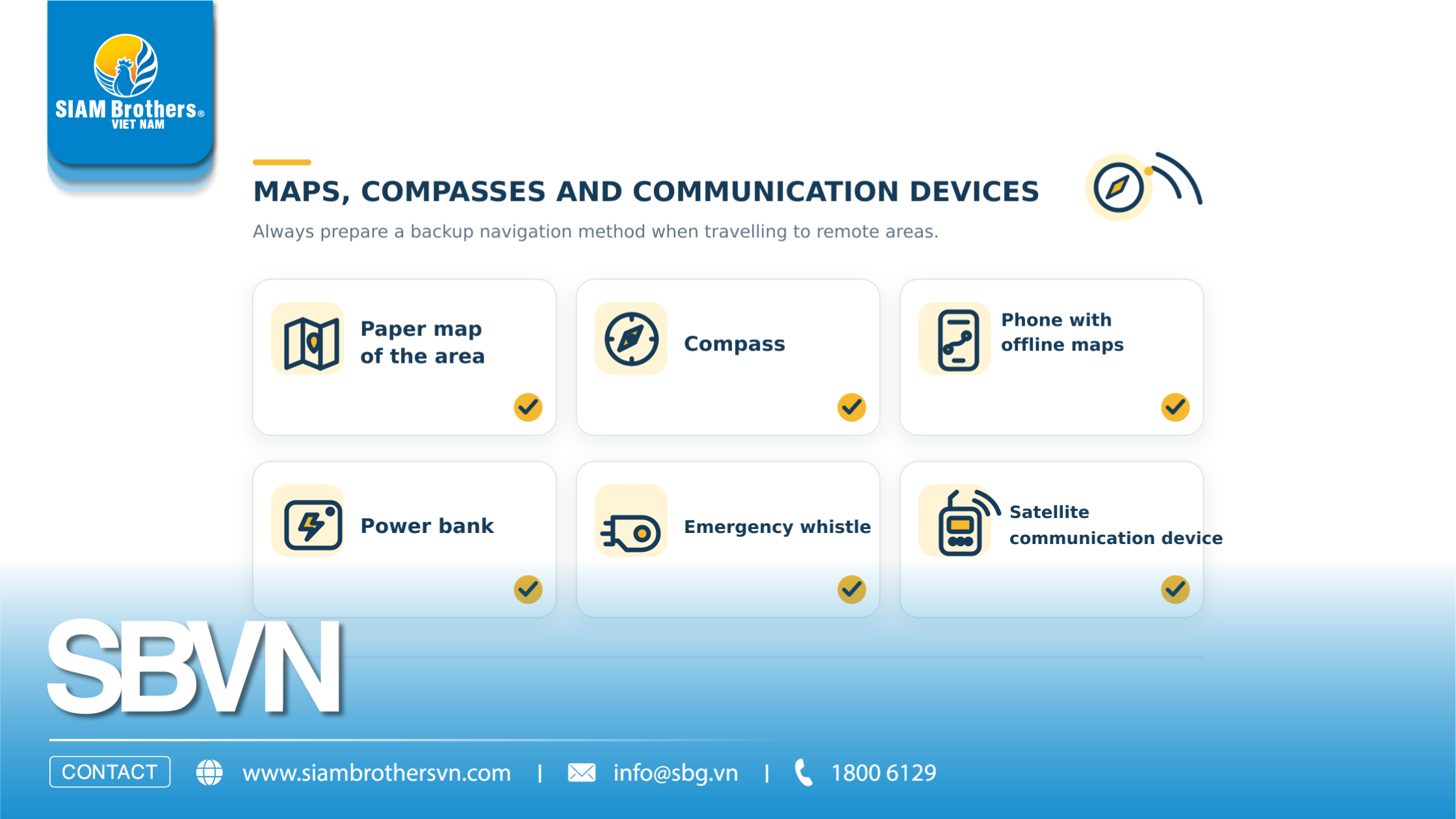
Items to consider include:
A paper map of the area.
A compass.
A phone with offline maps.
A power bank.
An emergency whistle.
A satellite communication device when travelling in remote areas.
Before departure, tell a relative or friend where you are going, which route you plan to take, how many people are in the group, and when you expect to return.
The National Park Service recommends leaving your trip plan with a trusted person so the authorities can respond sooner if the group does not return as scheduled.
Group members should also agree on a meeting point in case anyone becomes separated and should not leave the planned route without notifying the others.
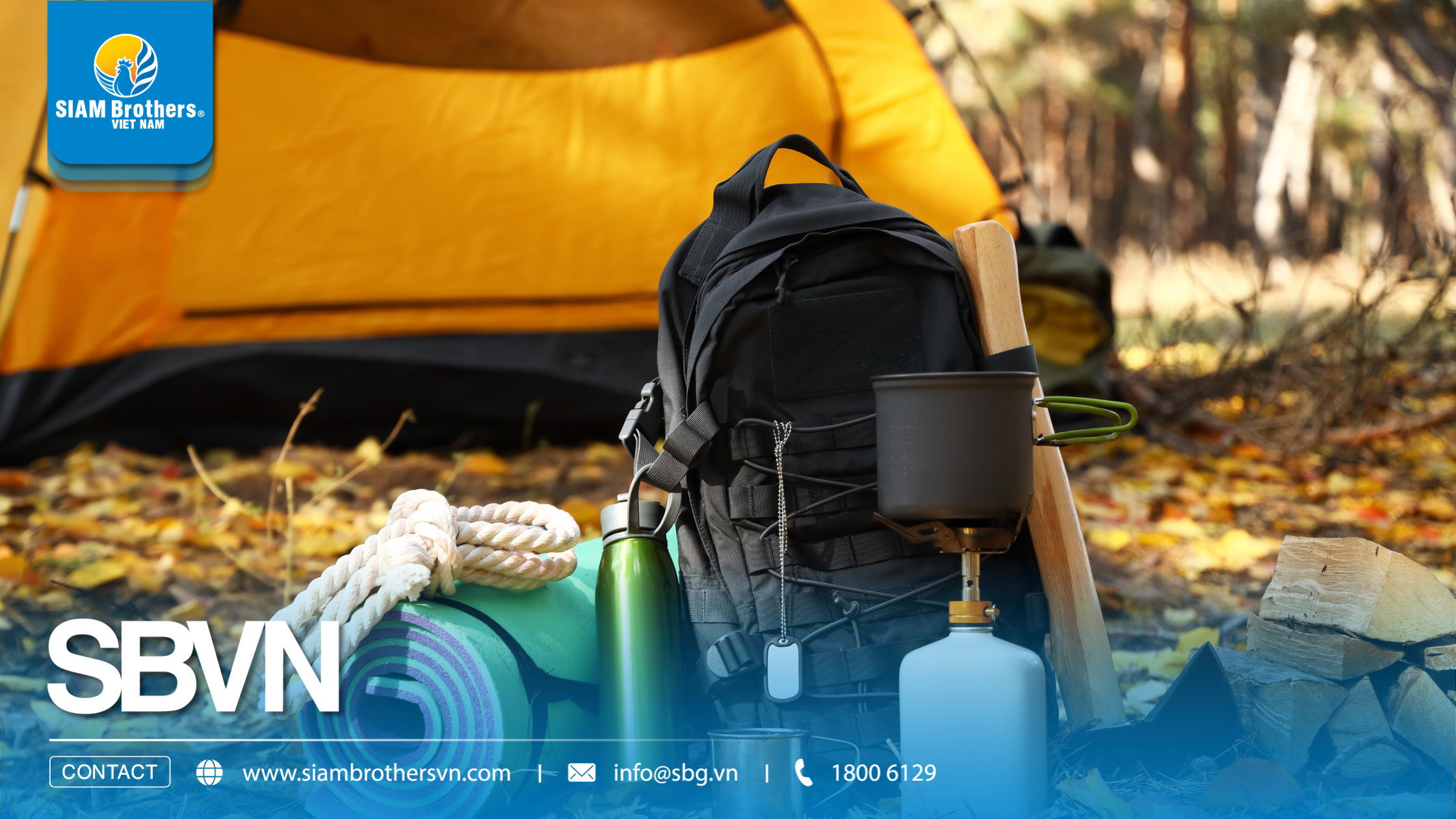
Rope is compact but can be useful for many campsite tasks, including:
Rigging a tarp or canopy.
Reinforcing tent guy lines.
Securing luggage.
Making a clothesline.
Marking off different campsite areas.
Tying trash bags or lightweight items.
Supporting temporary equipment repairs.
Choose a rope with a diameter, length, and load capacity suited to its intended purpose. Rope used to secure ordinary items must not automatically be used for climbing, rescue, suspending a person, or supporting heavy loads.
These activities require purpose-built ropes and equipment that meet specific technical standards.
A small accompanying repair kit may include:
Multipurpose rope.
Fabric repair tape or duct tape.
Cable ties.
A multitool.
Needle and thread.
Patches for a tent or air mattress.
When using rope around the campsite, choose an easily visible color or mark the line clearly to prevent people from tripping over it at night.
Do not stretch rope across walkways or wrap it directly around trees in a way that could damage the bark.
The same packing list should not be applied rigidly to every trip. Before preparing your gear, consider the following factors.
Camping at a tourist site with electricity, running water, and restrooms is different from camping on a beach, in a forest, or in a remote area.
A day trip requires less food and clothing than an overnight stay or a trip lasting several days.
During the rainy season, bring additional waterproof gear, guy lines, and shelter. In hot weather, prioritize drinking water, sunscreen, and insect protection.
Children, older adults, and people with underlying health conditions may require additional medication, food, and appropriate personal items.
Some locations restrict campfires, cooking, pets, or pitching tents outside designated areas. Campers should check the site management authority’s rules before the trip.
Before setting out, use the following checklist:
The tent, stakes, and guy lines are all packed.
Sleeping bags and clothing are appropriate for the weather.
There is enough clean water and food for the entire trip.
Flashlights, batteries, and power banks are working properly.
The first-aid kit and personal medications have not expired.
Offline maps have been downloaded.
Rope and the repair kit have been packed.
A relative or friend knows the itinerary and expected return time.
The weather forecast and site regulations have been checked.
Preparing all essential camping gear makes a trip more convenient, but most importantly, it helps group members respond proactively to unexpected situations.
Seven categories—camp setup equipment, warm sleeping gear, water and food, lighting, a first-aid kit, navigation tools, and multipurpose rope—provide the basic foundation for a safe journey.
The list should be adjusted to suit the destination and length of the trip rather than expanded with too many unnecessary items. Every piece of equipment should also be checked and tested before departure so you do not arrive at the campsite only to discover that the tent is missing stakes, the flashlight batteries are dead, or the stove does not work.
Source: SIAM Brothers Vietnam
Q: What should first-time campers prioritize bringing?
A: First-time campers should prioritize an easy-to-pitch tent, a sleeping bag, clean water, simple food, a headlamp, a first-aid kit, a phone with offline maps, and multipurpose rope. Before the trip, they should practice pitching the tent and check all equipment.
Q: Can you drink stream water directly while camping?
A: No. You should not drink it directly, even if the water looks clear. Natural water sources may still contain disease-causing microorganisms. Bring clean water or treat natural water using an appropriate method. The CDC considers boiling the most reliable way to kill disease-causing organisms in water.
Q: Can camping rope be used for climbing?
A: No. Multipurpose rope is suitable only for tasks such as rigging a canopy, securing luggage, or making a clothesline. Climbing, suspending a person, and rescue work require purpose-built ropes, carabiners, and other equipment that meet the relevant safety standards.
References
National Park Service: Ten Essentials and guidance on preparing for a camping trip.
National Park Service: Trip Planning Guide and outdoor safety guidance.
Centers for Disease Control and Prevention: Guidance on treating water while hiking and camping.
Centers for Disease Control and Prevention: Guidance on food safety and insect-bite prevention.
Contact us:
Address: 5th floor, VRG Building, 177 Hai Ba Trung Street, Vo Thi Sau Ward, Ho Chi Minh City, Vietnam
Tel: (+84) 28 38 912 889
Hotline: 1800 6129
Facebook: www.facebook.com/siambrothersvn
Email: info@sbg.vn
YouTube: youtube.com/@siambrothersvietnam1728
OA Zalo: zalo.me/1402339229697925373
App SBVN ID:
CHPlay: https://bit.ly/SBVNID-Android
Appstore: https://bit.ly/SBVNID-iOS








Specializing in Agricultural and Fisheries Products & Multipurpose Wire