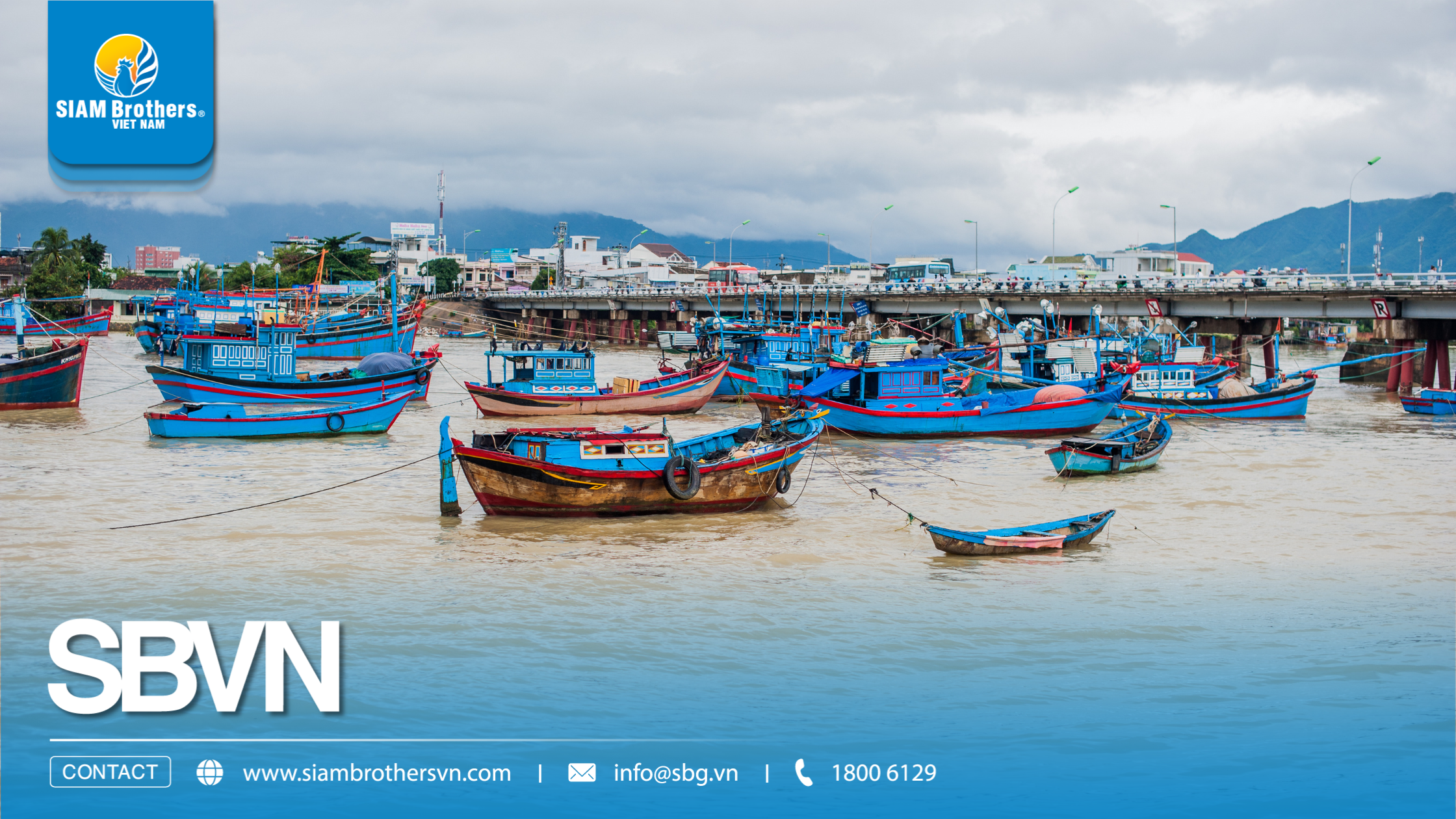
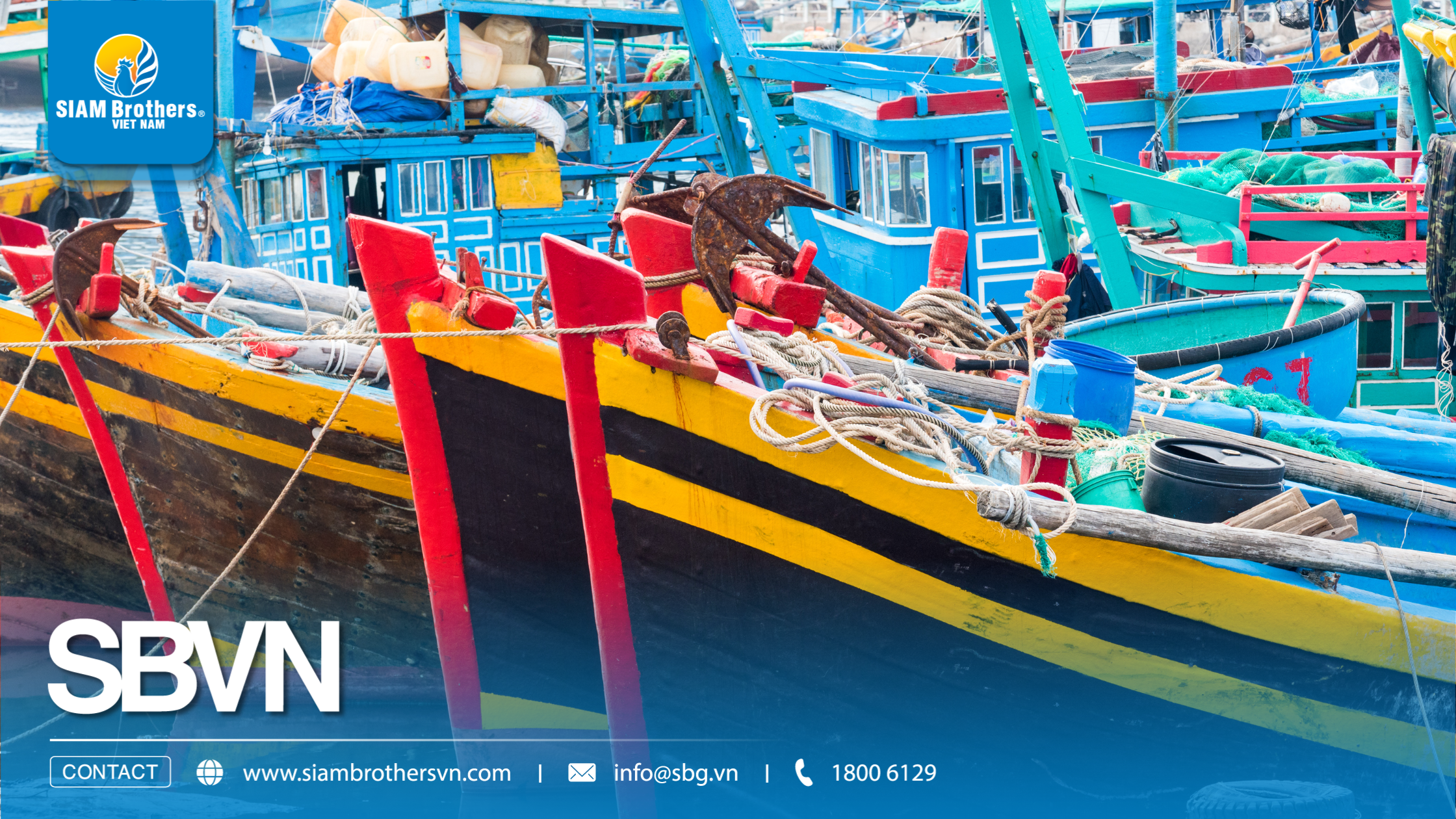
How thick should Boat Mooring Rope be? Choosing the right rope diameter is not simply a matter of picking a larger size. The appropriate diameter depends on the vessel’s load, the forces acting on the rope, the type of vessel, and the actual operating conditions. Choosing the right Boat Mooring Rope can help improve mooring safety and reduce the risk of rope failure when the vessel is exposed to strong waves, wind, or currents.
For fishing boats, cargo vessels, service vessels, and other marine craft, the rope diameter should be selected based on the vessel’s load capacity, pulling forces, and intended use. This article explains how to determine the appropriate Boat Mooring Rope diameter, how to choose rope size based on vessel load and operating conditions, and the key criteria to consider when purchasing high-quality marine mooring rope.
SIAM Brothers Vietnam provides specialized rope solutions for the fishing and marine industries, with a wide range of specifications to meet different vessel and mooring requirements.
1. How Thick Should Boat Mooring Rope Be?
When choosing Boat Mooring Rope, many vessel owners ask, “What rope diameter is strong enough for my boat?” In reality, there is no single rope size that works for every type of vessel. A reliable mooring rope should not simply have a large diameter. It must also match the vessel’s load, the pulling forces generated during mooring, and the actual marine environment in which it will be used.
Choosing the right rope diameter requires looking beyond the rope’s physical size. A rope that is too thin may not provide sufficient load capacity, while an unnecessarily large rope can increase costs and make handling more difficult.
When selecting the diameter of Boat Mooring Rope, consider the following factors:
- The weight and size of the vessel.
- The type of vessel, such as a fishing boat, service vessel, cargo vessel, or other marine craft.
- The mooring location, including rivers, ports, coastal waters, or areas exposed to strong waves.
- How frequently the rope is used and how much it is exposed to seawater.
- The required strength, tensile load capacity, and abrasion resistance of the rope.
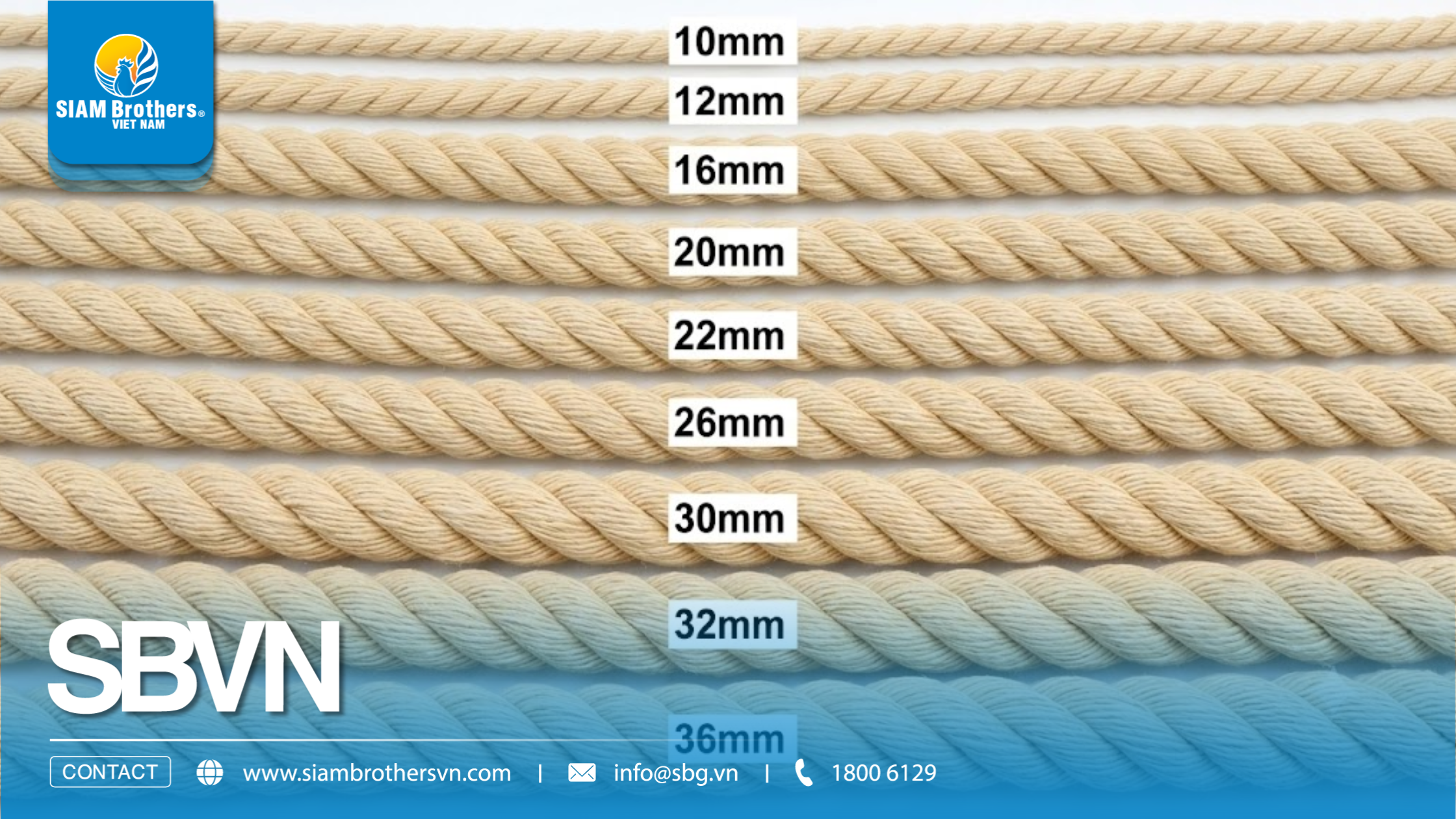
How Is Boat Mooring Rope Diameter Determined?
In the fishing and marine industries, rope diameter is commonly specified in millimeters (mm). For example, a 20 mm rope has an approximate diameter of 20 mm.
However, diameter is only one factor in determining whether a rope is suitable for a particular application. When manufacturing and recommending rope products, SIAM Brothers Vietnam also considers:
- Rope construction: The number of strands and the strength of the individual fibers.
- Material: PP, PE, Nylon, or other specialized rope materials.
- Breaking Strength: The maximum force the rope can withstand before failure.
- Marine resistance: The rope’s ability to withstand saltwater, UV exposure, and abrasion.
For example:
- A small boat moored close to shore may not require an excessively large rope diameter.
- An offshore fishing vessel regularly exposed to waves and strong currents may require a larger-diameter rope with higher load capacity.
- Cargo vessels and other high-load vessels should select mooring rope based on specific technical requirements to ensure safe and reliable mooring.
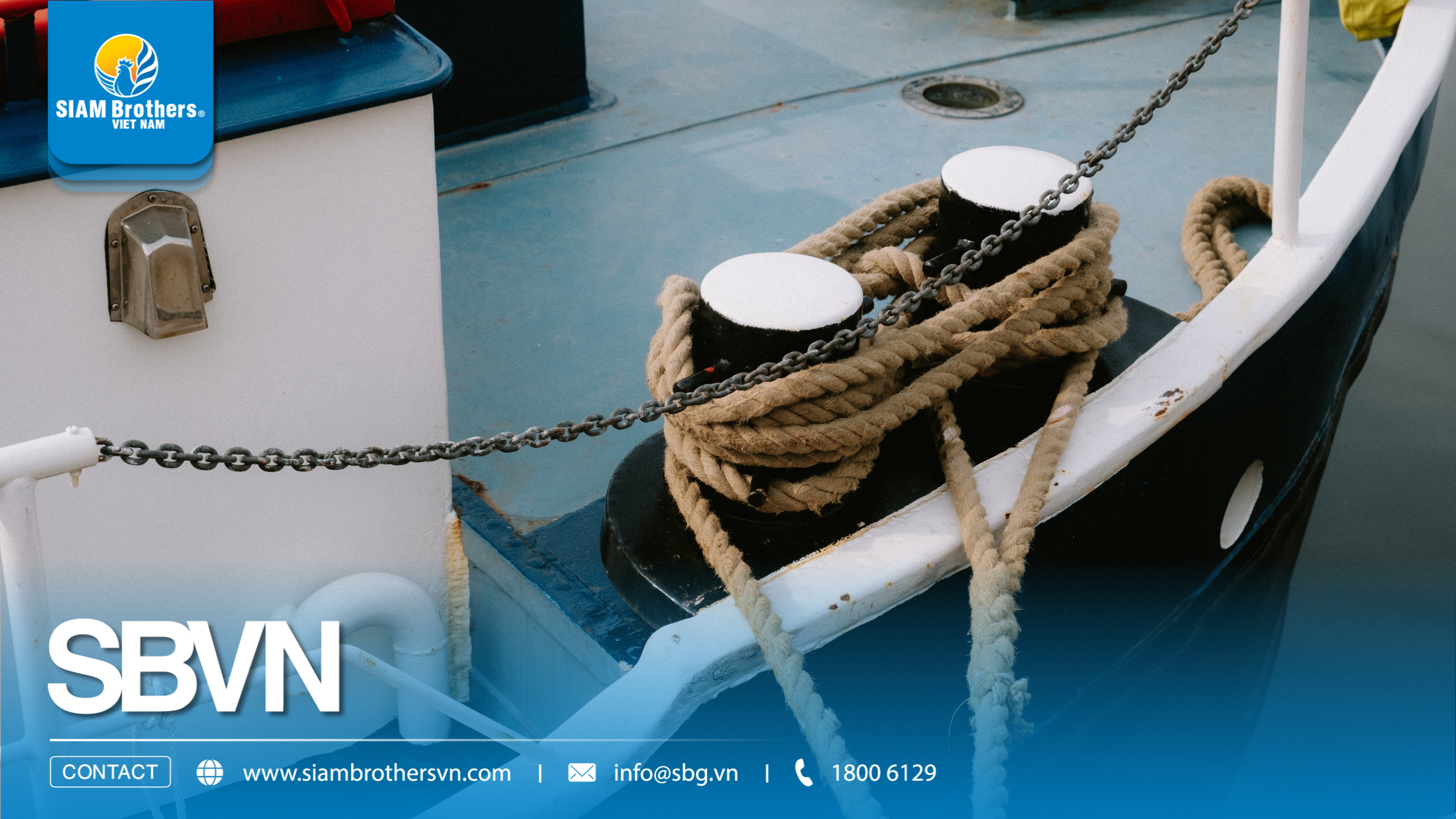
2. How to Choose Boat Mooring Rope Diameter Based on Vessel Load
2.1. Determine the Vessel Load Before Choosing Rope Diameter
Before deciding what Boat Mooring Rope diameter to use, start by assessing the basic characteristics of the vessel:
- Overall vessel weight when in operation
- Consider the vessel’s actual operating weight rather than its unloaded weight. The load carried by the vessel can affect the forces transferred to the mooring rope.
- Vessel length and hull dimensions
- The size and configuration of the vessel can also affect its mooring requirements and the forces acting on the rope.
Type of vessel
Common vessel categories include:
- Small boats and inshore fishing vessels.
- Offshore fishing vessels.
- Marine service vessels.
- Cargo vessels and workboats.
Mooring conditions
Consider where the vessel will normally be moored:
- Rivers and canals with relatively calm water.
- Ports and harbors.
- Coastal or offshore areas with strong winds, waves, and currents.
Practical examples:
- A small boat that is regularly moored close to shore will have different rope requirements from an offshore fishing vessel operating at sea for extended periods.
- A larger vessel requires a rope with sufficient load capacity because the forces acting on the mooring rope can increase significantly when the vessel is exposed to waves, wind, and currents compared with normal static mooring conditions.
2.2. Choose Rope Diameter Based on Pulling Forces and Operating Conditions
Rope diameter is an important factor, but it is not the only factor that determines rope strength. When selecting Boat Mooring Rope, buyers should also consider the rope’s breaking strength, construction, and material.
Rope Diameter
- A larger-diameter rope will generally have a higher load capacity, depending on its material and construction.
- However, the diameter should be matched to the actual application to avoid unnecessary cost and handling difficulties.
Breaking Strength
- Breaking Strength indicates the maximum tensile force the rope can withstand before failure.
- This is an important specification when selecting rope for vessels with higher loads or demanding marine applications.
- Buyers should refer to the manufacturer’s technical specifications rather than estimating rope strength based on diameter alone.
Elasticity
- An appropriate level of elasticity can help absorb sudden loads when a vessel moves in waves.
- This can help reduce sudden shock loading on the mooring rope and its connection points.
2.3. Suggested Boat Mooring Rope Diameters for Different Vessel Types
Depending on vessel load and intended application, the following diameter ranges can be used as a general reference:
| Vessel Type |
Suggested Rope Diameter Typical |
Application |
| Small boats and inshore fishing vessels |
12–24 mm |
Mooring at docks and in relatively calm waters |
| Medium-sized fishing vessels |
24–40 mm |
Regular fishing and seafood harvesting operations |
| Offshore fishing vessels |
40–60 mm |
Applications exposed to significant waves and wind |
| High-load vessels |
Based on technical requirements |
Requires specific calculation of pulling forces and operating conditions |
To select the right Boat Mooring Rope, customers should provide information about the vessel type, operating load, mooring environment, and intended use. Based on these factors, the appropriate rope construction, material, diameter, and strength can be recommended.
Choosing the right Boat Mooring Rope is not simply about selecting the largest available diameter. The best choice is a rope that provides an appropriate balance between diameter, breaking strength, elasticity, abrasion resistance, material properties, handling, and actual operating conditions.
3. Should You Choose PP, PE, or Nylon for Boat Mooring Rope?
Choosing the right Boat Mooring Rope is not simply about selecting the largest diameter. The rope material also plays an important role in determining its weight, strength, elasticity, water resistance, and overall suitability for different marine applications.
Three commonly used options are PP (Polypropylene), PE (Polyethylene), and Nylon. Each material has different characteristics, so the best choice depends on the vessel, mooring conditions, load requirements, and intended use.
3.1. PP Boat Mooring Rope: Lightweight, Easy to Handle, and Versatile
PP (Polypropylene) rope is widely used in fishing and marine applications because it is lightweight, easy to handle, and capable of floating on water.
Key advantages of PP rope:
- Lightweight and easy to pull, coil, and store.
- Floats on water, making it suitable for various marine applications.
- Cost-effective for applications that require frequent use.
PP Boat Mooring Rope is commonly used for:
- Mooring small and medium-sized fishing boats.
- Securing vessels at docks and mooring points.
- General tying and support applications in fishing operations.
- Fishing equipment distributors looking for versatile, practical rope products.
However, for vessels that regularly operate in areas with strong waves or require higher tensile strength, users should consider rope materials with greater mechanical strength and load capacity.
3.2. PE Boat Mooring Rope: A Practical Choice for Demanding Marine Conditions
PE (Polyethylene) rope is a popular choice for vessel owners looking for Boat Mooring Rope with good strength and durability for outdoor and marine environments.
Key advantages of PE rope include:
- Good tensile strength.
- Excellent resistance to moisture and water.
- Good durability in saltwater environments.
- Good abrasion resistance during mooring and tying operations.
PE rope is commonly suitable for:
- Offshore fishing vessels.
- Fishing and seafood harvesting operations that require frequent rope use.
- Applications where durability and long service life are important.
- Marine equipment businesses and distributors looking for a reliable supply of rope products.
In practice, many customers choose PE rope because they prioritize consistent performance over extended periods of use, particularly in areas where weather and marine conditions can change frequently.
3.3. Nylon Boat Mooring Rope: High Elasticity for Better Shock Absorption
Nylon rope is particularly well known for its high elasticity. When a vessel is affected by waves or currents, the rope’s ability to stretch can help absorb sudden loads and reduce the shock transmitted to the mooring point.
Key advantages of Nylon rope:
- High elasticity.
- Excellent shock absorption.
- Suitable for applications where sudden loads need to be reduced.
- Can provide smoother and more stable performance when vessels are constantly moving with waves or currents.
Nylon rope is commonly used for:
- Larger vessels with higher loads.
- Marine applications requiring greater elasticity.
- Mooring points exposed to constantly changing loads and tension.
However, Nylon rope is generally more expensive than some standard rope materials. Users should therefore consider their actual operating requirements and total cost of ownership when choosing Nylon Boat Mooring Rope.
3.4. PP vs. PE vs. Nylon Boat Mooring Rope: Which Is Right for You?
The following comparison provides a quick overview of the key characteristics of each material:
| Criteria |
PP Rope |
PE Rope |
Nylon Rope |
| Weight |
Lightweight |
Medium |
Heavier |
| Buoyancy |
Excellent |
Good |
May sink, depending on the rope type |
| Strength |
Moderate |
High |
High |
| Elasticity |
Low |
Moderate |
High |
| Abrasion Resistance |
Moderate |
Good |
Good |
| Cost |
Cost-effective |
Moderate |
Higher |
There is no universally “best” material. The right Boat Mooring Rope depends on the vessel type, load, mooring environment, required elasticity, handling requirements, and budget.
4. FAQs – Frequently Asked Questions About Boat Mooring Rope
4.1. How Thick Should Boat Mooring Rope Be?
There is no single rope diameter that works for every type of vessel. The appropriate Boat Mooring Rope diameter should be selected based on the vessel’s load, mooring environment, and intended application.
Key factors to consider include:
- How large and heavy is the vessel?
- Will the vessel operate on rivers, in ports, or offshore?
- Will the rope be used for temporary mooring or regular, long-term operations?
- What level of tensile strength and durability is required?
For example:
- Small boats and inshore fishing vessels may use a moderate rope diameter that provides sufficient strength while remaining easy to handle.
- Offshore fishing vessels and larger vessels may require a larger-diameter rope with higher load capacity, depending on the actual mooring conditions.
For an accurate recommendation, customers should provide information about the vessel type, operating load, mooring environment, and intended use so the appropriate rope specification can be determined.
4.2. Should Boat Mooring Rope Be Selected Based on Vessel Load?
Yes. Vessel load is one of the most important factors when selecting Boat Mooring Rope.
Some common situations include:
- A small vessel using an oversized rope:
- Higher purchase cost.
- More difficult to pull, handle, and coil.
- Potentially unnecessary rope capacity for the actual application.
A large vessel using an undersized rope:
- The rope may be subjected to excessive tension.
- Continuous loading can accelerate wear and deterioration.
- Insufficient rope capacity may compromise mooring safety.
When purchasing Boat Mooring Rope, customers should therefore consider:
- Rope diameter.
- Breaking strength.
- Rope material.
- Rope construction.
- Actual marine and environmental conditions.
4.3. How Often Should Boat Mooring Rope Be Replaced?
The replacement interval depends on how frequently the rope is used and the actual working conditions. There is no fixed replacement schedule that applies to every application.
Users should inspect the rope regularly and pay close attention to signs of wear, including:
- Frayed fibers or separated strands.
- Significant surface abrasion.
- The rope becoming stiff or losing flexibility.
- Prolonged exposure to seawater and direct sunlight.
- Visible deformation or other signs of deterioration.
The technical team at SIAM Brothers Vietnam recommends checking the condition of Boat Mooring Rope before every trip at sea, especially for fishing vessels operating for extended periods or in challenging weather conditions.
Regular inspection helps identify deterioration before it becomes a more serious safety issue.
4.4. Where Can You Buy Boat Mooring Rope in Bulk?
For businesses, distributors, fishing equipment stores, and other organizations purchasing large quantities, choosing a reliable rope supplier is essential.
When evaluating a Boat Mooring Rope supplier, consider:
- Manufacturing capacity.
- Range of available specifications.
- Ability to fulfill large-volume orders.
- Technical consultation and product support.
- Distributor and wholesale policies.
- Consistency of product quality and supply.
With experience in rope manufacturing and distribution, SIAM Brothers Vietnam provides rope solutions for a wide range of customers, including:
- Fishermen and vessel owners.
- Fishing and marine equipment stores.
- Fishing and seafood harvesting businesses.
- Companies and organizations requiring specialized rope products.
If you need help choosing Boat Mooring Rope based on vessel load, vessel type, operating conditions, or bulk purchasing requirements, contact SIAM Brothers Vietnam for a suitable rope solution.
Choosing the right Boat Mooring Rope is about more than simply asking how many millimeters in diameter the rope should be. Vessel load, operating environment, rope material, construction, and actual application requirements all need to be considered.
The right rope can help improve mooring safety, reduce premature wear, and minimize the need for frequent replacement. With experience in manufacturing ropes for fishing, marine, and industrial applications, SIAM Brothers Vietnam can help you select Boat Mooring Rope with the appropriate specifications for your vessel and operating conditions while keeping costs under control.
Contact SIAM Brothers Vietnam today for expert support in choosing high-quality Boat Mooring Rope based on your vessel load, application, and specific requirements.
Source: SIAM Brothers Vietnam
Contact us:
► Address: 5th floor, VRG Building, 177 Hai Ba Trung Street., Xuan Hoa Ward, Ho Chi Minh City, Vietnam
► Hotline: 1800 6129
► Tel: (+84) 28 38 912 889
► Email: info@sbg.vn
► Follow us for more details at: Facebook - Zalo OA - Tiktok - Youtube - LinkedIn
Download SBVN ID app here:
► CHPlay
► Appstore