
- 1800 6129

During camping trips and outdoor activities, a roll of multipurpose rope can support many tasks, including securing a tarp, tying luggage, pulling light objects and creating a temporary clothesline. However, not every rope is suitable for every application. Users should consider material, diameter, length, load rating and environmental conditions before making a selection. Let’s explore how to choose the right rope with SIAM Brothers Vietnam.
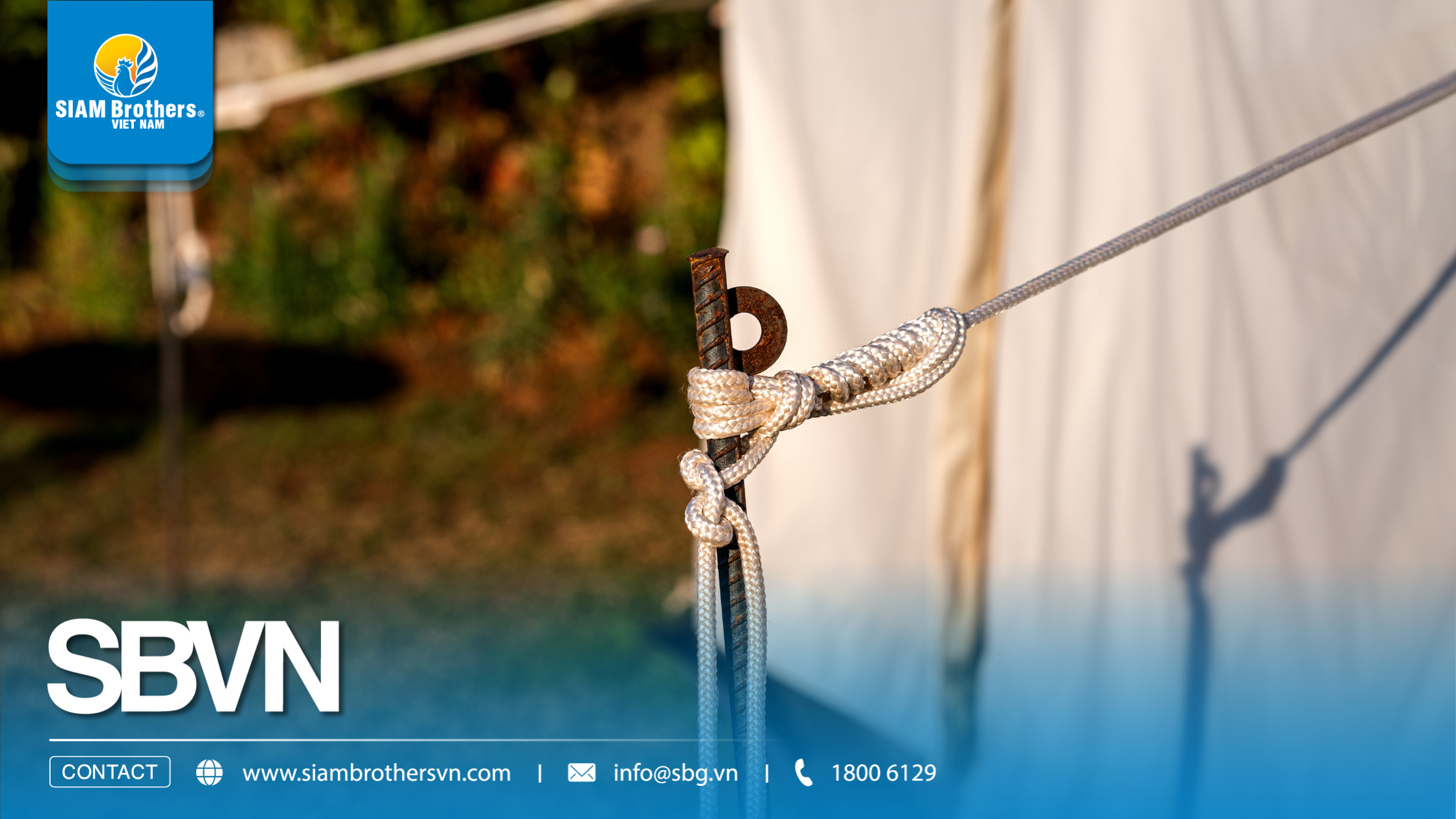
Source: Internet
Before selecting a material or diameter, determine what the rope will be used for. Each activity creates different levels of tension, shock loading and abrasion.
Rope is commonly used to tension tarps, secure tent flies and define areas around a campsite. For these tasks, the rope should be lightweight, easy to knot and flexible enough to allow tension adjustments.
A rope that is too thick may be difficult to pass through tent eyelets. A rope that is too thin can be uncomfortable to handle and difficult to untie after being loaded. In windy areas, users should also consider the rope’s tensile capacity and the stability of the tent stakes.
Do not rely solely on multipurpose rope to keep a tent safe during extreme weather. If strong winds, storms or flash floods are forecast, dismantle the campsite and move to a safer location.
Rope can be used to bundle firewood, secure storage boxes, tie ground sheets or organise luggage inside a vehicle’s storage compartment. The selected rope should offer appropriate grip, hold knots reliably and avoid damaging the surface of the secured items.
When securing cargo to a vehicle, follow the vehicle’s load limits and applicable safety requirements. Multipurpose rope is not a substitute for rated cargo straps, ratchet straps or specialised restraint systems when transporting heavy or bulky objects that could fall from the vehicle.
At a campsite, rope may help pull a gear bag, move a small branch or transfer equipment over a short distance. The rope should have enough diameter to provide a comfortable grip and reduce pressure on the hands.
Before pulling, check the route for sharp rocks and ensure that no one is standing in the direction of travel. Never use multipurpose rope to tow cars or motorcycles, lift heavy objects or perform tasks that can create high shock loads.
A clothesline should be lightweight, easy to tension and long enough to span the selected anchor points. Remember that wet clothes weigh more and can cause the rope to sag.
Choose strong trees or posts as attachment points, but avoid tightening rope excessively around young trees. Do not install a clothesline across a walkway or at a height where it may become a trip hazard.
After defining the intended use, compare the rope’s technical characteristics. A suitable product should balance durability, weight, handling and environmental resistance.
Common synthetic materials include polypropylene, polyethylene, polyester and nylon. Each has different properties:
|
Material |
General characteristics |
Suitable applications |
|
Polypropylene |
Lightweight, low water absorption and often able to float |
Tarp lines, clotheslines and general tying |
|
Polyethylene |
Lightweight, water-resistant and easy to clean |
Camping, household use and damp environments |
|
Polyester |
Relatively low stretch with good resistance to abrasion and sunlight |
Securing gear and applications requiring stable tension |
|
Nylon |
Provides elasticity and shock absorption |
Selected pulling and tying tasks according to manufacturer instructions |
|
Natural fibres |
Comfortable to handle but absorb moisture and dry slowly |
Decoration or light-duty use in dry environments |
Actual performance also depends on the rope’s construction, UV-resistant additives and manufacturing process. Therefore, users should not select multipurpose rope based on the material name alone.
Thin rope is compact and lightweight but may be uncomfortable to grip when pulling. Thicker rope is easier to handle but takes up more space in a backpack.
Consider:
The size of tent eyelets or accessories through which the rope must pass.
The weight of the object being tied or pulled.
How easily the rope can be held with wet hands.
Backpack size and available storage space.
The load information provided by the manufacturer.
Do not estimate rope strength solely from its diameter. Two ropes of the same diameter may have different breaking strengths because of differences in material and construction.
A rope that is too short may not cover the required distance, while an unnecessarily long rope adds weight and is more likely to become tangled. Before the trip, estimate the required span and allow additional length for knots.
Instead of carrying only one continuous roll, users can divide their multipurpose rope into:
One long section for a tarp or clothesline.
Several medium-length sections for securing luggage.
A few short sections for general backup use.
Label or record the length of each section to make selection easier at the campsite.
Breaking strength is the load at which a rope fails under specified testing conditions. It is not the same as the safe working load in real-world use.
Knots, cuts, abrasion, UV exposure, rope age and shock loading can all reduce strength. Users should therefore follow the working load limit and safety factor provided by the manufacturer.
Con Gà Vàng Household Rope from SIAM Brothers Vietnam is available in PP/PE, polyester and nylon. The product range includes diameters from 2–12 mm and lengths from 10–100 m, with customised specifications also available. Users should still select the correct configuration for the intended task rather than assuming one rope is suitable for every application.
This is one of the most important considerations when preparing outdoor equipment. The term “multipurpose” does not mean that the rope can safely lift, suspend or protect a person.
Multipurpose rope is suitable for everyday tasks such as:
Tensioning tents, tarps and shelters.
Tying, bundling or securing light equipment.
Creating a temporary clothesline.
Pulling light objects over a short distance.
Decorating or dividing areas within a campsite.
This type of rope should not be treated as personal protective equipment. Do not use it for body suspension, climbing trees, rock climbing, stream crossings, rappelling, fall arrest or rescue unless the product has been specifically designed and certified for that purpose.
Climbing rope must comply with technical standards appropriate to the climbing method. It must also be used with compatible harnesses, connectors, belay devices and anchor systems.
The International Climbing and Mountaineering Federation maintains safety standards for climbing ropes and equipment. Even an accessory cord with high tensile strength does not automatically provide the performance required for fall arrest or life-support applications.
People without suitable training should not attempt to build climbing, rappelling or suspension systems based solely on short online instructions.
Rescue rope is selected according to the rescue plan, load, connection hardware and operating environment. Rescue systems also require trained personnel, compatible equipment and appropriate backup measures.
Never use multipurpose rope to lift or lower an injured person. In an emergency, contact the appropriate authorities, follow instructions from trained personnel and avoid creating additional risks for rescuers and casualties.
Moisture, sunlight, sand and sharp surfaces can accelerate rope deterioration. Users should inspect the campsite and possible contact points before installing the rope.
When wet, some ropes become heavier, more slippery or more difficult to knot securely. Mud and sand can also enter the spaces between fibres and increase abrasion when the rope is bent or pulled.
Do not coil multipurpose rope while it is still wet. If the campsite must be packed during rain, place the rope in a separate bag and spread it out to dry as soon as possible.
UV radiation can accelerate the ageing of synthetic materials. Avoid leaving rope exposed to sunlight when it is not in use. Keep it away from camping stoves, hot charcoal, vehicle exhausts and other heat sources.
Rope that has become brittle, unusually faded, deformed or melted should no longer be used for load-bearing tasks.
Repeated contact with rocks, metal or rough timber can fray the rope and cut its fibres. Where possible, change the rope’s path, use edge protection and avoid pulling it directly across sharp surfaces.
According to the UIAA, sand, dust, UV exposure and severe friction can weaken rope. Regular inspection and protection from chemicals and acids are also recommended. Although these recommendations concern climbing ropes, the general principles of inspection and damage prevention are still useful when caring for outdoor ropes.
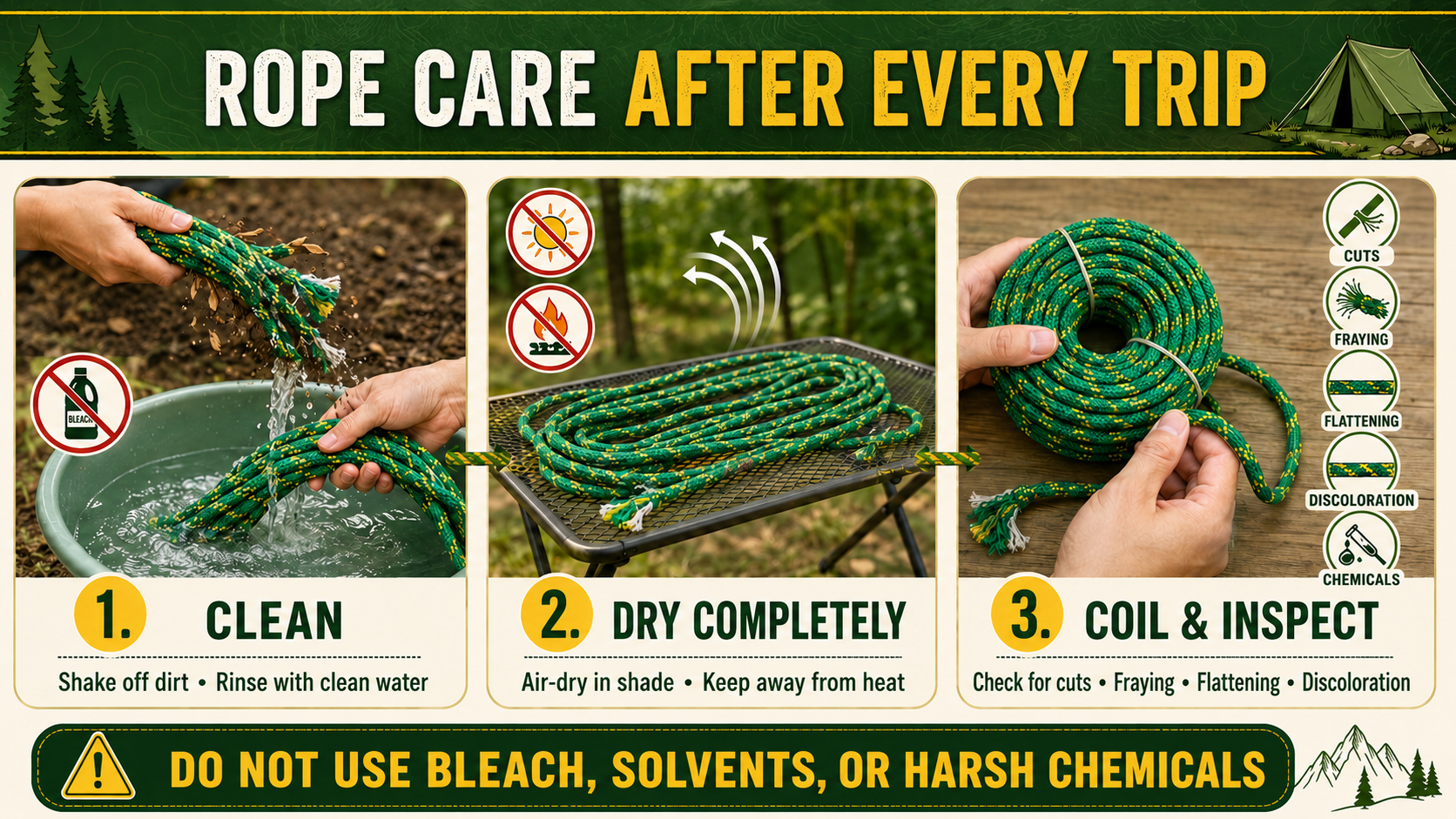
Proper storage keeps the rope clean, makes inspection easier and reduces the likelihood of damage before the next trip.
Source: SIAM Brothers Vietnam
After use, remove sand, soil, leaves and other debris. If the rope has been exposed to mud or salt water, clean it according to the manufacturer’s instructions using fresh water and an appropriate mild detergent.
Do not use bleach, solvents or strong chemicals unless the manufacturer specifically permits them, as these substances may damage the fibres.
Spread the rope in a well-ventilated area away from direct sunlight and heat. Check overlapping sections to ensure that moisture is not trapped between them.
Only coil and store multipurpose rope after it has dried completely. This helps reduce odours, mould and contamination during long-term storage.
Coil the rope in loose, even loops and avoid repeatedly folding it at the same point. A small securing cord or dedicated storage bag can help prevent tangles.
While coiling, inspect the entire length for:
Cuts or broken fibres.
Flattened or swollen sections.
Heavy surface fuzz.
Burns, melting or discolouration.
Oil or chemical contamination.
Knots that have tightened excessively and cannot be removed.
If the rope’s condition cannot be assessed confidently, replace it or limit it to non-load-bearing tasks.
Multipurpose rope is a compact and useful item for camping trips and outdoor activities. To select the right product, begin with the intended use and then consider material, diameter, length and the load rating published by the manufacturer.
The rope should only be used within its intended scope. Never use ordinary rope for climbing, fall arrest, body suspension or rescue. After each trip, clean it, dry it in the shade, inspect the entire length and store it in a cool, dry location.
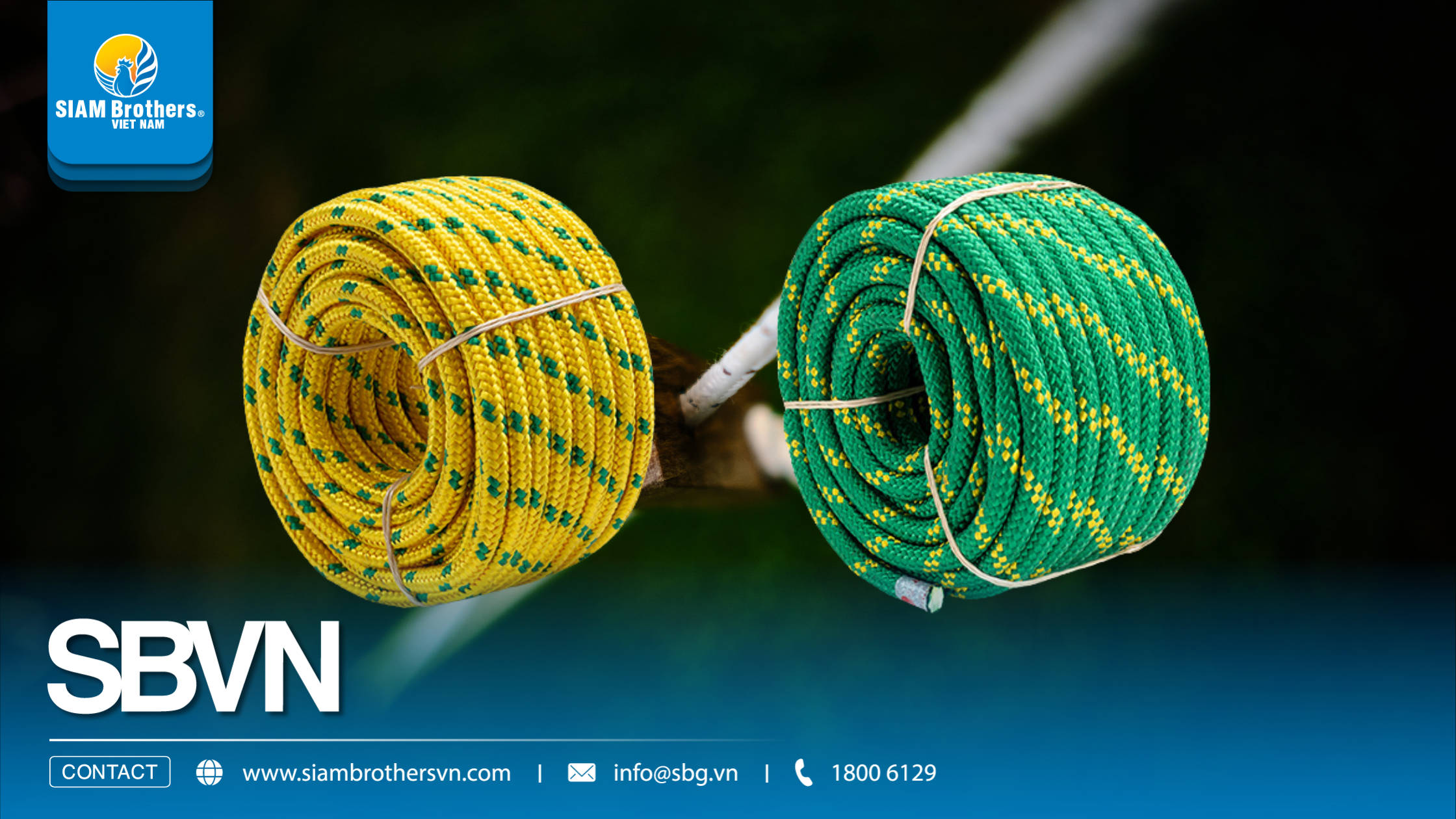
Source: SIAM Brothers Vietnam
Read more: Camping Essentials: 7 Items to Prepare for a Safe Outdoor Trip
Source: SIAM Brothers Vietnam
FAQ – Frequently Asked Questions
Q: What diameter of multipurpose rope should I choose for camping?
A: Select the diameter according to the tent eyelets, the type of equipment being secured and the load information provided by the manufacturer. Thin rope may be suitable for tent lines or clotheslines, while thicker rope is generally easier to hold when tying or pulling light objects. Do not determine load capacity from diameter alone.
Q: Can multipurpose rope be used for climbing or body suspension?
A: No, unless the manufacturer explicitly identifies the product as life-support equipment and confirms compliance with the relevant standards. Climbing, rappelling and rescue require specialised rope, compatible equipment and properly trained techniques.
Q: When should outdoor rope be replaced?
A: Replace the rope if it has deep cuts, numerous broken fibres, flattened or swollen sections, melted areas, brittleness, unusual discolouration or exposure to unidentified chemicals. If there is any doubt about its condition, do not continue using it for load-bearing tasks.
Contact us:
Address: 5th floor, VRG Building, 177 Hai Ba Trung Street, Vo Thi Sau Ward, Ho Chi Minh City, Vietnam
Tel: (+84) 28 38 912 889
Hotline: 1800 6129
Facebook: www.facebook.com/siambrothersvn
Email: info@sbg.vn
YouTube: youtube.com/@siambrothersvietnam1728
OA Zalo: zalo.me/1402339229697925373
App SBVN ID:
CHPlay: https://bit.ly/SBVNID-Android
Appstore: https://bit.ly/SBVNID-iOS








Specializing in Agricultural and Fisheries Products & Multipurpose Wire