
- 1800 6129

A rescue rope ladder is commonly prepared as an alternative escape aid when the primary exit is inaccessible. However, simply owning the equipment is not enough. Its ropes, rungs, hooks and anchoring points may deteriorate or become unsuitable for the intended location after a long period of storage.
Users should therefore inspect the rescue rope ladder periodically and before every training session. The following checklist helps identify potential defects, verify the product specifications and improve emergency preparedness.
Each component of the ladder serves a specific function. Damage to even one part may affect the load-bearing capacity and stability of the entire system.
Lay the ladder out in a clean, dry area and examine the full length of the ropes. Check whether:
The ropes are frayed, worn or have broken fibres.
The surface shows signs of scorching, melting or unusual discolouration.
The ropes have become mouldy, stiff, brittle or less flexible.
Any section is knotted, twisted or deformed.
The connections between the ropes and rungs remain secure.
Do not continue using the ladder if its ropes have been cut, severely worn or damaged by heat, chemicals or unsuitable storage conditions. Users should not extend or repair the ladder with ropes that do not match its original construction.
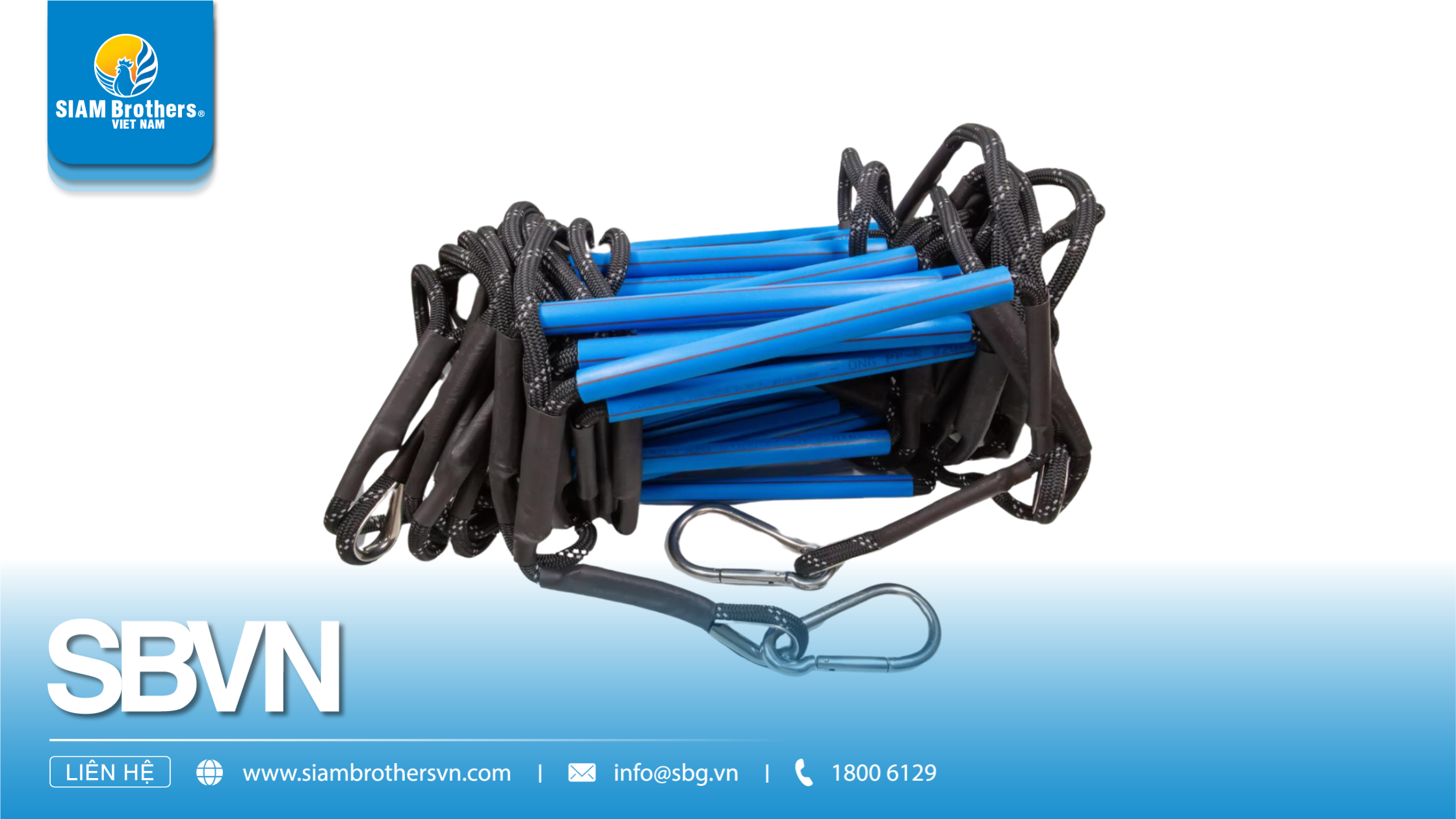
SIAM Brothers Vietnam Rescue Rope Ladder - Source: SIAM Brothers Vietnam
The rungs must maintain a stable shape so users can place their feet securely while climbing. The inspection checklist includes:
Are any rungs cracked, bent, broken or deformed?
Are the surfaces slippery because of grease, dust or moisture?
Is the spacing between the rungs consistent?
Are any rungs rotating, loose or slipping out of position?
Are both ends of each rung still securely attached to the ropes?
If a rung is cracked or its connection to the ropes is unstable, stop using the ladder and contact the supplier for inspection.
The hooks transfer the load from the rescue rope ladder to its anchoring point. Before use, check whether:
The hooks are bent, cracked or deformed.
The metal surfaces show signs of corrosion or rust.
The locking mechanisms open and close properly.
The locking gates automatically return to the closed position.
The connections between the hooks and ropes are loose or worn.
Do not use deformed hooks or hooks with faulty locking mechanisms. Never replace the original hooks with accessories of unknown origin or load capacity.
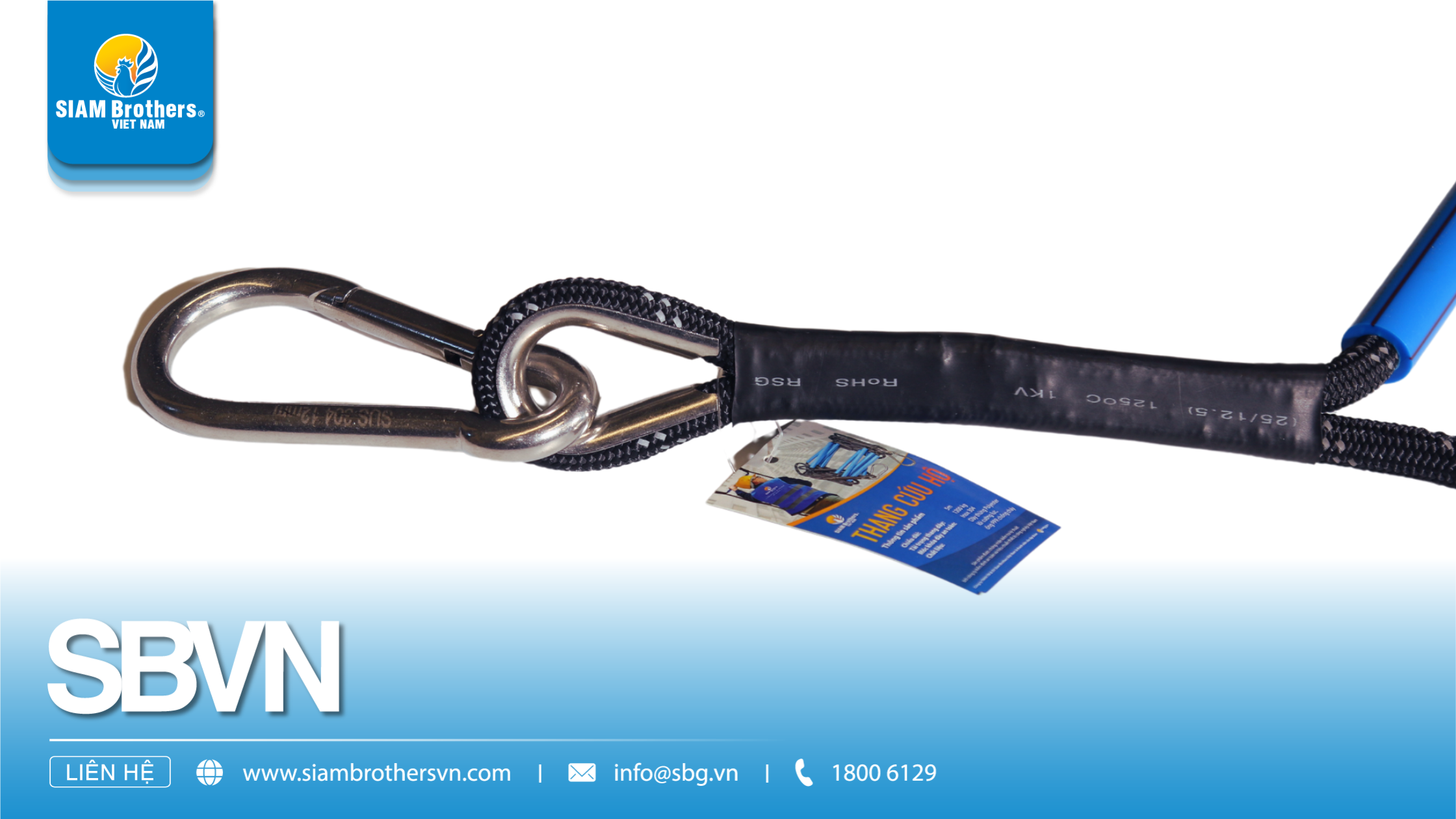
Inspect the Hooks and Metal Components - Source: SIAM Brothers Vietnam
Even an undamaged ladder cannot provide adequate support if it is attached to a weak anchoring point. The selected point must be structurally secure, suitable for the direction of loading and compatible with the manufacturer’s instructions.
Do not attach the ladder to:
Loose or corroded railings.
Rotten, cracked or damaged window frames and sills.
Pipes, furniture or movable objects.
Decorative features not designed to bear loads.
Locations with sharp edges that could cut or abrade the ropes.
First Alert’s escape ladder instructions also warn users not to attach a ladder to a weak, rotten or damaged window sill. The anchoring position must be structurally capable of supporting the intended load, with a clear area underneath.
Before deploying a rescue rope ladder, users should read the product label and the manufacturer’s instructions. Three important factors must be verified: length, load capacity and intended use.
The ladder must be long enough to reach from the escape point to a safe landing area. A ladder that is too short could force users to jump from a dangerous height. Conversely, excess rope that remains coiled or catches on an obstacle may also make evacuation more difficult.
Do not connect two ladders or extend the product unless specifically permitted by the manufacturer.
The ladder’s load capacity must be checked against the specifications published by the manufacturer. Its strength should never be estimated solely from the size of the ropes or rungs.
Even when the stated load capacity is high, users must follow the instructions regarding the number of users, positioning and evacuation order. Multiple people should not climb the ladder simultaneously unless the product instructions specifically allow it.
Each ladder may be designed for a particular location or purpose. Before use, determine whether:
The product is suitable for the intended window, balcony or installation point.
The hooks are compatible with the building structure.
There are awnings, electrical cables, signs or other obstacles below.
The landing area is level and provides sufficient clearance.
The product has previously been exposed to excessive heat or chemicals.
Never use the ladder outside the scope specified by the manufacturer.
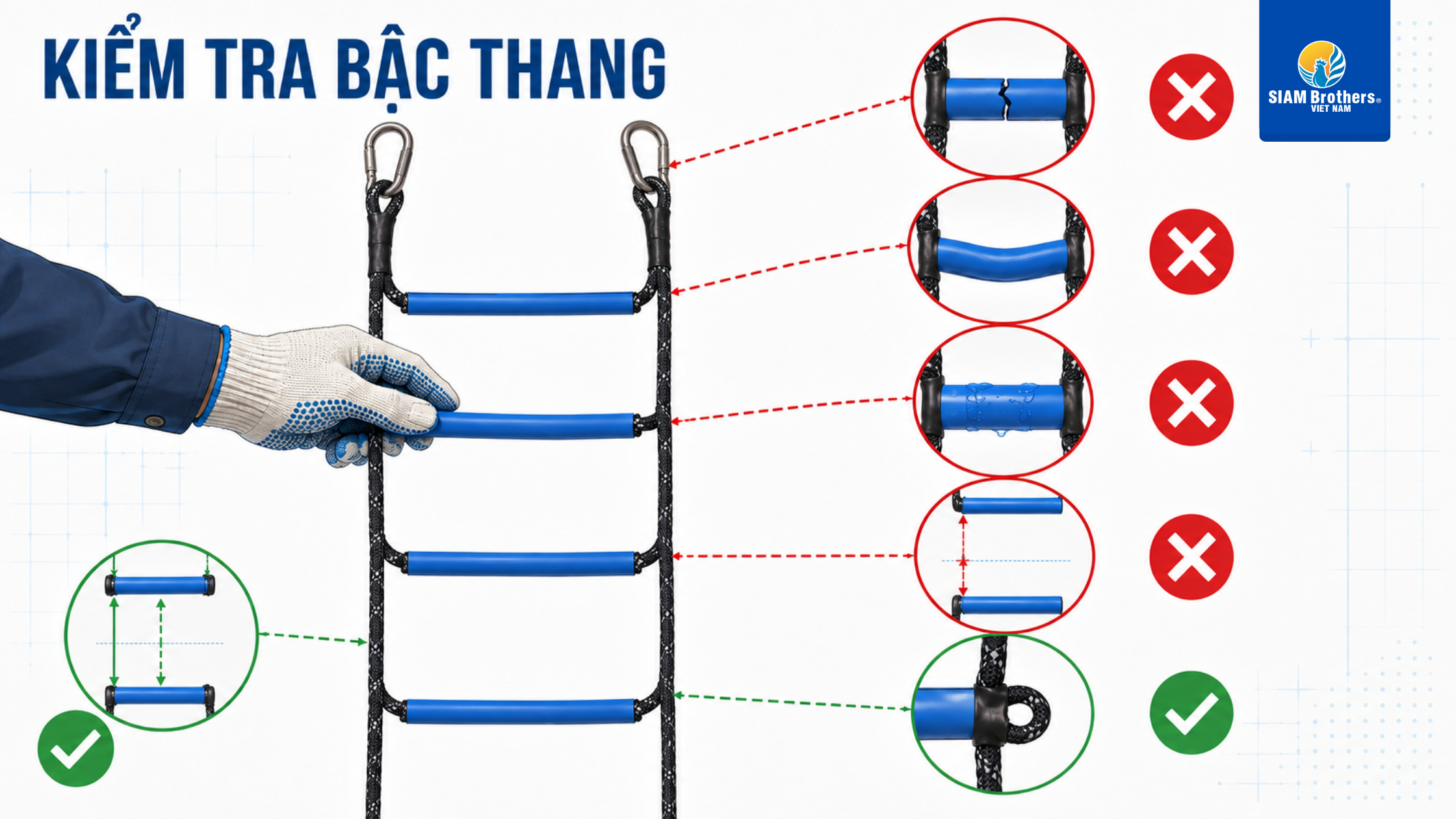
Identify Rot, Fraying, Cracks and Deformation - Source: SIAM Brothers Vietnam
Certain types of damage may develop after extended storage, particularly when the ladder is kept in a damp location, exposed to direct sunlight or placed near chemicals.
Stop using the rescue rope ladder if any of the following signs are detected:
The ropes are severely frayed, have broken fibres or show uneven wear.
The ropes smell mouldy, appear rotten or have changed in structure.
The rungs are cracked, bent or unable to maintain their original shape.
The hooks are bent, rusty, jammed or cracked.
The connections between the ropes, rungs and hooks are loose.
The ladder has been subjected to a major impact or used during an emergency.
Do not use adhesive tape, wire or temporary accessories to conceal or repair damage. If the condition of the ladder cannot be accurately assessed, stop using it and request an inspection from the supplier or a qualified professional.
A rescue rope ladder should be stored in an accessible location near the intended escape point without obstructing normal movement. Every family member or building occupant should know where the ladder is kept.
The storage area should be:
Clean, dry and protected from direct sunlight.
Away from heat sources, cooking areas and chemicals.
Free from objects that could press against or damage the ladder.
Clearly labelled for easy identification.
Quickly accessible under low-light conditions.
Users should inspect the ladder according to the manufacturer’s recommended schedule and after every practice deployment. The inspection date, condition of the product and name of the inspector may be recorded on a tracking card stored with the equipment.
All potential users should also read the instructions and practise opening the window or access point, attaching the hooks and deploying the ladder from a safe, low position. The Electrical Safety Foundation International recommends becoming familiar with an escape ladder before an emergency and practising its installation from a ground-floor window.
Users should not conduct unsupervised practice at the actual escape height without qualified personnel, suitable protective equipment and an appropriate safety plan.
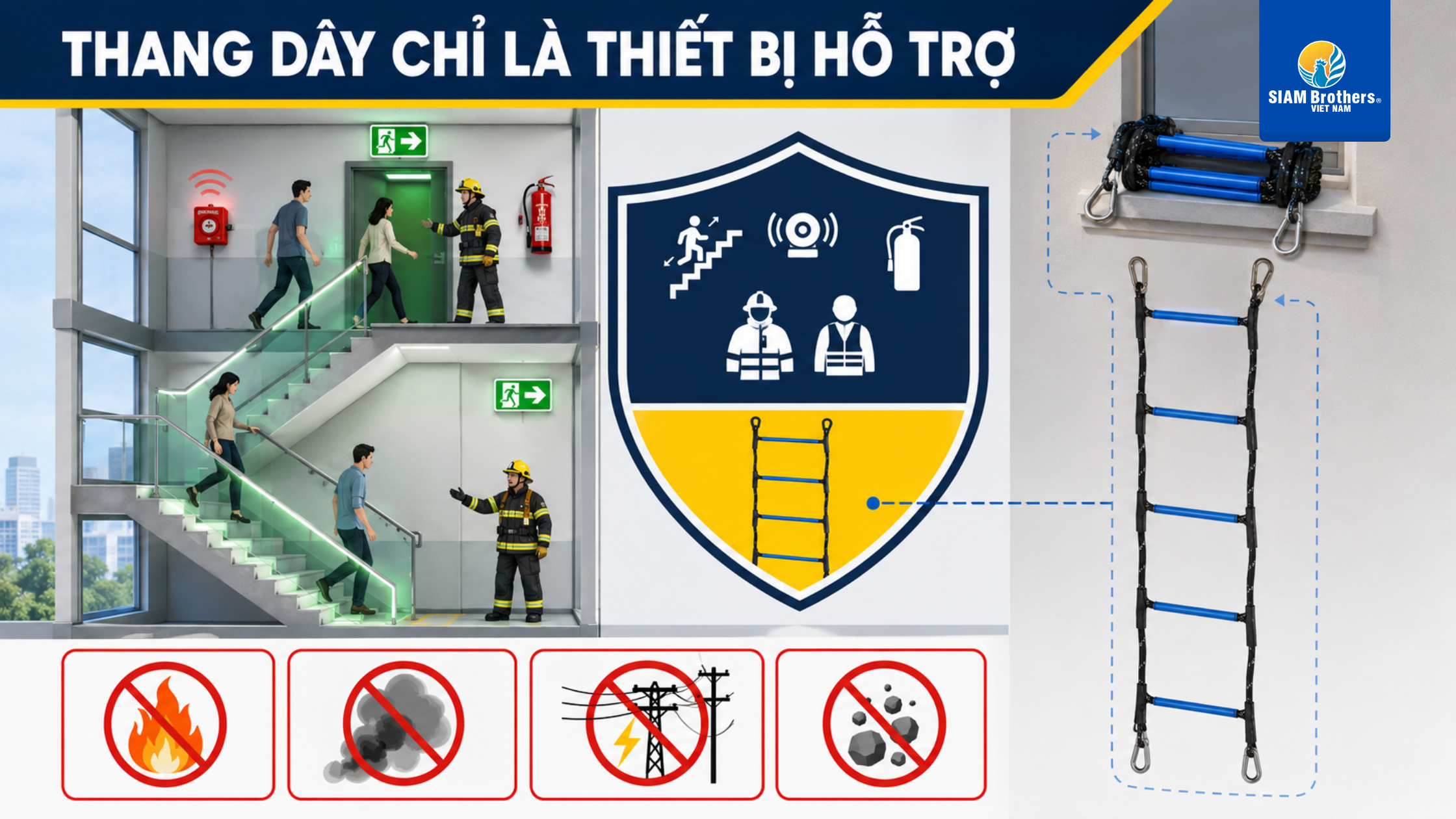
A Rescue Rope Ladder Does Not Replace an Official Fire Safety System - Source: SIAM Brothers Vietnam
A rescue rope ladder should only be considered a supplementary device for certain emergency situations. It does not replace:
Designated stairways and emergency exits.
Fire alarm and firefighting systems.
Fire extinguishers and mandatory fire safety equipment.
An established emergency evacuation plan.
Instructions from firefighters and rescue personnel.
Compliance with applicable fire safety regulations.
In the event of a fire, occupants should raise the alarm, contact the emergency services and use the designated safe exit according to the building’s evacuation plan. Do not deploy the ladder through areas containing flames, heavy smoke, electrical cables or falling-object hazards.
The SIAM Brothers Vietnam Rescue Rope Ladder is developed and manufactured to support emergency response situations such as fires, rescue operations and evacuations.
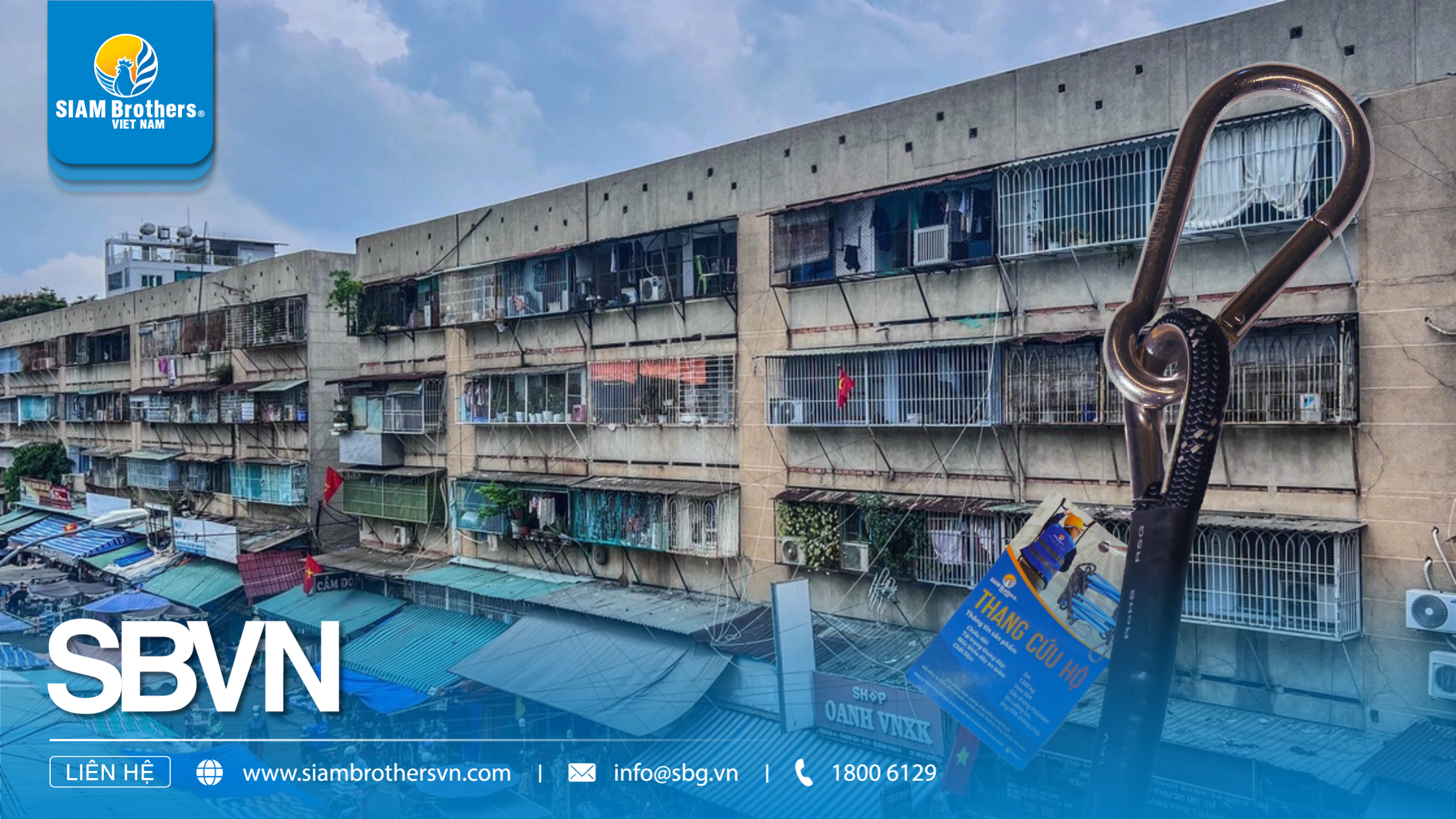
SIAM Brothers Vietnam Rescue Rope Ladder - Source: SIAM Brothers Vietnam
According to the specifications published by SIAM Brothers Vietnam, the product features:
Polyester ropes.
A high-strength fibre core.
A length of 5 metres.
A stated ladder load capacity of 1,200 kg.
Safety hooks made from 304 stainless steel.
Fire-resistant PPR tube rungs.
Before selecting the product, buyers should assess the height, anchoring point and structural conditions at the intended installation location. The stated load capacity does not mean that multiple users may climb the ladder simultaneously without restriction. Deployment must comply with the manufacturer’s instructions and the building’s safety plan.
☐ The ropes are free from rot, fraying, broken fibres and scorching.
☐ The rungs are not cracked, bent, loose or slippery.
☐ The hooks are free from rust, cracks and deformation.
☐ The hook-locking mechanisms function properly.
☐ The anchoring point is secure and undamaged.
☐ The ladder length is suitable for the intended escape point.
☐ The load capacity and intended use comply with the instructions.
☐ The deployment path is free from electrical cables and obstacles.
☐ All potential users know where the ladder is stored and how to deploy it.
☐ The ladder is stored in a dry and accessible location.
Read more: Mini Apartments and Multi-Story Homes: Why Every Family Should Prepare an Emergency Escape Ladder
Source: SIAM Brothers Vietnam
FAQ About Rescue Rope Ladders
Q: How often should a rescue rope ladder be inspected?
A: Users should follow the inspection schedule recommended by the manufacturer. The ladder should also be checked before every practice session, after each deployment and whenever it has been stored for an extended period or exposed to moisture, heat or chemicals.
Q: Can a ladder still be used if the rope is only slightly frayed?
A: Users should not assume that damage is minor, particularly when the fraying occurs at a load-bearing point, connection or near a hook. Stop using the ladder and contact the supplier or a qualified professional for an inspection.
Q: Can a rescue rope ladder replace an emergency staircase?
A: No. It is a supplementary emergency device and does not replace designated escape stairways, fire alarm and firefighting systems, evacuation plans or instructions from emergency personnel.
Contact us:
Address: 5th floor, VRG Building, 177 Hai Ba Trung Street, Vo Thi Sau Ward, Ho Chi Minh City, Vietnam
Tel: (+84) 28 38 912 889
Hotline: 1800 6129
Facebook: www.facebook.com/siambrothersvn
Email: info@sbg.vn
YouTube: youtube.com/@siambrothersvietnam1728
OA Zalo: zalo.me/1402339229697925373
App SBVN ID:
CHPlay: https://bit.ly/SBVNID-Android
Appstore: https://bit.ly/SBVNID-iOS








Specializing in Agricultural and Fisheries Products & Multipurpose Wire