
- 1800 6129

White-sand beaches, clear blue water, and unspoiled landscapes have made many Vietnamese islands popular destinations. Behind this beauty, however, several coastal areas have recorded plastic waste, water hyacinth, and abandoned fishing gear that threaten local scenery and ecosystems. From An Bình Island in Lý Sơn to Phú Quốc and Côn Đảo, incidents reported by the media between 2025 and 2026 show that managing marine debris remains a significant challenge. Let’s join SIAM Brothers Vietnam in examining these notable cases and exploring solutions to prevent waste from reaching the sea.
An Bình Island, also known as Đảo Bé or Little Island, is part of the Lý Sơn Special Administrative Zone in Quảng Ngãi Province. It has long been known for its distinctive volcanic landscape, black rock formations, and clear seawater. Covering approximately 0.69 km², this small island attracts visitors with its natural beauty and relatively peaceful atmosphere.
Behind this landscape, however, lie considerable challenges in waste collection and treatment.
According to an article published by Pháp Luật TP.HCM on April 16, 2025, An Bình Island has more than 400 residents but welcomes around 60,000 visitors each year. Its limited area, large number of tourists, and restricted waste-treatment capacity have placed considerable pressure on local environmental management.
The report documented plastic waste in several parts of the island, while local authorities struggled to collect and process it promptly.
Notably, an island measuring less than one square kilometre must accommodate both the daily needs of residents and tourism activities. This creates a need for waste collection, temporary storage, and transportation systems suited to the conditions of a small island.
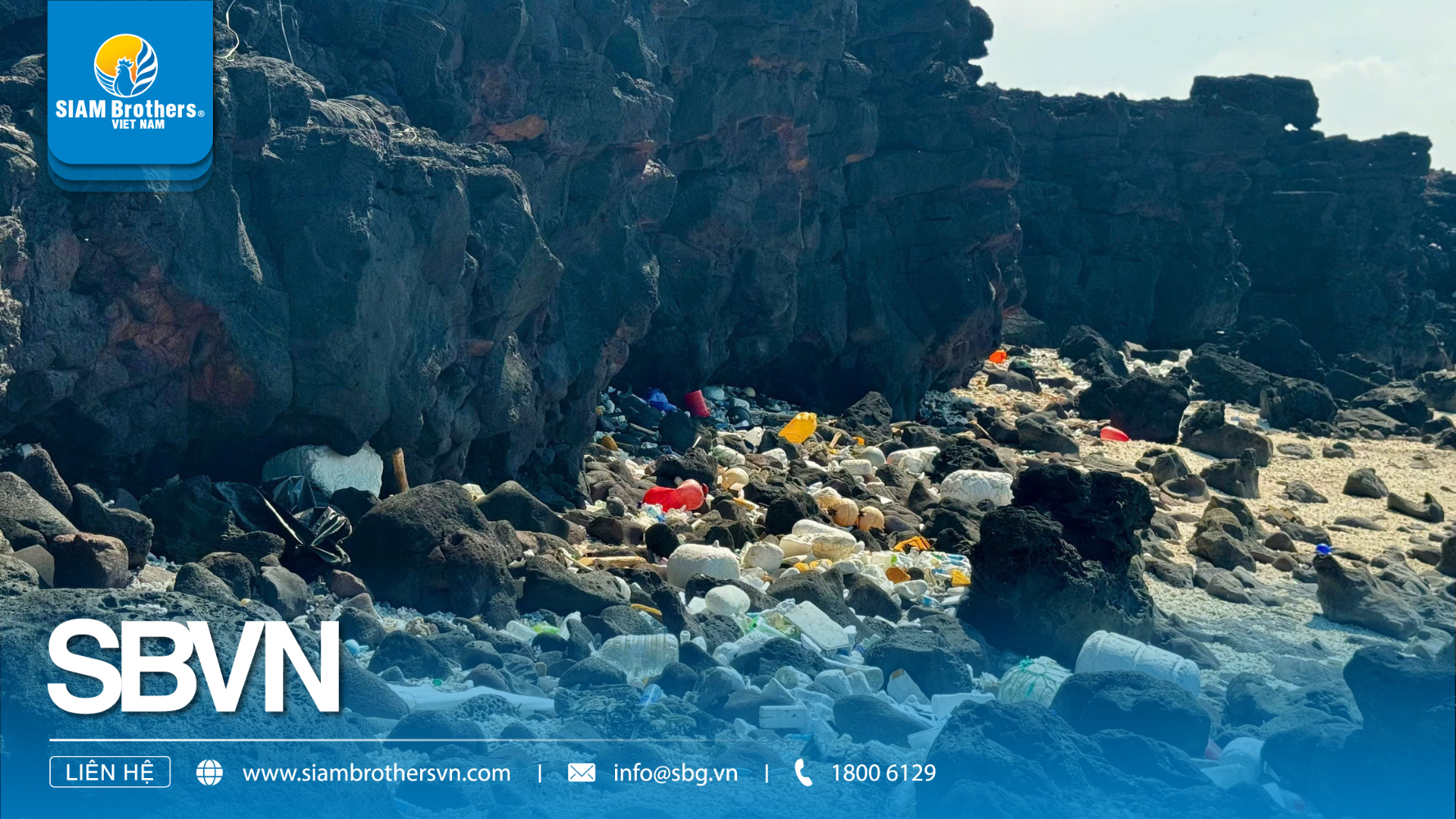
Plastic waste, bottles, containers, and foam boxes found along the coast of An Bình Island, Lý Sơn, Quảng Ngãi, as recorded in April 2025. Photo: Pháp Luật TP.HCM.
Unlike mainland cities, waste management on islands is often affected by limited land availability, transportation capacity, and weather conditions.
When the amount of waste generated exceeds local collection capacity, it may accumulate in residential areas or along the coast. Lightweight materials such as plastic bags, bottles, and packaging can be carried into the marine environment by wind or water if they are not properly managed.
The situation on An Bình Island shows that protecting tourist destinations requires more than occasional beach clean-ups. Waste must also be controlled at its source.
Known for its famous beaches, Phú Quốc is one of Vietnam’s leading island destinations. However, in the first days of 2026, images of waste and water hyacinth washing ashore at two well-known beaches attracted public attention.
According to VnExpress on January 3, 2026, large amounts of water hyacinth and household waste washed ashore at Bãi Khem and Bãi Sao. The incident surprised many international visitors, and some were reportedly reluctant to enter the water.
At Bãi Khem, local residents, accommodation staff, and tourists participated in clean-up activities. At Bãi Sao, the volume of water hyacinth reaching the shore created difficulties in maintaining cleanliness and preserving the beach landscape.
It is important to distinguish between the materials involved. Much of the floating matter reported in this incident consisted of water hyacinth, an aquatic plant, rather than plastic waste. Nevertheless, the simultaneous presence of household waste still raised concerns about waste management in rivers and coastal waters.
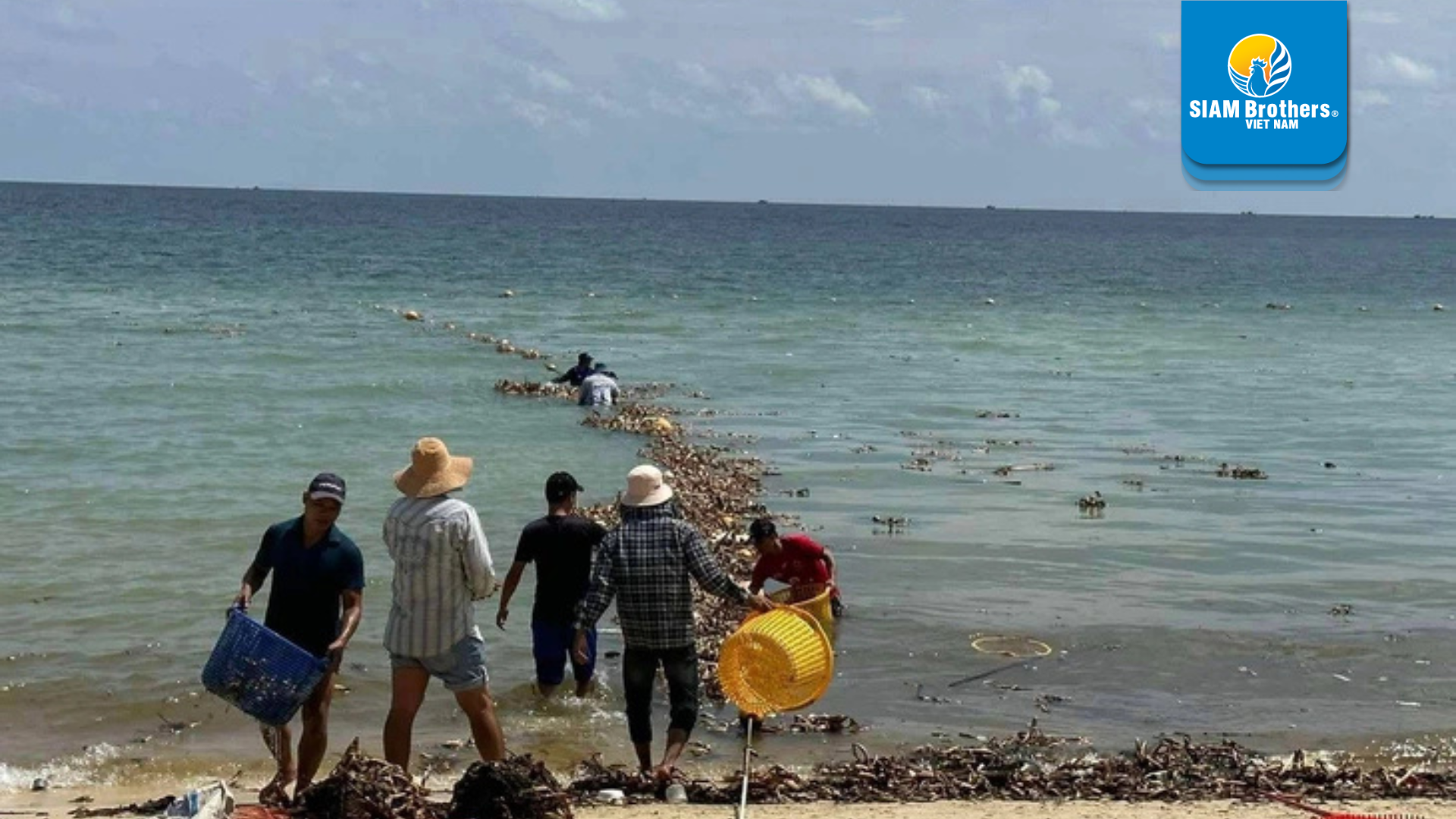
Resort employees at Bãi Khem, Phú Quốc, collect water hyacinth, seaweed, and waste washed ashore by seasonal winds. Photo: Tuổi Trẻ, 2023.
According to information attributed by the media to local authorities, water hyacinth may travel through mainland rivers and canals before reaching the sea. Currents and tides can then carry it back towards coastal areas.
This phenomenon shows that floating materials found on a beach do not necessarily originate from that location.
River currents, tides, waves, and wind direction can all influence the movement of floating materials. Therefore, waste and aquatic vegetation may continue to arrive even when a beach is cleaned regularly.
The incident in Phú Quốc demonstrates that maintaining the appearance of a tourist beach requires management beyond the beach itself. The wider system of rivers, canals, and land-based waste sources must also be considered.
Côn Đảo is known for its natural beaches, diverse forest and marine ecosystems, and ecologically valuable conservation areas. However, even strictly protected locations are not completely shielded from marine debris.
On July 15, 2025, Báo Nông nghiệp và Môi trường published a report on marine debris in Côn Đảo, including the situation at Hòn Bảy Cạnh.
According to the report, waste can wash onto beaches, become trapped between rocks and tree roots, and be pushed by waves towards the edge of coastal forests. Some debris also remains underwater, creating additional challenges for collection teams.
Unlike household waste generated in residential areas, marine debris can travel through multiple sea regions before accumulating at a particular location. The place where waste is found is therefore not necessarily where all of it originated.
Plastic waste, ropes, and lost fishing nets can affect marine ecosystems in several ways.
Marine animals may become entangled in abandoned ropes, nets, and other materials. Some species may ingest plastic fragments after mistaking them for food. Debris accumulating on coral reefs can also cause physical damage to important habitats.
Lost fishing gear can continue trapping marine life even after it is no longer being used by people. This phenomenon is commonly known as ghost fishing.
In ecologically valuable areas such as Côn Đảo, waste collection is not simply about maintaining the appearance of a tourist destination. It also helps reduce pressure on natural habitats and marine species.
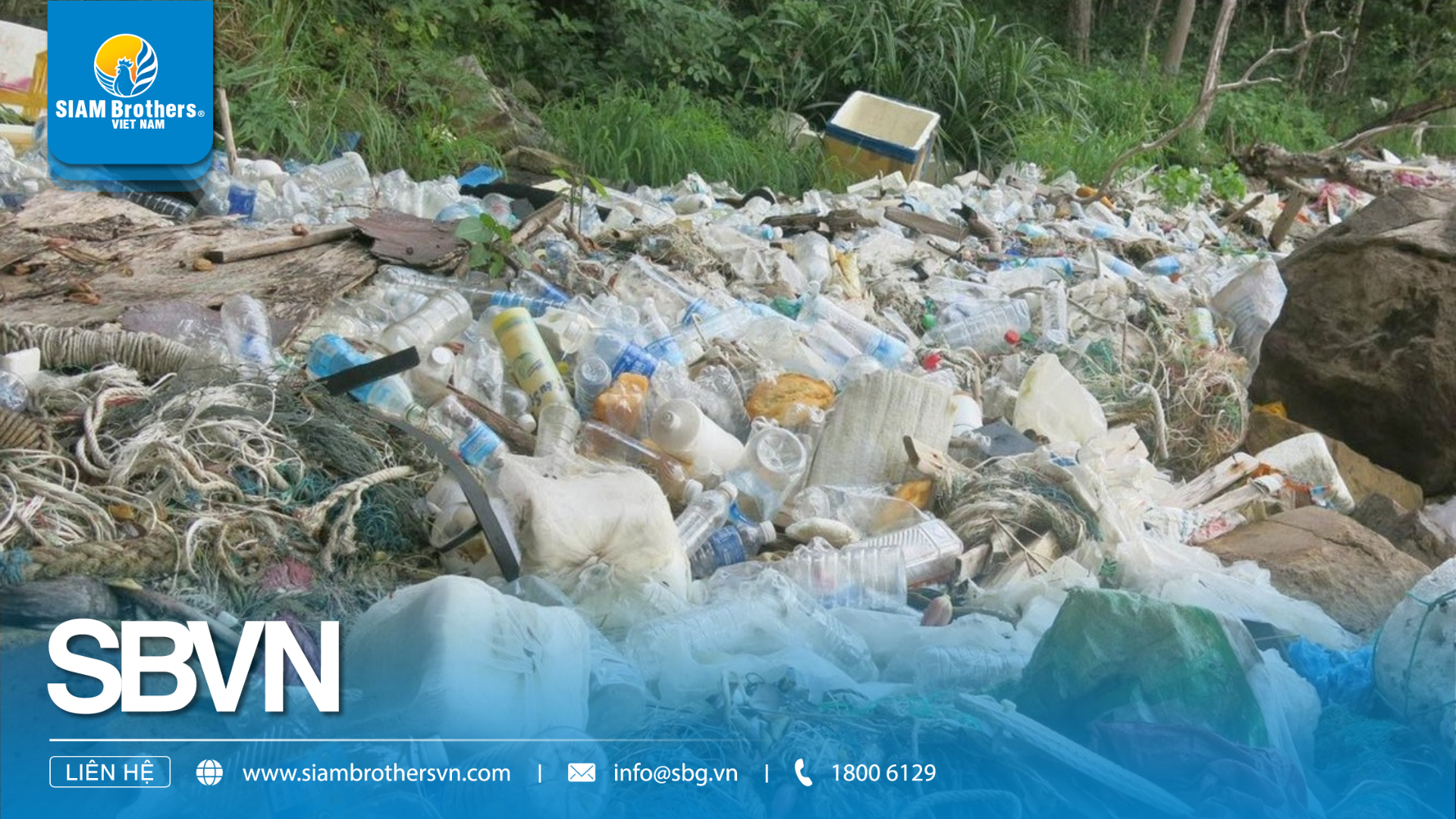
Plastic waste and discarded materials accumulating along the coast of Côn Đảo, illustrating the pollution pressure created by marine debris. Source: Báo Nông nghiệp và Môi trường, 2025.
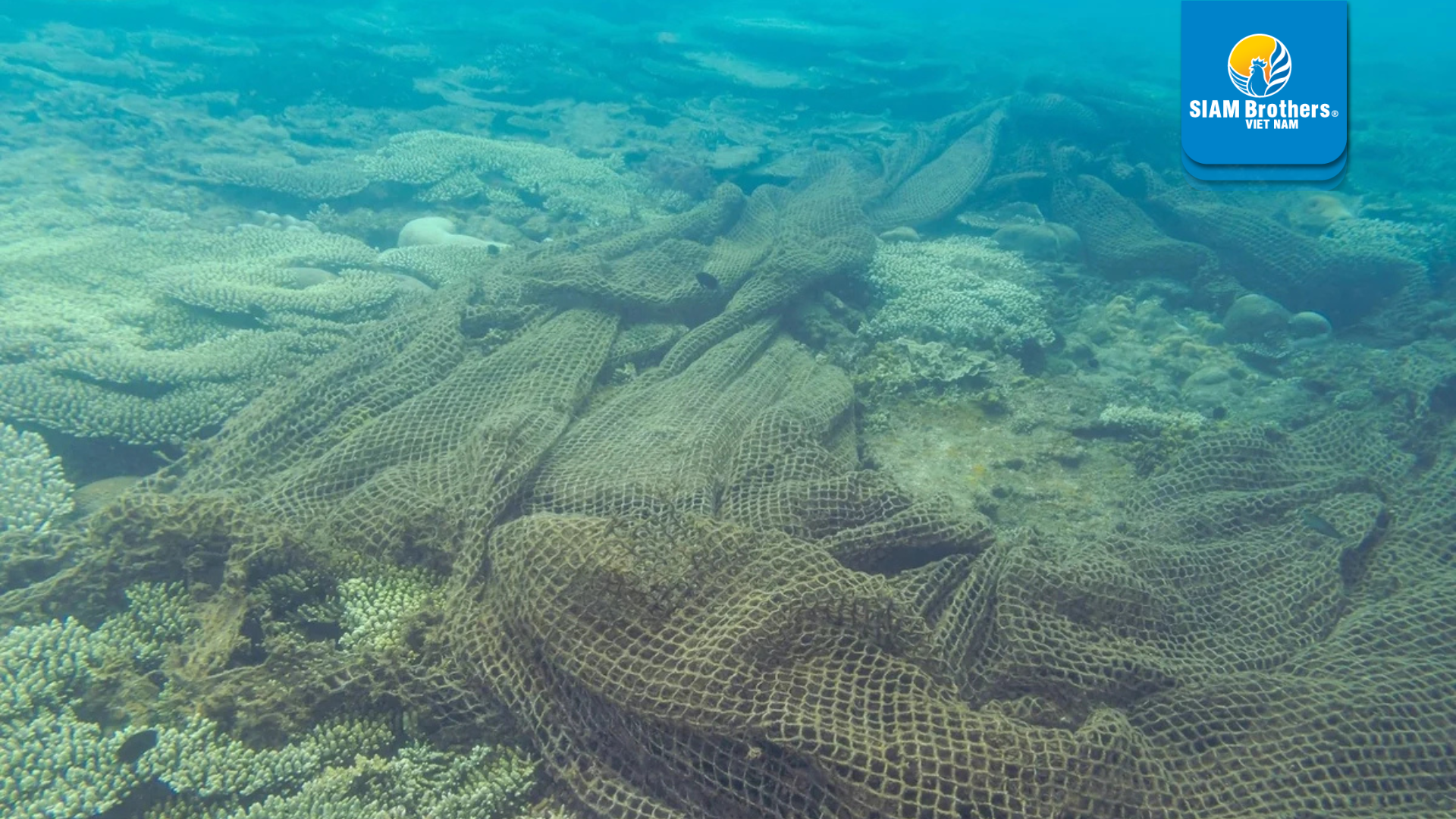
Lost fishing nets covering a coral reef in Côn Đảo, illustrating the risks that abandoned fishing gear poses to marine ecosystems. Source: Báo Nông nghiệp và Môi trường, 2025.
The cases of Lý Sơn, Phú Quốc, and Côn Đảo reflect different challenges involving the sources, movement, and collection of marine debris.
On tourist islands, growing visitor numbers can increase the consumption of packaged food, plastic bottles, bags, and other single-use products.
When collection systems cannot keep pace with the amount of waste generated, the risk of waste accumulation or leakage into the environment also increases.
Waste discarded into drains, canals, or rivers can be carried towards estuaries.
After reaching the sea, floating materials remain subject to waves, wind, and ocean currents. They may eventually wash ashore far from their original source.
This is one reason why cleaning beaches alone cannot fully resolve the problem of drifting marine debris.
Ropes, fishing nets, packaging, and damaged equipment can become marine debris if they are not properly recovered and managed.
Some materials float and travel across the water’s surface, while others sink, become trapped between rocks, or accumulate on the seabed.
Because these waste categories behave differently, they require different collection and management methods.
Waste collection capacity on islands depends on several factors, including infrastructure, workforce availability, storage space, and transportation conditions.
For small or remote islands, the cost and difficulty of transporting waste can create additional challenges for centralised treatment.
Long-term solutions should therefore combine waste reduction, source separation, and improved collection capacity instead of focusing solely on clean-up activities after waste has already reached the beach.
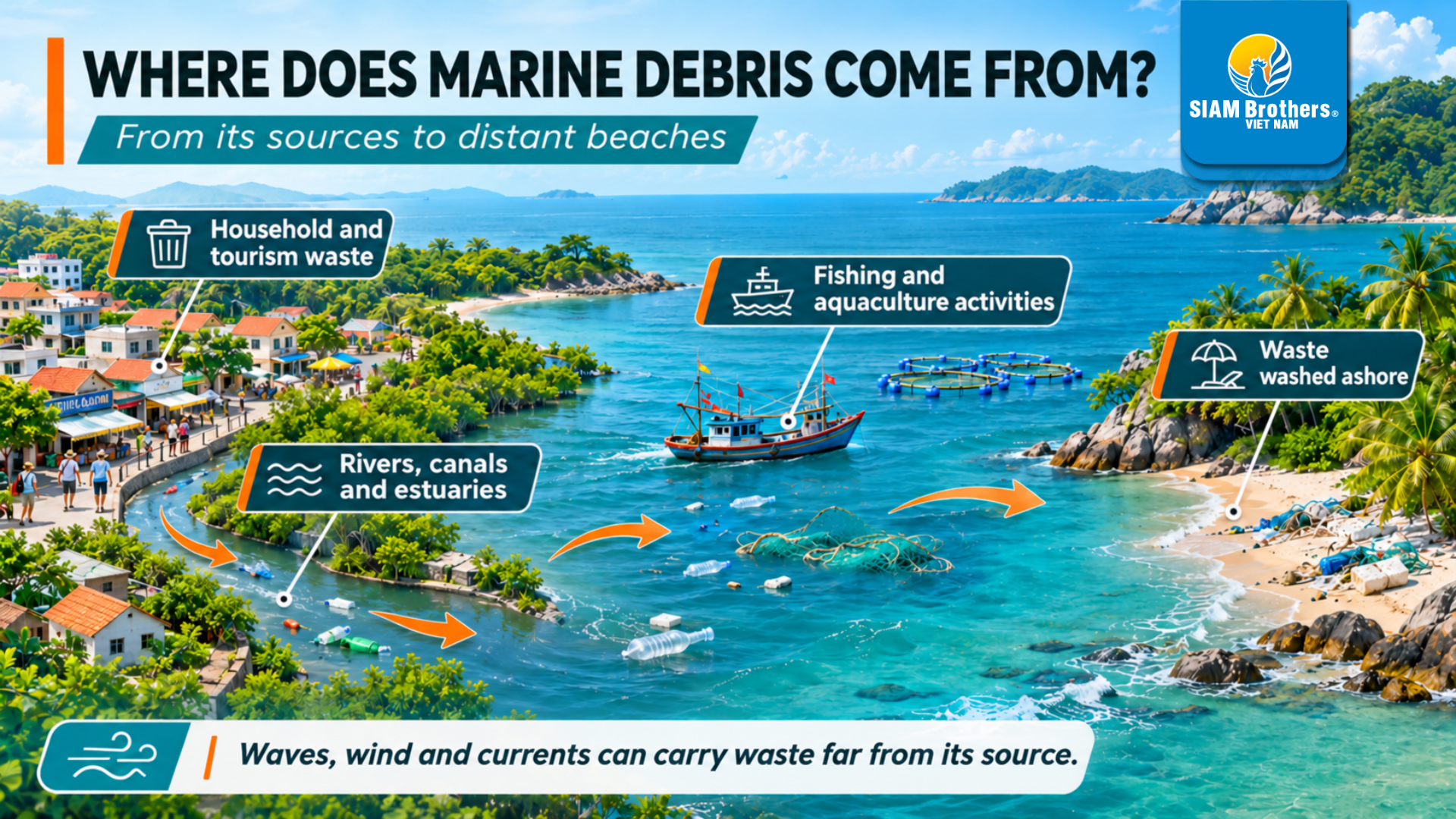
Where do marine debris come from?
Reducing marine debris requires cooperation among government agencies, businesses, local communities, and organisations operating at sea.
Reducing single-use plastics, improving source separation, and providing appropriate collection systems are important measures for preventing waste from leaking into the environment.
On tourist islands, waste collection plans should account for seasonal fluctuations in visitor numbers and the infrastructure conditions of individual locations.
Ropes, fishing nets, and materials used in fishing and aquaculture should be inspected, recovered when damaged, and transferred to an appropriate collection or treatment facility.
Preventing fishing gear from being lost or abandoned at sea helps reduce entanglement risks for marine life and limits the long-term accumulation of persistent waste.
At certain rivers, canals, or outfalls, a Trash Boom system may be considered to intercept or guide floating waste towards an accessible collection point.
However, its effectiveness depends on factors such as water flow, tides, waste characteristics, anchoring arrangements, and the collection plan implemented after the waste has been intercepted.
A Trash Boom cannot replace the collection of submerged waste, the recovery of lost fishing gear, or efforts to control waste at its source. Installation in coastal areas also requires a site assessment and careful evaluation of local conditions.
Beach clean-ups can improve local environmental conditions and raise public awareness. However, maintaining their results requires a combination of waste reduction, scheduled collection, and effective waste management.
Between 2020 and 2025, the project Reducing Ocean Plastic Waste in Vietnam, implemented by the Vietnam Administration of Seas and Islands in cooperation with WWF-Vietnam, supported several waste-management models, including activities in Phú Quốc, Côn Đảo, and Cù Lao Chàm.
These models show that reducing marine debris requires long-term participation from both local communities and government management systems.
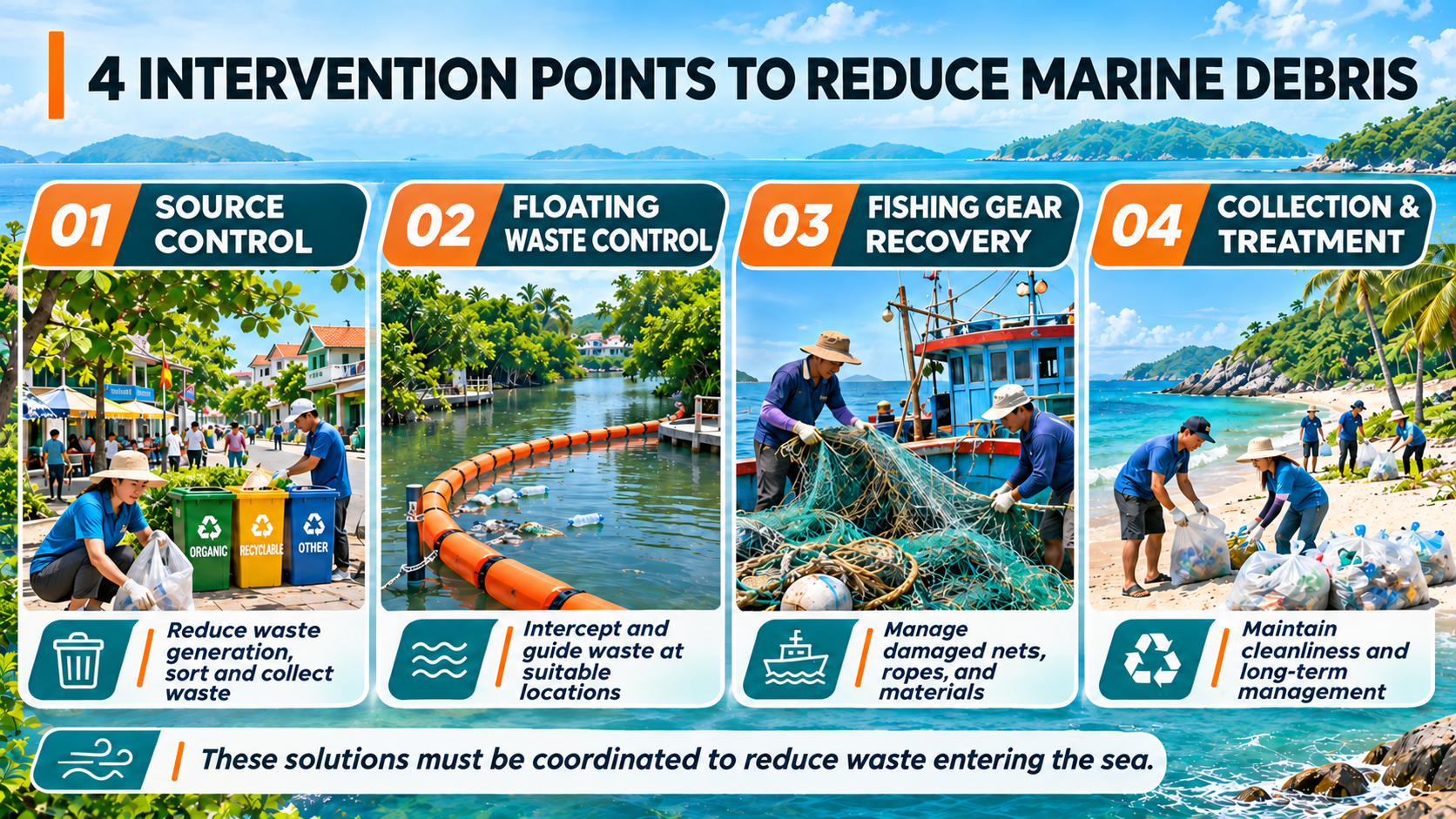
4 intervention points to reduce marine debris
Lý Sơn, Phú Quốc, and Côn Đảo are destinations with significant scenic, tourism, and environmental value. The incidents reported in 2025 and 2026 remind us that island landscapes remain vulnerable to waste, whether it originates locally or travels tens or hundreds of kilometres from another area.
The cases discussed above reflect conditions recorded at specific locations and times. They do not mean that the entire islands are constantly polluted.
Reducing marine debris requires an integrated approach that includes land-based waste management, fishing-gear recovery, floating-waste control at suitable locations, and sustained environmental protection in coastal areas.
Read more: Finding a Trusted Trash Boom Manufacturer in 2026
Source: SIAM Brothers Vietnam
Q: Where does the waste found around Vietnamese islands mainly come from?
A: It may originate from residential activities, tourism, fishing, aquaculture, or other locations before being transported by water currents. The specific sources must be identified through local surveys and assessments.
Q: Why does waste continue to appear on beaches after clean-up activities?
A: Waves, wind, and currents can continuously carry waste towards the shore. Beach clean-ups remove accumulated debris but do not necessarily eliminate its original sources.
Q: Can a Trash Boom be used at sea?
A: It may be considered for certain suitable coastal locations, but wave conditions, currents, tides, anchoring requirements, and collection plans must first be assessed. Not every offshore or coastal location is suitable for a Trash Boom system.
Q: What can tourists do to reduce waste on islands?
A: Tourists can limit single-use products, avoid littering, use designated collection points, and comply with local environmental-protection regulations.
References
Pháp Luật TP.HCM. (2025, April 16). Waste surrounds An Bình Island as Lý Sơn struggles to process it. https://tuoitre.vn/plo/rac-thai-bua-vay-dao-be-huyen-ly-son-khong-xu-ly-xue-109844595.htm
VnExpress International. (2026, January 3). Tourists shocked as trash swamps Phu Quoc’s most famous beaches. https://e.vnexpress.net/news/travel/places/tourists-shocked-as-trash-swamps-phu-quoc-s-most-famous-beaches-5001398.html
Báo Nông nghiệp và Môi trường. (2025, July 15). Marine debris surrounds Côn Đảo: Part 1 – The sea is “suffocating” from waste. https://nongnghiepmoitruong.vn/con-dao-bua-vay-boi-rac-thai-dai-duong-bai-1-bien-ngat-tho-vi-rac-d762568.html
Southern Center for Environmental Monitoring. (2025, July 9). Vietnam’s journey to reduce ocean plastic waste during the 2020–2025 period. https://scem.org.vn/vi/tin-tuc-trung-tam/chu-truong-chinh-sach/hanh-trinh-giam-thieu-rac-thai-nhua-dai-duong-tai-viet-nam-giai-doan-2020-2025-1534.html
Contact us:
Address: 5th floor, VRG Building, 177 Hai Ba Trung Street, Vo Thi Sau Ward, Ho Chi Minh City, Vietnam
Tel: (+84) 28 38 912 889
Hotline: 1800 6129
Facebook: www.facebook.com/siambrothersvn
Email: info@sbg.vn
YouTube: youtube.com/@siambrothersvietnam1728
OA Zalo: zalo.me/1402339229697925373
App SBVN ID:
CHPlay: https://bit.ly/SBVNID-Android
Appstore: https://bit.ly/SBVNID-iOS






Specializing in Agricultural and Fisheries Products & Multipurpose Wire