Industry News

What Is a Super-Intensive Shrimp Farming Model? Is It Really as Profitable as Advertised?

  • 12/04/2026

What Is a Super-Intensive Shrimp Farming Model? SIAM Brothers Vietnam analyzes costs, profitability, real-world risks, and material solutions to help optimize efficiency in every Shrimp Farming Model.

The Shrimp Farming Model known as super-intensive farming is often promoted as a “golden solution” to significantly boost productivity and profits compared to traditional methods but is that truly the case?

In this article, SIAM Brothers Vietnam helps you clearly understand what a super-intensive Shrimp Farming Model is, how it operates in real-world conditions, the investment required, and the key factors that directly impact profitability. At the same time, we analyze potential risks and provide optimized system solutions using high-quality materials such as HDPE nets, ropes, and floating plastic buoys—helping you make informed decisions, minimize losses, and maximize long-term efficiency.

1. What Is a Super-Intensive Shrimp Farming Model?

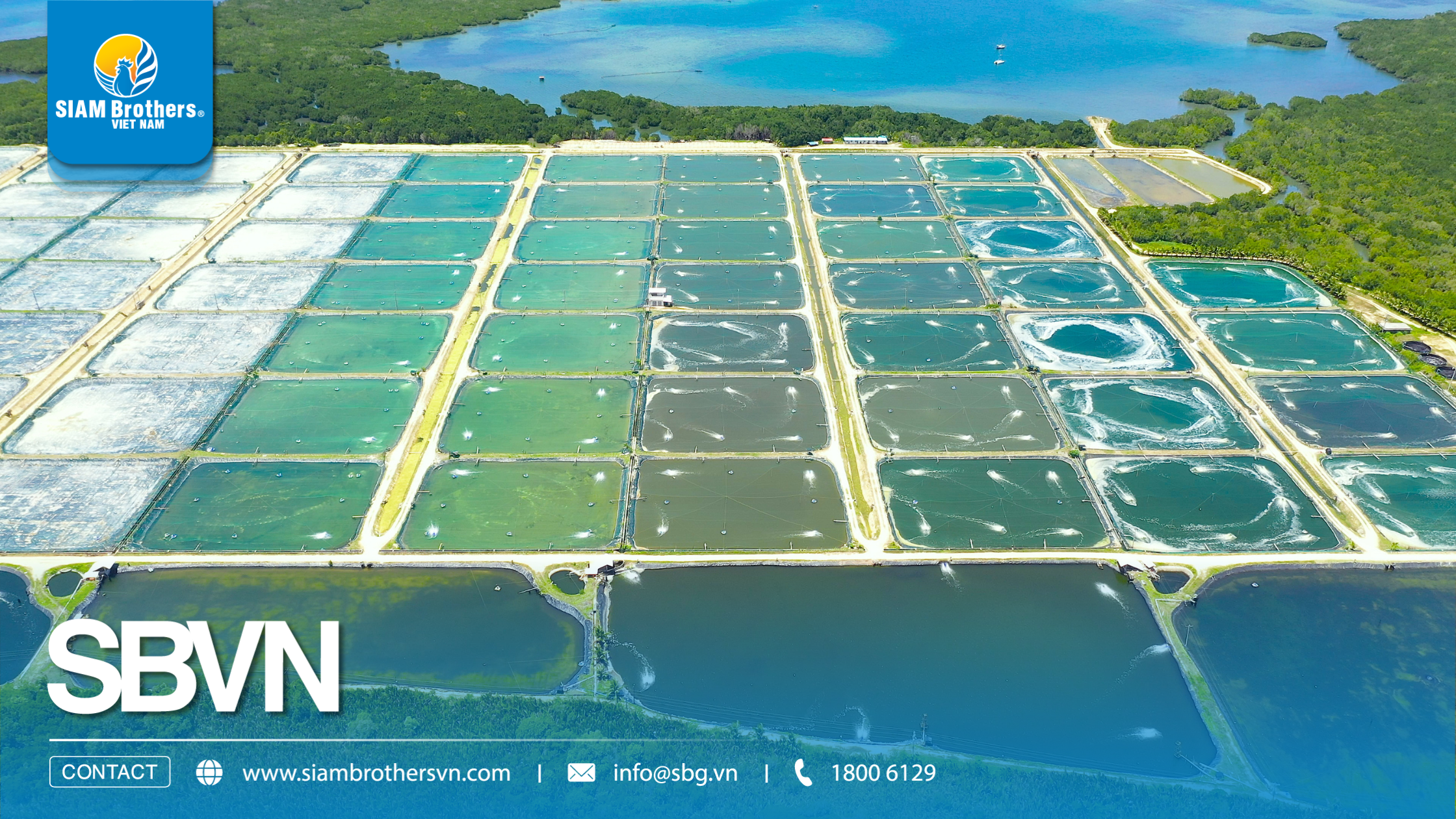
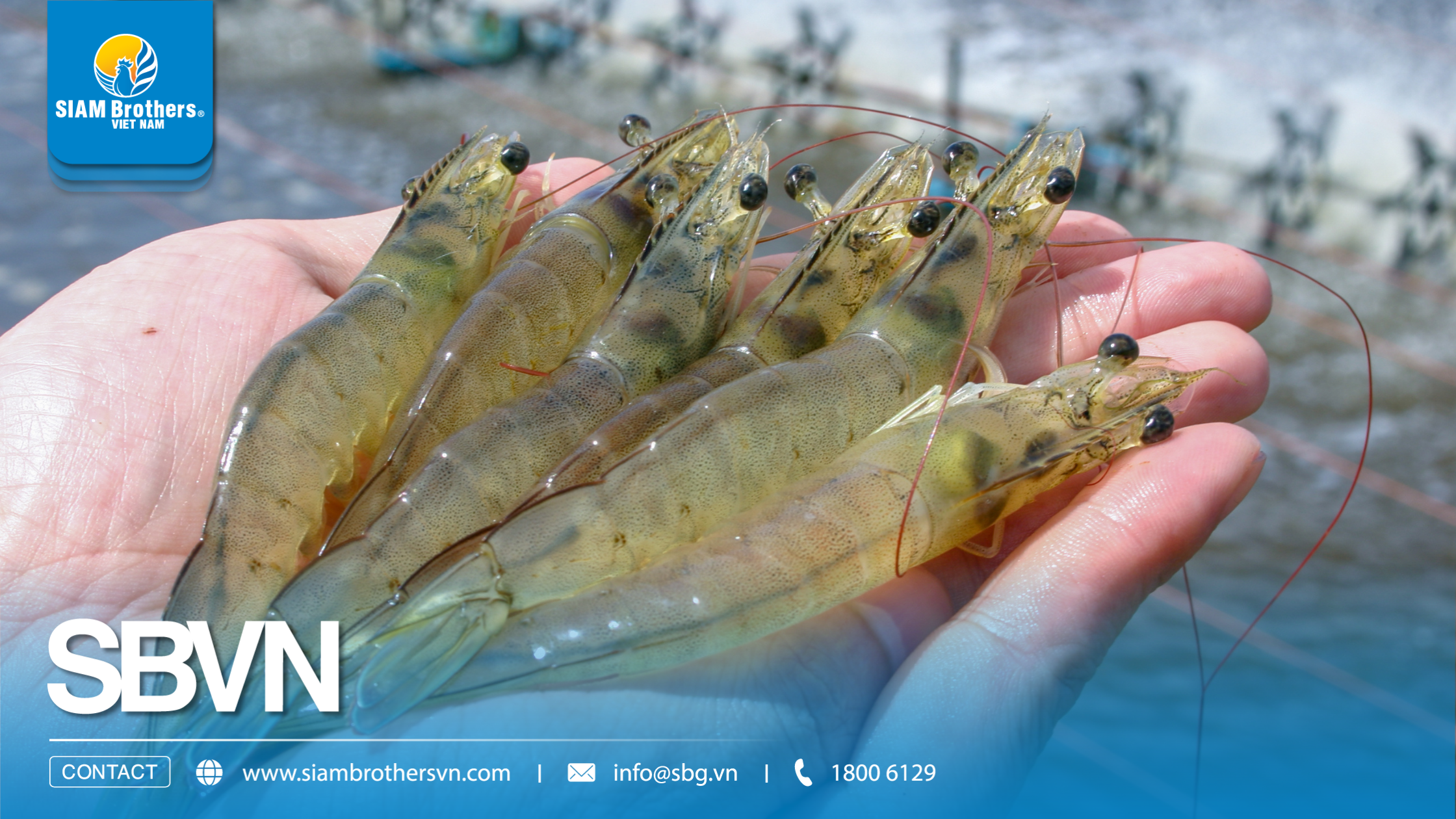
A super-intensive Shrimp Farming Model is a high-tech aquaculture approach in which farmers control nearly all aspects of the shrimp’s living environment to maximize yield per unit area. Unlike traditional farming, this model focuses on closed systems and strict data-driven management.
  • Extremely high stocking density (5-10 times higher than conventional methods)
  • Ponds lined with HDPE sheets to prevent seepage and control water conditions
  • Continuous aeration, oxygenation, and water treatment systems
  • Real-time monitoring of key parameters such as pH, alkalinity, and dissolved oxygen
  • Reduced dependence on natural conditions, enabling greater production control

Mô hình nuôi tôm siêu thâm canh là gì? Có thực sự lợi nhuận cao như quảng cáo?

Key Technical Features of the Model

To successfully operate a super-intensive Shrimp Farming Model, understanding its technical foundation is essential. These factors directly determine survival rates and harvest productivity.

Standard pond system:

  • Round or square ponds fully lined with HDPE (bottom and sides)
  • Sloped pond bottoms for efficient waste collection

Independent water supply and drainage system:

  • Includes settling and treatment ponds before water enters the culture pond
  • Minimizes cross-contamination and improves disease control

Supporting material system:

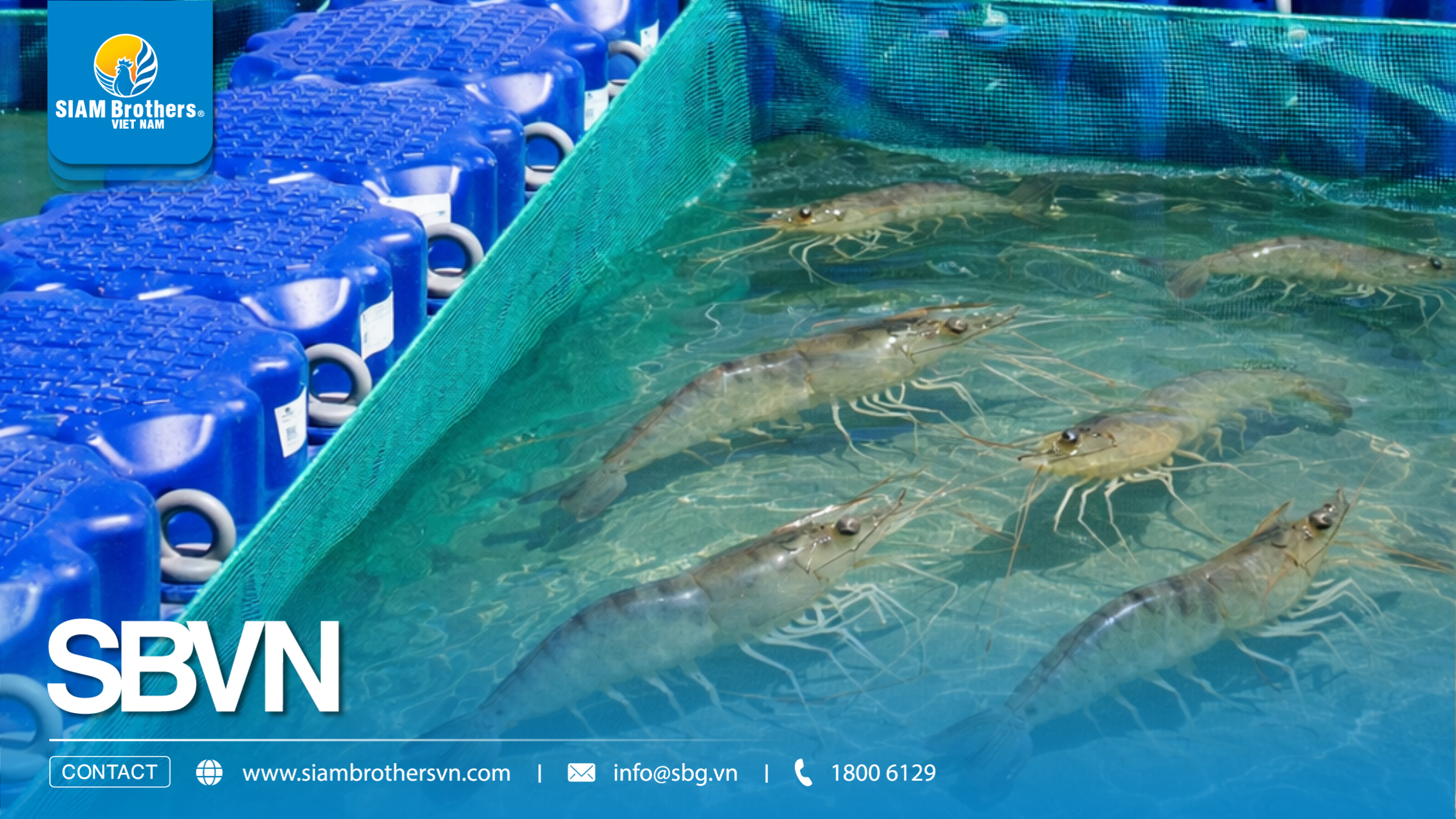
  • HDPE nets: used for pond partitioning and protecting shrimp from external threats
  • Ropes: secure structures and withstand tension in aquatic environments
  • HDPE floating buoys: maintain stability of floating systems

2. Is the Super-Intensive Shrimp Farming Model Really Profitable?

Under proper operation, a super-intensive Shrimp Farming Model can deliver outstanding profitability due to the following advantages:

High productivity per unit area:

  • Output can be 2–3 times higher than traditional intensive farming
  • Maximizes land use efficiency, ideal for large-scale operations

Improved shrimp survival rates:

  • Better water quality control reduces mortality
  • Minimizes large-scale disease outbreaks

Optimized operations through systems:

  • Technology reduces labor dependency
  • Easier to monitor and adjust throughout farming cycles

2.1. The Reality: Not Everyone Achieves High Profits

In practice, not every Shrimp Farming Model delivers expected returns. This is a critical consideration before investing.

Strong dependence on technical expertise:

  • Poor water management can lead to total crop loss
  • High density increases risk if not properly controlled

High initial investment pressure:

  • HDPE-lined ponds, aeration, and treatment systems require significant capital
  • Longer payback period if performance is below expectations

Market volatility:

  • Fluctuating shrimp prices directly impact profitability
  • Increasing competition within the industry

This highlights that profitability depends not only on the Shrimp Farming Model itself but also on how effectively it is implemented and managed.

2.2. When Does the Model Truly Become Profitable?

To achieve sustainable economic efficiency, a Shrimp Farming Model must meet the following conditions:

Well-designed system from the start:

  • Proper planning of ponds, water systems and aeration
  • Suitable for both scale and stocking density

Use of high-quality aquaculture materials:

  • Durable HDPE nets with strong load-bearing capacity
  • Specialized ropes designed for aquatic environments
  • Corrosion-resistant and stable HDPE buoys

Scientific and data-driven management:

  • Regular monitoring of environmental indicators
  • Flexible adjustments throughout the farming cycle

Clear financial planning:

  • Accurate cost estimation and ROI timeline
  • Focus on long-term cost optimization rather than short-term savings

Mô hình nuôi tôm siêu thâm canh là gì? Có thực sự lợi nhuận cao như quảng cáo?

3. Comparison Between the Super-Intensive Shrimp Farming Model and Other Shrimp Farming Models

To make an informed investment decision, it is essential to compare the Shrimp Farming Model of super-intensive farming with other common approaches. Each model differs significantly in terms of technical requirements, cost structure, and risk profile.

3.1. Super-Intensive vs. Intensive Shrimp Farming Model

These two Shrimp Farming Models are often confused, yet they differ substantially in both technical complexity and performance.

Stocking density:

  • Super-intensive: extremely high, maximizing output per unit area
  • Intensive: high but significantly lower than super-intensive

Technical systems:

  • Super-intensive: requires HDPE-lined ponds, aeration systems, and closed-loop water treatment
  • Intensive: simpler systems with lower reliance on advanced technology

Control level:

  • Super-intensive: strict environmental control
  • Intensive: partially dependent on natural conditions

Cost and profitability:

  • Super-intensive: higher investment with greater profit potential
  • Intensive: lower cost with more stable but moderate returns

If you have strong technical capabilities and sufficient capital, the super-intensive Shrimp Farming Model can offer a clear competitive advantage.

3.2. Super-Intensive vs. Extensive Shrimp Farming Model

These two Shrimp Farming Models represent opposite approaches and are suited to different target users.

Farming method:

  • Super-intensive: industrial, fully controlled system
  • Extensive: natural farming with minimal intervention

Investment cost:

  • Super-intensive: high investment in systems and materials
  • Extensive: low cost, leveraging natural conditions

Productivity:

  • Super-intensive: high yield, shorter production cycles
  • Extensive: low yield, longer farming periods

Risk level:

  • Super-intensive: high technical risk if mismanaged
  • Extensive: risks from environmental factors and disease

Your choice of Shrimp Farming Model depends on your goal: maximizing output or minimizing investment and risk.

3.3. Super-Intensive vs. Traditional Earthen Pond Shrimp Farming Model

This is the most practical comparison for farmers considering upgrading their current Shrimp Farming Model.

Pond structure:

  • Super-intensive: HDPE-lined ponds with standardized design
  • Earthen ponds: natural soil base, difficult to control

Environmental management:

  • Super-intensive: strict monitoring of water parameters
  • Earthen ponds: highly affected by weather and external factors

System durability:

  • Super-intensive: uses high-quality materials such as nets, ropes, and HDPE buoys
  • Earthen ponds: minimal material investment, lower durability

Long-term efficiency:

  • Super-intensive: high initial cost but stable long-term performance
  • Earthen ponds: lower upfront cost but higher risk and maintenance expenses

If you are planning to upgrade your Shrimp Farming Model, this transition requires careful evaluation.

3.4. When Should You Choose a Super-Intensive Shrimp Farming Model?

Not every farmer or business is suited for this model. You should consider adopting a super-intensive Shrimp Farming Model when:

  • You have sufficient capital for initial system investment
  • You possess technical knowledge or have access to skilled operators
  • You aim for large-scale, long-term production
  • You prefer system-based risk control over dependence on natural conditions

Conversely, if you are new to shrimp farming or have limited resources, it is advisable to start with a simpler Shrimp Farming Model before scaling up.
Mô hình nuôi tôm siêu thâm canh là gì? Có thực sự lợi nhuận cao như quảng cáo?

4. Solutions to Optimize the Efficiency of a Super-Intensive Shrimp Farming Model

To achieve sustainable profitability, the effectiveness of a Shrimp Farming Model depends heavily on system design, material quality, and operational management.

4.1. Design a Standardized Farming System from the Beginning

A well-designed system significantly reduces risks and operational costs throughout the farming cycle.

Scientific pond planning:

  • Clearly separate culture ponds, settling ponds, and treatment ponds
  • Design sloped pond bottoms for efficient waste collection

Material selection:

  • Use high-quality HDPE liners to enhance durability and environmental control
  • Minimize leakage and contamination from soil

Optimized water supply and drainage:

  • Ensure stable water flow and prevent toxic gas accumulation
  • Enable proactive water treatment before and after farming

For new investors, this is not an area to cut costs, as it directly impacts the entire Shrimp Farming Model.

4.2. Choose Durable Materials to Reduce Long-Term Costs

In a super-intensive Shrimp Farming Model, materials are not just an expense—they are critical to system stability.

High-quality HDPE nets:

  • UV-resistant, reducing wear and tear in aquatic environments
  • Maintain pond structure and effective partitioning

Specialized ropes:

  • High tensile strength, resistant to stretching in saline water
  • Ensure safety for anchoring and securing systems

HDPE floating buoys:

  • Stable buoyancy and strong impact resistance
  • Corrosion-resistant, suitable for long-term use

Investing in standard-compliant materials from the beginning helps avoid frequent replacement costs and production disruptions.

4.3. Data-Driven Environmental Control

Unlike traditional methods, a modern Shrimp Farming Model relies on measurable data rather than experience alone.

Monitor key parameters:

  • pH, alkalinity, dissolved oxygen, temperature
  • Toxic gases such as NH3 and NO2

Maintain stable conditions:

  • Adjust aeration systems according to stocking density
  • Control feeding to prevent water pollution

Apply supporting technologies:

  • Use automated or semi-automated monitoring devices
  • Reduce reliance on manual observation

Effective environmental control leads to higher survival rates and improved productivity.

4.4. Optimize Operating Costs and Risk Management

This is the factor that directly determines the real profitability of any Shrimp Farming Model.

Financial and budget control:

  • Allocate budgets appropriately for seed, feed, and materials
  • Avoid unplanned and inefficient investments

Prioritize long-term efficiency:

  • Choose durable materials instead of low-cost alternatives
  • Invest correctly from the beginning to reduce repair costs

An effective Shrimp Farming Model is not the one with the lowest cost, but the one with the best cost control over time.
Mô hình nuôi tôm siêu thâm canh là gì? Có thực sự lợi nhuận cao như quảng cáo?Mô hình nuôi tôm siêu thâm canh là gì? Có thực sự lợi nhuận cao như quảng cáo?

5. FAQs – Frequently Asked Questions About the Super-Intensive Shrimp Farming Model

Below are the most common questions farmers and investors ask when evaluating a Shrimp Farming Model based on super-intensive systems. These concise answers are structured to support quick decision-making and practical implementation.

5.1. How much capital is required for a super-intensive Shrimp Farming Model?

Investment costs depend on scale and level of automation.

Average estimates:

  • Small-scale farms: initial investment ranges from several hundred million to over 1 billion VND
  • Large-scale farms: can reach several billion VND

Main cost components:

  • HDPE-lined ponds and water treatment systems
  • Aeration systems and operational equipment
  • Materials such as HDPE nets, ropes, and floating buoys

Key considerations:

  • Avoid cutting costs on materials, as they directly affect system durability
  • Focus on long-term cost efficiency rather than only initial investment

5.2. Is the super-intensive Shrimp Farming Model suitable for small-scale farmers?

It can be applied, but only under certain conditions:

  • Suitable if you have stable capital and are ready for structured investment
  • Not suitable if technical expertise is limited

Recommended approach:

  • Start with a smaller scale to test the system
  • Optimize a simplified setup before expanding

Practical suggestion: Combine intensive and super-intensive Shrimp Farming Models to reduce risk

5.3. How long does it take to recover the investment?

The payback period depends on several factors:

  • Actual productivity
  • Market prices
  • Cost control efficiency

Typical timeframe:

  • Around 1-2 years if operated effectively
  • Longer if technical or market risks occur

Key influencing factors:

  • Seed quality
  • Farming system design and materials used

5.4. How can risks be minimized in a super-intensive Shrimp Farming Model?

Optimize the system from the beginning:

  • Ensure ponds, water systems, and aeration meet technical standards
  • Clearly separate functional zones

Maintain strict environmental control:

  • Monitor water parameters regularly
  • Adjust promptly when fluctuations occur

Use high-quality materials:

  • Durable HDPE nets to reduce damage
  • High-strength ropes that resist stretching
  • Stable, corrosion-resistant HDPE buoys

5.5. How should materials be selected for long-term efficiency?

Prioritize durability:

  • UV-resistant and suitable for saline environments
  • Minimize replacement frequency during operation

Choose reliable suppliers:

  • Provide clear technical specifications
  • Offer transparent warranties and technical support

Select materials based on application:
  • Use the right type of rope, net, and buoy for each system
  • Avoid non-specialized or low-quality materials

Mô hình nuôi tôm siêu thâm canh là gì? Có thực sự lợi nhuận cao như quảng cáo?

The super-intensive Shrimp Farming Model offers strong potential for higher productivity and better risk control, but it is not a “quick-profit formula” as often advertised. Actual performance depends on how well you design your system, select materials, and manage operations based on data.

Before investing, carefully evaluate your resources and choose a solution that aligns with your scale and capabilities. If you are looking for an effective and sustainable Shrimp Farming Model, contact SIAM Brothers Vietnam for expert consultation and tailored material solutions designed to optimize your farming performance.

Source: SIAM Brothers Vietnam


Contact us:

► Address: 5th floor, VRG Building, 177 Hai Ba Trung Street., Xuan Hoa Ward, Ho Chi Minh City, Vietnam

► Hotline: 1800 6129

► Tel: (+84) 28 38 912 889

► Email: info@sbg.vn

 Follow us for more details at: Facebook - Zalo OA - Tiktok - Youtube - LinkedIn

Download SBVN ID app here:

 CHPlay

► Appstore

Mô hình nuôi tôm siêu thâm canh là gì? Có thực sự lợi nhuận cao như quảng cáo?