
- 1800 6129

OEM stands for Original Equipment Manufacturer – the Original Equipment Manufacturer.
It is a manufacturing model in which a factory specializes in producing products according to the exact design, technical specifications, and quality standards provided by the ordering party (the brand owner). Once production is completed, the products are labeled with the private brand of the ordering party and brought to market.
In simple terms: The ordering party only needs to provide the design or detailed requirements, while the factory takes full responsibility for the entire production process. This model helps save significant costs on factory investment, machinery, and shortens the time to launch products to the market.
A Vietnamese company wants to sell fishing ropes but does not have its own factory. They provide the design (thickness, durability, color) to a large factory to produce according to exact requirements. The finished products are then labeled with the Vietnamese company’s brand and sold on the market → this is OEM products.
Similarly, many smartphone or tech accessory brands commission factories in China to manufacture phone cases and power banks according to their own designs. They then apply their own logo and sell the products under their brand name.
Thanks to the OEM model, businesses can focus on sales and marketing instead of worrying about the production process.
OEM products can be very good and achieve high quality if you choose a reputable manufacturer. Many OEM items are produced on the same modern production lines as branded products, with the only differences being the absence of the original logo and savings on advertising and research & development costs.
Product quality mainly depends on the level of supervision by the ordering party. When raw materials and production processes are strictly controlled, OEM products can reach a level close to or nearly equivalent to official branded goods. On the other hand, if costs are cut excessively, quality will decline.
In summary, OEM is a smart choice for those who want to balance affordable pricing with stable quality. It is especially suitable for small and medium-sized enterprises that are building their own brand.
Key Advantages:
Competitive pricing, often 20-40% cheaper than similar products from strong brands due to saved marketing costs.
Easy customization according to specific requirements regarding size, color, materials, and features.
Faster time to market.
Allows businesses to focus on sales rather than managing production.
Disadvantages to Consider:
Warranty is usually the responsibility of the ordering party or distributor.
Quality control can be difficult if there is no regular supervision.
Products lack strong brand recognition compared to OBM items.
Important Notes When Buying OEM Products:
Avoid products with unusually low prices.
Request to see product samples and quality certificates before placing large orders.
Sign clear contracts regarding technical specifications, delivery schedule, and warranty terms.
Here is a clear comparison table of the three popular manufacturing models:
|
Criteria |
OEM |
ODM |
OBM |
|
Design |
Ordering party provides ready design |
Manufacturer designs and proposes samples |
Manufacturer designs and owns the design |
|
Production |
Factory manufactures according to requirements |
Factory produces based on its own design |
Entire process belongs to the manufacturer |
|
Brand |
Uses the ordering party’s brand |
Uses the ordering party’s brand |
Manufacturer’s own brand |
|
Cost |
Low (no design cost) |
Medium (includes design cost) |
Highest (full investment) |
|
Suitable for |
Businesses that want to control the design |
Businesses that want fast product launch |
Large brands that want full control |
|
Example |
Production according to customer’s drawing |
Provides ready samples for customer to choose |
Products sold under the manufacturer’s name |
Summary:
OEM: You provide the design → the factory produces it.
ODM: The factory provides ready design samples → you choose and apply your own label.
OBM: The factory handles everything from design to branding (high-end official branded products).
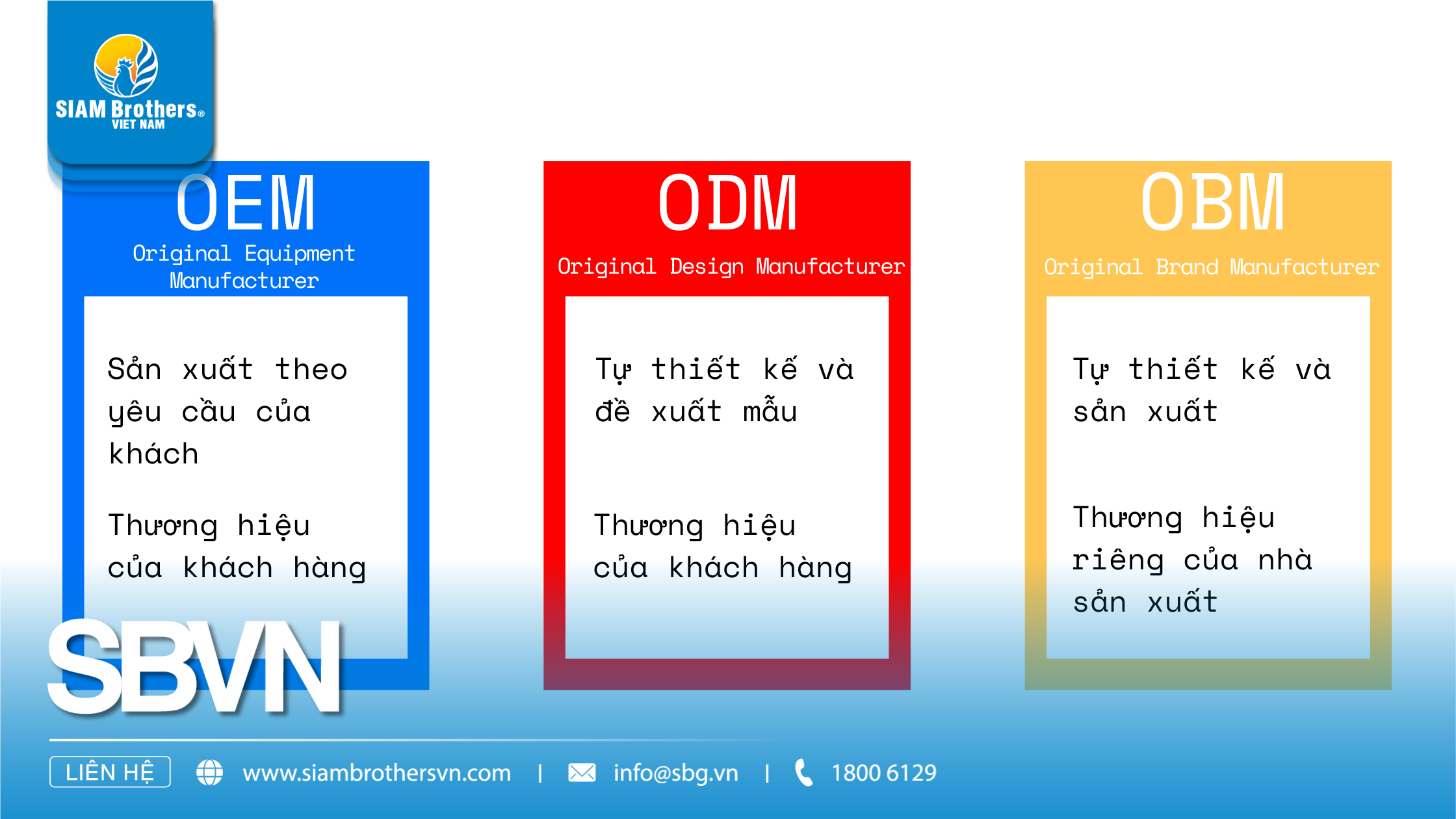
How to distinguish between OEM, ODM, and OBM products - Source: SIAM Brothers Vietnam
OEM Products vs Counterfeit/Fake Products: Basic Differences
These two concepts are often confused but are actually very different:
OEM Products: Legal, produced under official contracts, use standard raw materials, and follow clear quality control processes.
Counterfeit/Fake Products: Illegally copied, use poor-quality materials, do not meet safety standards, and violate intellectual property rights.
Quick identification signs:
OEM products have professional packaging, clear technical specifications, and transparent origins. Fake products usually have unusually low “bargain” prices, rough materials, and lack supporting documents.
Understanding this difference helps buyers avoid risks and choose reliable products.
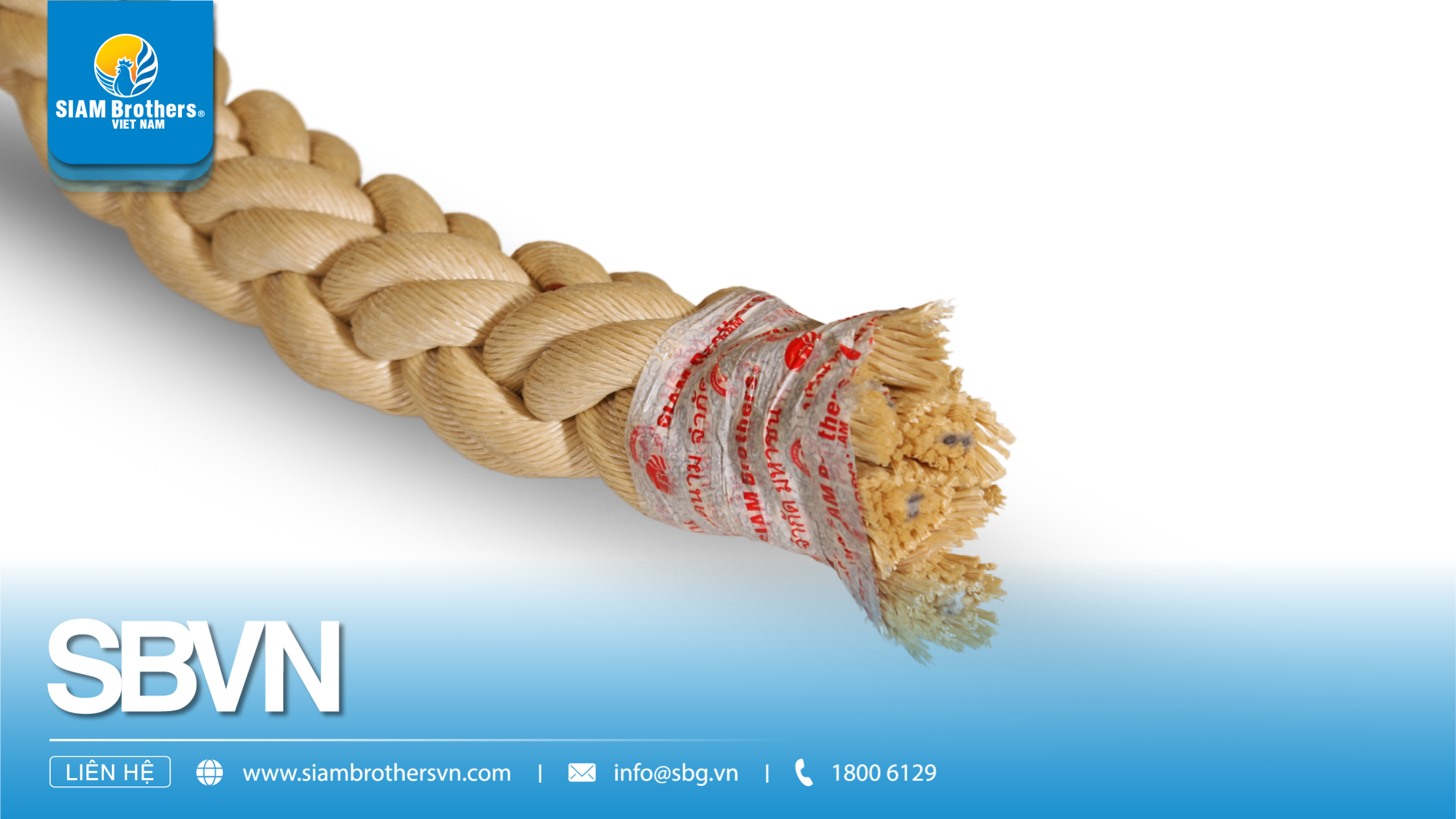
Source: SIAM Brothers Vietnam
To purchase good OEM products, you should follow these steps:
Choose suppliers with many years of experience and modern production systems.
Carefully check product information, quality certifications, and customization capabilities.
Ask clearly about warranty policy, delivery time, and contract terms.
Refer to real user reviews on forums and e-commerce platforms.
Applying these steps well will help you own high-quality products at reasonable costs.
Understanding what OEM is, along with its advantages and disadvantages and differences from ODM and OBM, will help you make smarter purchasing or production cooperation decisions. It is an effective cost-saving solution for both individuals and businesses, as long as you choose a reputable source and inspect thoroughly.
Siam Brothers Vietnam is a unit that provides OEM and ODM production services with high quality and long-standing experience in the rope, fishing net, and industrial solution industry.
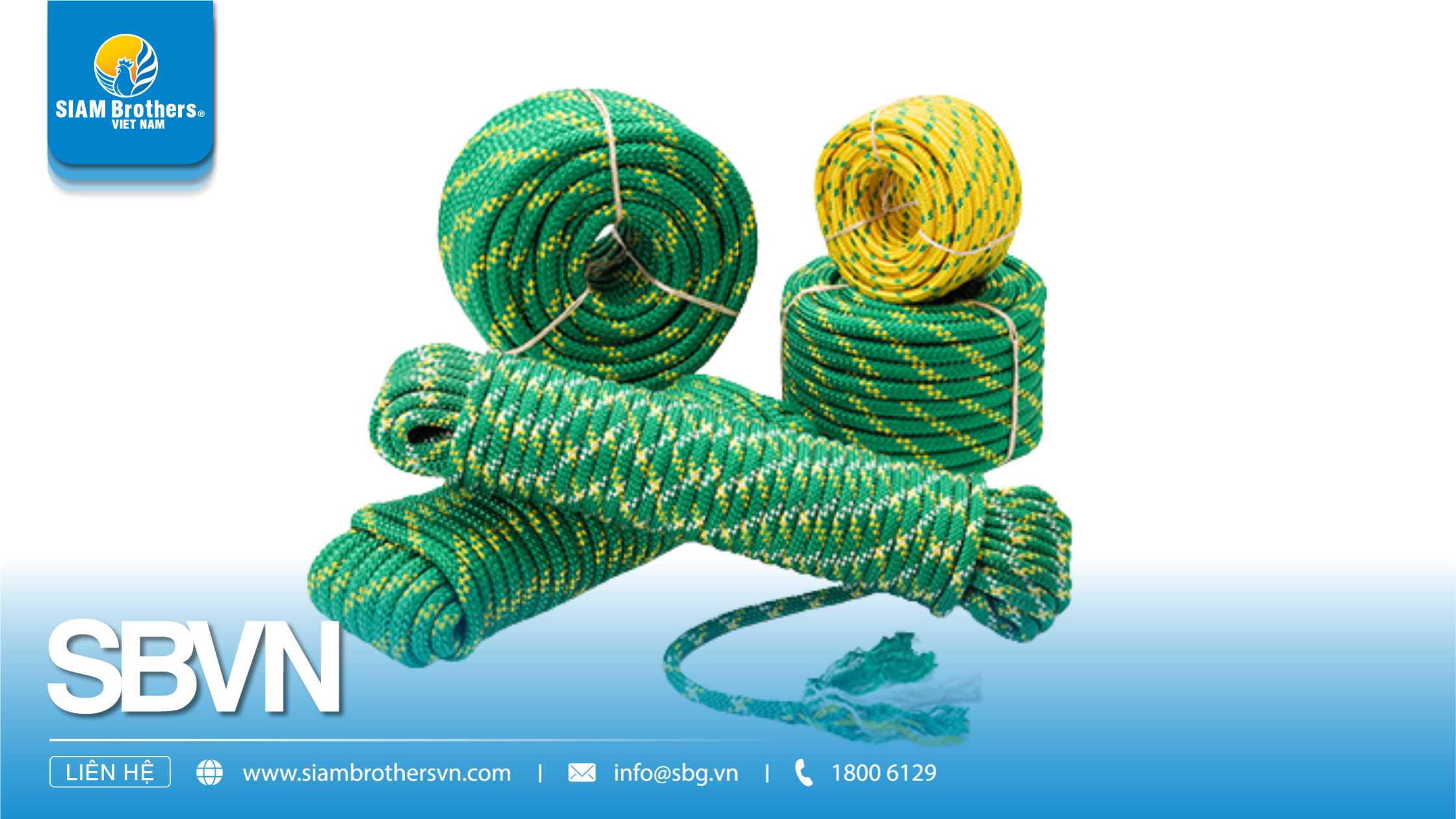
Source: SIAM Brothers Vietnam
Read more: What Is LLOYD’S Certification? Why Marine Ropes Need LLOYD’S Approval
Are OEM products the same as official branded products? No, they are not entirely the same in terms of branding, but the quality can be nearly equivalent if the manufacturer maintains good control.
What is the difference between OEM and ODM? OEM uses the design provided by the ordering party, while ODM uses ready designs proposed by the manufacturer.
How to distinguish OEM products from fakes? Based on production contracts, quality certifications, and transparent technical specifications. Fake products usually lack documents and have noticeably poor quality.
Do OEM products come with a warranty? Yes, but the duration and conditions are usually regulated by the ordering party or distributor.
Who should buy OEM products? Businesses that want to build their own brand and consumers who need stable quality products at better prices than major branded items.
Source: SIAM Brothers Vietnam
Contact us:
Address: 5th floor, VRG Building, 177 Hai Ba Trung Street, Vo Thi Sau Ward, Ho Chi Minh City, Vietnam
Tel: (+84) 28 38 912 889
Hotline: 1800 6129
Facebook: www.facebook.com/siambrothersvn
Email: info@sbg.vn
YouTube: youtube.com/@siambrothersvietnam1728
OA Zalo: zalo.me/1402339229697925373
App SBVN ID:
CHPlay: https://bit.ly/SBVNID-Android
Appstore: https://bit.ly/SBVNID-iOS







Specializing in Agricultural and Fisheries Products & Multipurpose Wire