
- 1800 6129

Many organizations managing canals, landscape lakes, and waterfront facilities need to buy floating trash barriers in Ho Chi Minh City because debris continues to drift in after rainfall. A barrier placed at a suitable location can contain and guide floating waste toward a collection point, making cleanup easier to plan. To learn how these systems work, what to include in a quotation request, and what SIAM Brothers Vietnam has done in previous projects, let’s explore the details together...

Floating waste in the city’s canals - Image: Internet
Ho Chi Minh City’s canals run through residential areas, commercial districts, and waterfront communities. Plastic bottles, bags, packaging, branches, and water hyacinth can travel with the current and accumulate near drains, outfalls, or hard-to-reach sections of a canal. After heavy rain or a change in water flow, waste may return even if the surface was recently cleared.
According to an article published on the Ho Chi Minh City People’s Council website on May 13, 2026, the Inland Waterway Management Center collects waste and water hyacinth along seven routes every one to two days. The article reports an average collection volume of approximately 56 tonnes per day. It also notes that floating trash barriers have been installed along some canals in Tân Vĩnh Lộc Commune to limit drifting waste.
These details illustrate the need to manage floating debris where it can be collected efficiently. They do not establish the size of the floating barrier market or the number of systems required across the city.
A suitably positioned barrier can contain waste before it moves into another canal section or reaches an area that needs protection. Depending on the direction of flow and the barrier layout, it can also guide debris toward a point that a cleanup crew can reach by boat or from the bank.
A floating trash barrier does not lift waste out of the water. If the collected material is left in place for too long, its weight and the force of the current may add stress to the netting, cables, and anchors. Organizations planning to buy floating trash barriers in Ho Chi Minh City should therefore account for the collection point, available crew, and cleanup schedule, especially after heavy rainfall.
Outfalls where floating waste regularly accumulates, canal sections near an accessible bank, landscape lakes receiving debris from incoming water, and areas upstream of water intakes may be worth assessing. However, a barrier stretched straight across the full width of a waterway is not suitable for every site.
Before choosing a location, identify the types of debris to be contained, the direction in which they travel, changes in water level, passing vessels, and how collected waste will be brought ashore. A site survey helps the buyer and supplier agree on the system’s purpose before deciding on buoy size, barrier length, or anchoring arrangements.

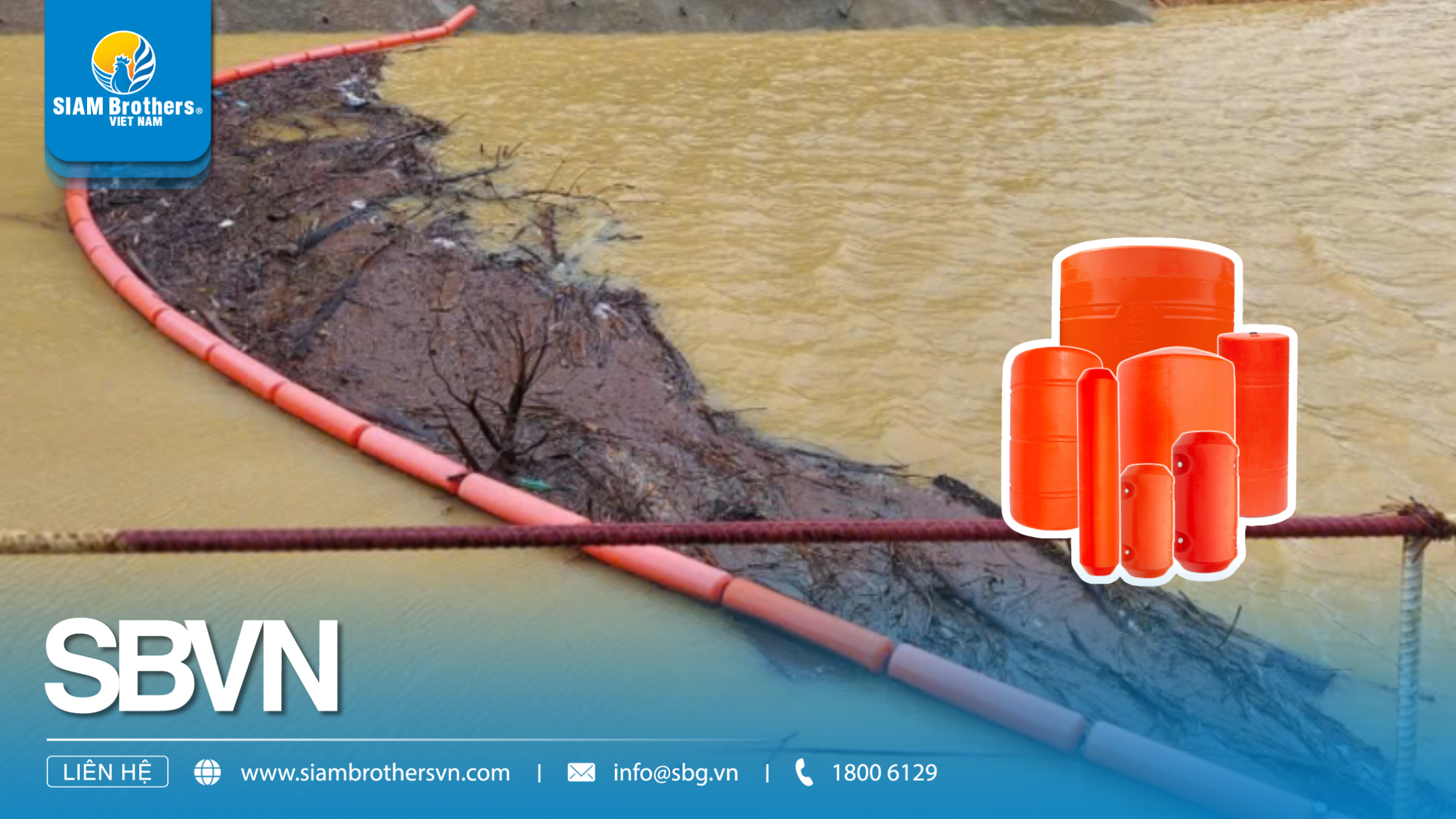
Floating trash barrier - Source: SIAM Brothers Vietnam
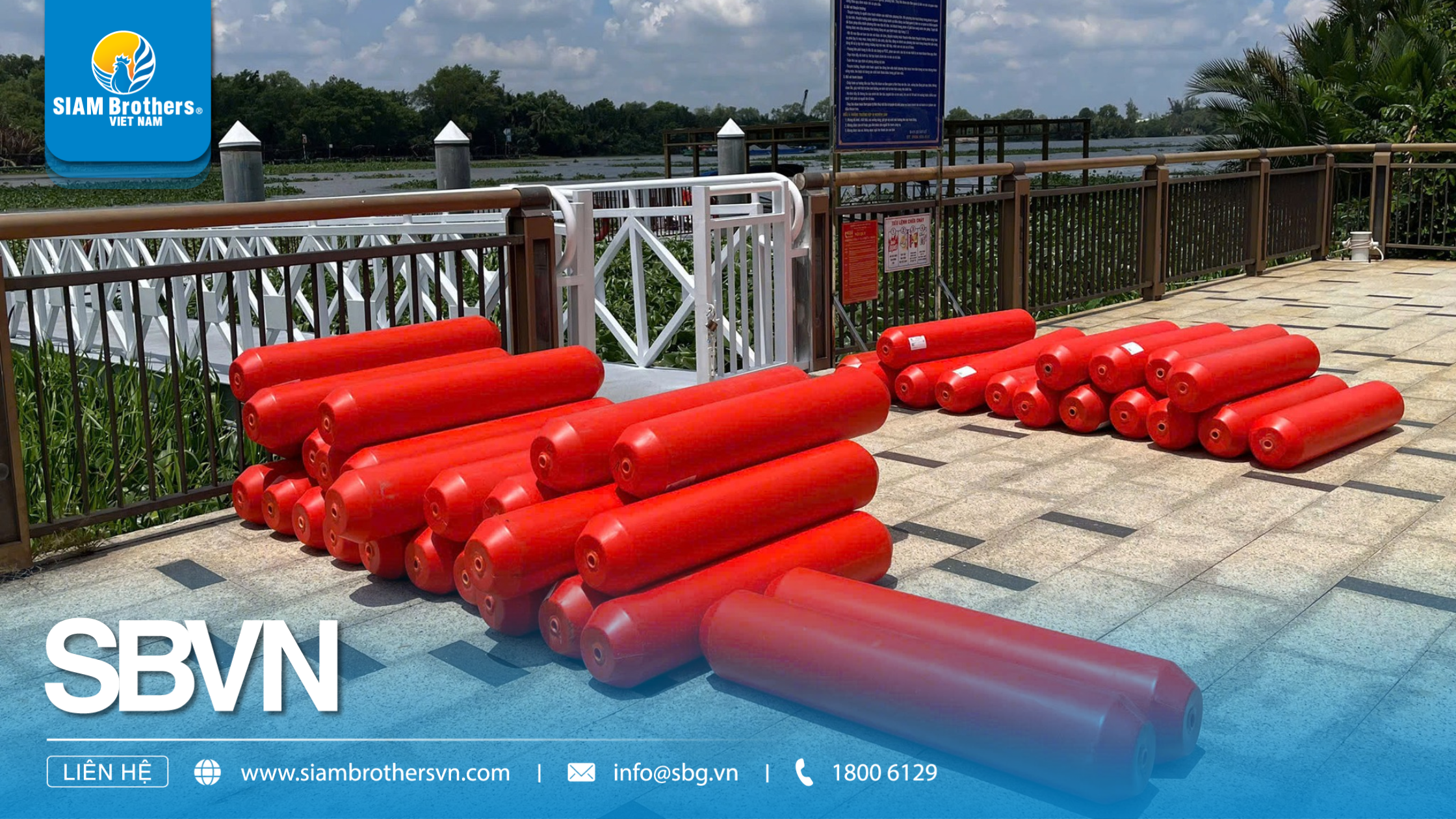
A typical system consists of connected LLDPE floating buoys, netting or a debris screen, load-bearing ropes or cables, connectors, and anchors. Depending on the site, the layout may also include a designated point where the cleanup crew can remove the collected waste.
Each component has a specific role. The buoys keep the line afloat, the netting or screen contains debris according to the chosen configuration, and the ropes and anchors hold the barrier in position. The size of an individual buoy alone does not indicate how the entire system will perform.
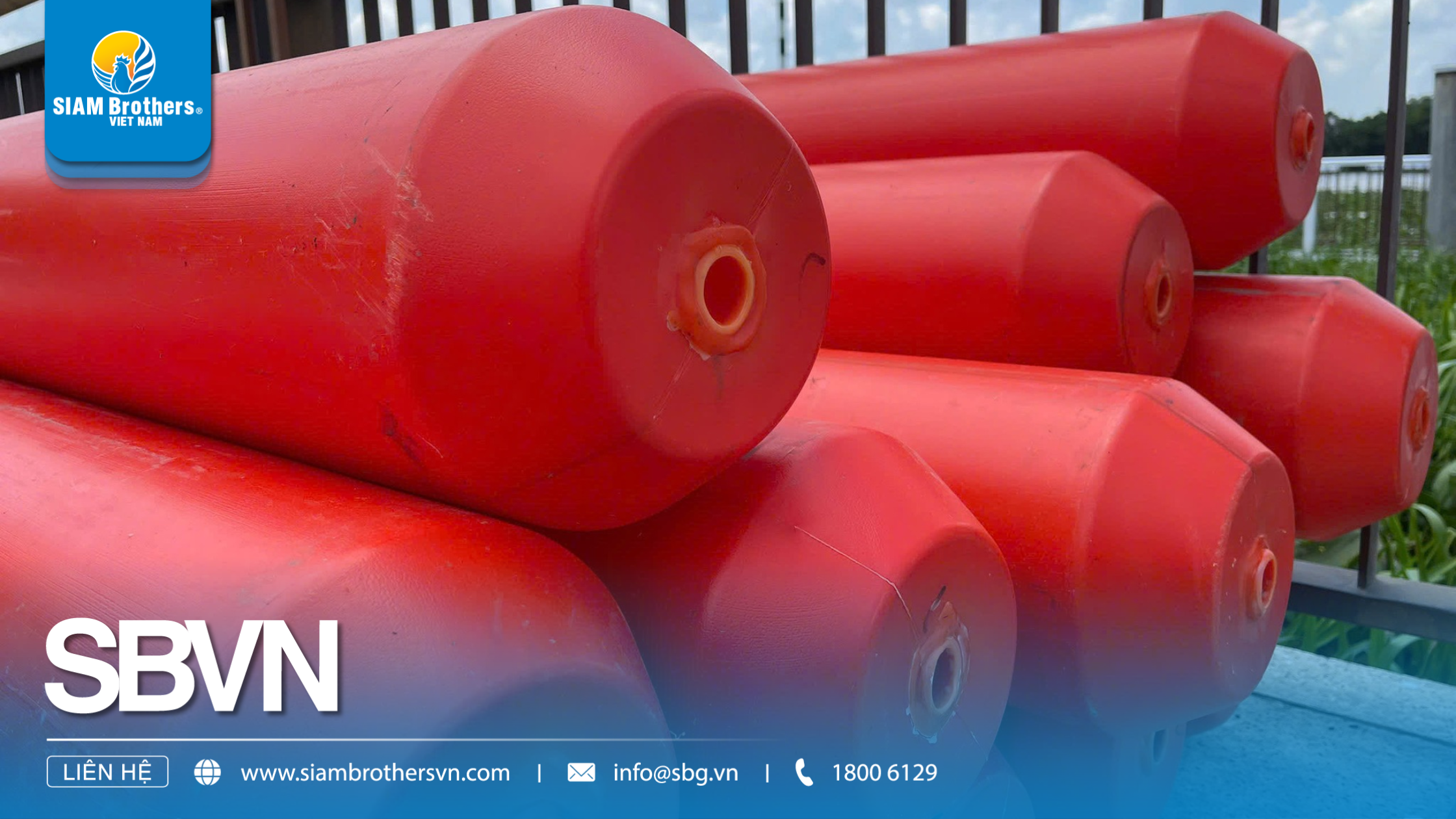
The floating trash buoys discussed in this article are made of LLDPE. When requesting a quotation, buyers should ask the supplier to specify the material, buoy dimensions, quantity, and configuration of the accompanying components.
When floating waste reaches the barrier, the system contains it or guides it along the line toward a planned collection area. Its ability to hold plastic bottles, bags, leaves, water hyacinth, or branches depends on both the buoy layout and the netting or screen configuration.
The design should account for waterway width, current direction and speed, changing water levels, seasonal debris volumes, anchor positions, and access for the cleanup crew. A straight line across a canal should not automatically be assumed to be the best arrangement. At some sites, the barrier needs to direct waste toward a bank or corner where collection is more practical.
For more on site assessment and installation, see SIAM Brothers Vietnam’s article on how floating trash barriers work on rivers.
In canals and near outfalls, a floating barrier can help contain debris where it can be removed regularly. In landscape lakes or waterfront developments, it may limit the amount of floating waste entering areas maintained for their appearance.
At reservoirs, pumping stations, or water intakes, a system designed for the operating conditions may help keep water hyacinth, branches, and other floating objects away from the facility. The configuration will vary by location because the debris, water flow, and protection goals differ.
All these applications rely on the barrier’s ability to contain, guide, and concentrate floating debris. It does not remove dissolved pollutants, replace control of pollution at its source, or guarantee that every type of waste will be held under all conditions.
In addition to the length of water that needs to be covered, the site manager should consider anchor locations, water-level changes, the volume of waste that may accumulate after rain, and the route used by collection boats. Where vessels pass through, the proposed layout should be reviewed against the site’s management and operating requirements.
Once installed, the connections, netting, cables, and anchors should be inspected periodically. A layout description and itemized materials list will help the buyer compare the proposed system with the quotation before placing an order.
Floating trash barrier - Source: SIAM Brothers Vietnam
SIAM Brothers Vietnam supplies LLDPE floating trash barriers and has published information about its experience with site surveys, proposed layouts, and installation support. Buyers can browse the SIAM Brothers Vietnam floating trash barrier collection to review available products, then submit site details for advice on a suitable configuration.
When choosing a supplier, ask how the barrier will contain debris, where it will be anchored, where waste will accumulate, and what maintenance will be needed. A completed reservoir or coastal project can demonstrate experience, but its configuration cannot simply be copied for an urban canal.
To receive a proposal based on the actual site, prepare:
The proposed installation location, with photos or video showing the water surface and both banks.
The waterway width, the length of the area to be protected, and any routes used by vessels.
The types of waste normally present, typical volumes, and conditions after heavy rain.
The direction of flow, changes in water level, and possible anchor locations.
How the cleanup crew can reach the waste by boat or from the bank, and where it could be brought ashore.
The requested scope: replacement buoys only, materials for a complete line, or a package that includes a survey and installation support.
If the project covers several locations, send information for each site separately. Different currents and collection arrangements may require different configurations, quantities, and budgets.
A listed price for a buoy model, where available, applies to the product shown at the time the page is viewed. It should not be treated as the price of a complete floating barrier line.
A full quotation may include buoys, netting or screens, cables, anchors, connectors, transport, and work at the site. The quantity of each item depends on the barrier length, expected debris load, and installation plan.
When requesting a floating trash barrier quotation in Ho Chi Minh City, ask for the material specifications, quantities, unit prices, transport costs, installation scope if applicable, warranty terms, and tasks assigned to the site operator. This makes it easier to compare the total cost of different proposals rather than only the price of an individual buoy.
Material and dimensions: Confirm that the floating trash buoys are made of LLDPE, and compare their dimensions and quantity with the quotation.
Complete system configuration: Check the netting or screen, cables, anchors, connectors, and how the components join together.
Collection point: Identify where debris will accumulate and how the cleanup crew will reach it.
Scope of supply: Clarify whether the quotation covers materials only or also includes a survey, transport, and installation support.
Handover and maintenance: Agree on who will inspect the system, remove waste, and respond if site conditions change after installation.
If actual site conditions differ from those used to prepare the proposal, the configuration and quotation should be updated before work begins.
Floating trash barrier - Source: SIAM Brothers Vietnam
At the Sơn La Hydropower Reservoir, SIAM Brothers Vietnam presents an LLDPE floating trash barrier designed to contain and collect floating debris across a large water surface where water levels and debris volumes may vary by season. Its project description emphasizes assessing the direction of debris movement, choosing the barrier line, and checking stability after installation.
For a project in Ho Chi Minh City, the relevant lesson is to identify where debris travels and where it can be removed before finalizing the layout. Reservoir dimensions and anchoring arrangements would still need to be reassessed for an urban canal.
View the project: Floating trash barrier at Sơn La Hydropower Reservoir.
For its Đắk Lắk project, SIAM states that its technical team surveyed the terrain, current, debris accumulation areas, water levels, and anchor positions. The team then proposed a barrier layout, supported installation, and provided operating and maintenance guidance at handover.
This project shows why purchasing buoys is only one part of the work. The technical arrangement and responsibilities after handover should also be agreed upon from the start.
View the project: Floating trash barrier at the Đắk Lắk hydropower facility.
At Mũi Kê Gà, SIAM describes a system intended to contain floating waste before it reaches the beach area and concentrate it for removal by the operating crew. Coastal conditions differ from those in a canal because of waves and changing water movement. The project is therefore an example of another application, not a standard configuration for every location.
View the project: Coastal floating trash barrier at Mũi Kê Gà.
The three projects above were published by SIAM Brothers Vietnam in Sơn La, Đắk Lắk, and Mũi Kê Gà. They are not presented as projects completed in Ho Chi Minh City. Buyers in the city can use them to review the supplier’s experience, then request a survey and proposal for their own canal, lake, or outfall.
Floating trash barrier - Source: SIAM Brothers Vietnam
Buying floating trash barriers in Ho Chi Minh City starts with understanding the debris, water flow, and collection method at each location. An LLDPE system can serve its intended purpose when the buoy line, debris screen, anchors, and collection point are planned together and supported by a cleanup schedule.
If you are preparing a project for a canal, landscape lake, or outfall, send the site details to SIAM Brothers Vietnam to discuss a suitable configuration and receive an itemized quotation.
Further reading: How to choose a floating trash barrier: Five factors to consider before investing.
Source: SIAM Brothers Vietnam
Thanh Hiền. (2026, May 13). Mạnh tay với hành vi xả rác xuống kênh, rạch [Stricter action against dumping waste into canals]. Ho Chi Minh City People’s Council.
FAQ
Q: Does a floating trash barrier lift waste out of the water?
A: No. The system contains or guides floating debris toward an accessible point. The operating crew must still remove and dispose of it regularly.
Q: Can the same configuration be used for every canal in Ho Chi Minh City?
A: It should not be assumed. Waterway width, current, water levels, debris, and collection access vary between sites. A survey is needed before the configuration is finalized.
Q: Is a listed buoy price the price of a complete barrier line?
A: No. The total cost also depends on the number of buoys, netting, cables, anchors, connectors, transport, and installation scope.
Q: What should I send when asking about floating trash barriers in Ho Chi Minh City?
A: Send the location, site photos, waterway width, common debris types, current direction, water-level changes, and the scope of work you need.
Contact us:
Address: 5th floor, VRG Building, 177 Hai Ba Trung Street, Vo Thi Sau Ward, Ho Chi Minh City, Vietnam
Tel: (+84) 28 38 912 889
Hotline: 1800 6129
Facebook: www.facebook.com/siambrothersvn
Email: info@sbg.vn
YouTube: youtube.com/@siambrothersvietnam1728
OA Zalo: zalo.me/1402339229697925373
App SBVN ID:
CHPlay: https://bit.ly/SBVNID-Android
Appstore: https://bit.ly/SBVNID-iOS








Specializing in Agricultural and Fisheries Products & Multipurpose Wire