
- 1800 6129

Fishing gear plays a crucial role in determining the efficiency, productivity, and sustainability of marine fisheries. Each type of fishing gear is designed to target specific species and suit different fishing environments. Besides nets and hooks, supporting components such as ropes, floats, sinkers, and anchors are equally important for ensuring safe and efficient operations. Join SIAM Brothers Vietnam as we explore five of the most commonly used fishing gears and their essential components.
Fishing gear refers to the equipment used to capture aquatic species in marine and inland fisheries. Selecting the appropriate gear not only improves catch efficiency but also reduces operational costs, minimizes equipment failure, and supports sustainable fishing practices.
A complete fishing gear system typically consists of:
Nets or fishing hooks
Ropes and rigging lines
Floats
Sinkers (weights)
Anchors
Connectors and other accessories
Each fishing method is designed with a specific structure to suit different target species, water depths, and fishing conditions.
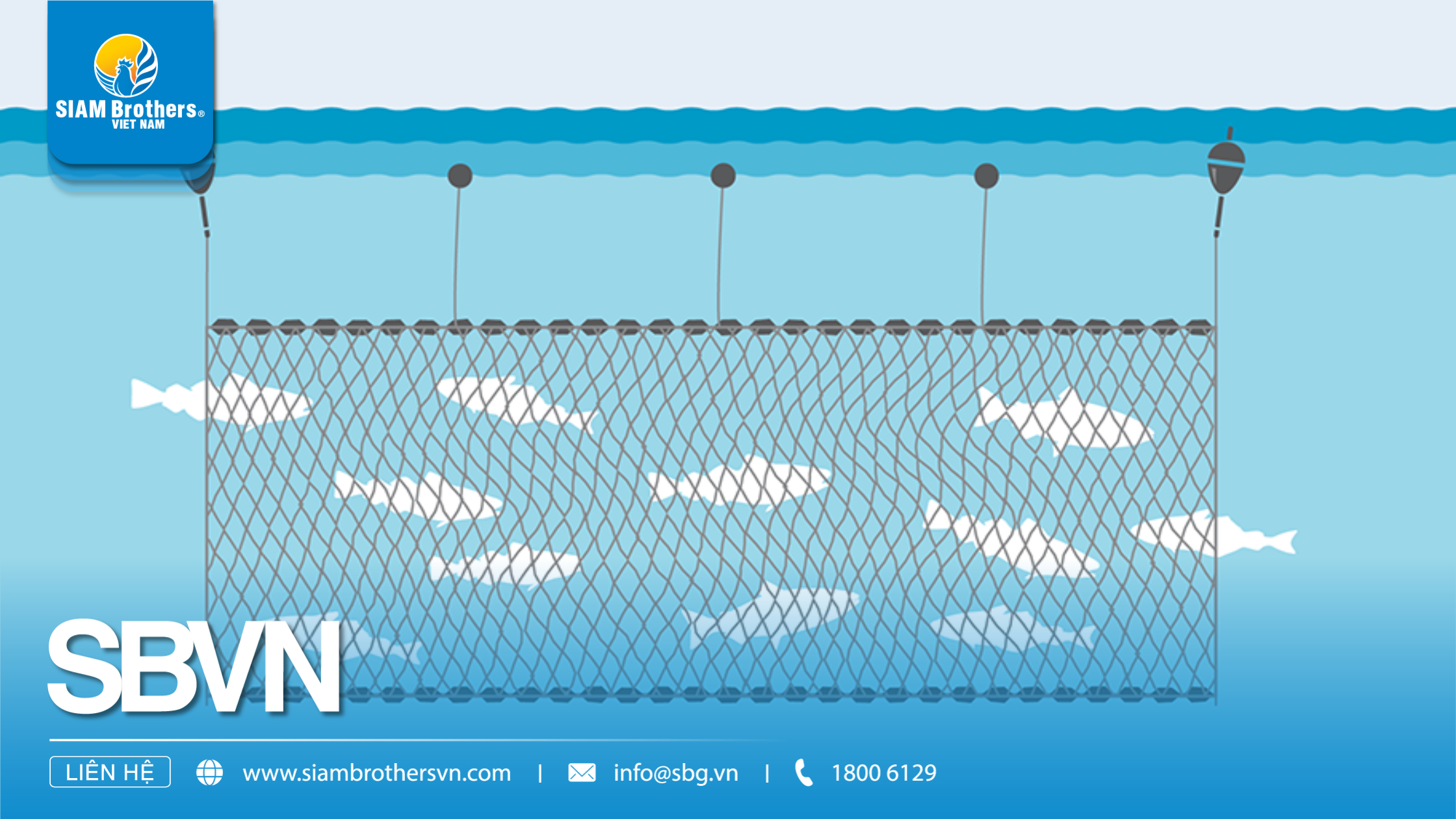
Gill Net - Image: msc.org
A gill net is one of the most widely used fishing gears in Vietnam and around the world. Fish become entangled when attempting to swim through the mesh, making this method effective for catching species such as mackerel, sardines, mullet, and herring.
A typical gill net system includes:
Netting panel
Float line (headline)
Lead line (footrope)
Floats
Sinkers
Anchor ropes or connecting ropes
Together, these components keep the net vertically positioned in the water column for efficient fish capture.
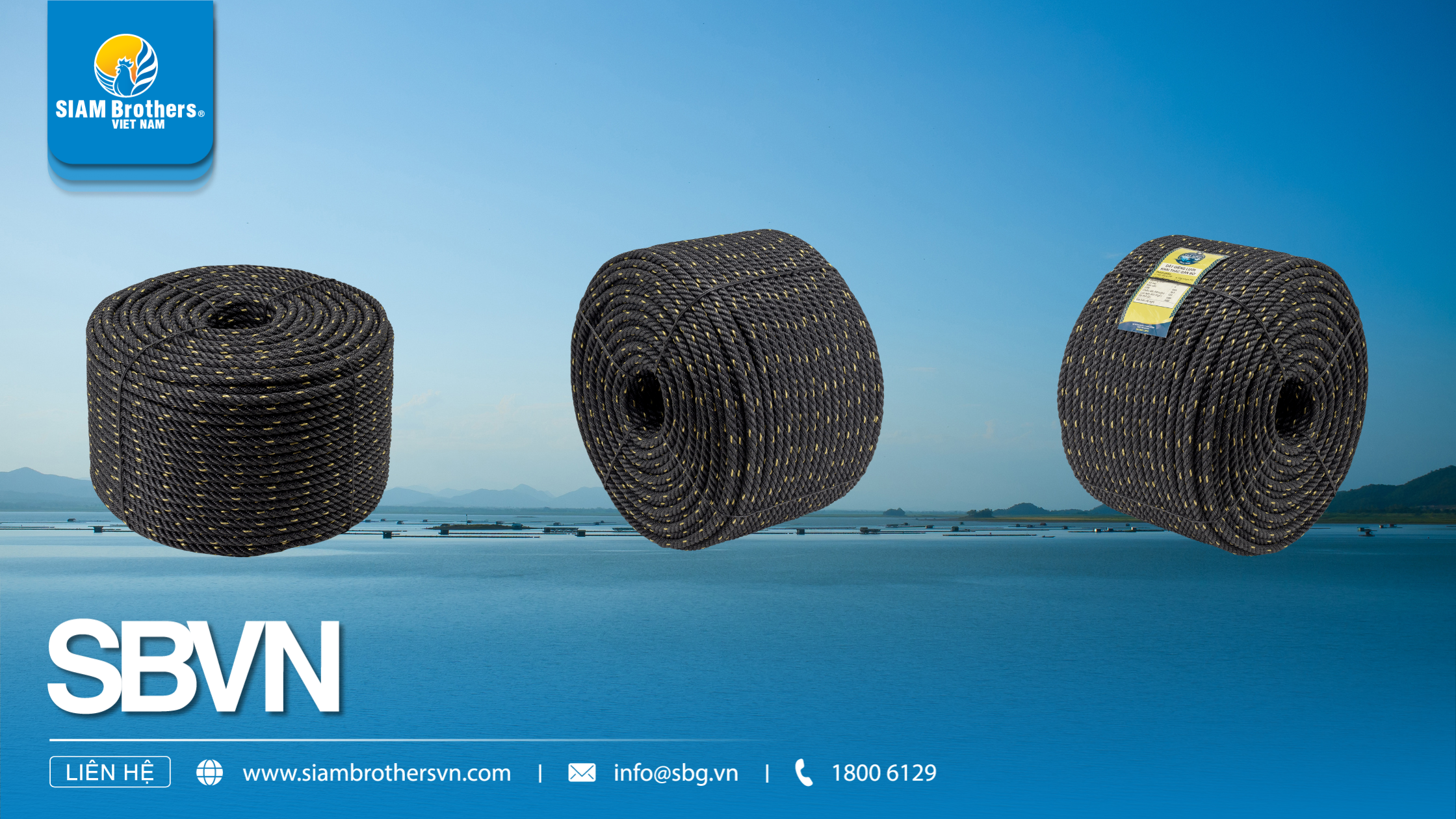
Onshore fishing net rope – Source: SIAM Brothers Vietnam
Cost-effective investment
Simple deployment and retrieval
Suitable for various fish species
Lower fuel consumption compared to some active fishing methods
Improper mesh sizes may result in the capture of juvenile fish, affecting fish stock sustainability.
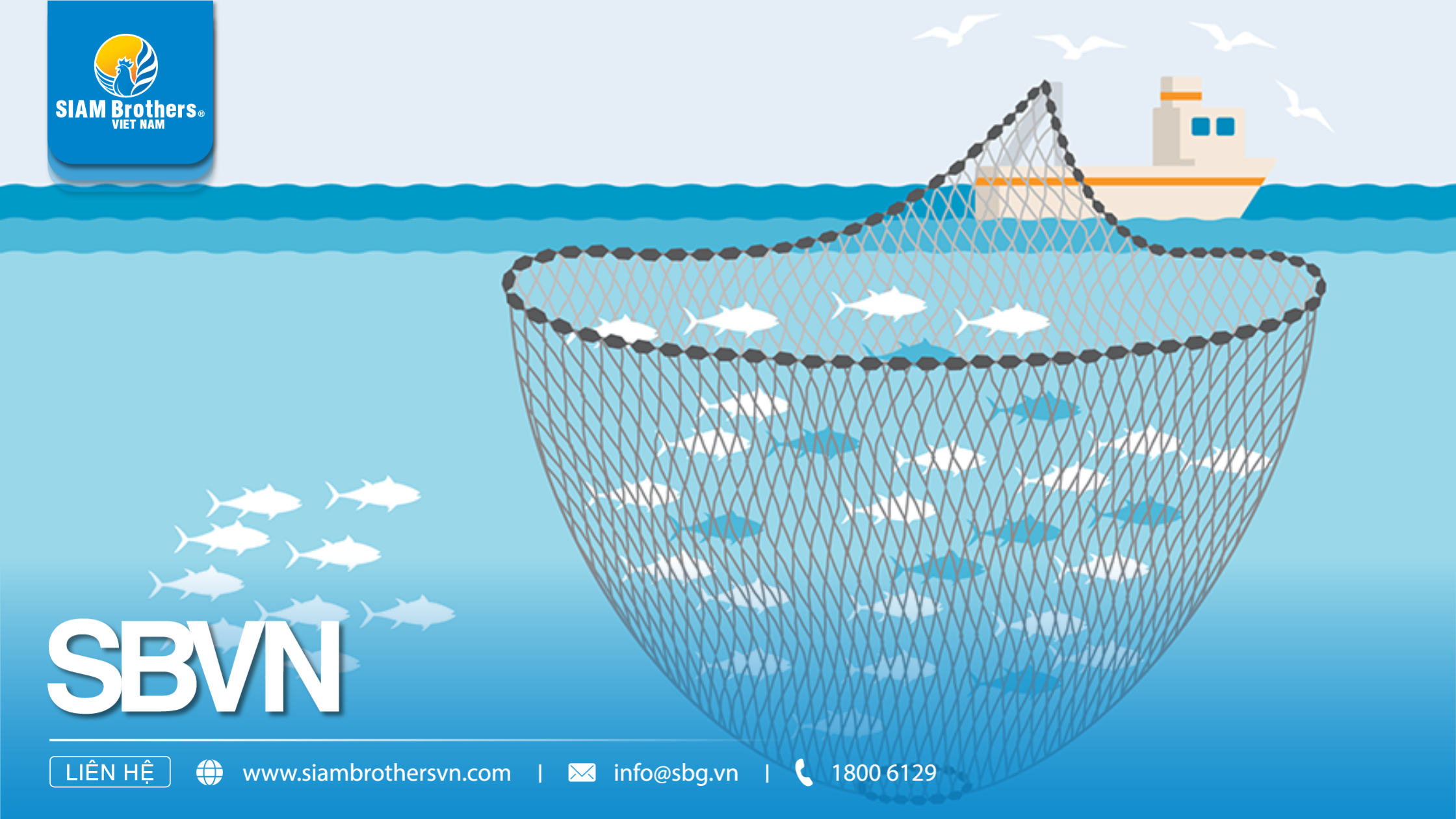
Purse Seine - Image: msc.org
A purse seine surrounds an entire school of fish before the bottom of the net is closed using a purse line, forming a large "bag" that traps the fish inside. It is commonly used for catching tuna, sardines, anchovies, and other schooling fish.
A purse seine system consists of:
Main net body
Purse line
Purse rings
Floats
Sinkers
Hauling ropes
The purse line and hauling ropes are subjected to significant tension during operation and therefore require excellent strength and abrasion resistance.
High harvesting efficiency
Fast operation
Suitable for commercial-scale fishing
Requires larger vessels, experienced crews, and higher initial investment.
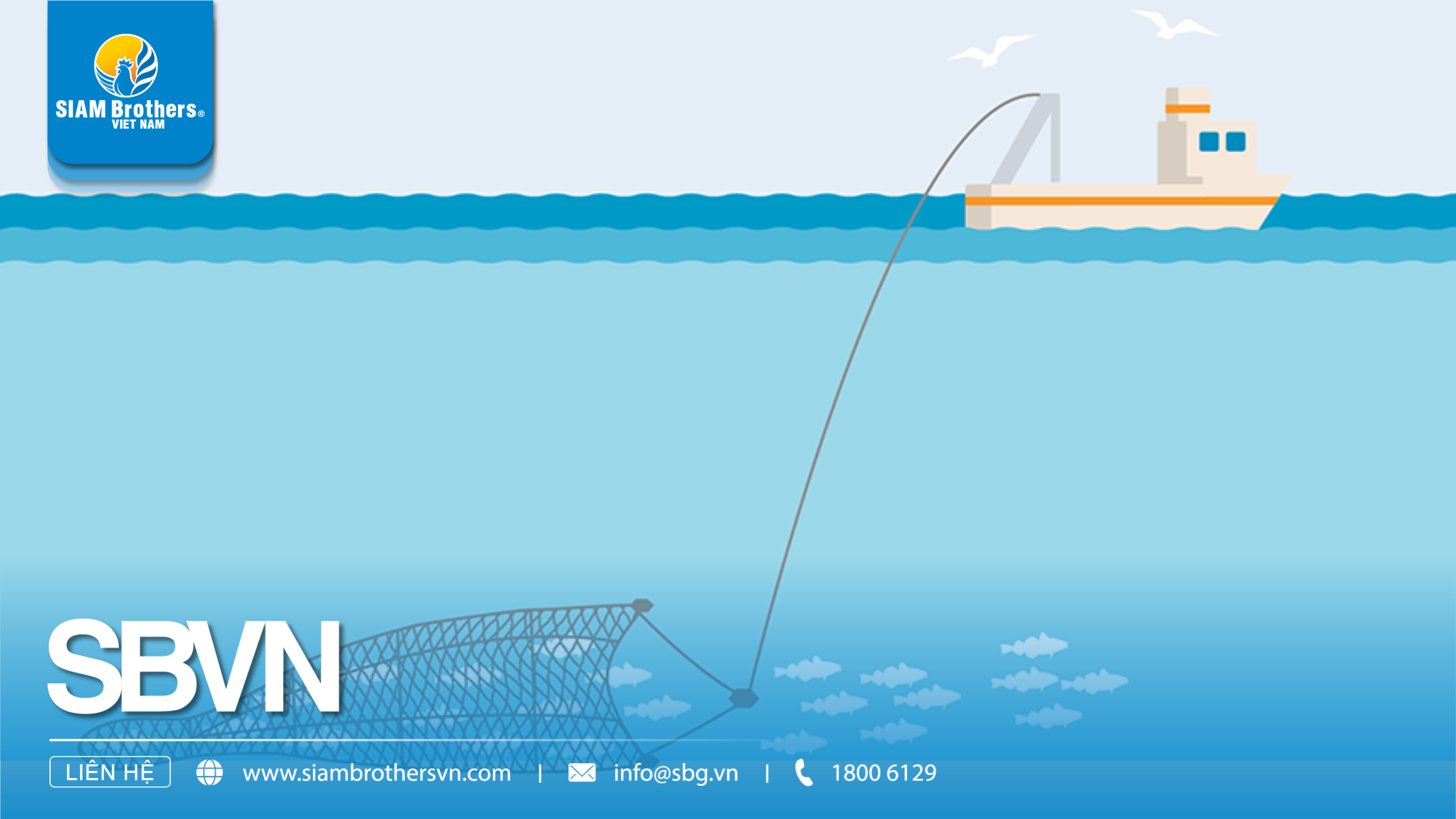
Purse Seine - Image: msc.org
A trawl net is towed through the water by one or two fishing vessels to catch fish, shrimp, squid, and other marine organisms living near or on the seabed.
A trawl system generally includes:
Net wings
Net mouth
Cod-end (catch bag)
Towing cables
Heavy-duty ropes
Floats and sinkers
Since the entire system experiences heavy loads during towing, all connecting components must be durable and regularly inspected.
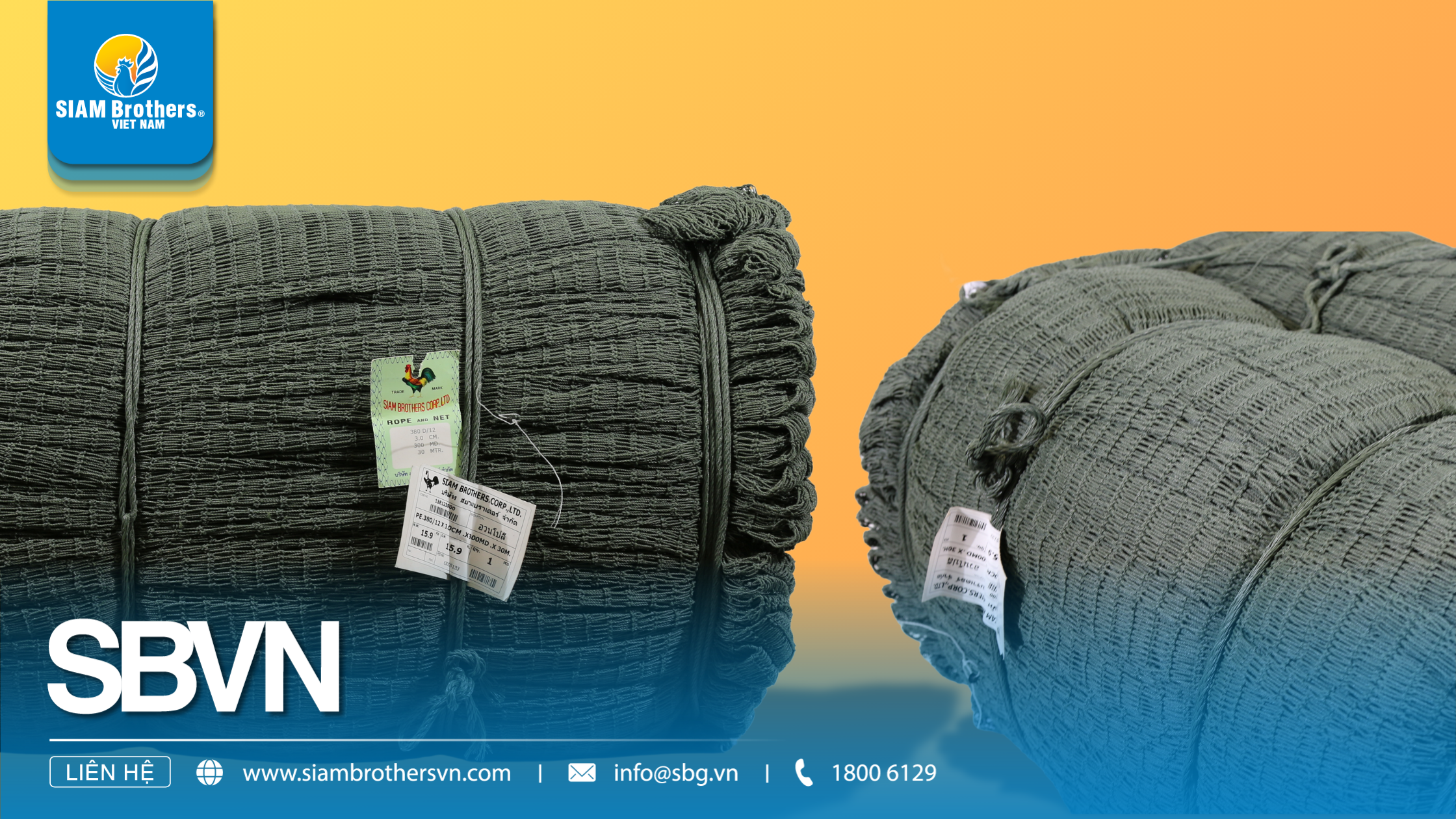
A trawl net – Source: SIAM Brothers Vietnam
High catch volume
Capable of targeting multiple species
Suitable for offshore fishing
If improperly managed, bottom trawling may impact seabed ecosystems. Many countries therefore regulate its use to promote sustainable fisheries.
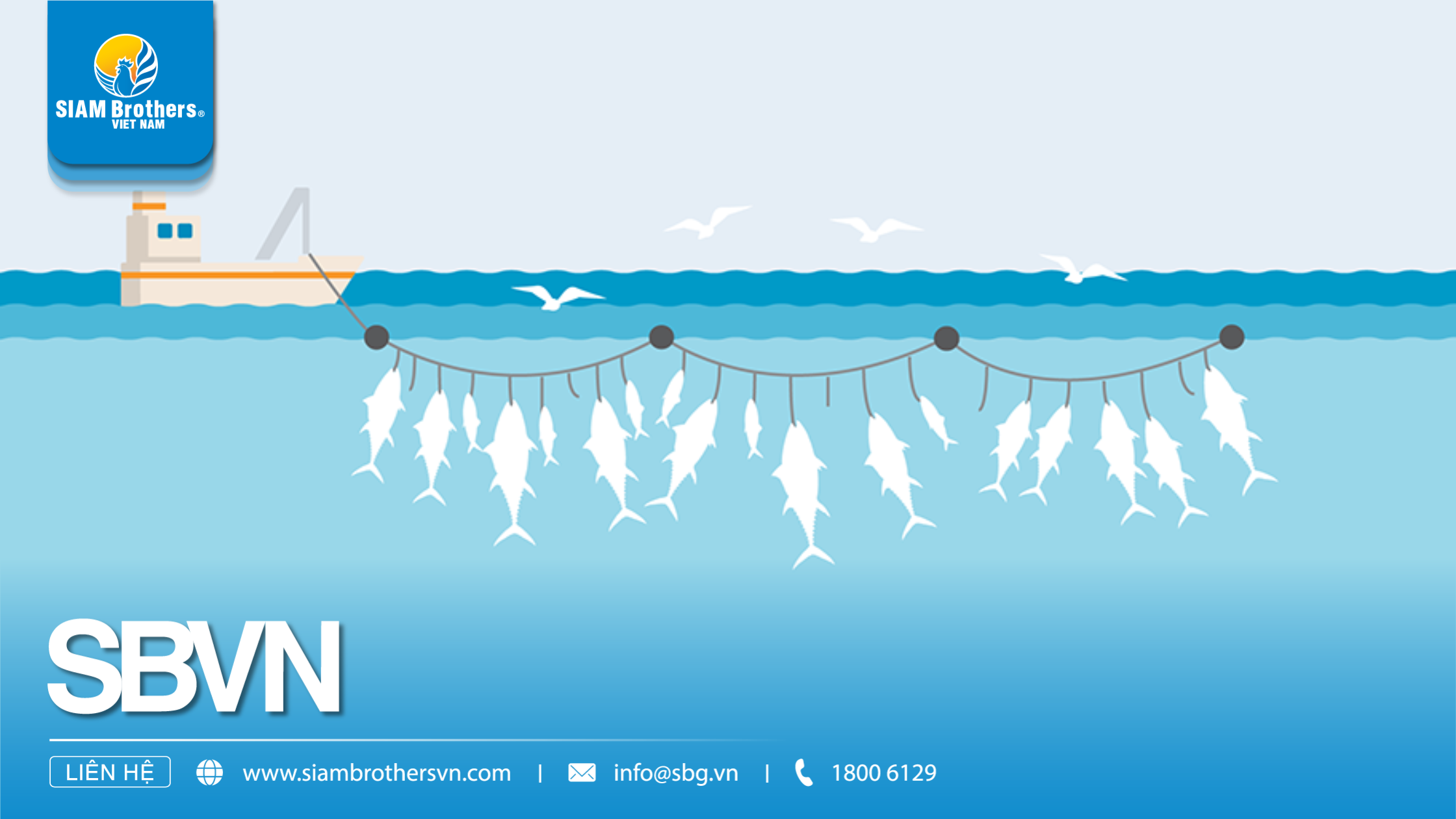
Longline - Image: msc.org
A longline consists of a main fishing line fitted with numerous branch lines, each carrying a baited hook. It is commonly used for catching high-value species such as tuna, swordfish, and groupers.
A longline system includes:
Main line
Branch lines
Hooks
Marker floats
Anchor lines
Positioning devices
Produces high-quality catches
Minimizes damage to fish
Well suited for offshore fisheries
Fishing success depends on bait selection, deployment techniques, weather conditions, and fishing experience.
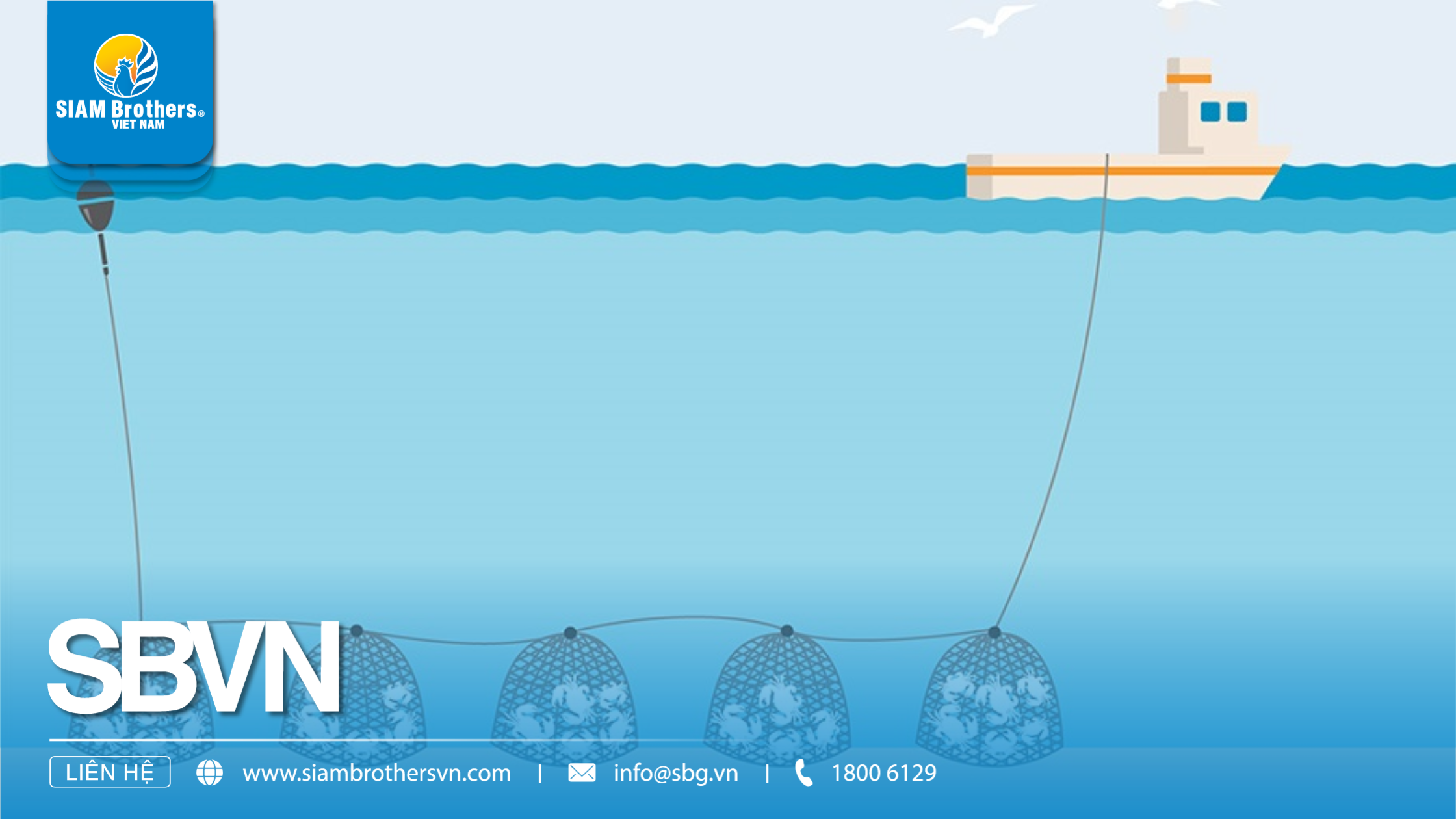
Trap - Image: msc.org
Fishing traps are commonly used to catch crabs, lobsters, octopuses, and various bottom-dwelling fish. Bait is placed inside the trap to attract marine species, which can enter easily but find it difficult to escape.
A typical trap includes:
Rigid frame
Net covering
Entrance funnel
Anchor rope
Marker float
Selective fishing method
Minimal environmental impact
Reusable over multiple fishing seasons
Catch volume is generally lower than active fishing methods and requires regular inspection.
Although fishing methods differ, most fishing gear systems share several key components that contribute to their overall performance.
|
Component |
Function |
Selection Considerations |
|
Fishing Net |
Captures and retains aquatic species. |
Select appropriate mesh size and material according to target species and fishing regulations. |
|
Rope |
Connects gear components and serves as headline, towing line, anchor line, or mooring line. |
High tensile strength, abrasion resistance, UV resistance, and reliable performance in seawater conditions. |
|
Float |
Keeps the gear afloat and marks its location on the water surface. |
Stable buoyancy, impact resistance, UV resistance, and compatibility with system load requirements. |
|
Sinker |
Maintains the desired fishing depth and stabilizes the gear underwater. |
Proper weight distribution, corrosion resistance, and suitability for the fishing method. |
|
Anchor |
Secures fishing gear against currents and waves, especially for stationary gear such as traps and fixed nets. |
Adequate holding power, durability, and compatibility with seabed conditions. |
|
Connectors & Accessories |
Join different components together and facilitate installation, maintenance, and operation. |
Corrosion resistance, ease of handling, durability, and compatibility with the overall fishing system. |
A well-designed fishing gear system depends not only on the main catching component but also on the quality and compatibility of every supporting element. Selecting reliable ropes, floats, sinkers, anchors, and accessories helps improve operational efficiency, reduce maintenance costs, and extend the service life of fishing equipment.
To maximize fishing efficiency and prolong equipment lifespan, fishers should:
Choose fishing gear suitable for target species and fishing grounds.
Inspect nets, ropes, floats, and connectors regularly.
Replace worn or damaged components promptly.
Wash fishing gear with fresh water after each trip to reduce salt-induced corrosion.
Store equipment in dry, shaded areas away from prolonged sunlight.
Follow local fisheries regulations regarding mesh size and fishing methods to support sustainable resource management.
Choosing the right fishing gear is essential for improving catch efficiency, reducing operational costs, and supporting sustainable fisheries. While nets and hooks are the primary catching tools, supporting components such as ropes, floats, sinkers, anchors, and connectors play an equally important role in ensuring the stability and performance of the entire fishing system. By understanding the characteristics and applications of different fishing gears, fishers and seafood businesses can make more informed decisions that enhance productivity while promoting responsible and sustainable fishing practices.
Read more: Where to Buy Floating Buoys from a Reliable Supplier? Latest Prices by Type
Source: SIAM Brothers Vietnam
References
Tép Bạc. Analysis of 10 Fishing Gears: Structures, Efficiency, and Sustainable Fishing Strategies.
Food and Agriculture Organization of the United Nations (FAO). Fishing Gear Types and Sustainable Fisheries.
Directorate of Fisheries Vietnam. Technical Guidelines for Marine Fishing Operations.
Gill nets, purse seines, trawl nets, longlines, and traps are among the most widely used fishing gears worldwide.
Ropes connect different components, transmit towing forces, secure anchors, and ensure the overall stability of the fishing system during operation.
Routine inspections help identify wear, corrosion, or damage before failures occur, improving safety and reducing repair costs.
Longlines and purse seines are the two primary fishing methods used for harvesting tuna, depending on fishing conditions and operational scale.
Proper cleaning, regular maintenance, timely replacement of damaged components, and using high-quality materials all contribute to longer equipment life.
Contact us:
Address: 5th floor, VRG Building, 177 Hai Ba Trung Street, Vo Thi Sau Ward, Ho Chi Minh City, Vietnam
Tel: (+84) 28 38 912 889
Hotline: 1800 6129
Facebook: www.facebook.com/siambrothersvn
Email: info@sbg.vn
YouTube: youtube.com/@siambrothersvietnam1728
OA Zalo: zalo.me/1402339229697925373
App SBVN ID:
CHPlay: https://bit.ly/SBVNID-Android
Appstore: https://bit.ly/SBVNID-iOS








Specializing in Agricultural and Fisheries Products & Multipurpose Wire