
- 1800 6129

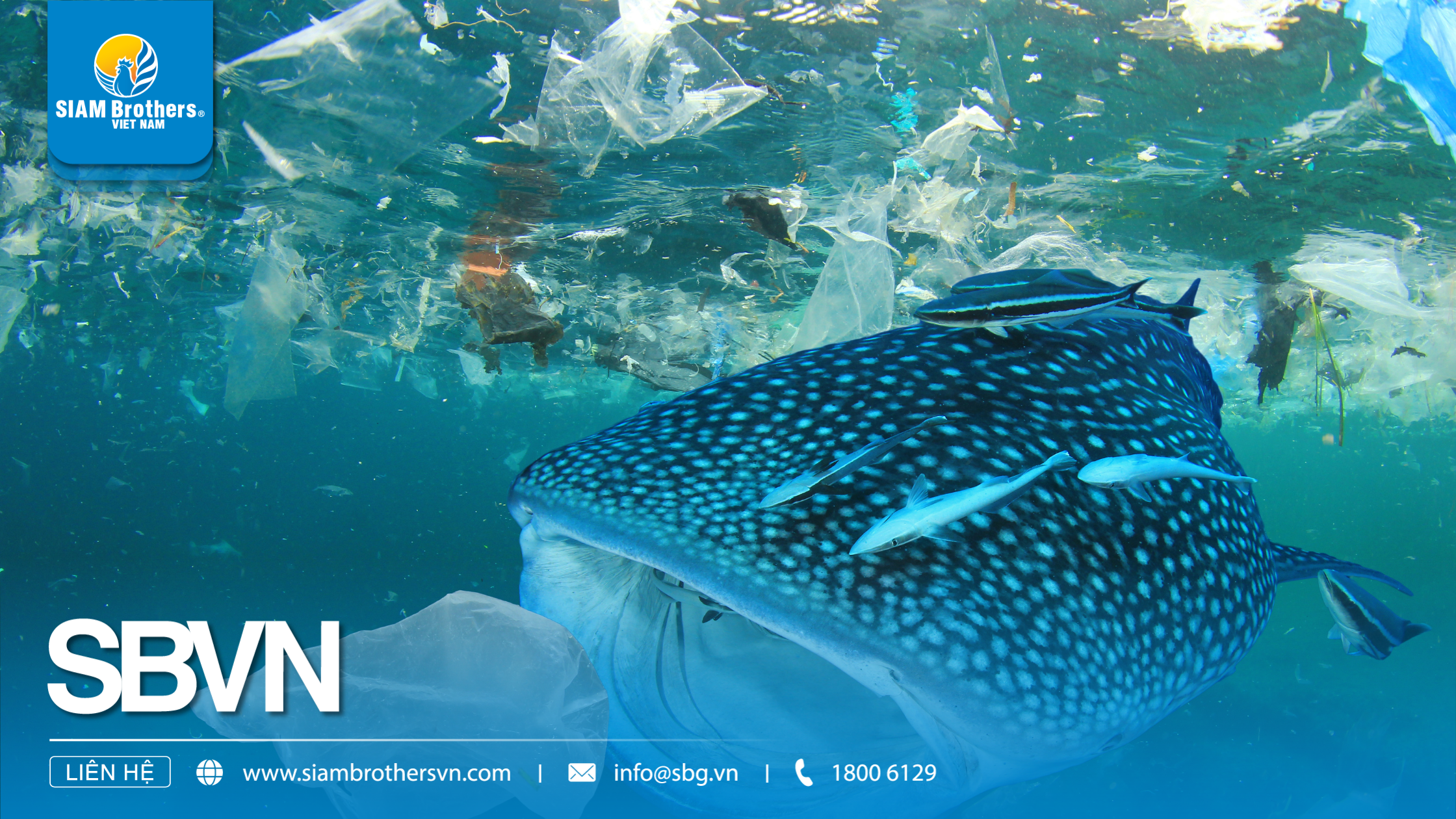
Marine plastic waste has become one of the world’s most pressing environmental challenges. International reports show that millions of tonnes of plastic continue to leak into rivers, lakes and seas every year. Vietnam also faces growing pressure from single-use plastics and gaps in waste collection. Addressing the problem requires coordinated action to reduce waste generation, improve collection and intercept floating debris before it reaches the ocean. Let’s explore the latest figures and potential solutions with SIAM Brothers Vietnam.
Source: Internet
According to the United Nations Environment Programme (UNEP), approximately 19–23 million tonnes of plastic waste leak into aquatic ecosystems every year, polluting lakes, rivers and seas.
Without meaningful intervention, plastic emissions into aquatic environments could nearly triple by 2040. UNEP also estimates that approximately 75–199 million tonnes of plastic are already present in the ocean.
It is important to interpret these figures accurately. The estimate of 19–23 million tonnes does not refer exclusively to plastic entering the ocean. It covers plastic leakage across aquatic ecosystems, including rivers and lakes, which often act as pathways carrying waste from inland areas towards the sea. UNEP
The Organisation for Economic Co-operation and Development’s Global Plastics Outlook reports that global annual plastic production increased from 234 million tonnes in 2000 to 460 million tonnes in 2019.
Over the same period, plastic waste more than doubled, rising from 156 million to 353 million tonnes. After accounting for losses during recycling, only about 9% of plastic waste was ultimately recycled. Approximately 19% was incinerated, while almost 50% was sent to sanitary landfills.
For 2019 alone, the OECD estimated that:
Approximately 22 million tonnes of plastic leaked into the environment.
Around 6.1 million tonnes entered rivers, lakes and the ocean.
Approximately 109 million tonnes had accumulated in rivers.
Around 30 million tonnes had accumulated in the ocean.
Plastic stored in rivers may continue flowing towards the sea for decades. Once larger plastic items break down into smaller fragments and microplastics, recovery becomes significantly more difficult and expensive.
According to the World Bank, an estimated 3.1 million tonnes of plastic waste are discharged on land in Vietnam every year. At least 10% of this mismanaged waste leaks into waterways.
Field surveys conducted at river and coastal locations in Vietnam found that:
Plastic accounted for approximately 94% of collected waste by item count.
Plastic represented around 71% of the waste by weight.
The ten most common plastic items accounted for more than 80% of plastic waste leaking into waterways.
More than 60% of the plastic items recorded were single-use products.
Frequently identified items included non-degradable plastic bags, expanded polystyrene food containers, straws, food packaging and other disposable products associated with takeaway food, catering and tourism.
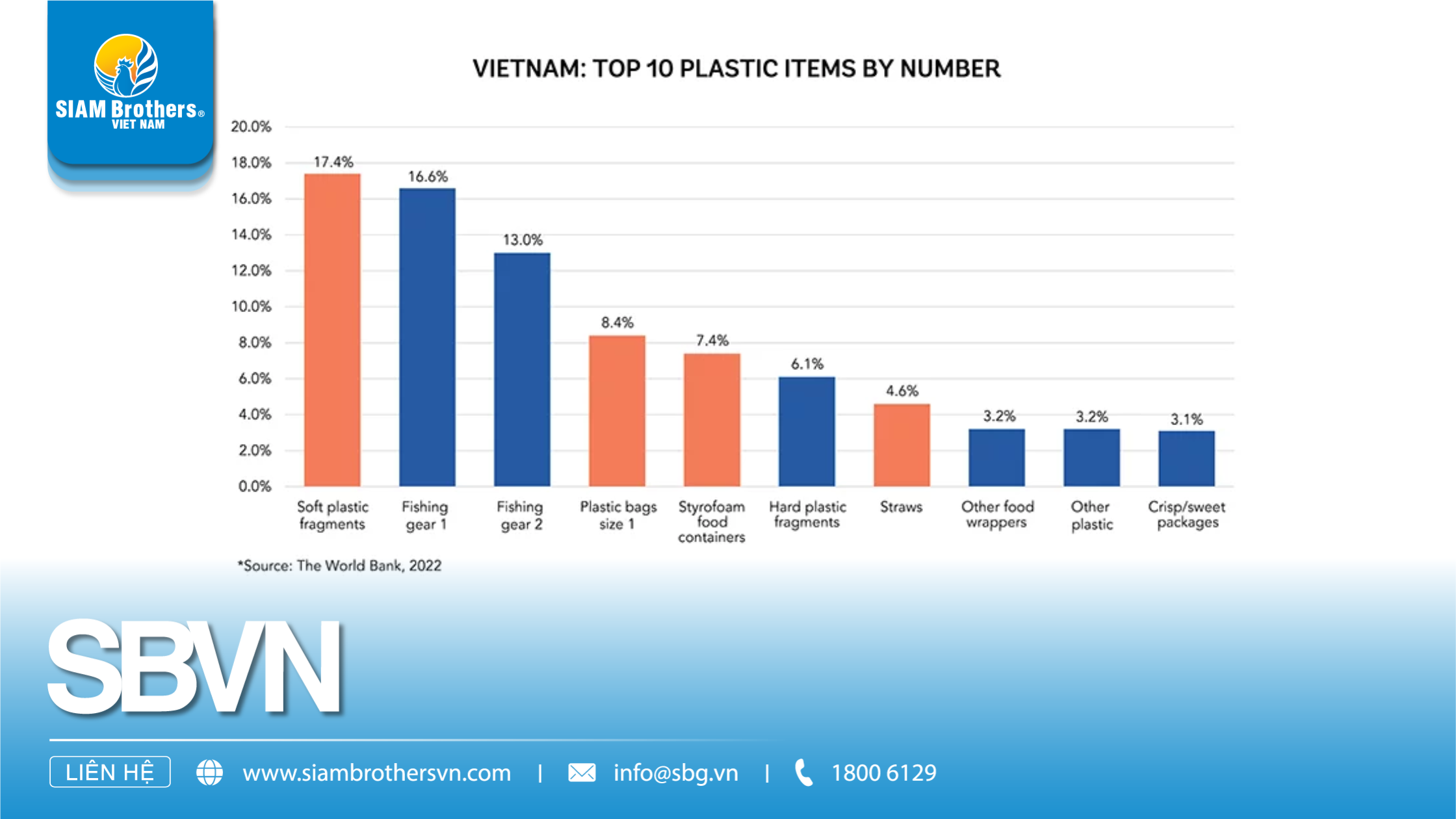
Source: The World Bank, 2022
Plastic bags, bottles, takeaway containers and disposable packaging usually have extremely short useful lives. When these products are not properly sorted and collected, they can be carried into drains, canals and rivers by wind or rainwater.
Waste from residential areas, markets, production facilities and tourism activities can accumulate in drainage systems, canals, rivers and estuaries.
During storms and periods of heavy rainfall, stronger water flows can carry large volumes of floating debris downstream. Waste that is not intercepted may eventually reach coastal waters.
Once plastic spreads into the ocean, collection becomes more expensive and technically challenging. Some items sink, while others travel across large areas or break down into microplastics.
For this reason, reducing plastic at source and intercepting floating debris in inland waterways can be more practical than attempting to recover it after it has entered the ocean.
Marine animals may ingest plastic fragments or become entangled in bags, discarded ropes and abandoned fishing gear. Plastic pollution can damage habitats, reduce biodiversity and disrupt natural ecological processes.
Floating waste also affects coastal landscapes, tourism, aquaculture and fishing activities. Around water infrastructure, accumulated debris may block water intakes, drainage outlets and pumping stations, increasing cleaning and maintenance costs.
As plastic breaks down into microplastics, removing it from the environment becomes significantly more complicated. Preventing larger items from reaching the sea is therefore an important part of any broader pollution-control strategy.
Vietnam issued its National Action Plan for Management of Marine Plastic Litter under Decision No. 1746/QĐ-TTg on December 4, 2019.
According to the targets summarized by the World Bank, Vietnam aimed to reduce marine plastic litter by 50% by 2025 and 75% by 2030.
Priority actions include reducing single-use plastics, improving waste collection and recycling capacity, controlling land-based pollution sources and strengthening cooperation among government agencies, businesses and communities.
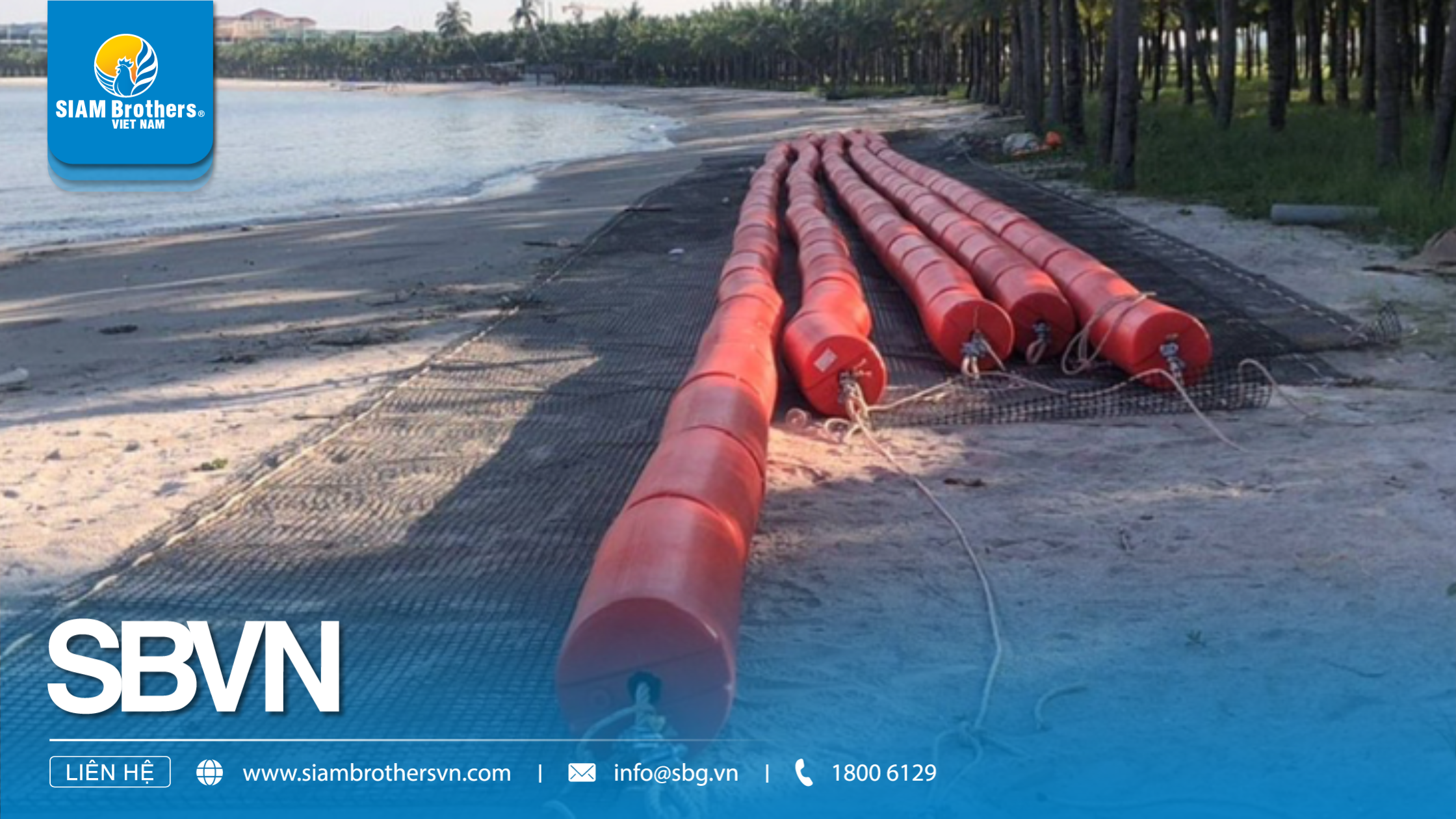
Trash Booms - Source: SIAM Brothers Vietnam
Reducing single-use plastics and improving waste treatment remain fundamental. However, floating debris also needs to be controlled at strategic locations such as canals, drainage outlets, rivers, reservoirs and estuaries.
A trash boom is a mechanical barrier designed to intercept floating items such as plastic bottles, bags, branches and other surface debris. By directing waste towards a designated collection point, the system can support periodic removal and prevent debris from spreading further downstream.
Trash booms do not replace waste reduction, sorting, recycling or treatment. Instead, they provide an additional control layer between inland waste sources and the marine environment.
SIAM Brothers Vietnam provides trash-boom solutions that can be configured according to waterway width, flow conditions and expected waste loads. A typical system may include floating boom sections, a net or skirt, anchoring ropes and securing components.
Before installation, the site should be surveyed to determine an appropriate design and anchoring method. Operators must also establish a regular collection schedule to prevent excessive waste accumulation and overloading.
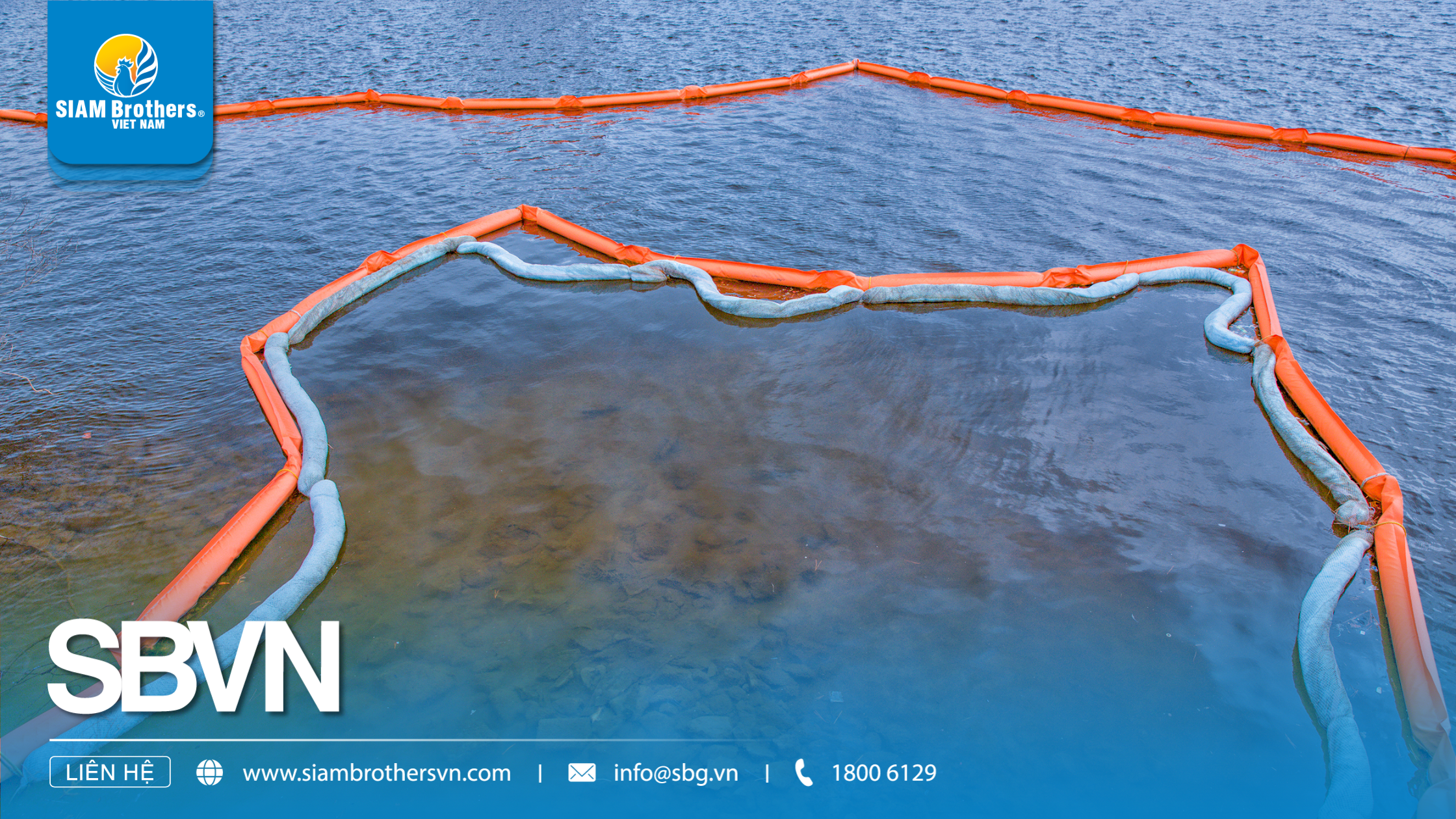
Trash Booms - Source: SIAM Brothers Vietnam
Data from UNEP, the OECD and the World Bank show that marine plastic waste is closely connected to consumption patterns and waste-management practices on land.
Effective action must combine waste reduction, source separation, improved collection and controls along rivers and drainage systems. The earlier floating debris is captured, the lower the risk of it spreading across downstream and coastal environments.
Within this broader strategy, trash booms can help concentrate floating waste before it reaches the sea. Their long-term effectiveness depends on appropriate site assessment, system design, anchoring and routine waste removal.
Read more: Specialized Trash Boom vs. DIY Trash Barrier System: Which Is the More Sustainable Choice?
Source: SIAM Brothers Vietnam
References:
FAQ – Frequently Asked Questions About Marine Plastic Waste
UNEP estimates that approximately 19–23 million tonnes of plastic waste leak into aquatic ecosystems—including lakes, rivers and seas—each year. This figure should not be interpreted as plastic entering the ocean exclusively.
Major sources include single-use products, household and commercial waste, tourism activities and improperly collected materials. Plastic may travel through drains, canals and rivers before reaching coastal waters.
No. Trash booms mainly intercept floating debris and support concentrated collection. They must be combined with reduced plastic consumption, source separation, recycling, effective waste treatment and routine maintenance.
Contact us:
Address: 5th floor, VRG Building, 177 Hai Ba Trung Street, Vo Thi Sau Ward, Ho Chi Minh City, Vietnam
Tel: (+84) 28 38 912 889
Hotline: 1800 6129
Facebook: www.facebook.com/siambrothersvn
Email: info@sbg.vn
YouTube: youtube.com/@siambrothersvietnam1728
OA Zalo: zalo.me/1402339229697925373
App SBVN ID:
CHPlay: https://bit.ly/SBVNID-Android
Appstore: https://bit.ly/SBVNID-iOS








Specializing in Agricultural and Fisheries Products & Multipurpose Wire