
- 1800 6129

The modern rope manufacturing process is no longer just about twisting fibers together; it is now a combination of advanced material technology, automation, and strict quality control systems. Few people realize that producing a durable rope used in fisheries, marine industries, or heavy-duty applications requires a series of complex technical stages, from fiber extrusion and stranding to final finishing. As demand for higher strength, UV resistance, and longer product lifespan continues to grow, rope manufacturers are constantly improving production technologies to enhance product quality. This is also why modern PP, PE, and polyester ropes are increasingly used in aquaculture, construction, shipping, and high-tech agriculture. So, how does the rope manufacturing process work, and what factors determine the quality of the final product? Let’s explore together with SIAM Brothers Vietnam in the article below.
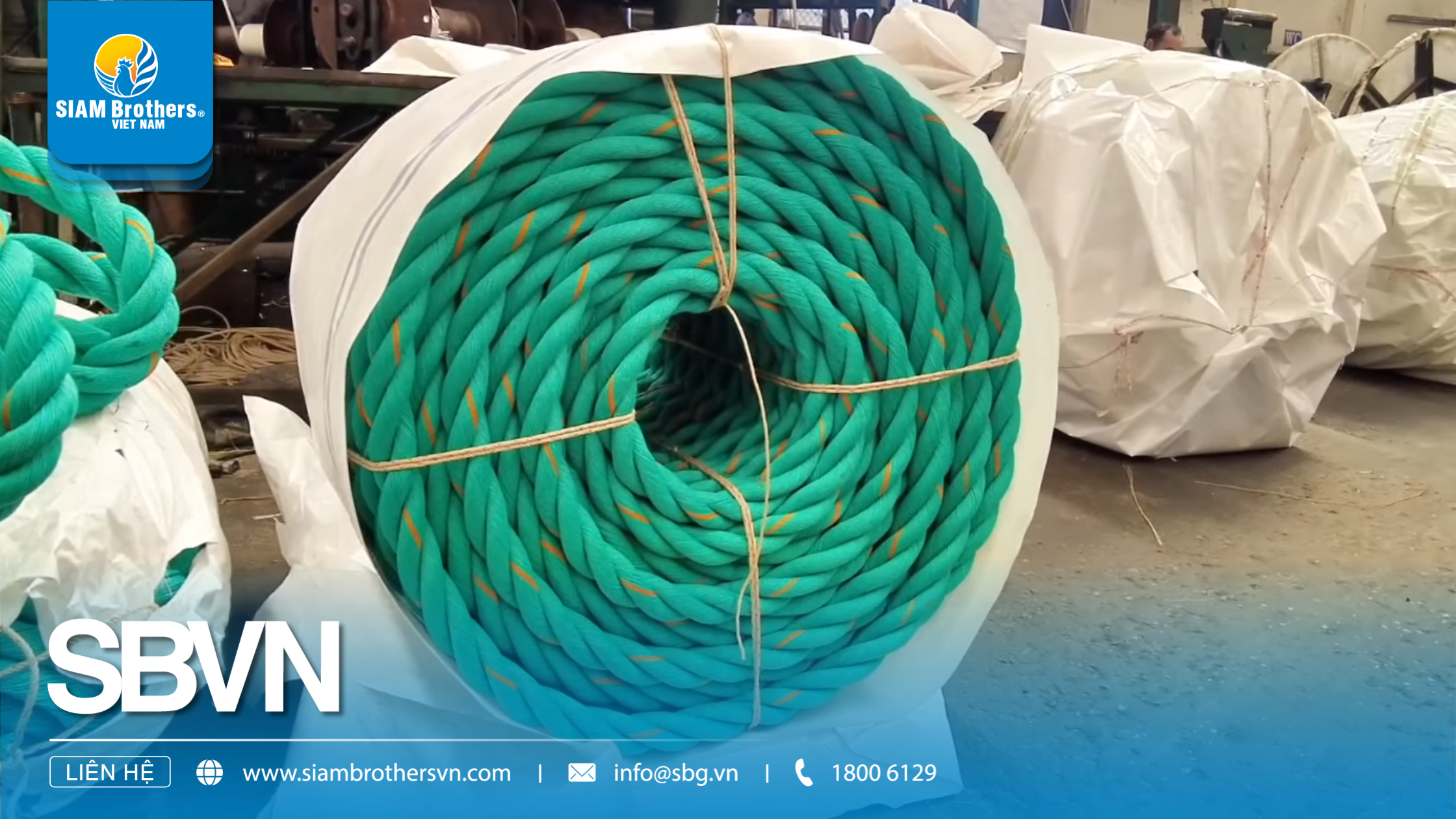
Rope Manufacturing Process – Source: SIAM Brothers Vietnam
The rope manufacturing process is the transformation of raw materials such as PP, PE, polyester, nylon, or natural fibers into high-strength ropes through various technical production stages. Depending on the intended application, ropes can be designed with twisted or braided structures to meet requirements for durability, abrasion resistance, and long-term performance.
Today, most industrial rope manufacturers utilize automated machinery systems to optimize productivity and ensure product consistency. Starting from virgin plastic pellets, ropes go through several processes including melting, fiber extrusion, twisting, stranding, finishing, and quality inspection before reaching the market.
In industries such as fisheries, marine operations, and aquaculture, rope quality directly impacts safety and operational efficiency. Therefore, investing in technology and optimizing the rope manufacturing process has become a key trend in the modern rope industry.
Ropes are widely used across various industries thanks to their flexibility, durability, and high load-bearing capacity. In the fishing industry, ropes are used for mooring boats, pulling nets, securing cages, and supporting offshore fishing activities. In marine transportation, ropes play a critical role in docking systems and cargo handling.
In high-tech agriculture, ropes are also used as greenhouse ropes, plant support ropes, and fixing systems for modern farming structures. In construction, ropes assist in lifting materials, securing goods, and ensuring operational safety.
The development of synthetic materials such as PP and PE has made ropes lighter, stronger, and more durable compared to traditional natural-fiber ropes.
In the past, ropes were primarily made from natural fibers such as jute, sisal, hemp, cotton, or coconut fibers. These materials are environmentally friendly and biodegradable. However, natural-fiber ropes generally have lower water resistance and mechanical durability, making them more vulnerable to moisture and decay.
Today, natural-fiber ropes are mainly used in handicrafts, interior decoration, and traditional products.
In modern industry, synthetic materials dominate due to their superior durability and strength. Common materials include:
Polypropylene (PP)
Polyethylene (PE)
Polyester
Nylon
Among them, PP and PE ropes are the most widely used in Vietnam because they are lightweight, float on water, and offer cost-effective performance. These ropes are especially popular in fisheries and aquaculture.
Meanwhile, nylon and polyester ropes are often chosen for applications requiring higher load capacity or operation in harsh environments such as marine transportation and rescue operations.
The first stage in the rope manufacturing process is raw material preparation. For synthetic ropes, virgin plastic pellets are inspected for purity, moisture content, and heat resistance before production.
Depending on product requirements, manufacturers may add:
Industrial color pigments
UV stabilizers
Strength-enhancing additives
Thermal stabilizers
After blending, the materials are fed into extrusion machines to begin fiber production.
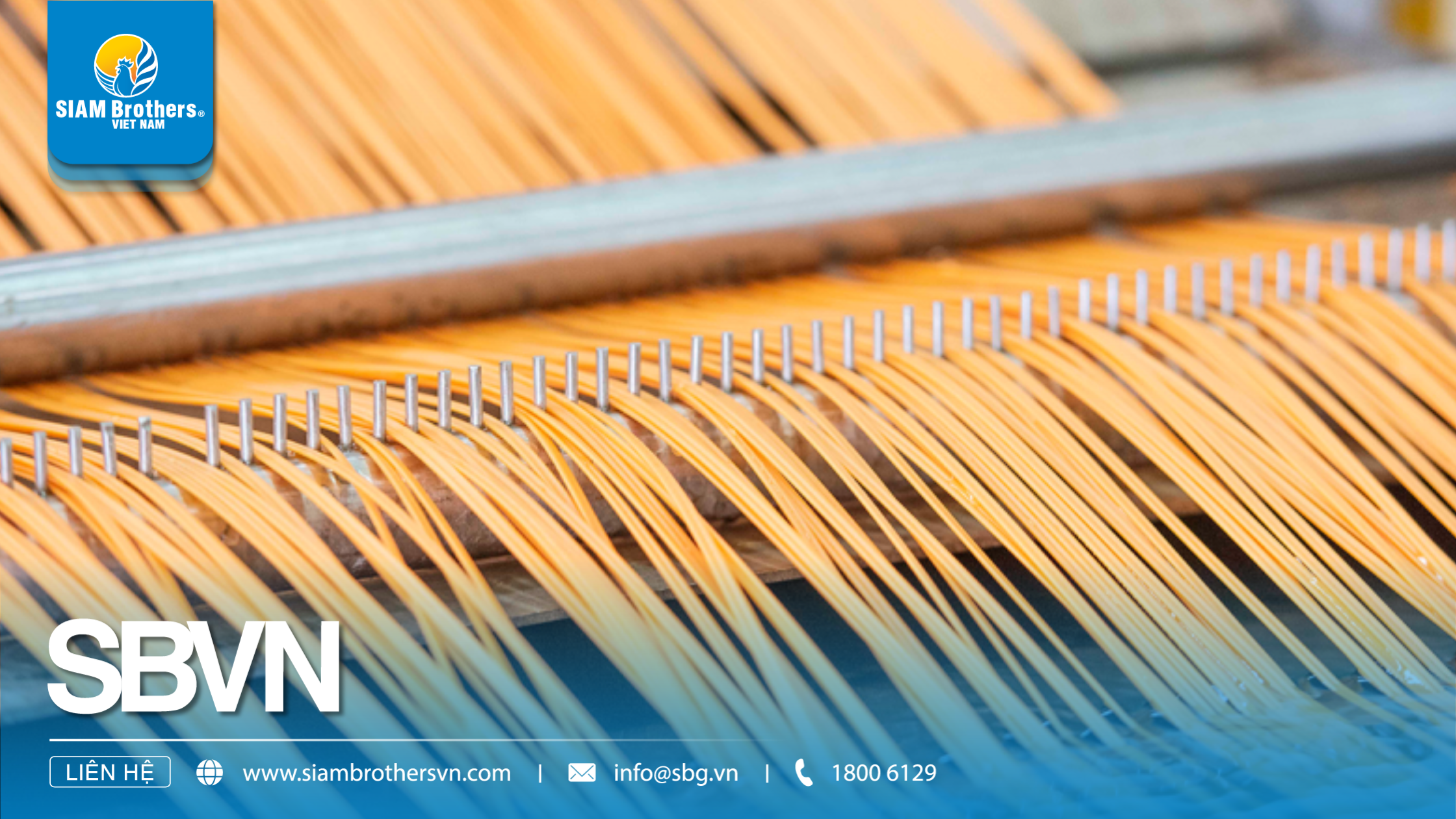
Rope Manufacturing Process – Source: SIAM Brothers Vietnam
This is one of the most important stages affecting filament quality. Plastic pellets are heated to suitable temperatures and processed through screw systems inside extrusion machines. The molten plastic is then forced through spinneret dies to create continuous filaments.
After extrusion, the filaments undergo:
Water or air cooling
Stretching to improve tensile strength
Size stabilization
Bobbin winding
This process requires high precision to ensure uniform fiber diameter and minimize production defects.
After filament production, the fibers are twisted together to form yarns. This process commonly uses S-twist or Z-twist techniques to improve fiber cohesion.
Multiple yarns are then combined into strands, and the strands are twisted in the opposite direction to balance torque and improve rope stability.
Depending on the design, ropes may be produced in:
3-strand
4-strand
8-strand
12-strand structures
This stage directly influences:
Tensile strength
Load-bearing capacity
Structural stability
Resistance to kinking during use
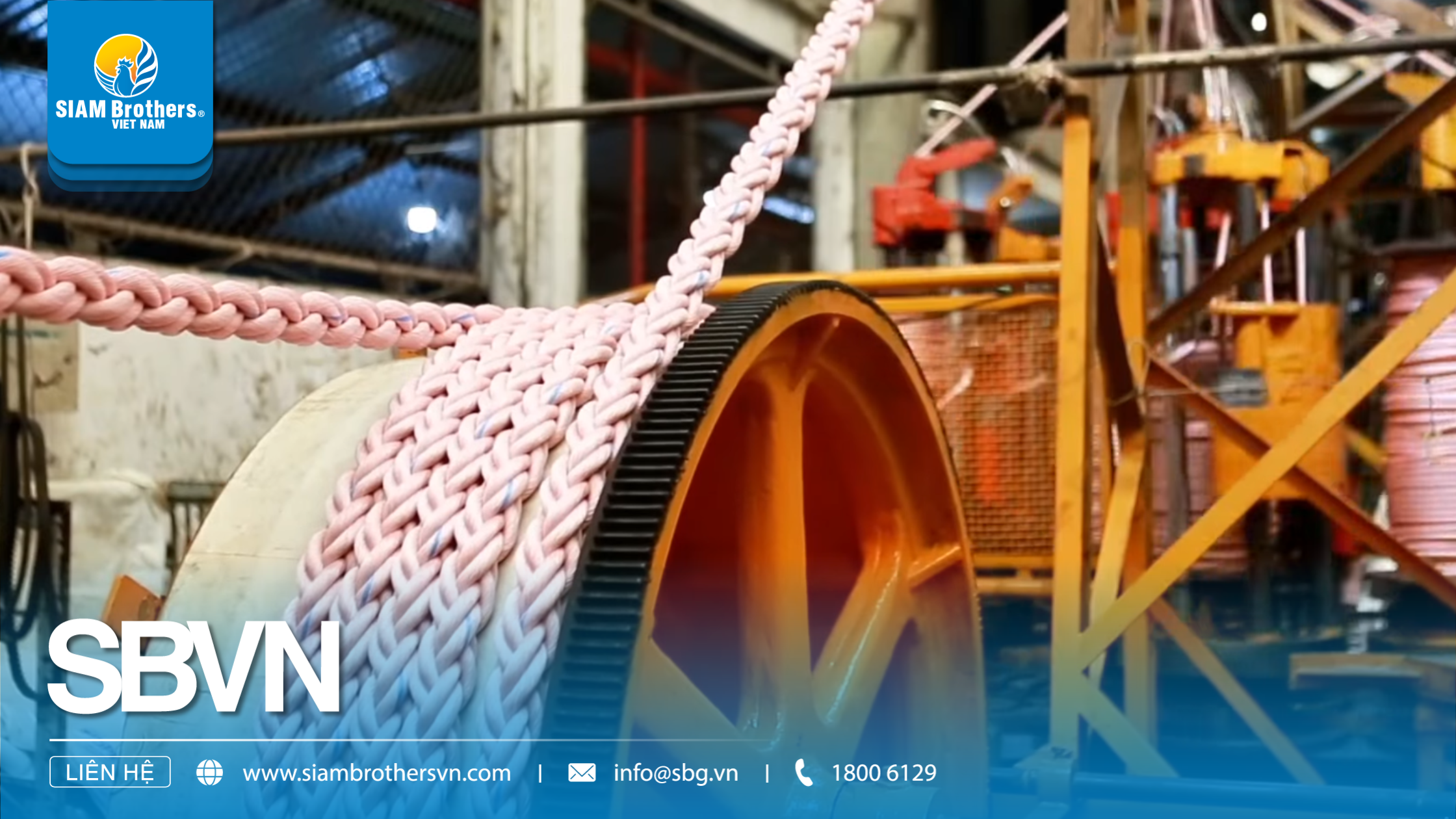
Rope Manufacturing Process – Source: SIAM Brothers Vietnam
Besides traditional twisted ropes, many manufacturers now apply braided rope technology to create premium rope products.
Unlike twisted ropes, braided ropes are made by interweaving fibers through automated braiding machines. This structure allows ropes to be:
Softer
Stronger
Less likely to kink
More stable under heavy loads
Common braided rope structures include:
Solid braid
Hollow braid
Double braid
Kernmantle rope
These ropes are commonly used in:
Marine applications
Climbing
Rescue operations
Offshore industries
After the rope structure is completed, products undergo finishing processes to improve lifespan and appearance.
Depending on the rope type, finishing may include:
Heat-setting stabilization
UV-resistant coating
Abrasion-resistant coating
Automatic cutting and coiling
Heat sealing rope ends to prevent fraying
Some products may also include printed technical specifications or traceability codes directly on the rope surface.
To ensure product quality, finished ropes undergo various technical tests, including:
Breaking tensile strength
Elongation
Rope diameter
Structural consistency
UV resistance
Saltwater resistance
Abrasion resistance
For ropes used in marine or heavy industrial applications, quality control standards are even stricter to ensure operational safety.
Today, many factories invest in automated tensile strength testing systems to improve inspection accuracy.
Automation also helps:
Reduce production errors
Improve product consistency
Enable real-time quality monitoring
Optimize operational efficiency
These factors significantly enhance the competitiveness of rope manufacturers in global markets.
In addition to traditional PP and PE materials, many international manufacturers are adopting high-performance fibers such as:
Dyneema
Kevlar
Marine-grade polyester
These materials offer:
Ultra-lightweight properties
High load capacity
Excellent UV resistance
Exceptional durability
The rope industry is also moving toward sustainable manufacturing practices. Many companies are now:
Recycling used ropes
Recycling fishing nets
Reducing plastic waste
Optimizing energy consumption
These efforts help reduce environmental impact and align with global sustainability trends.
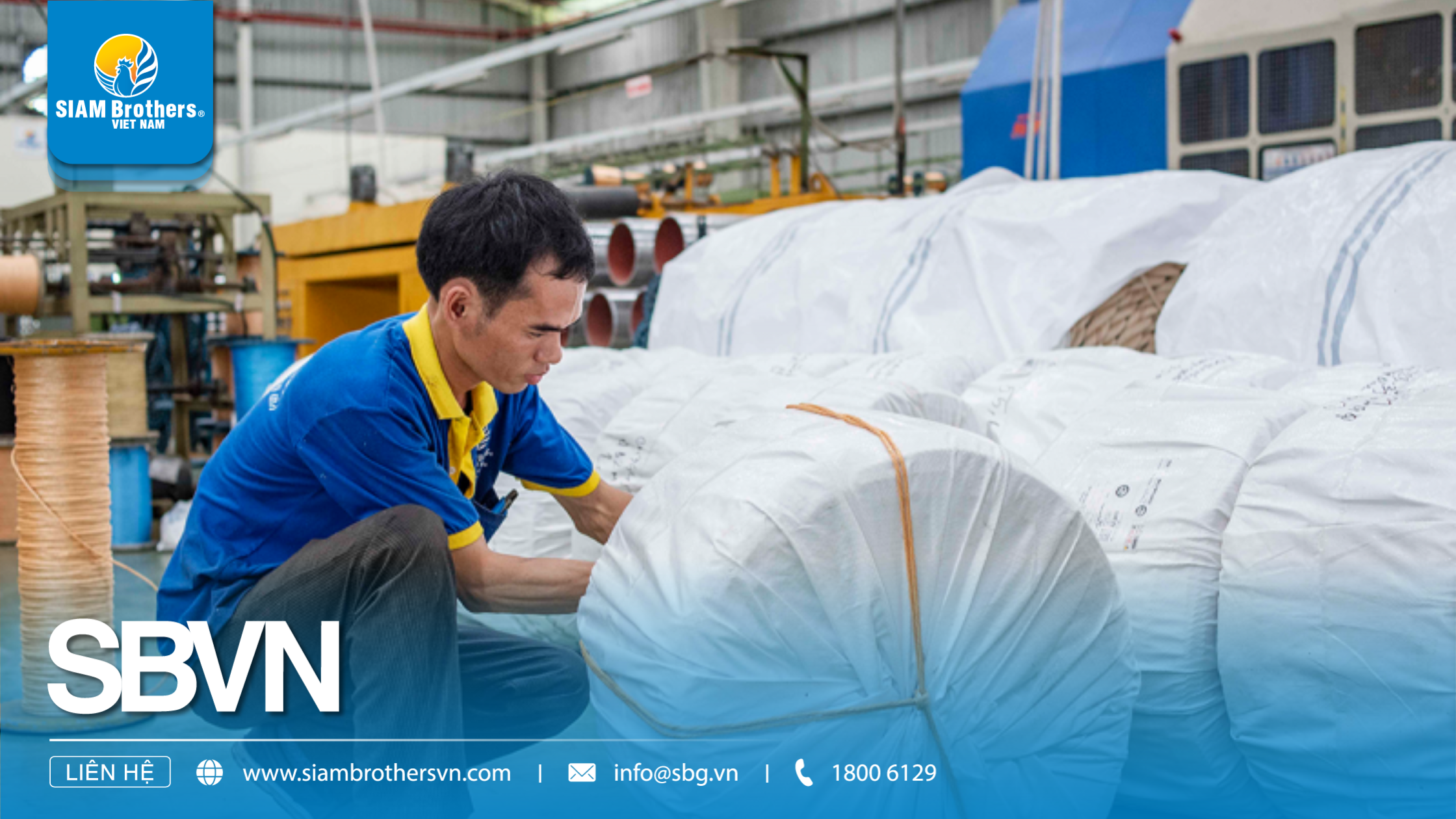
Rope Manufacturing Process – Source: SIAM Brothers Vietnam
In Vietnam, SIAM Brothers Vietnam is one of the leading companies specializing in rope manufacturing and supply for fisheries, marine industries, agriculture, and industrial applications. With many years of experience, the company has invested heavily in modern factories and automated production lines to meet growing domestic and international demand.
Rope products at SIAM Brothers Vietnam are manufactured using virgin PP and PE materials combined with advanced extrusion and twisting technologies to enhance tensile strength, abrasion resistance, and UV protection. These characteristics are especially important for ropes used in marine environments, aquaculture, and outdoor applications.
In addition to traditional twisted ropes, the company also develops various specialized products including:
Fishing net ropes
Mooring ropes
Cargo securing ropes
Agricultural ropes
Greenhouse ropes
Industrial aquaculture ropes
Beyond product quality, SIAM Brothers Vietnam also focuses on sustainable development by optimizing manufacturing processes, improving product durability, and promoting recycling solutions within the rope and net industry.
With large-scale production capacity and strict quality control systems, the company has become a trusted partner for customers in fisheries, marine transportation, and industrial sectors across Vietnam and Southeast Asia.
The modern rope manufacturing process is a combination of advanced material technology, extrusion systems, and precise twisting or braiding techniques that create highly durable products suitable for a wide range of applications.
From virgin plastic pellets to finished products, ropes undergo multiple technical stages including fiber extrusion, yarn twisting, stranding, structural finishing, and strict quality inspections before reaching the market.
As manufacturing technology continues to evolve, the rope industry is improving product quality, optimizing durability, and moving toward more sustainable production practices to meet increasing global demand.
Read more: The Future of the Rope Manufacturing Industry
Source: SIAM Brothers Vietnam
1. What are the main stages in the rope manufacturing process?
The rope manufacturing process typically includes material preparation, fiber extrusion, twisting, stranding, finishing, and quality control.
2. What is the difference between PP and PE ropes?
PP ropes are lighter and float better on water, while PE ropes are softer and offer better abrasion resistance.
3. What are the advantages of braided rope technology?
Braided ropes are softer, stronger, and less likely to kink during heavy-duty applications.
4. Why is UV resistance important for ropes?
Ropes used outdoors are constantly exposed to sunlight, so UV resistance helps prevent brittleness and extends product lifespan.
5. Which industries use ropes the most today?
Common industries using ropes include fisheries, marine transportation, high-tech agriculture, construction, and industrial logistics.
Contact us:
Address: 5th floor, VRG Building, 177 Hai Ba Trung Street, Vo Thi Sau Ward, Ho Chi Minh City, Vietnam
Tel: (+84) 28 38 912 889
Hotline: 1800 6129
Facebook: www.facebook.com/siambrothersvn
Email: info@sbg.vn
YouTube: youtube.com/@siambrothersvietnam1728
OA Zalo: zalo.me/1402339229697925373
App SBVN ID:
CHPlay: https://bit.ly/SBVNID-Android
Appstore: https://bit.ly/SBVNID-iOS








Specializing in Agricultural and Fisheries Products & Multipurpose Wire